An album can be cohesive while containing very different songs. The aim is to avoid accidental distractions while protecting the emotional shape of the project.
Begin with the whole sequence
Collect the approved mixes and confirm their versions. Put them in the intended order in a mastering session or sequence workspace. Listen without processing and make notes about the experience from one track to the next.
Ask where attention rises, where the listener gets relief, and whether the ending of one song prepares the next. A dense opener followed by a sparse track may be effective. The issue is whether the contrast feels intentional rather than like a technical mistake.
If the order is not decided, test two plausible sequences before detailed processing. You do not need to solve sequencing and mastering simultaneously through endless random rearrangement. Make a deliberate proposal, listen, and document the reason for changes.
iZotope's album mastering discussion emphasizes sequence, spacing, and a project wide perspective. Use that perspective without assuming all tracks need identical processing.
TRY IT HERE
Make it your session
Turn the steps into a plan you can save.
Ready when you are. Audio starts only when you press Play.
Keep experimenting in the stem splitter LabChoose an anchor track
Pick a song that represents the project's main sound and is already reasonably balanced. Use it as an anchor for comparisons. It need not be the loudest track or the first track.
If one song is unusually fragile or dynamic, consider its limits before making every other track extremely dense. Otherwise you may later force that song into processing it cannot tolerate simply to keep up.
The anchor provides context, not a rigid template. A solo piano interlude should not acquire the bass weight of a full band chorus. Compare like sections and ask whether the project feels coherent at a stable listening level.
Separate tonal consistency from sameness
A bright song may need a small adjustment if it suddenly feels abrasive after its neighbour. But brightness may also be part of its arrangement or narrative role. Listen in sequence before correcting it.
Use broad, modest changes when appropriate. If a vocal is consistently buried in one mix, request a mix revision rather than trying to brighten the entire song until the vocal emerges. Mastering an album does not eliminate the boundary between mix balance and overall tone.
Keep notes such as “Track 3 feels unusually thick after Track 2” rather than “Track 3 must match Track 2's spectrum.” A spectrum display cannot account for different instrumentation and musical roles.
Match perceived level where it makes musical sense
Compare representative active sections, then listen through each track's full dynamics. Integrated loudness is useful documentation, but a long quiet opening can lower the average without making the chorus feel too quiet.
A ballad can sit below a driving single and still feel correctly placed. An interlude can be much quieter by design. Do not raise quiet material merely to produce a neat column of identical numbers.
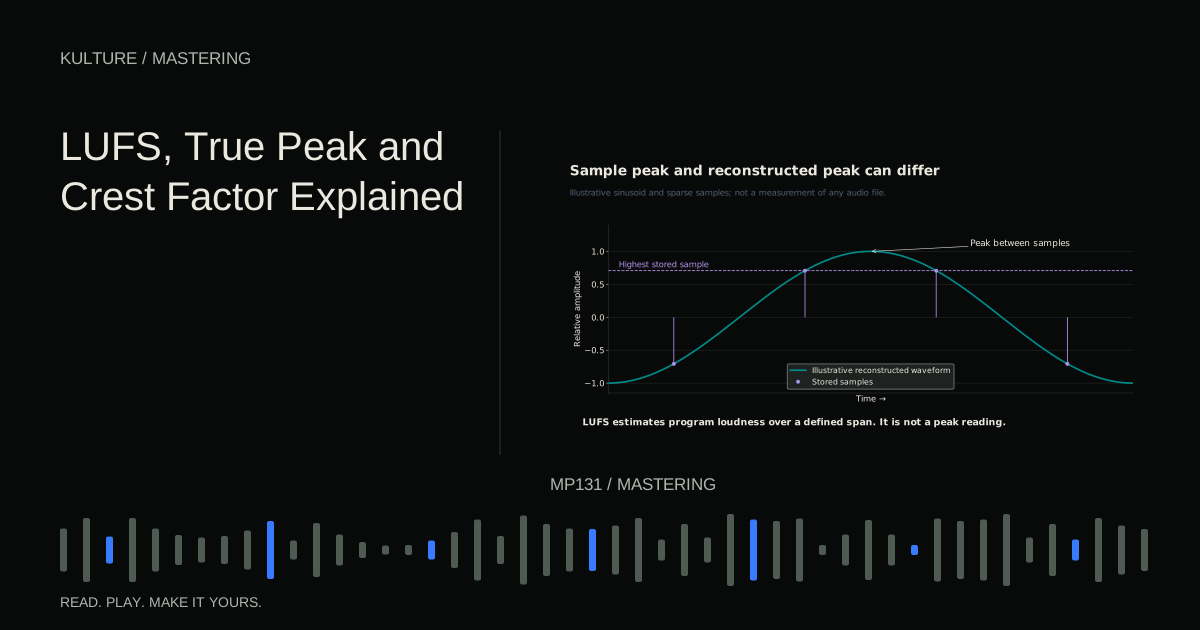
The LUFS and dynamics guide explains the meter distinctions. Use measurements to investigate a level mismatch you hear, not to overrule the intended shape of the album.
Design the gaps by listening
The gap between songs includes both digital silence and the perceived decay of the preceding music. A two second pause after an abrupt stop feels different from two seconds after a long reverb tail.
Listen to the last twenty seconds of one track and the first twenty seconds of the next. Adjust spacing until the transition breathes or surprises in the intended way. Avoid applying the same gap to every transition just because it is convenient.
For a segue or crossfade, agree how it should be represented in the deliverables. A continuous sequence and individual streaming tracks may require careful boundary decisions. Coordinate with the distributor or manufacturing provider rather than guessing where indexes should fall.
A four track example
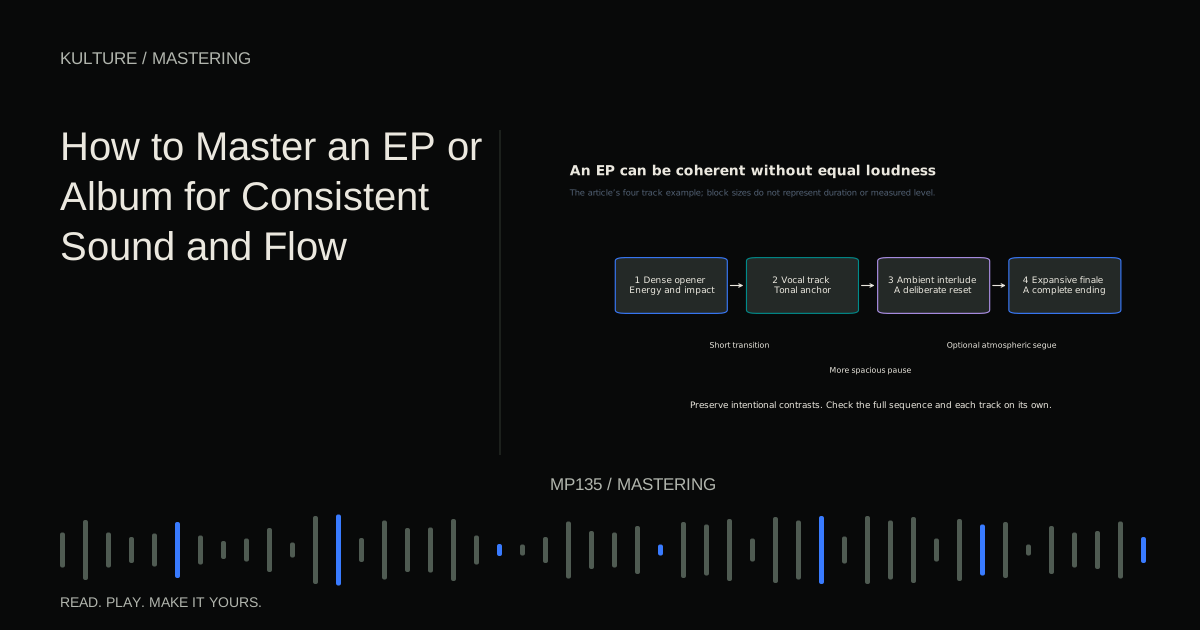
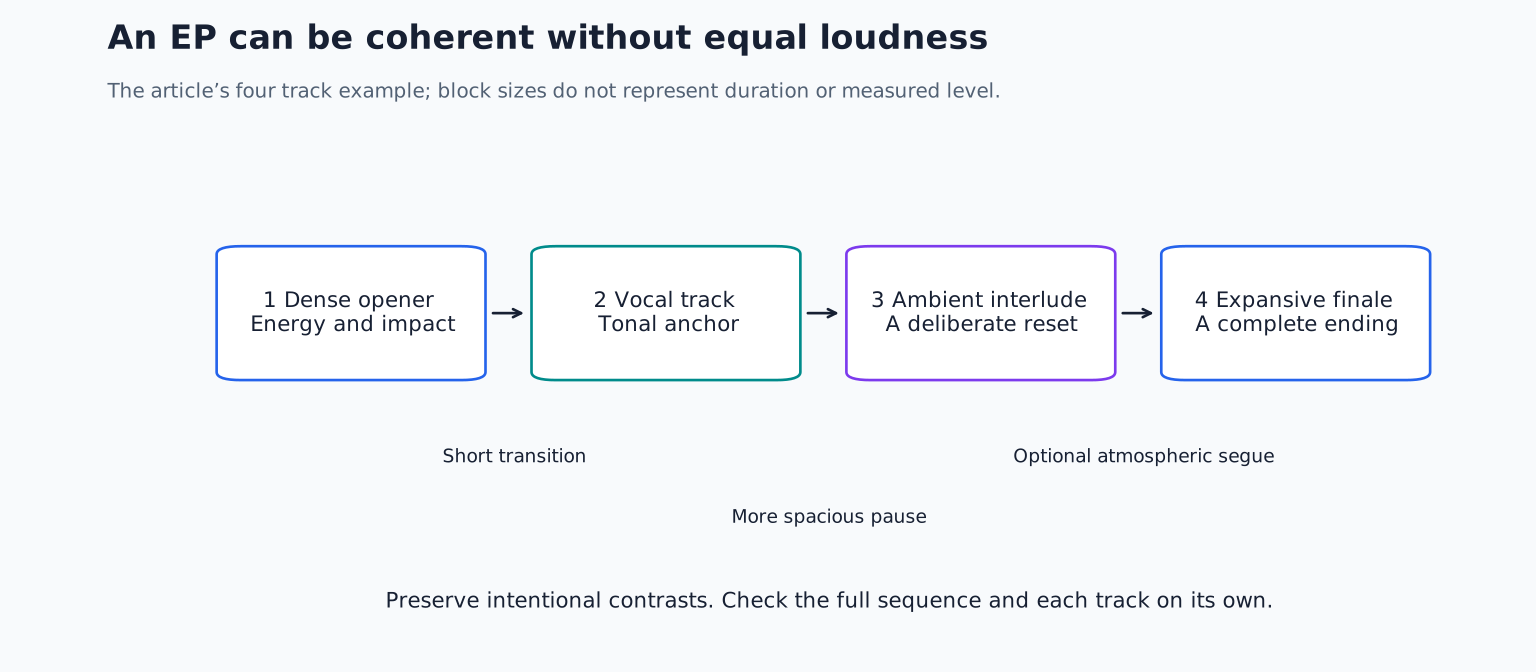
Imagine an EP with a dense opener, a midtempo vocal track, a short ambient interlude, and an expansive finale.
Use the vocal track as a tonal anchor because its arrangement is balanced and exposes the singer clearly. Compare the opener's chorus with it at a similar perceived level, then decide whether the opener should remain slightly more aggressive. Do not push the ambient interlude to the same loudness; preserve its role as a reset.
Try a short transition from the opener into the vocal track, a more spacious pause before the interlude, and an overlapping atmospheric connection into the finale if artistically intended. Listen to the full EP before approving those choices.
Finally audition the finale alone. It must still make sense when someone encounters it outside the sequence. Album flow and standalone usability can both matter.
Keep processing and versions traceable
Label each track's source mix and master version. If a new mix arrives, replace only the intended source and check whether the mastering settings still fit. A revised bass balance can change limiter behaviour, even if the filename is almost identical.
Keep a sequence sheet listing track number, title, version, duration, and any special transition instructions. Avoid placing obsolete masters in the final delivery folder.
If you create alternate versions, such as clean or instrumental mixes, identify whether they belong to the album sequence or are separate deliverables. See alternate version preparation.
Understand playback context
Streaming services may treat album playback differently from playlist playback. Spotify's documentation describes its album and individual track normalization behaviour. That is one service's policy, not a guarantee for every listener.
Preserve the musical relationships in your delivered album rather than trying to anticipate every playback scenario with identical loudness. Check current destination requirements and retain the best quality source masters.
Perform two final listening passes
First listen continuously in sequence without touching controls. Note only issues that genuinely interrupt the experience. Then inspect each exported track individually for starts, endings, channel errors, clicks, and incorrect versions.
Check the metadata and order against the approved sequence sheet. A swapped filename can undermine careful mastering just as effectively as an audio mistake. If identifiers are being assigned, follow IFPI's ISRC guidance for recording versions rather than assuming every format conversion creates a new recording.
Your exercise is to sequence three finished tracks, choose an anchor, and make a transition log. Record the reason for each level or spacing decision. The final question is simple: can you listen through the project without wanting to reach for the volume control or skip an awkward transition, while still feeling the intended contrasts?
TAKE IT INTO YOUR OWN MUSIC
Your next session.
Imagine an EP with a dense opener, a midtempo vocal track, a short ambient interlude, and an expansive finale.
Notes and progress stay in this browser.