KULTURE GUIDES / LEARN BY DOING
Start here.
Make something.
A clear next step, from your first idea to a finished track.
Six learning paths, hands-on tools and 173 guides to explore at your own pace.
Find my starting point ↓THE ROUTE THROUGH A TRACK
- Get set upOpen a project. Make a sound.
- Build an ideaRhythm, notes and a sound you like.
- Give it a shapeTurn a loop into an arrangement.
- Balance and finishListen, refine and export.
PICK A GOAL. FOLLOW THE STEPS.
Where should I start?
Choose what you want to make. Each path puts the lessons in order, explains what to do at each step and points you to a tool for practice.
8 STEPS / LEARN BY DOING
Make my first track
New to making music? Follow one small project from a working setup to a finished audio file.
WHAT YOU’LL MAKEA short track you can play from beginning to end.
Start with step 1. Take each lesson at your own pace.
Start this path →Try the beat maker- 01See the whole processUnderstand the small track you’re going to build.
- 02Get your setup workingOpen a project and make sure you can hear it.
- 03Build a drum grooveMake a simple rhythm you can loop.
- 04Add some chordsGive your idea a harmonic foundation.
- 05Write a basslineSupport the chords without crowding the kick.
- 06Arrange your ideaGive the loop a beginning, middle and ending.
- 07Balance the partsMake the important sounds easy to hear.
- 08Export and listen backFinish a file you can play outside your project.
6 STEPS / LEARN BY DOING
Make a better beat
Build the rhythm first, then give it movement and a bassline that fits.
WHAT YOU’LL MAKEA drum-and-bass loop with a deliberate groove.
Start with step 1. Take each lesson at your own pace.
Start this path →Practise in the beat maker- 01Find the pulseUnderstand the count before adding hits.
- 02Choose your drum rolesHear what each part brings to the pattern.
- 03Program your grooveTurn a count into a repeating pattern.
- 04Add feelCompare timing and velocity changes.
- 05Bring in the bassMake the bass work with the rhythm.
- 06Change the phraseUse a small fill to lead into the next section.
6 STEPS / LEARN BY DOING
Record my vocals
Get a usable recording before building a vocal mix.
WHAT YOU’LL MAKEAn edited vocal take with a purposeful processing chain.
Start with step 1. Take each lesson at your own pace.
Start this path →Explore a vocal with the stem splitter- 01Prepare the sessionMake the room and project ready for a performance.
- 02Place the microphoneFind a position that suits the voice and room.
- 03Set a safe recording levelCapture a take without accidental clipping.
- 04Choose the performanceBuild a strong take from your recordings.
- 05Clean up the editRemove distractions without flattening the performance.
- 06Build the vocal chainChoose processing for the sound you recorded.
5 STEPS / LEARN BY DOING
Make my own sounds
Learn the main synth controls, then use them to build and refine a sound.
WHAT YOU’LL MAKEYour own bass, pluck or pad, with controls you understand.
Start with step 1. Take each lesson at your own pace.
Start this path →Try the synth- 01Learn the synth controlsHear the role of oscillators, filters and envelopes.
- 02Make three starting soundsUse the same foundation for different musical jobs.
- 03Add movementExplore how a sound can change over time.
- 04Layer with a purposeGive each layer a useful role.
- 05Work from what you hearBreak a reference sound into decisions you can try.
5 STEPS / LEARN BY DOING
Finish my loop
Already have an idea? Turn it into sections and make the decisions needed to finish.
WHAT YOU’LL MAKEAn arrangement that develops beyond the first eight bars.
Start with step 1. Take each lesson at your own pace.
Start this path →Open Kulture Lab- 01Plan the sectionsGive each part of the track a job.
- 02Expand the loopBuild a longer arrangement from the material you have.
- 03Connect the sectionsMake arrivals and changes feel intentional.
- 04Shape the energyCreate movement without adding more tracks.
- 05Make the final decisionsSet a finishing point and stop circling the same idea.
6 STEPS / LEARN BY DOING
Mix and release a track
Start with a finished arrangement. Balance it, check the export and prepare the release details.
WHAT YOU’LL MAKEA checked mix and a clearer delivery checklist.
Start with step 1. Take each lesson at your own pace.
Start this path →Listen closely with the stem splitter- 01Start with the balanceGet the levels working before processing.
- 02Solve tone problemsUse EQ for a change you can describe.
- 03Control the dynamicsUnderstand what the compressor is doing.
- 04Check your perspectiveMake a useful comparison at similar loudness.
- 05Prepare the final audioUnderstand the step after the mix.
- 06Prepare the deliveryCheck files, artwork, credits and release details.
Use “Mark practised” in a lesson to keep your progress in this browser. No account needed.
FIND YOUR NEXT STEP
Browse all guides
Showing 1 to 12 of 173 guides
 Getting set up7 min
Music Production Setup for Beginners: Your Tools and First Project
Read & try Getting set up6 min
What Is a DAW? Tracks, Instruments and Effects Explained
Read & try Getting set up6 min
MIDI vs Audio: What's the Difference?
Read & try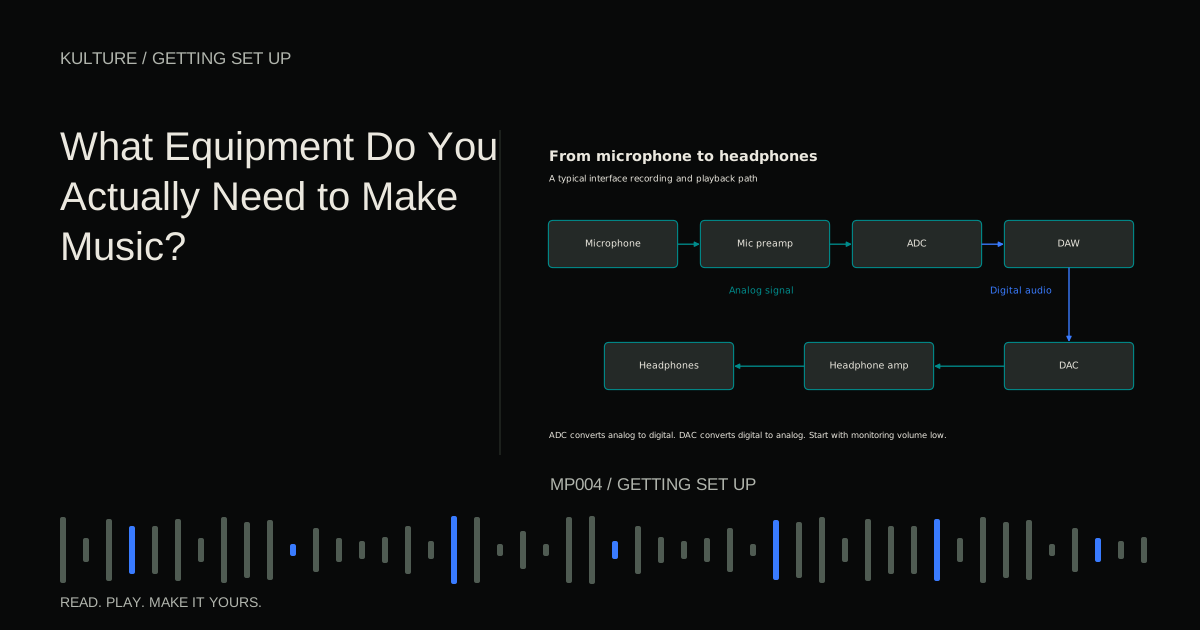 Getting set up6 min
What Equipment Do You Actually Need to Make Music?
Read & try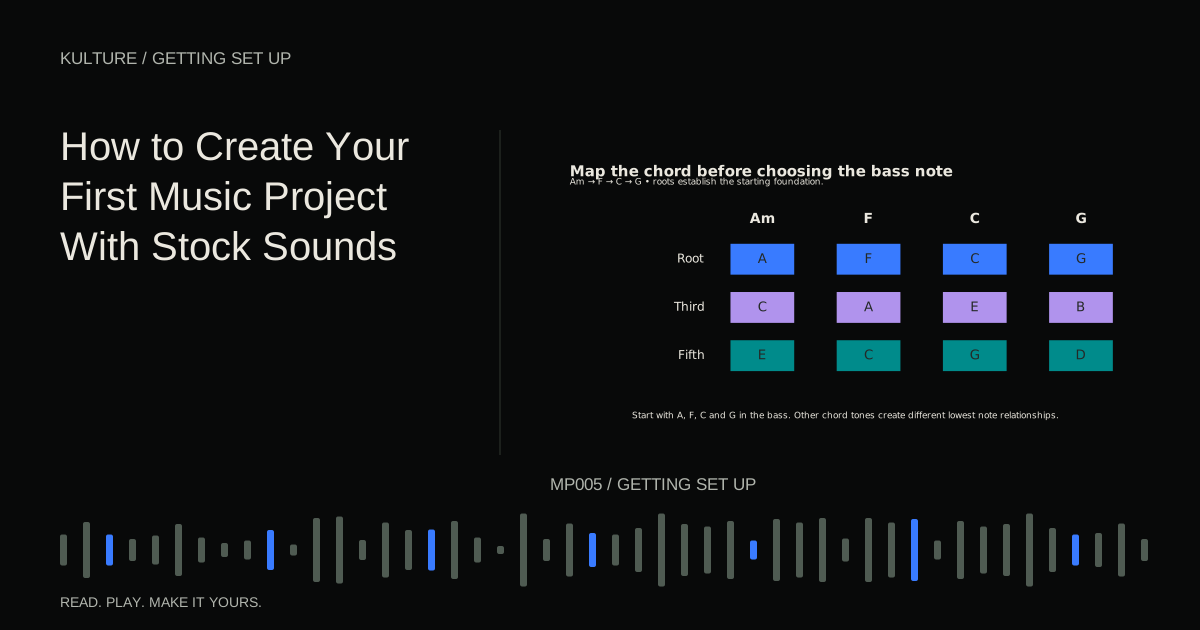 Getting set up7 min
How to Create Your First Music Project With Stock Sounds
Read & try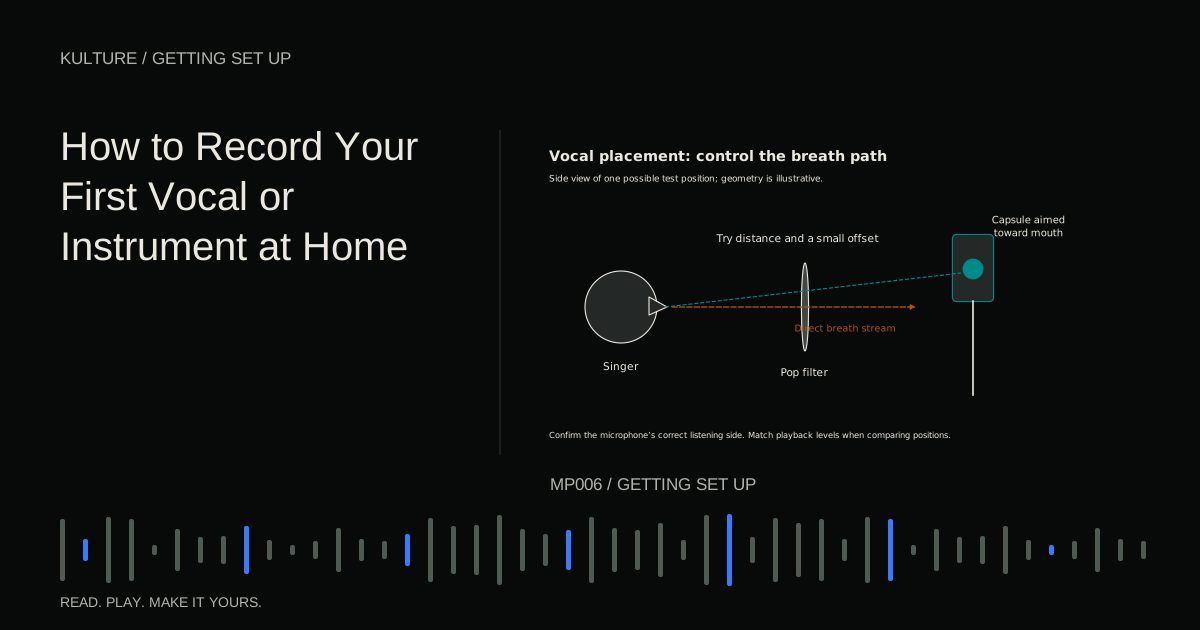 Getting set up6 min
How to Record Your First Vocal or Instrument at Home
Read & try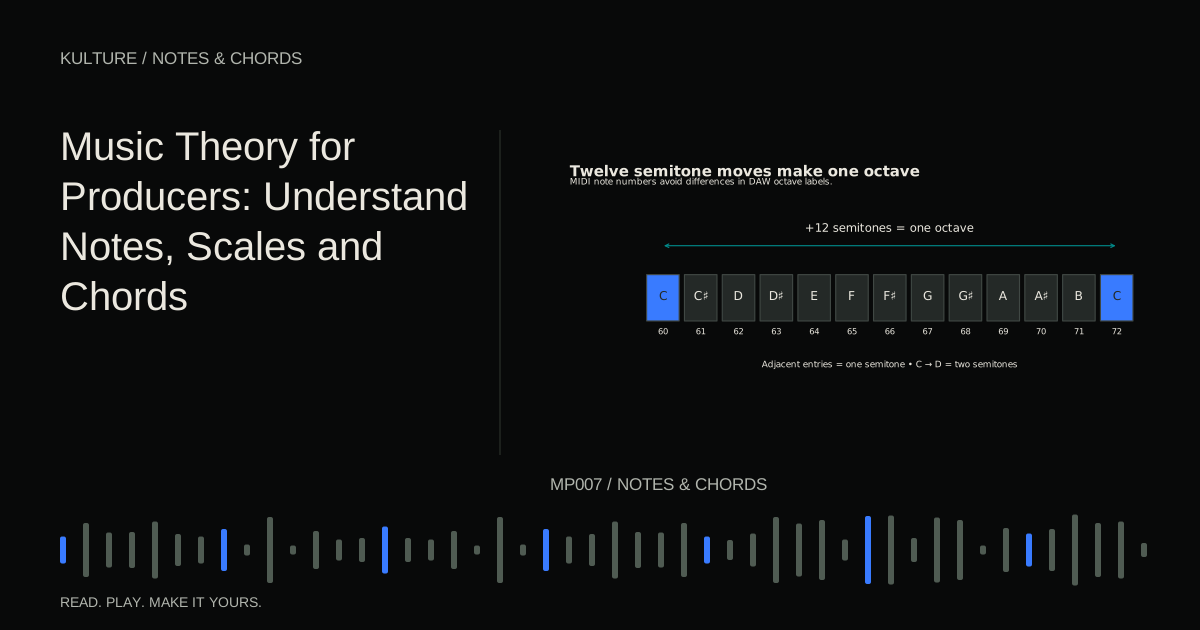 Notes & chords7 min
Music Theory for Producers: Understand Notes, Scales and Chords
Read & try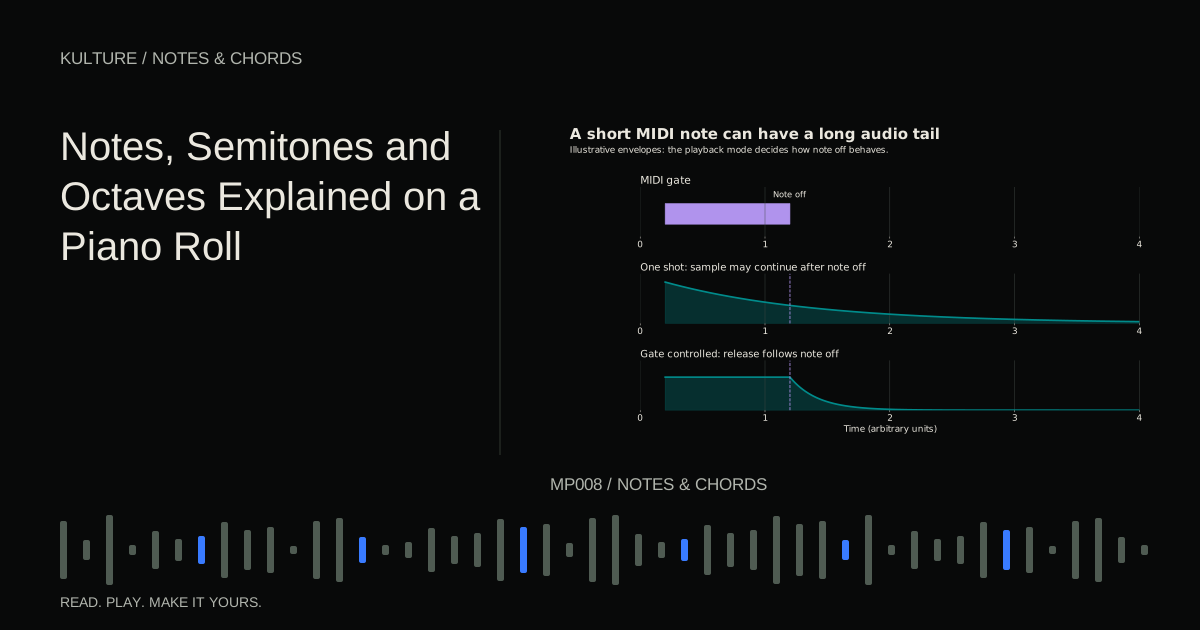 Notes & chords6 min
Notes, Semitones and Octaves Explained on a Piano Roll
Read & try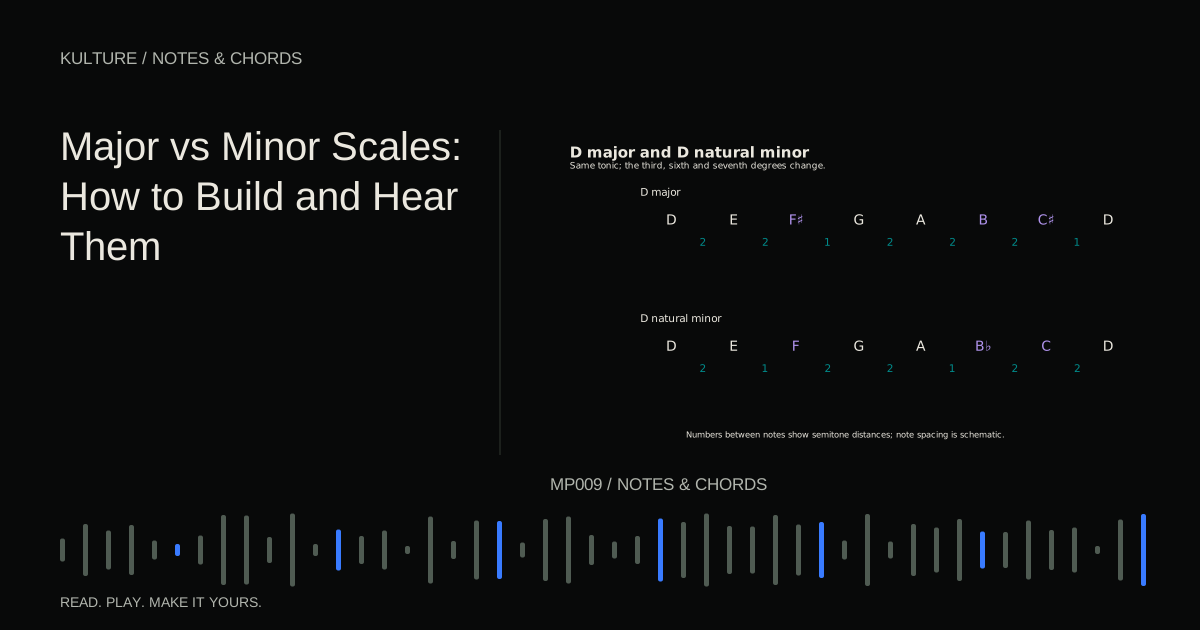 Notes & chords6 min
Major vs Minor Scales: How to Build and Hear Them
Read & try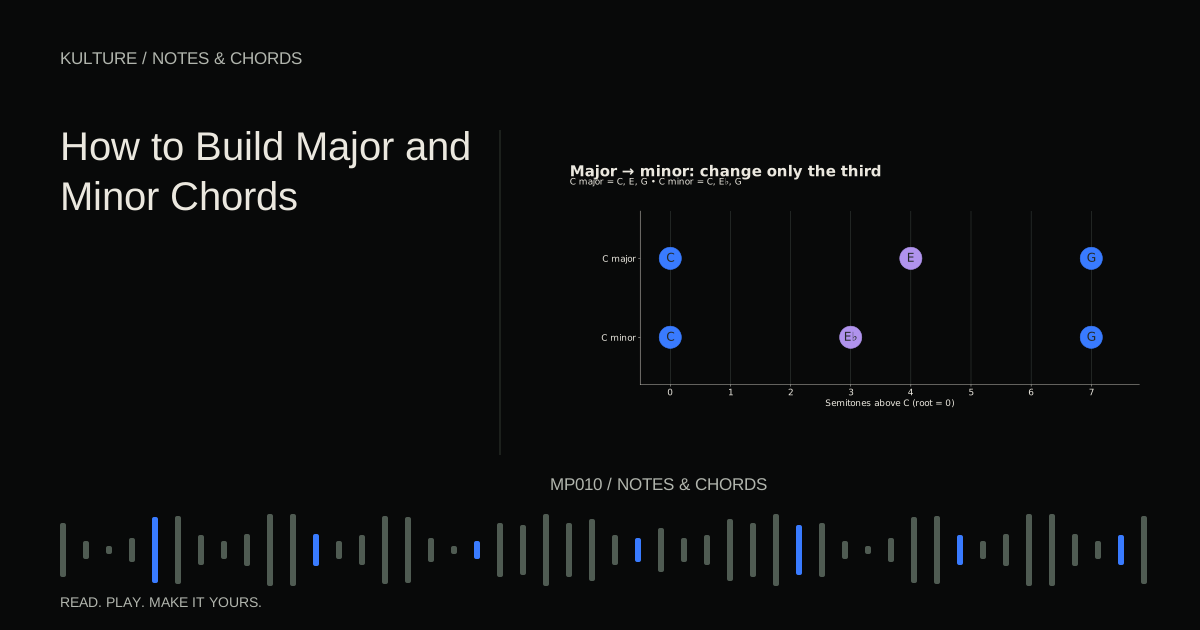 Notes & chords6 min
How to Build Major and Minor Chords
Read & try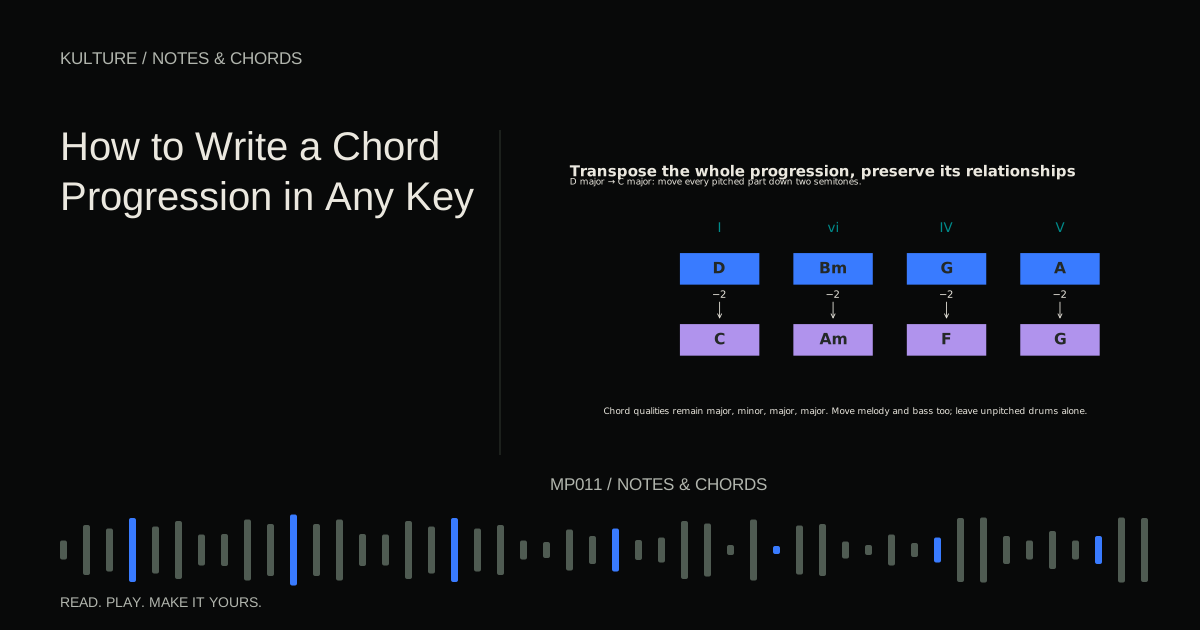 Notes & chords6 min
How to Write a Chord Progression in Any Key
Read & try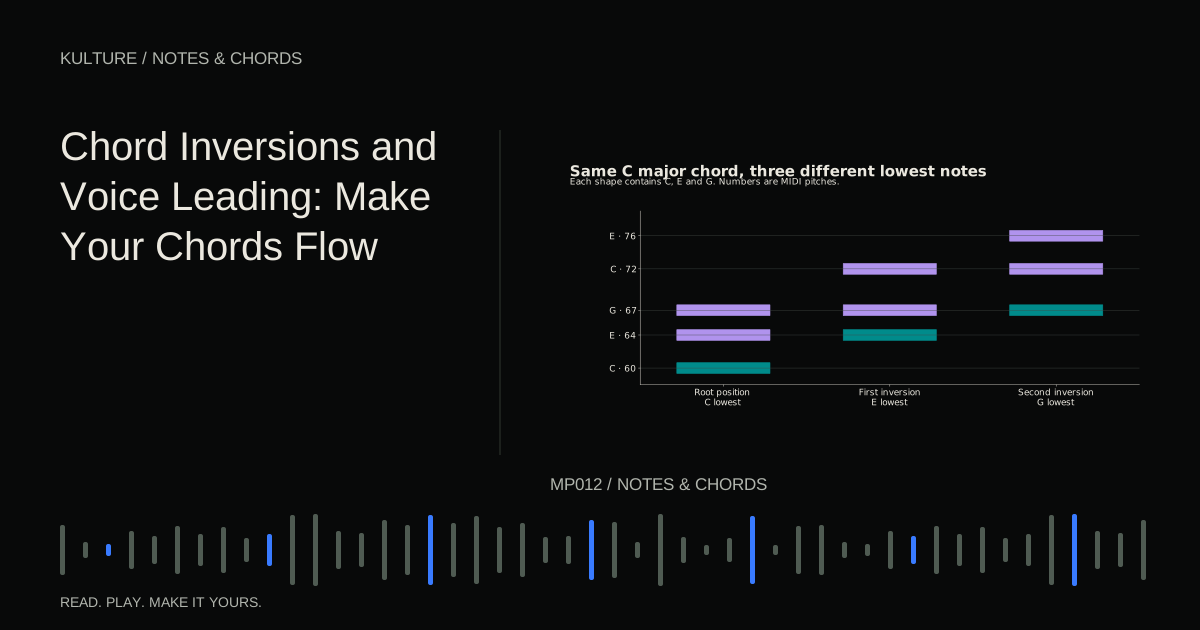 Notes & chords6 min
Chord Inversions and Voice Leading: Make Your Chords Flow
Read & try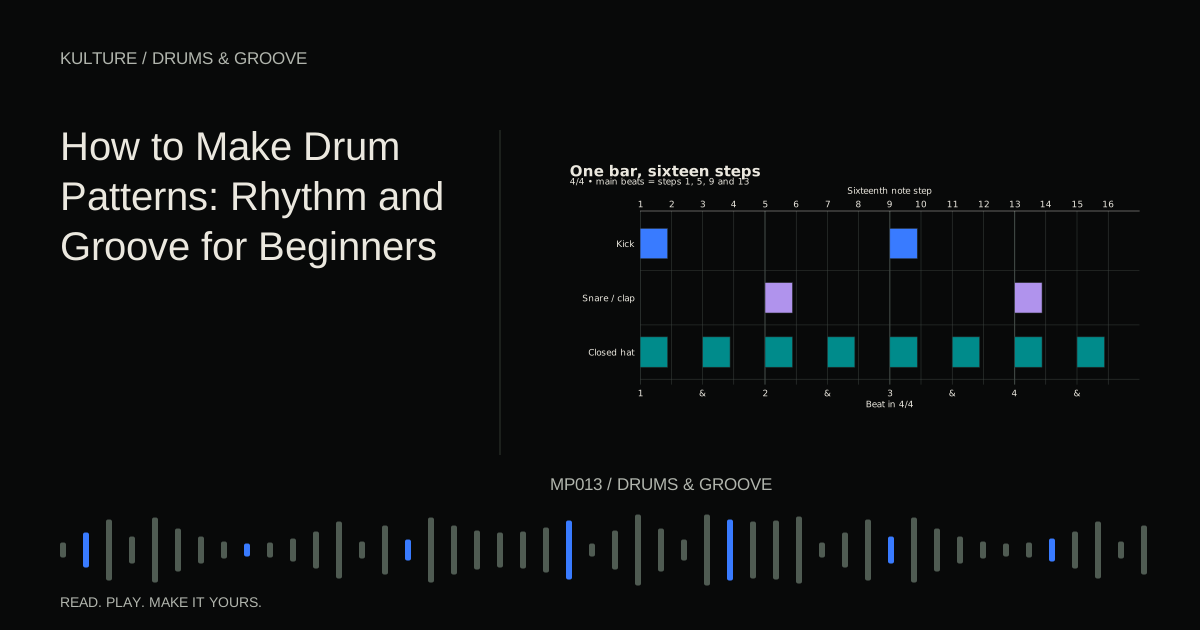 Drums & groove8 min
How to Make Drum Patterns: Rhythm and Groove for Beginners
Read & try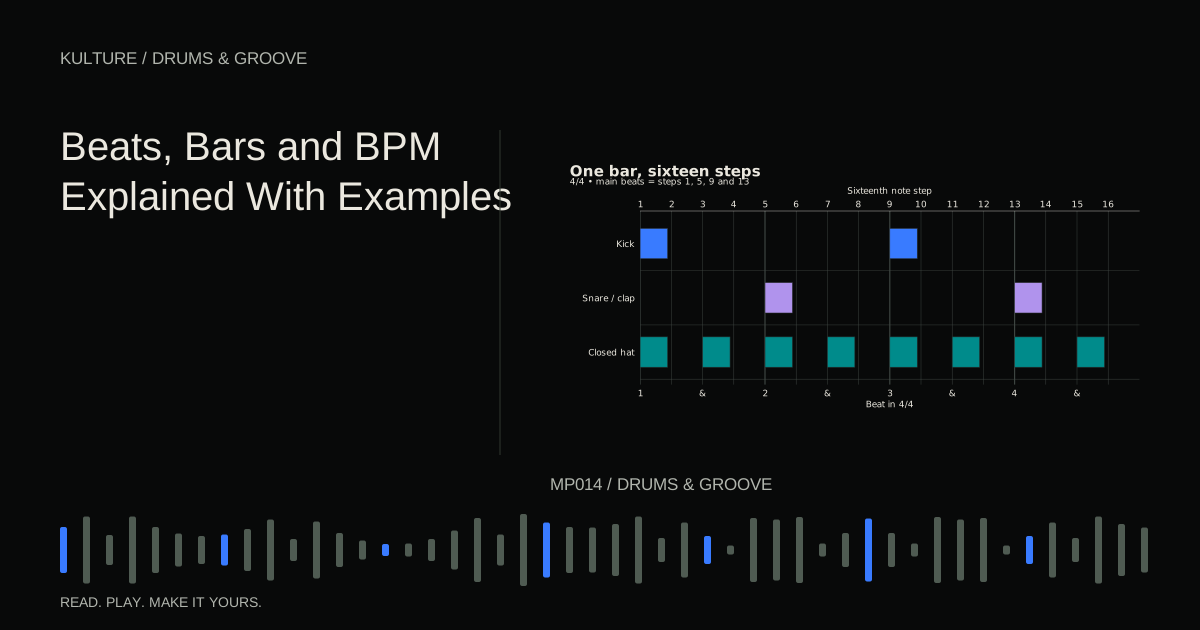 Drums & groove6 min
Beats, Bars and BPM Explained With Examples
Read & try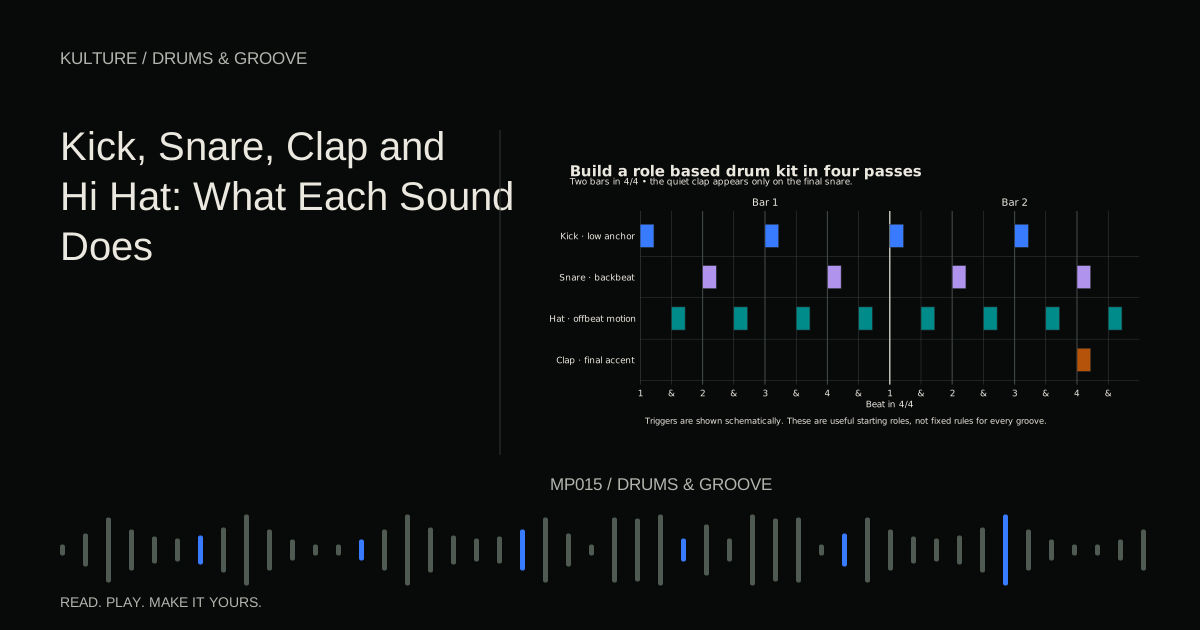 Drums & groove6 min
Kick, Snare, Clap and Hi Hat: What Each Sound Does
Read & try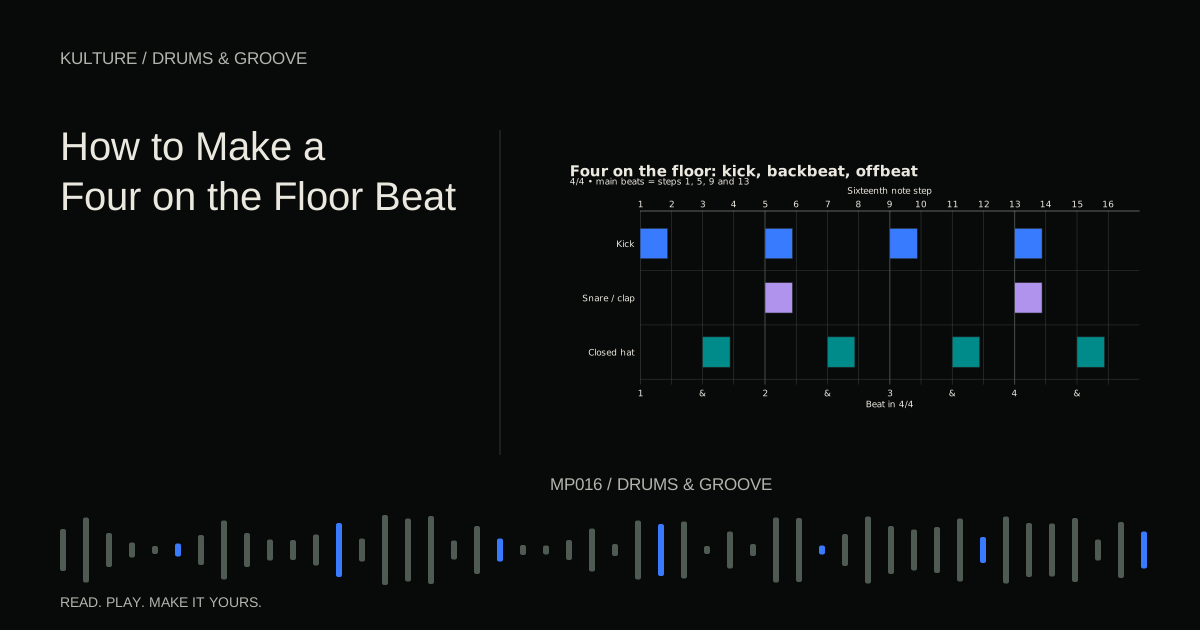 Drums & groove6 min
How to Make a Four on the Floor Beat
Read & try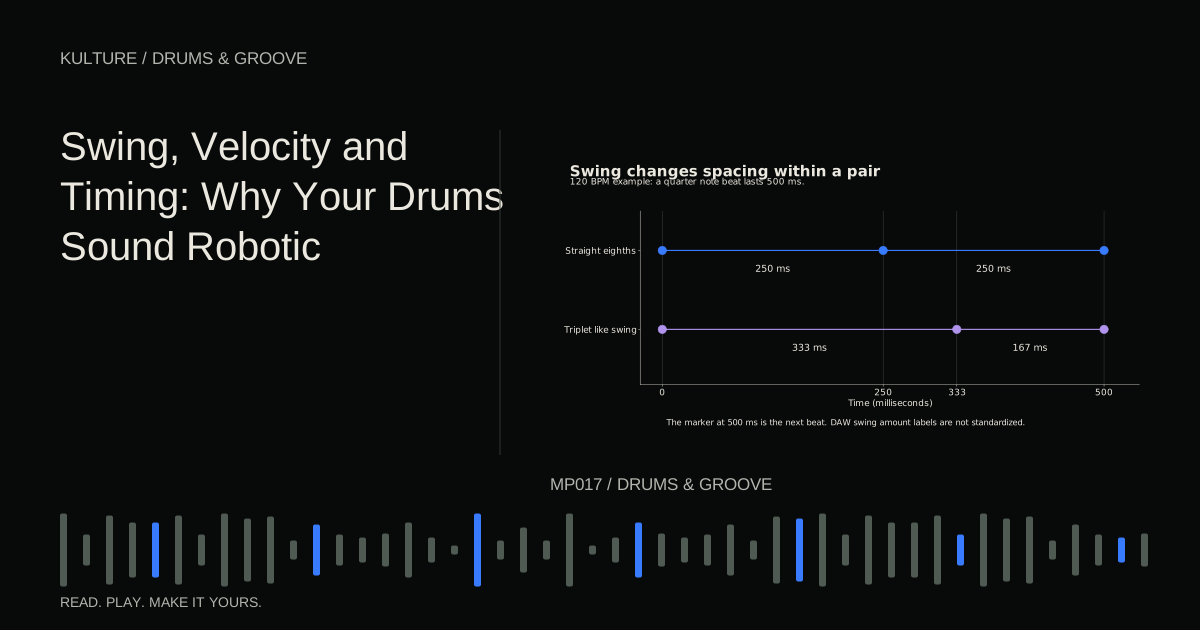 Drums & groove6 min
Swing, Velocity and Timing: Why Your Drums Sound Robotic
Read & try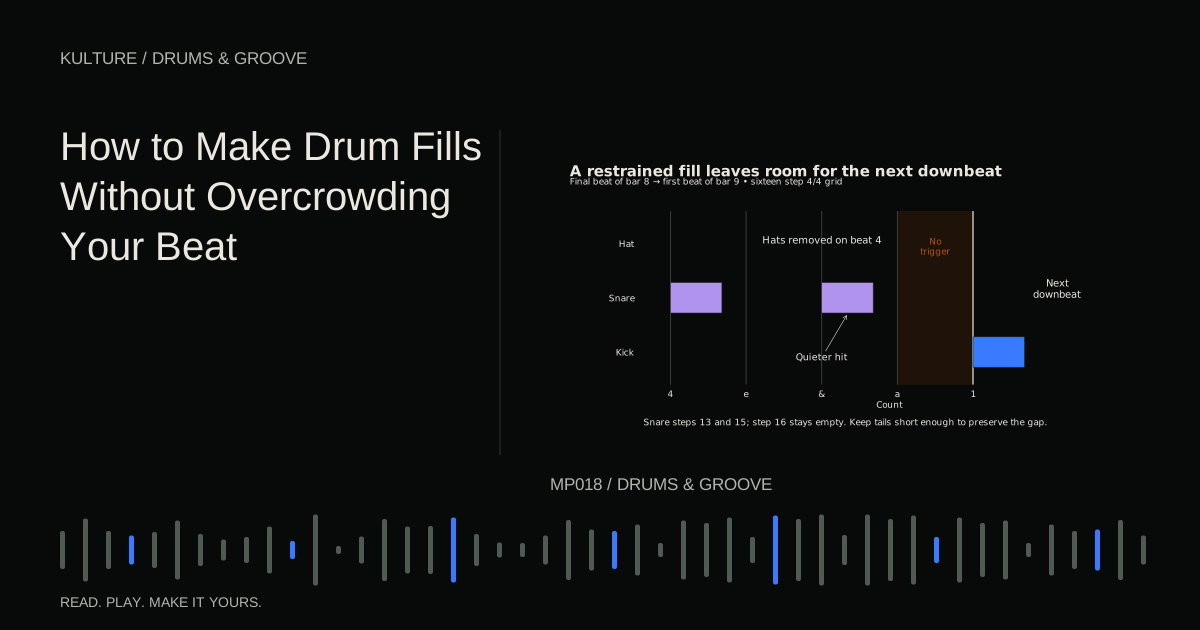 Drums & groove6 min
How to Make Drum Fills Without Overcrowding Your Beat
Read & try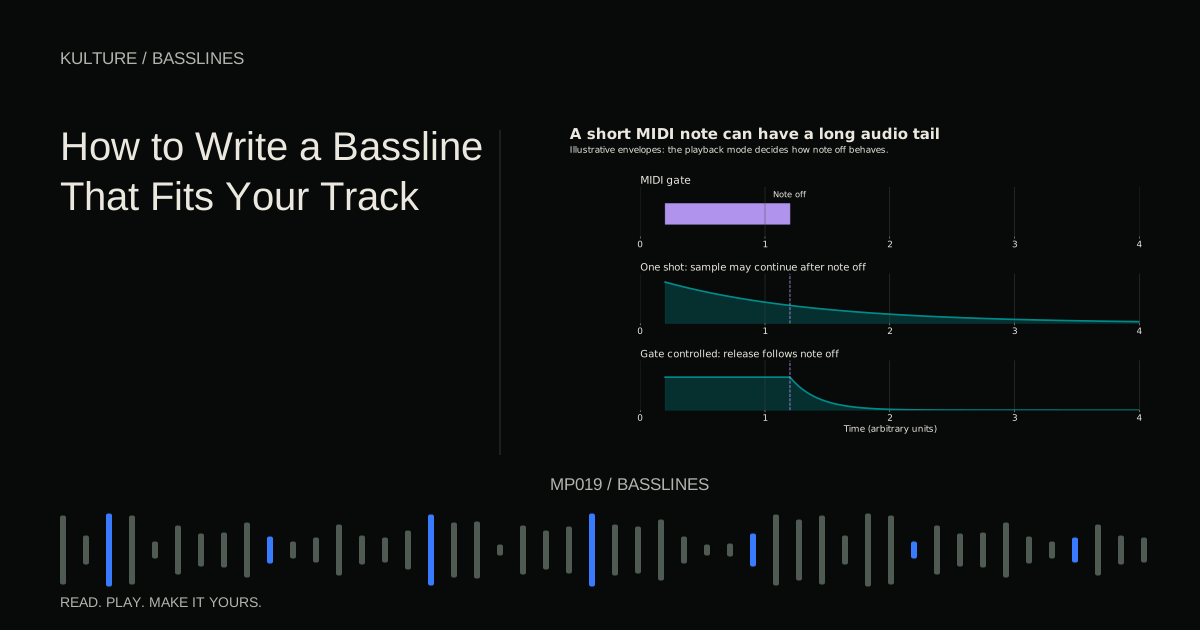 Basslines7 min
How to Write a Bassline That Fits Your Track
Read & try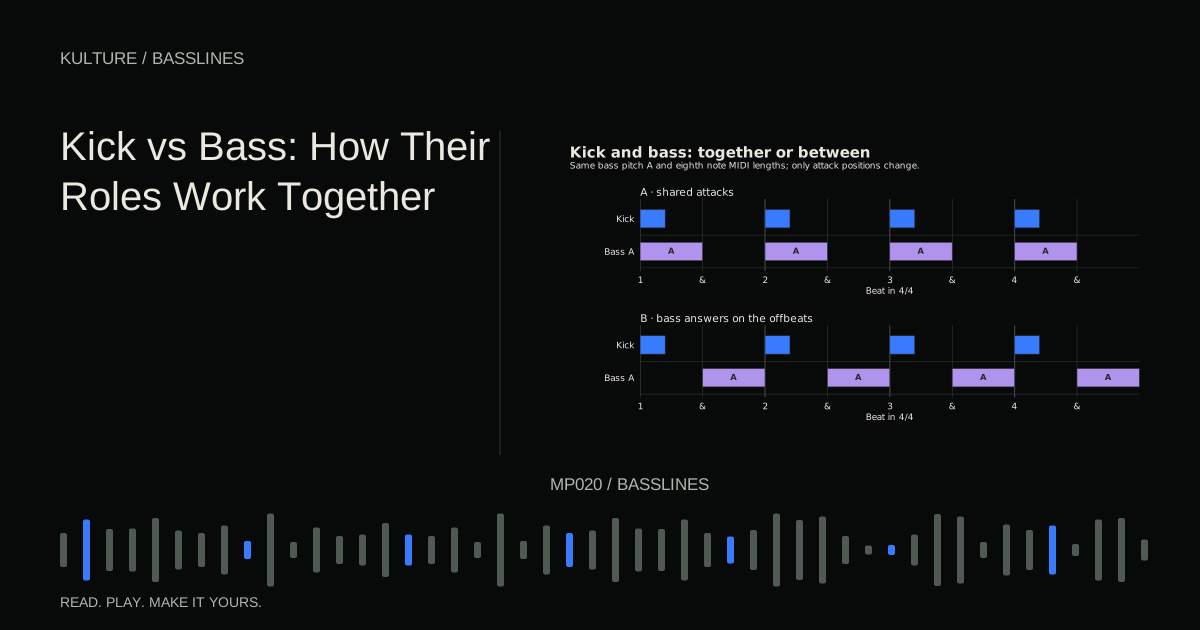 Basslines6 min
Kick vs Bass: How Their Roles Work Together
Read & try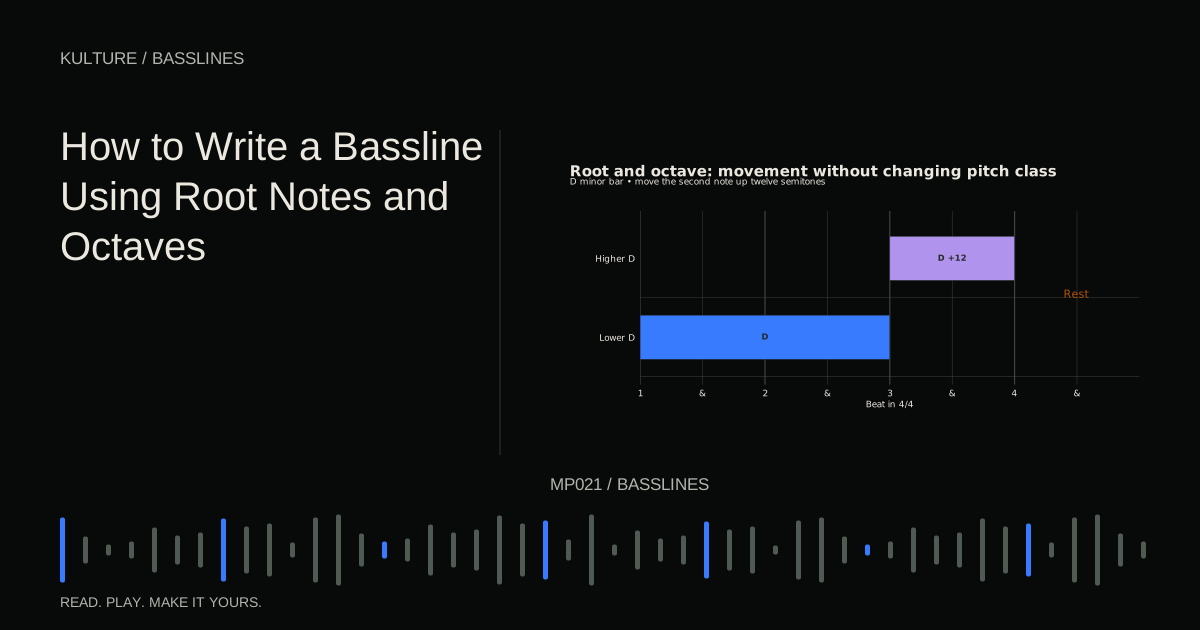 Basslines6 min
How to Write a Bassline Using Root Notes and Octaves
Read & try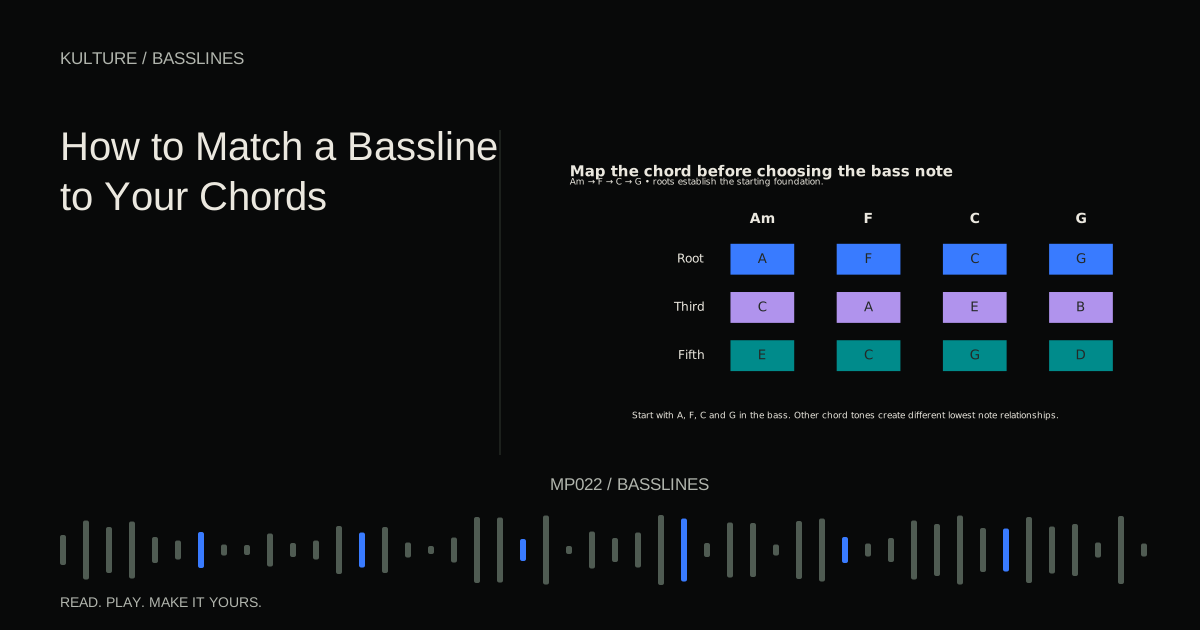 Basslines6 min
How to Match a Bassline to Your Chords
Read & try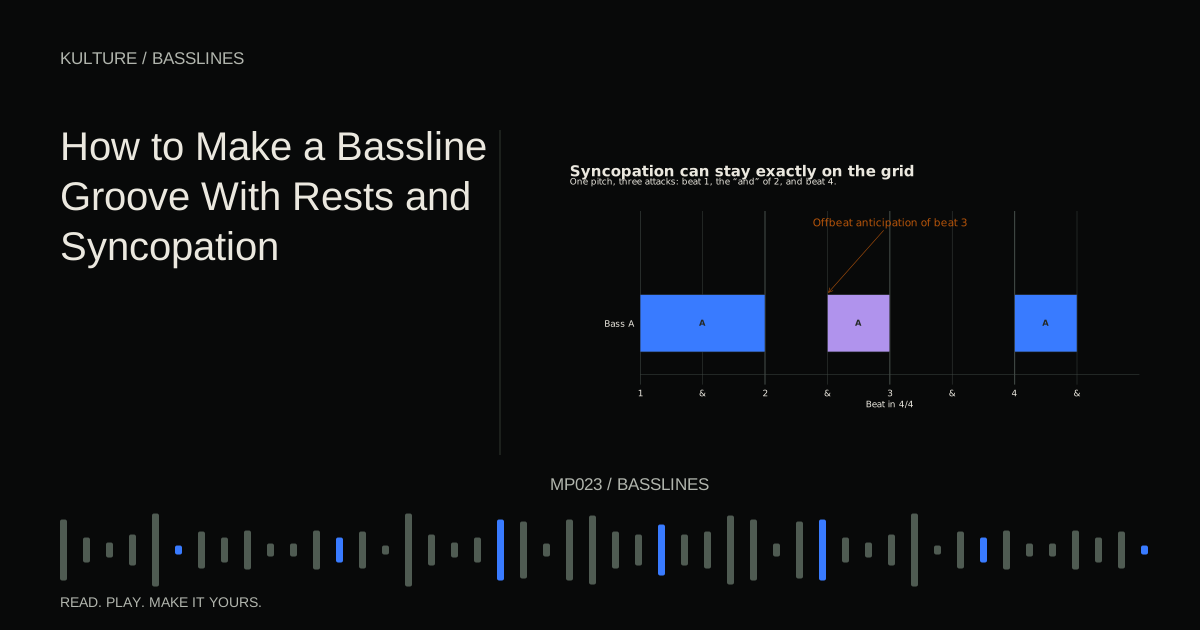 Basslines6 min
How to Make a Bassline Groove With Rests and Syncopation
Read & try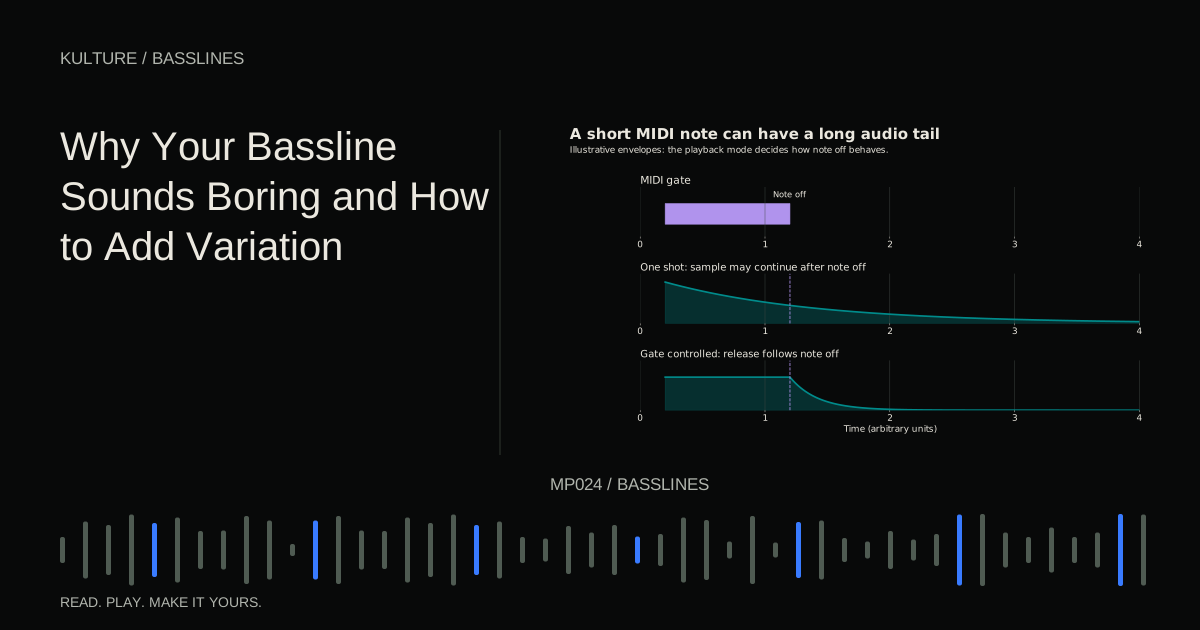 Basslines6 min
Why Your Bassline Sounds Boring and How to Add Variation
Read & try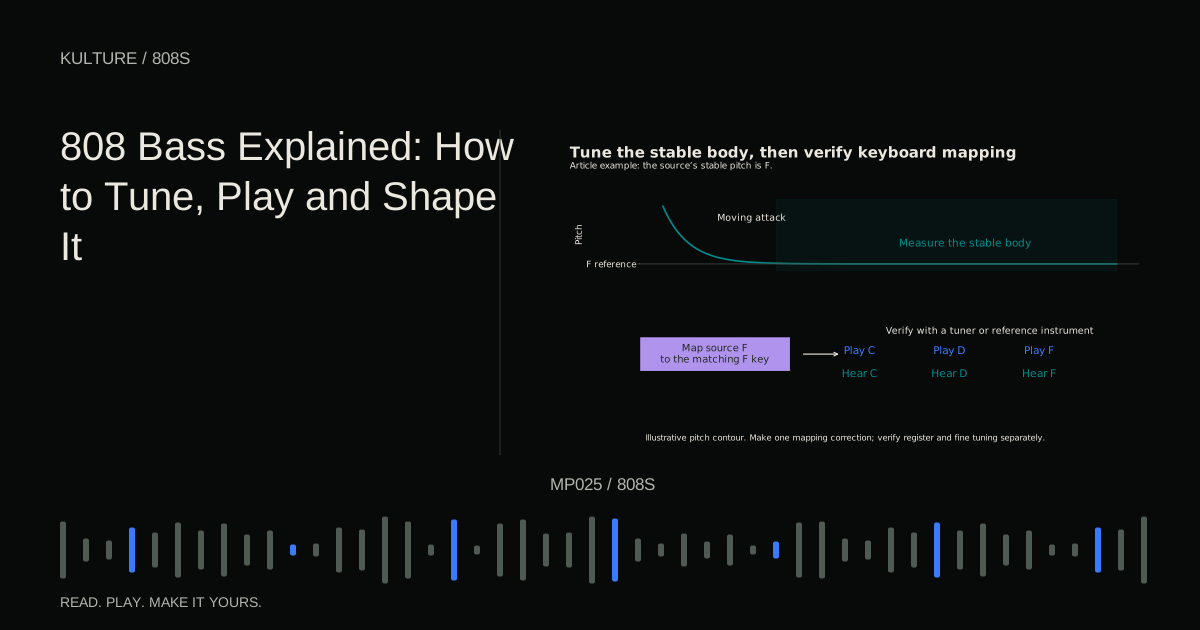 808s8 min
808 Bass Explained: How to Tune, Play and Shape It
Read & try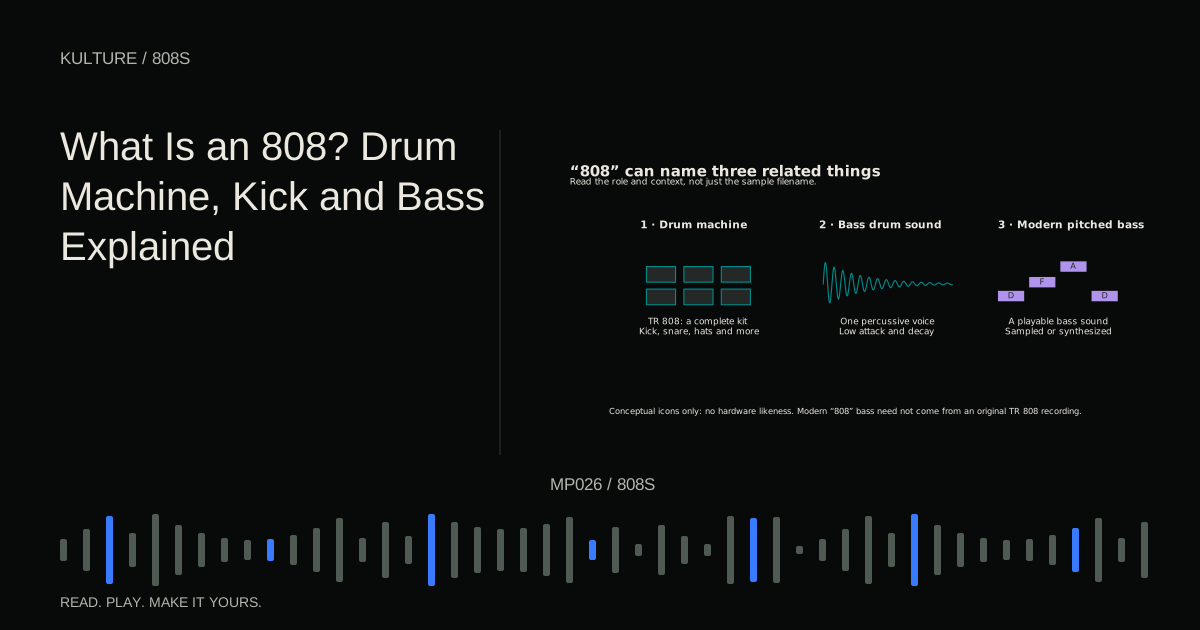 808s6 min
What Is an 808? Drum Machine, Kick and Bass Explained
Read & try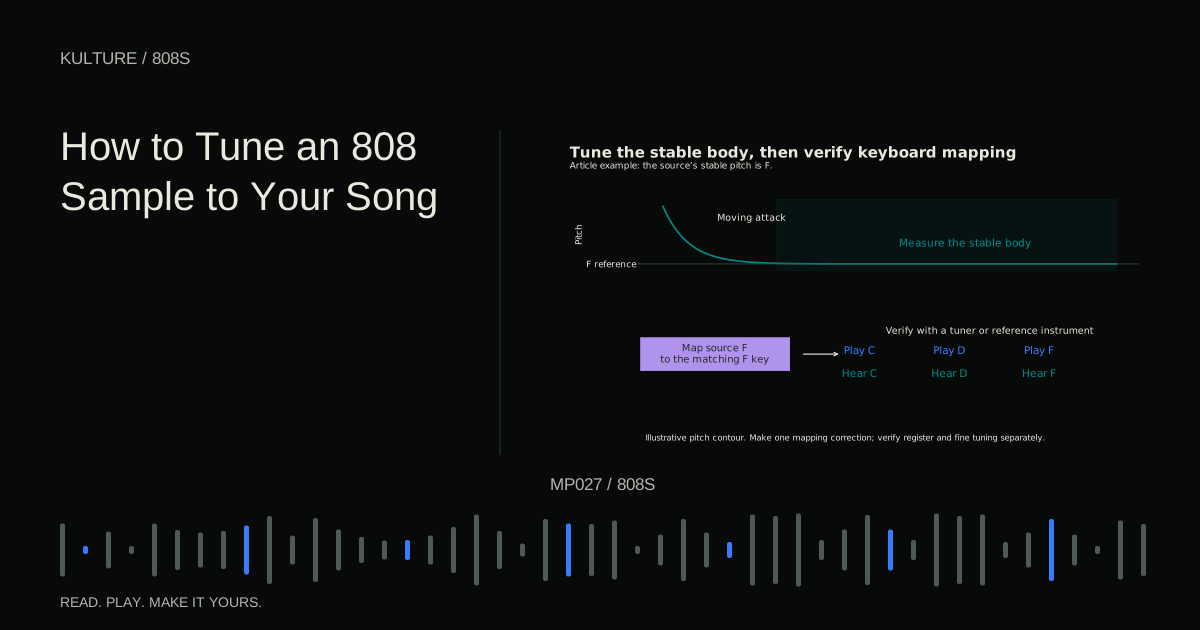 808s6 min
How to Tune an 808 Sample to Your Song
Read & try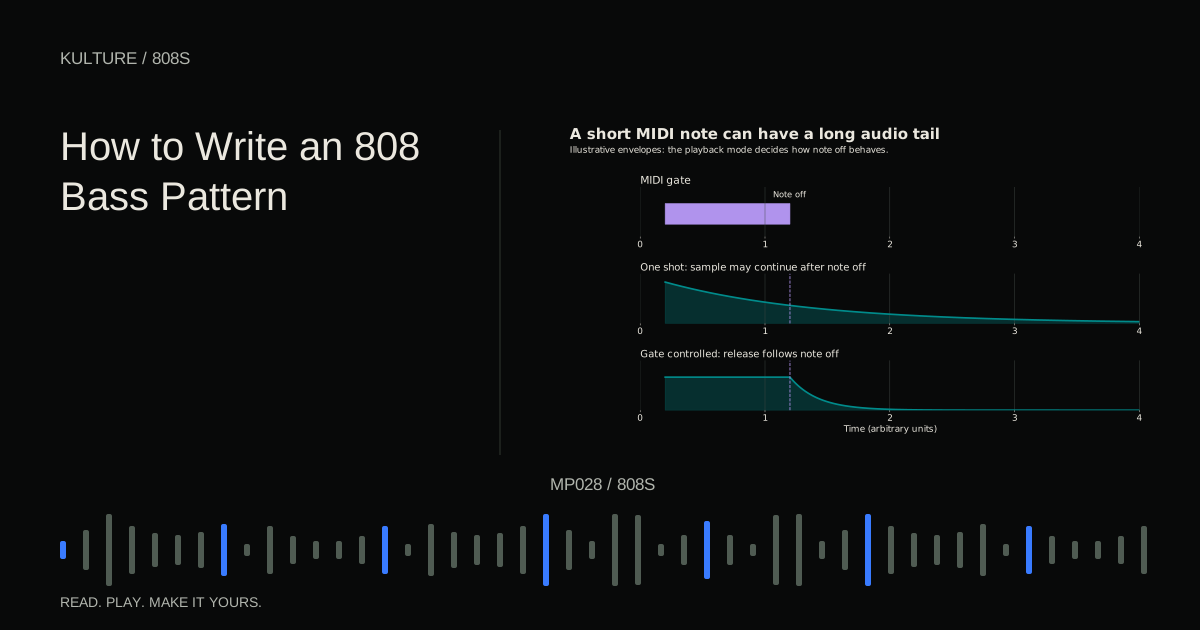 808s6 min
How to Write an 808 Bass Pattern
Read & try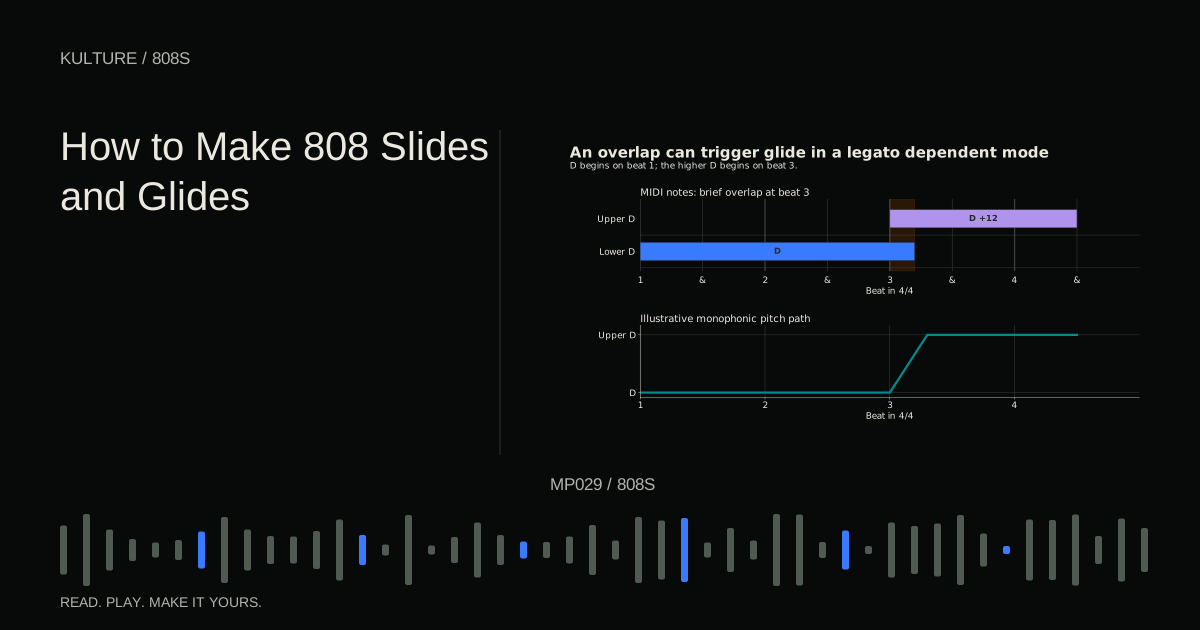 808s6 min
How to Make 808 Slides and Glides
Read & try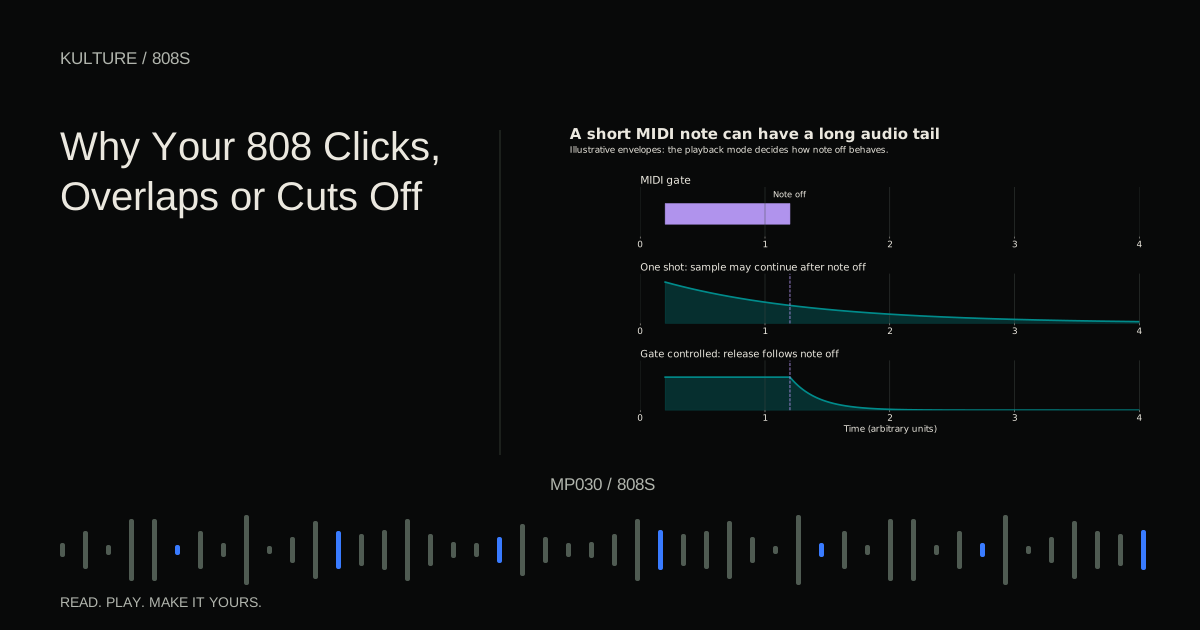 808s6 min
Why Your 808 Clicks, Overlaps or Cuts Off
Read & try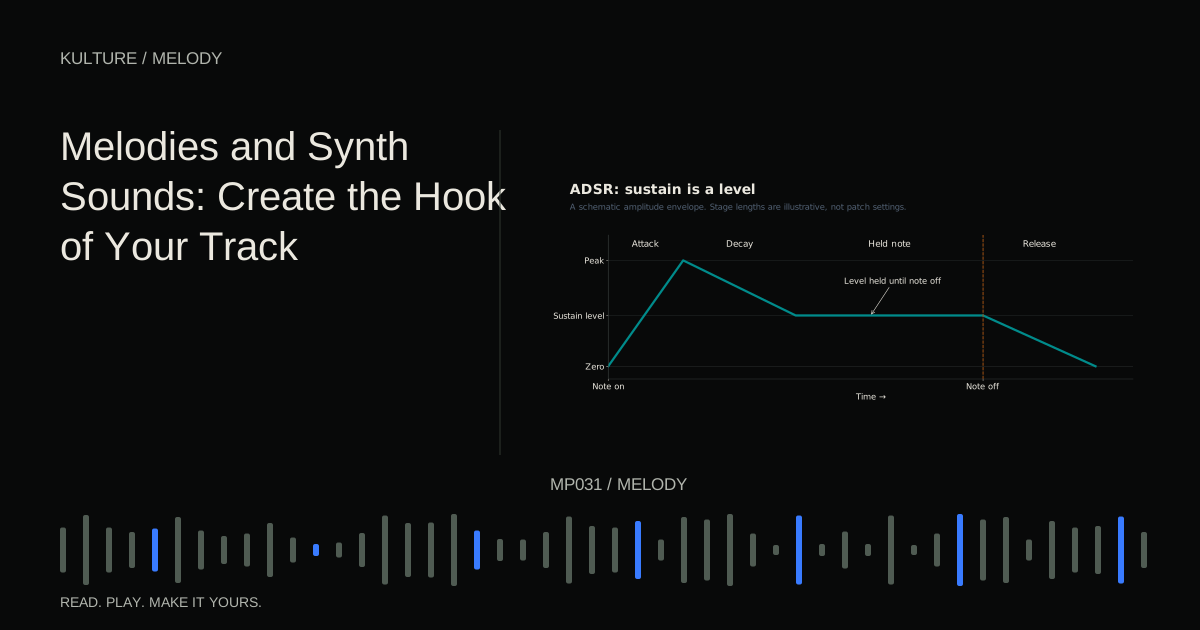 Melody7 min
Melodies and Synth Sounds: Create the Hook of Your Track
Read & try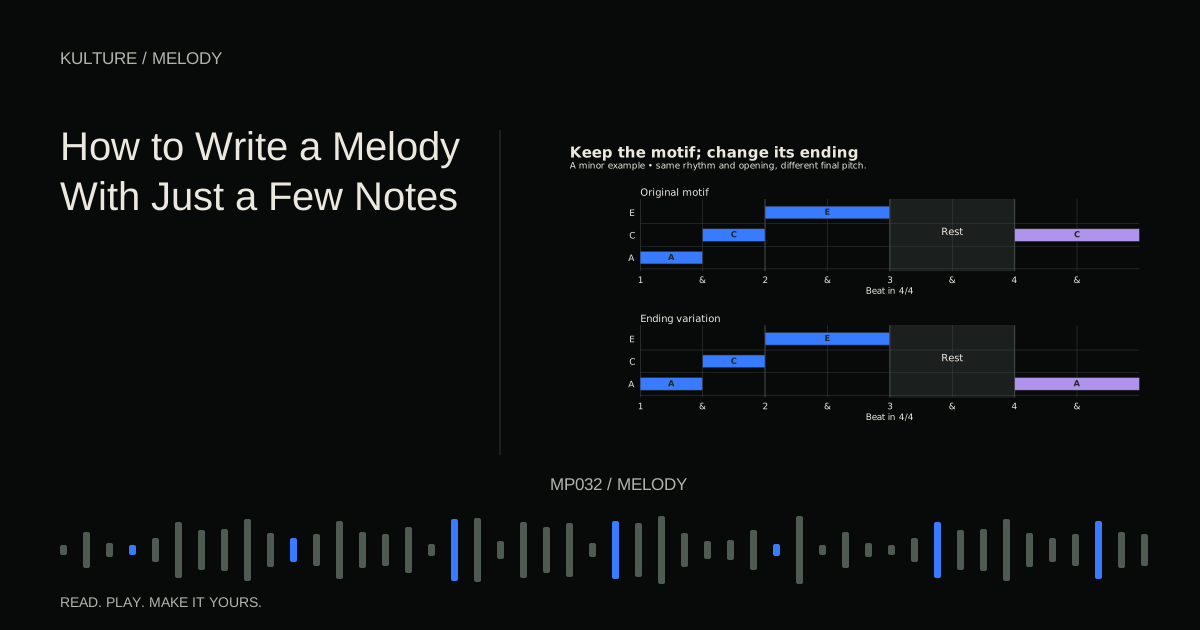 Melody6 min
How to Write a Melody With Just a Few Notes
Read & try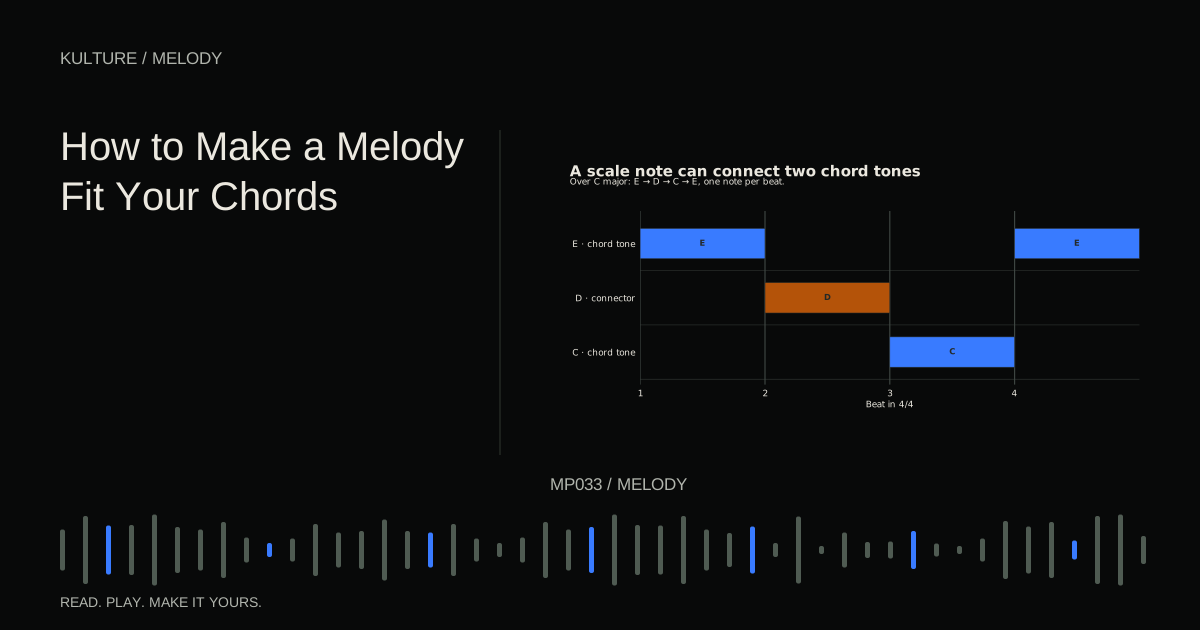 Melody6 min
How to Make a Melody Fit Your Chords
Read & try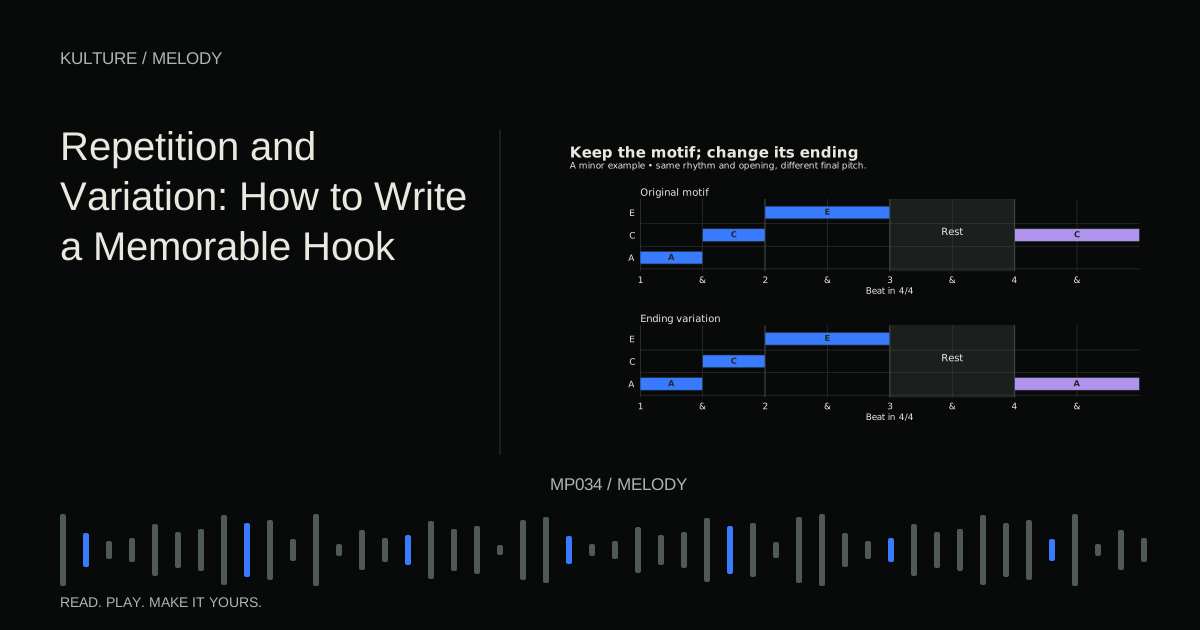 Melody6 min
Repetition and Variation: How to Write a Memorable Hook
Read & try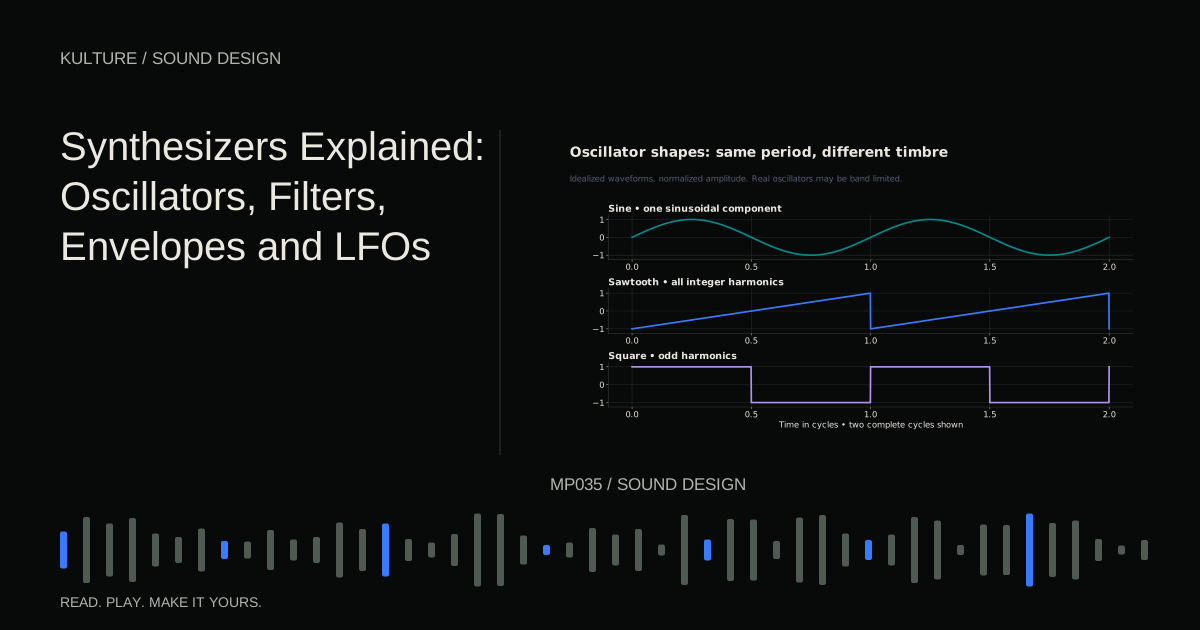 Sound design6 min
Synthesizers Explained: Oscillators, Filters, Envelopes and LFOs
Read & try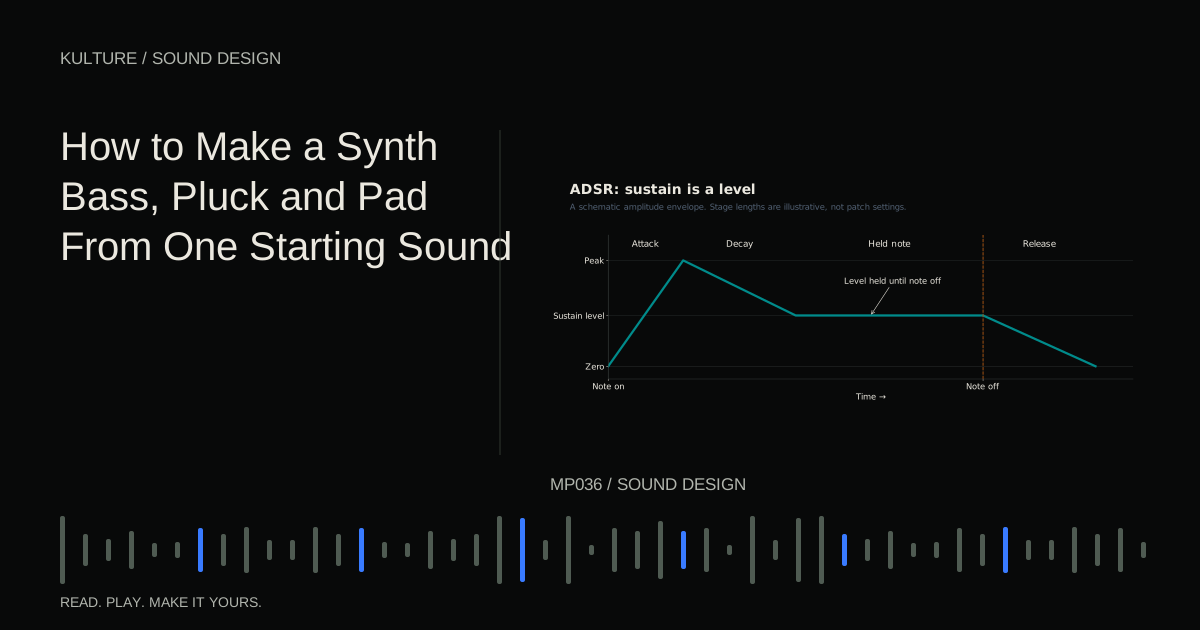 Sound design6 min
How to Make a Synth Bass, Pluck and Pad From One Starting Sound
Read & try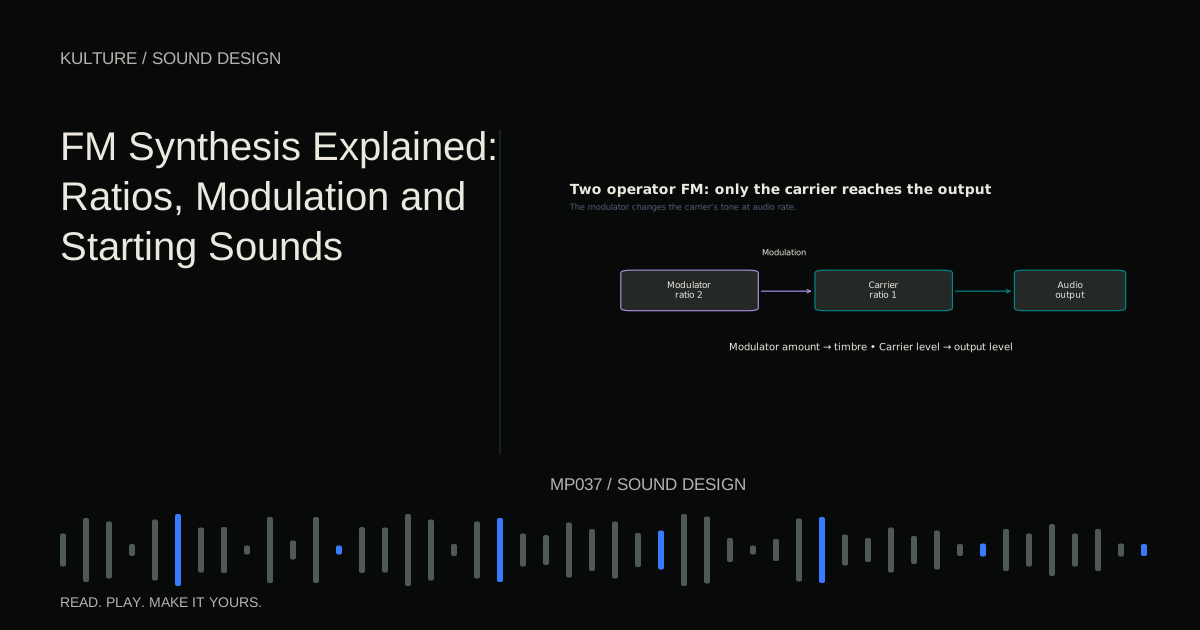 Sound design6 min
FM Synthesis Explained: Ratios, Modulation and Starting Sounds
Read & try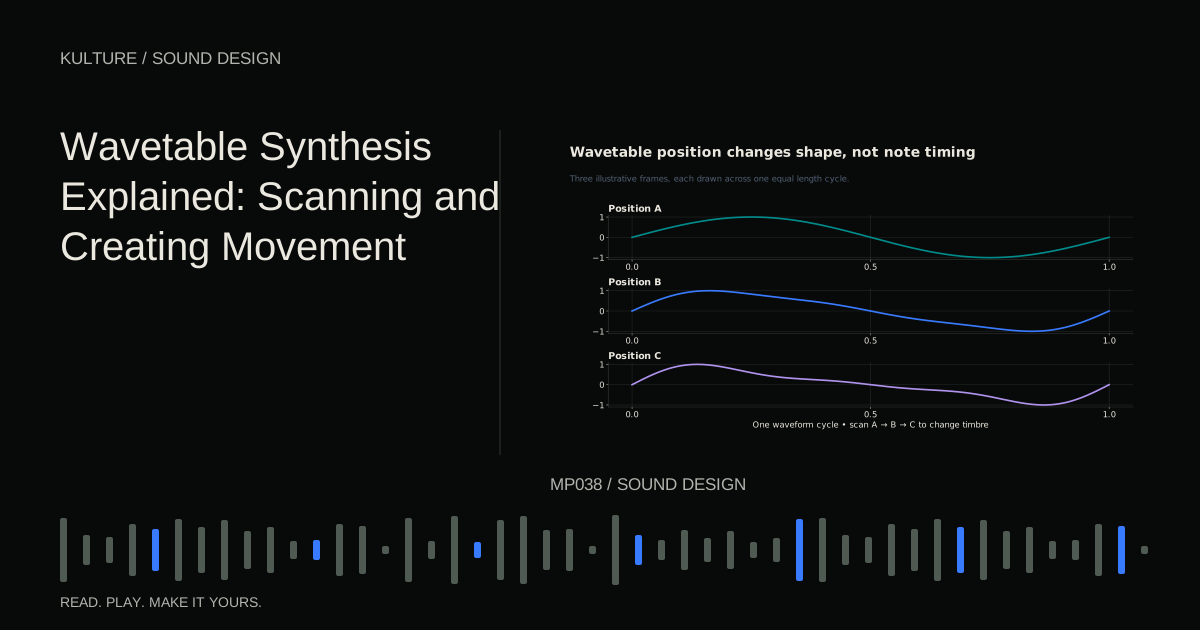 Sound design5 min
Wavetable Synthesis Explained: Scanning and Creating Movement
Read & try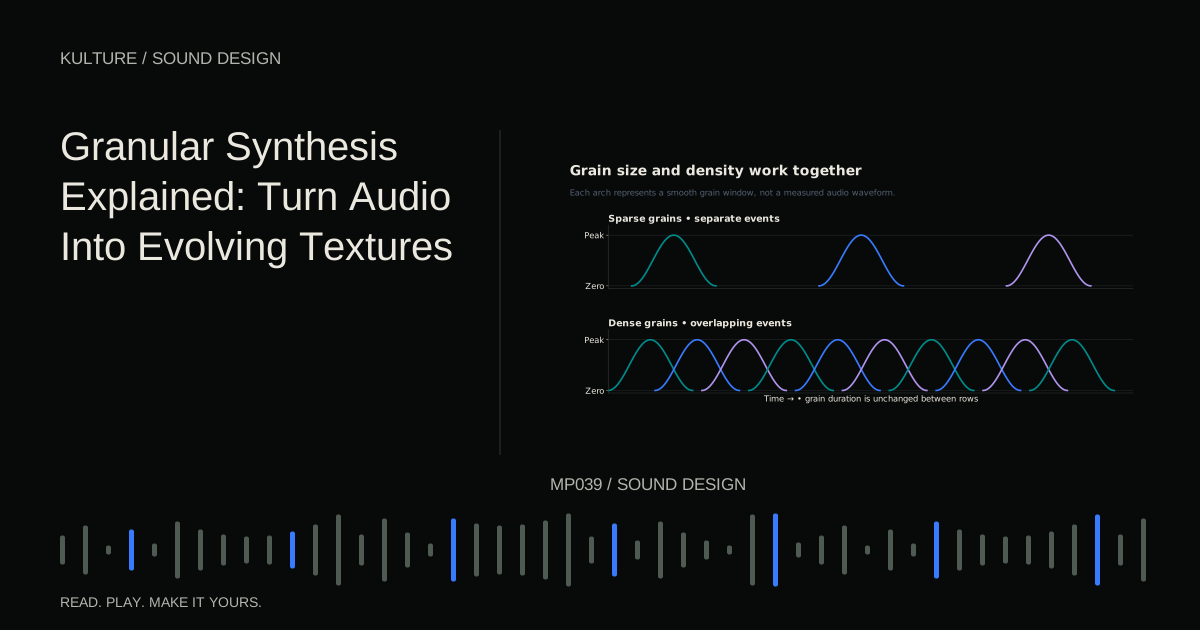 Sound design5 min
Granular Synthesis Explained: Turn Audio Into Evolving Textures
Read & try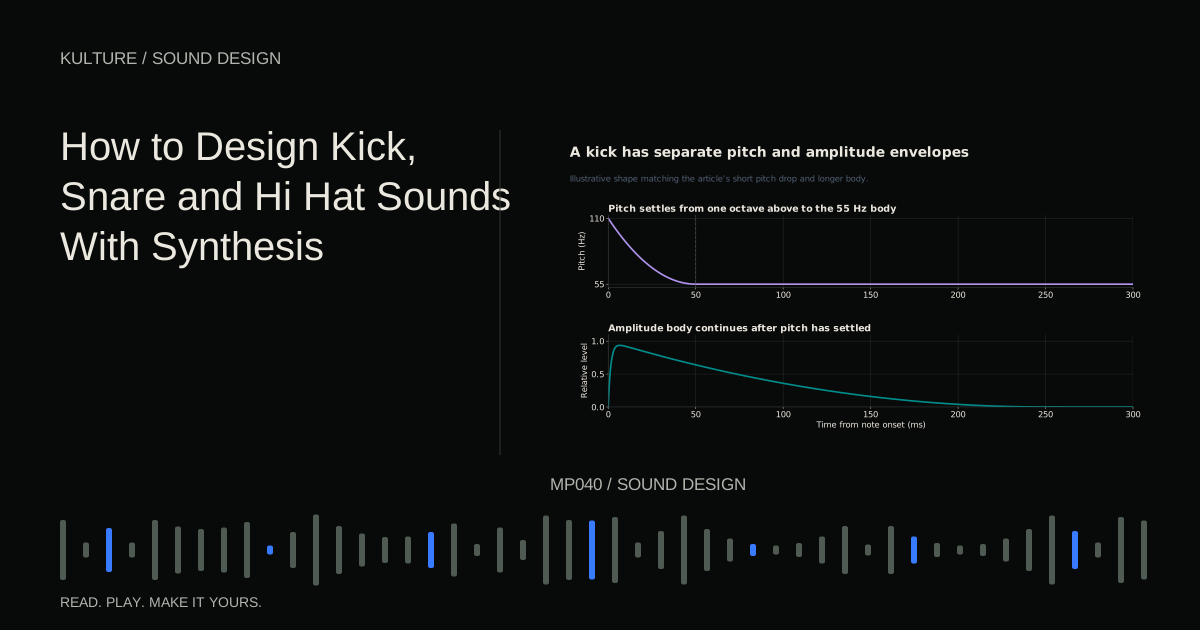 Sound design5 min
How to Design Kick, Snare and Hi Hat Sounds With Synthesis
Read & try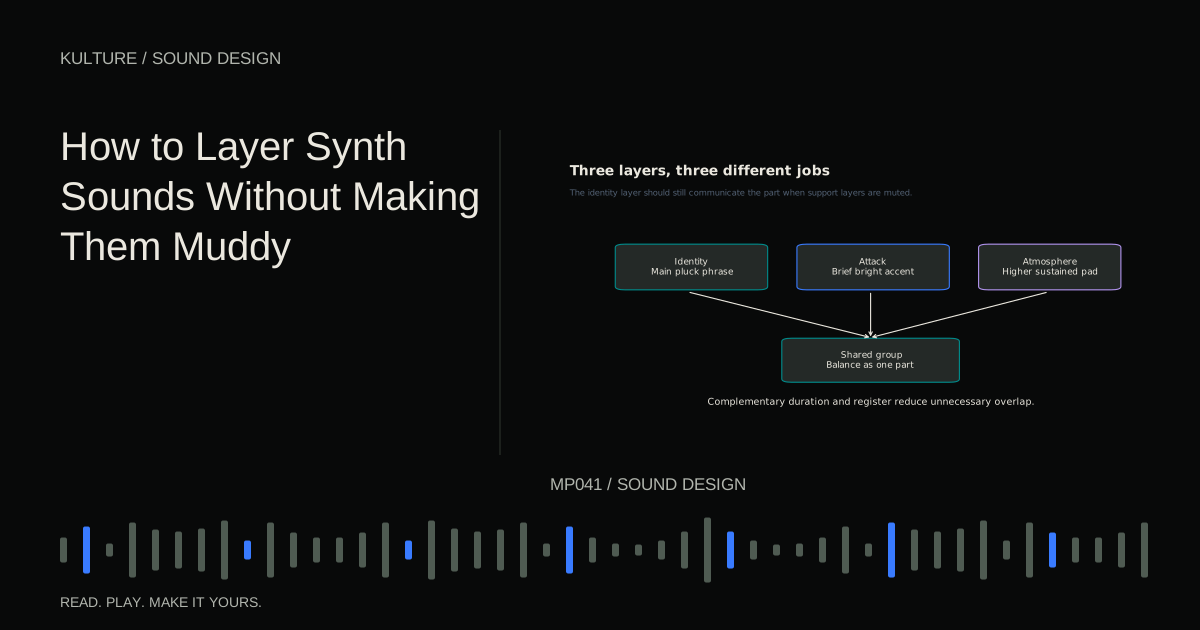 Sound design5 min
How to Layer Synth Sounds Without Making Them Muddy
Read & try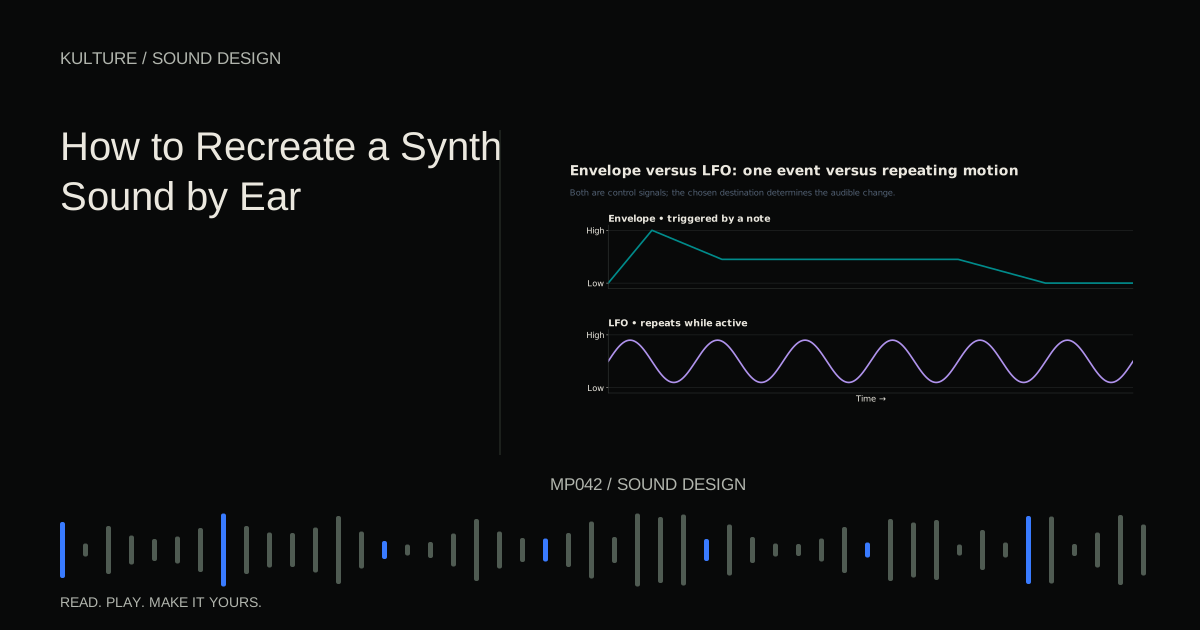 Sound design5 min
How to Recreate a Synth Sound by Ear
Read & try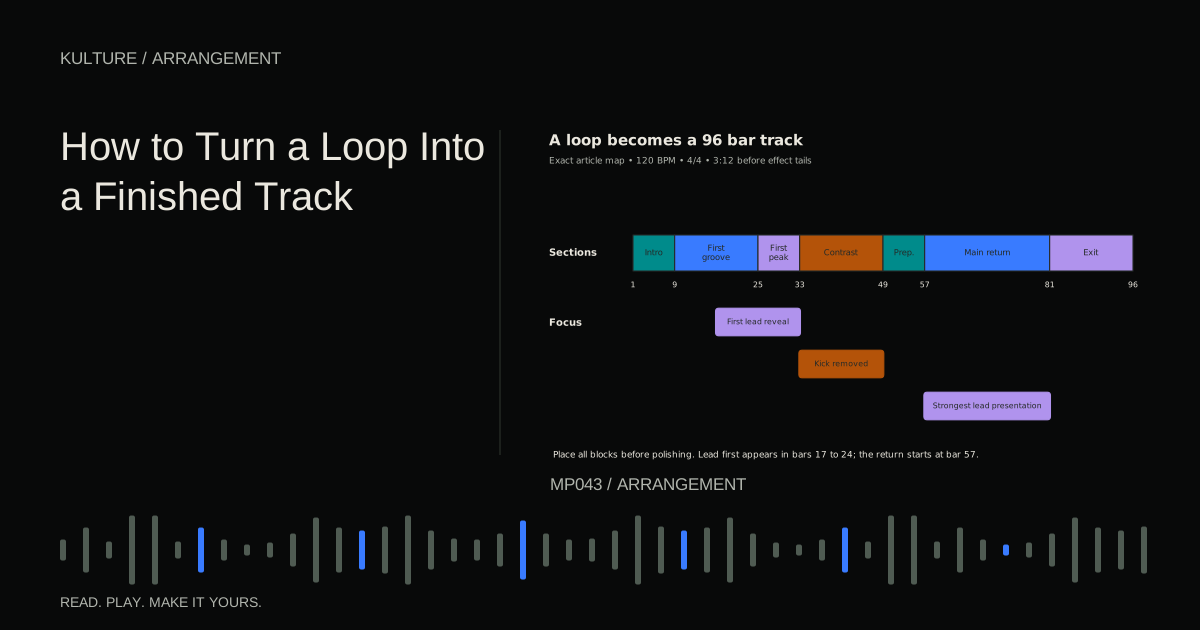 Arrangement5 min
How to Turn a Loop Into a Finished Track
Read & try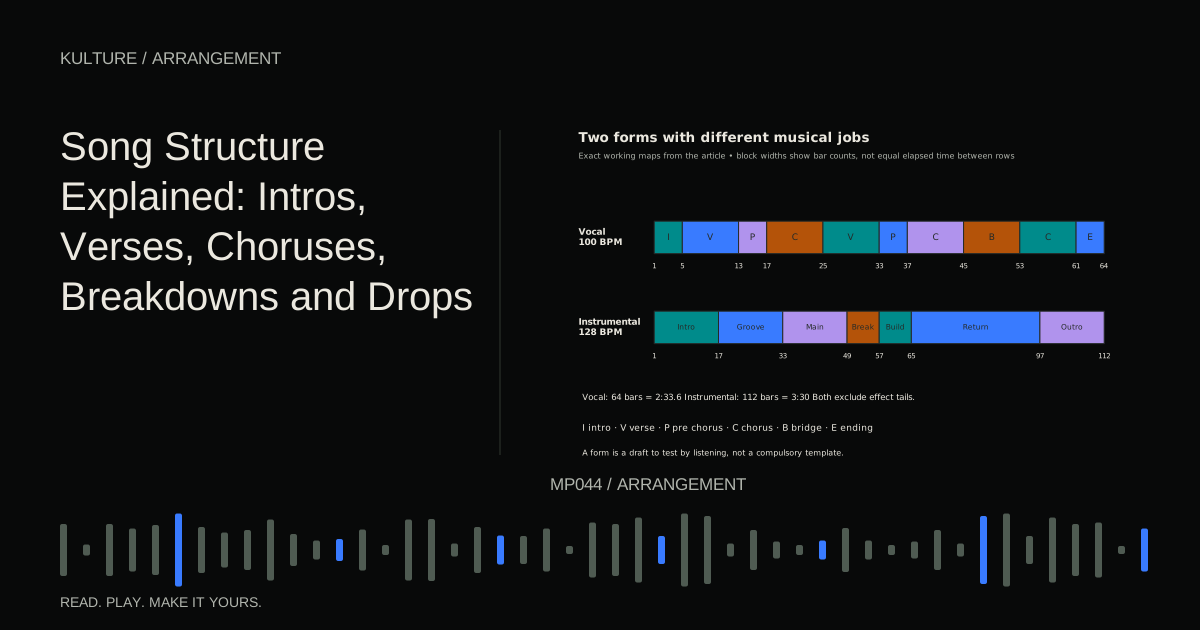 Arrangement6 min
Song Structure Explained: Intros, Verses, Choruses, Breakdowns and Drops
Read & try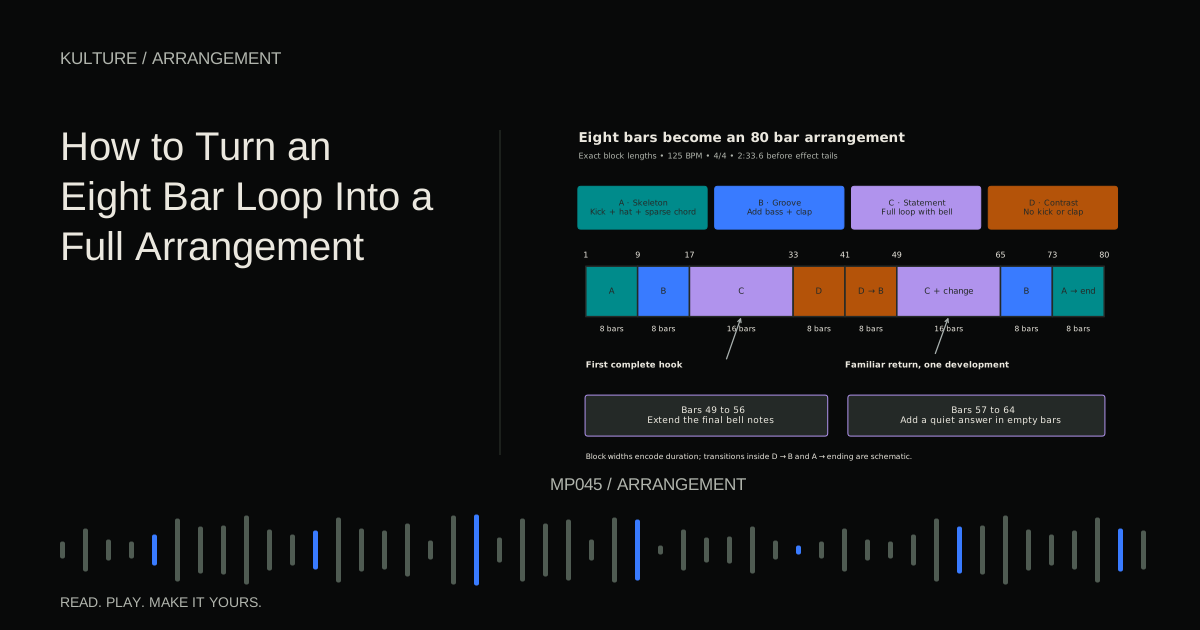 Arrangement6 min
How to Turn an Eight Bar Loop Into a Full Arrangement
Read & try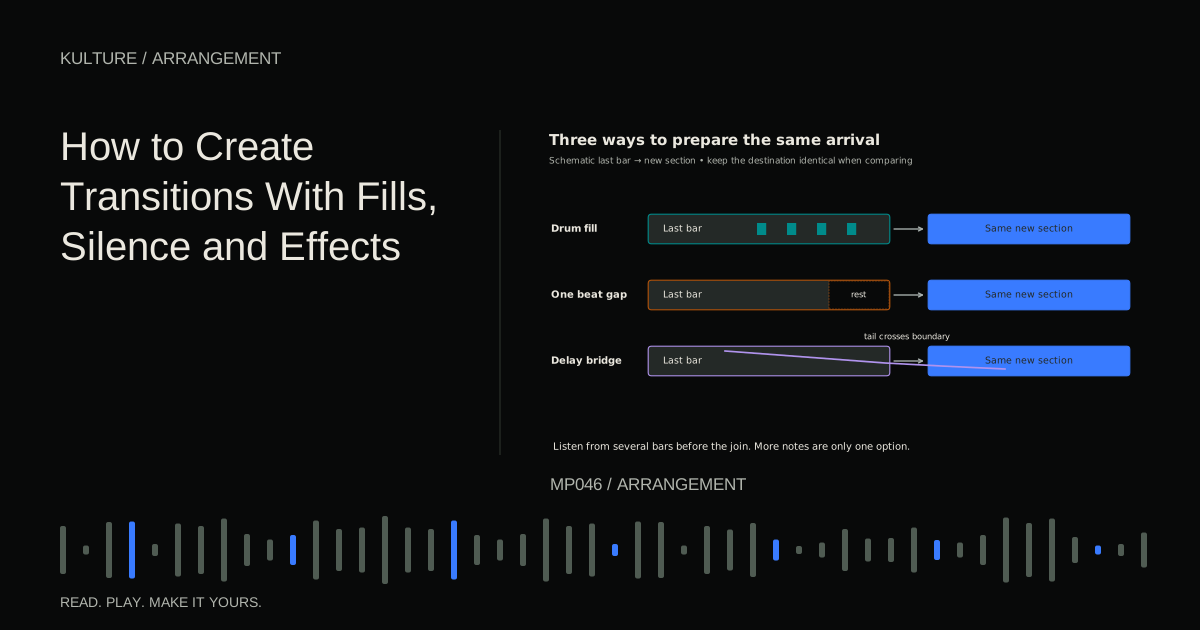 Arrangement5 min
How to Create Transitions With Fills, Silence and Effects
Read & try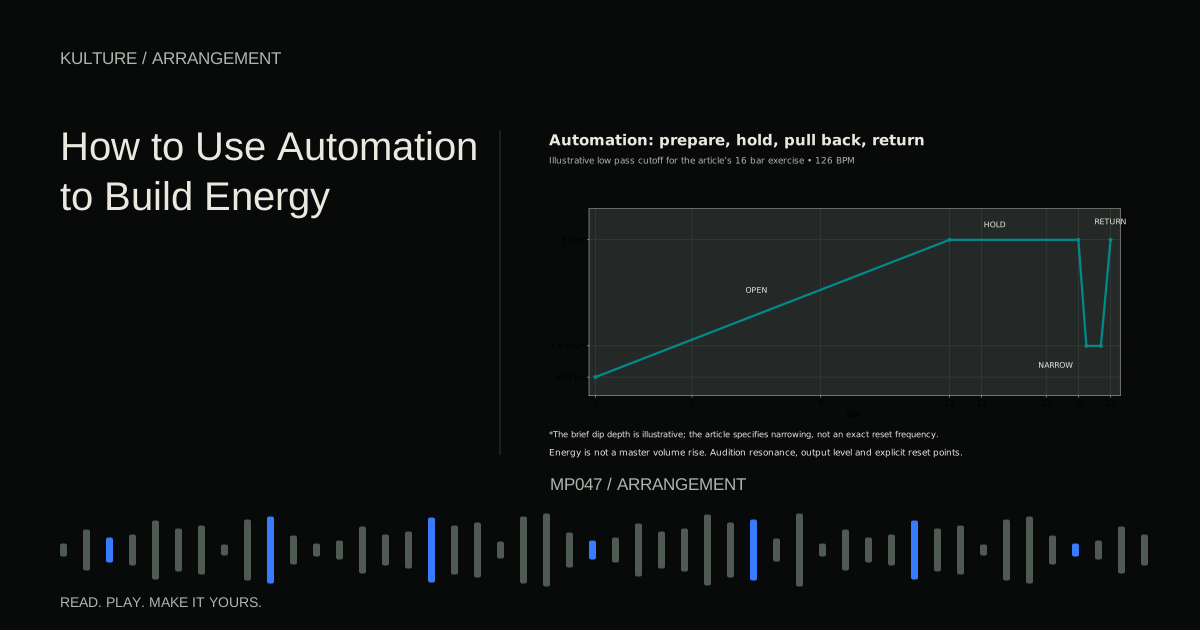 Arrangement5 min
How to Use Automation to Build Energy
Read & try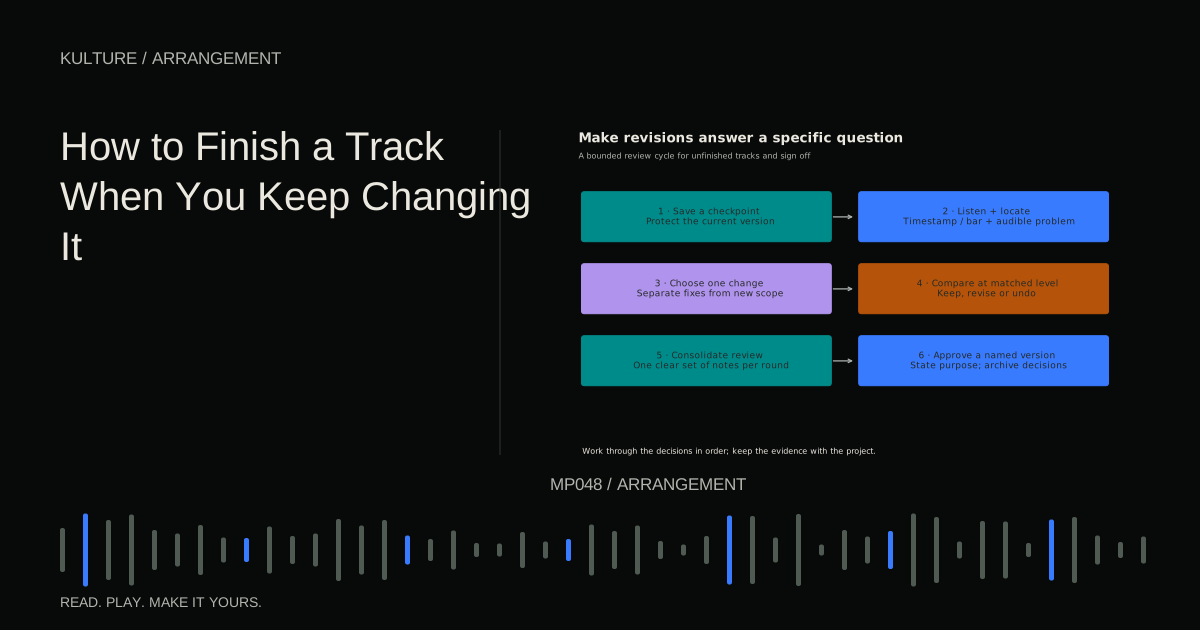 Arrangement5 min
How to Finish a Track When You Keep Changing It
Read & try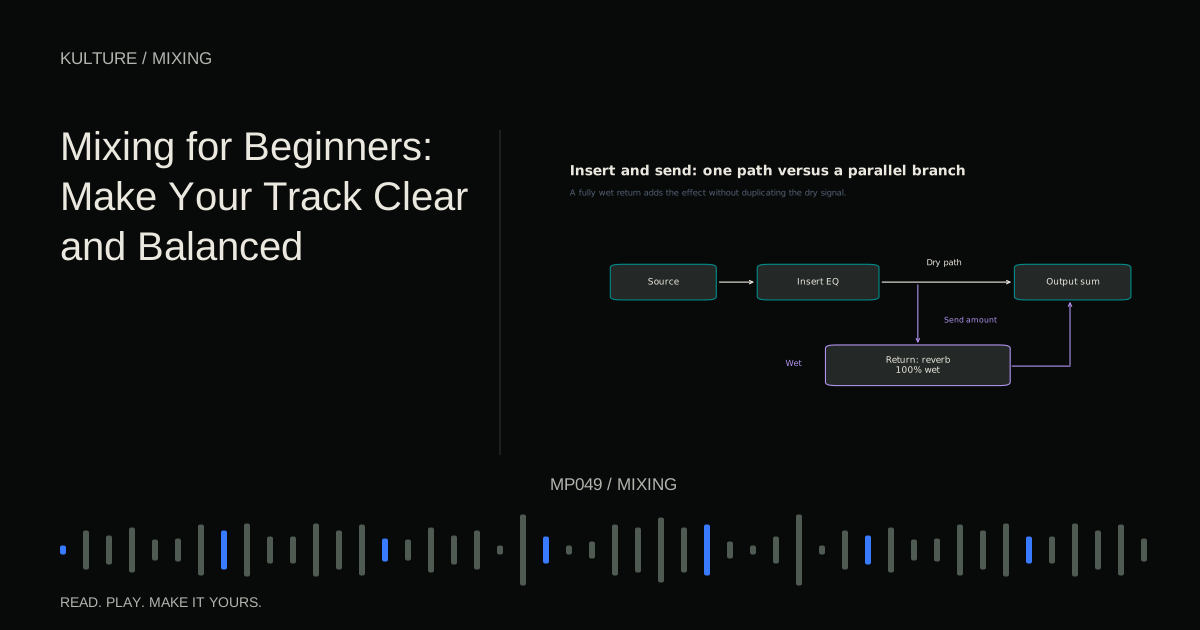 Mixing7 min
Mixing for Beginners: Make Your Track Clear and Balanced
Read & try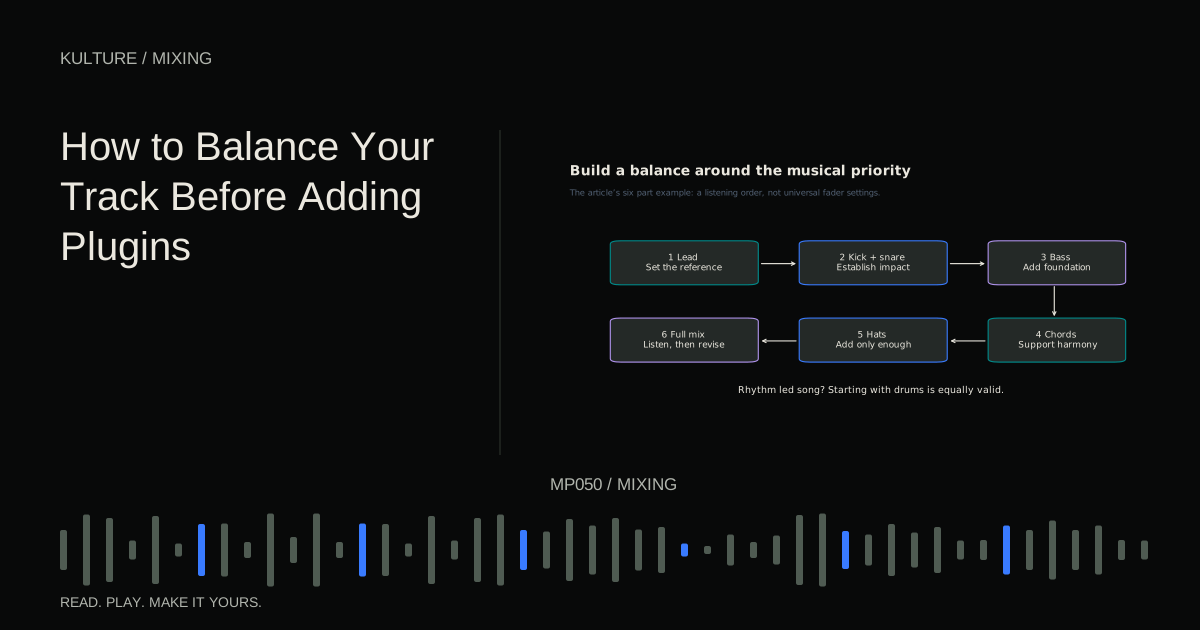 Mixing5 min
How to Balance Your Track Before Adding Plugins
Read & try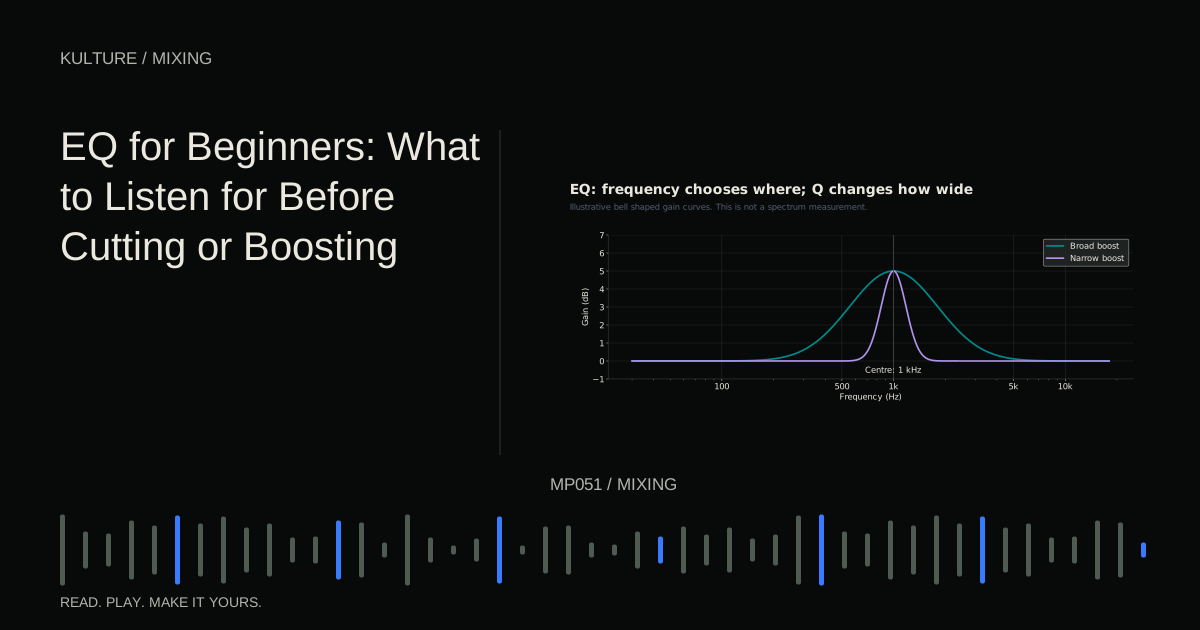 Mixing5 min
EQ for Beginners: What to Listen for Before Cutting or Boosting
Read & try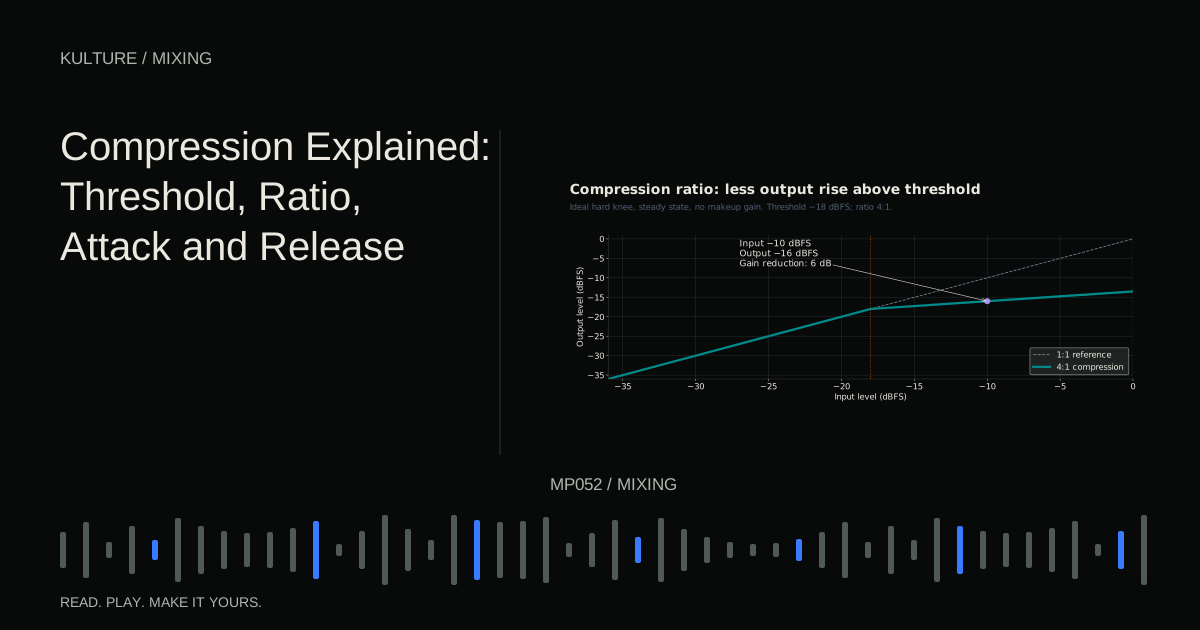 Mixing5 min
Compression Explained: Threshold, Ratio, Attack and Release
Read & try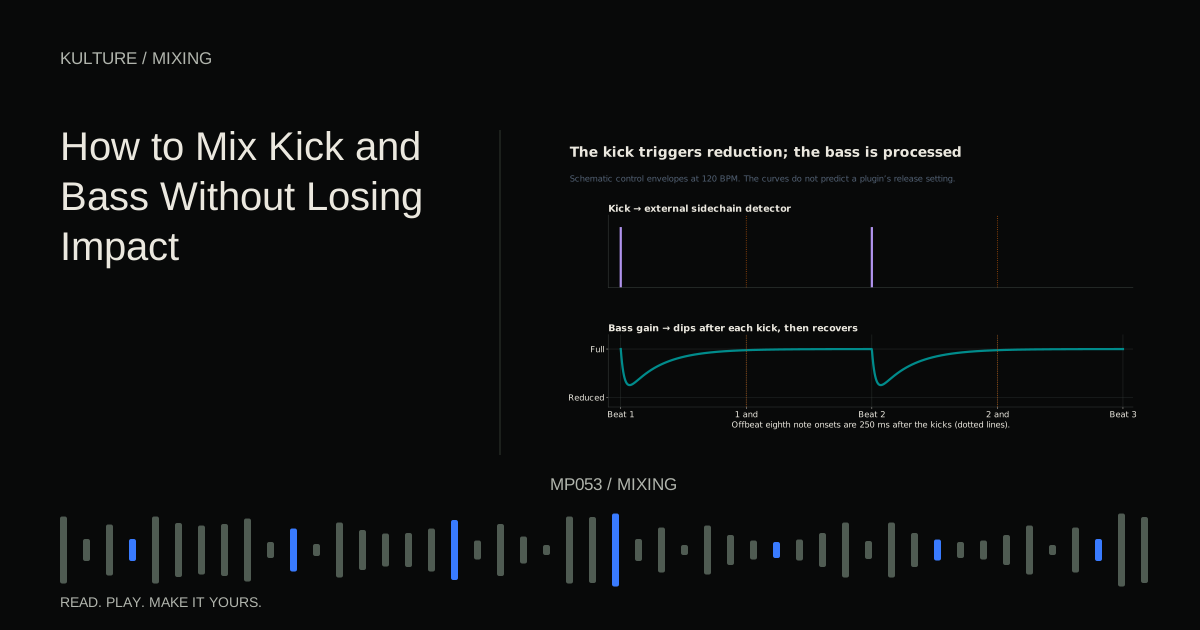 Mixing5 min
How to Mix Kick and Bass Without Losing Impact
Read & try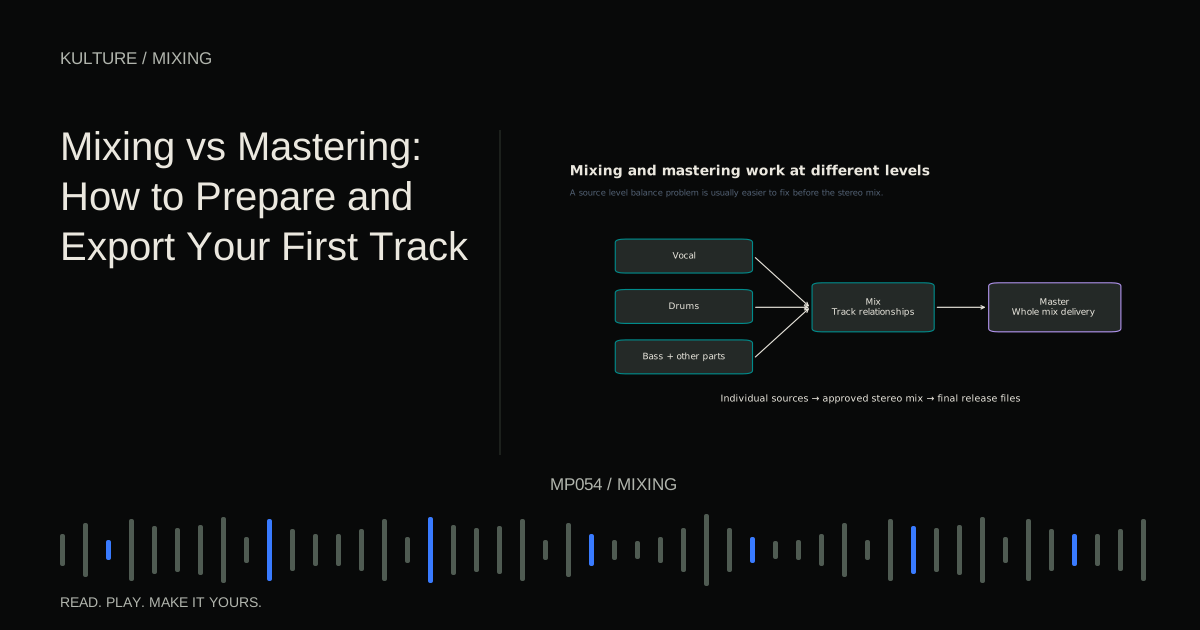 Mixing5 min
Mixing vs Mastering: How to Prepare and Export Your First Track
Read & try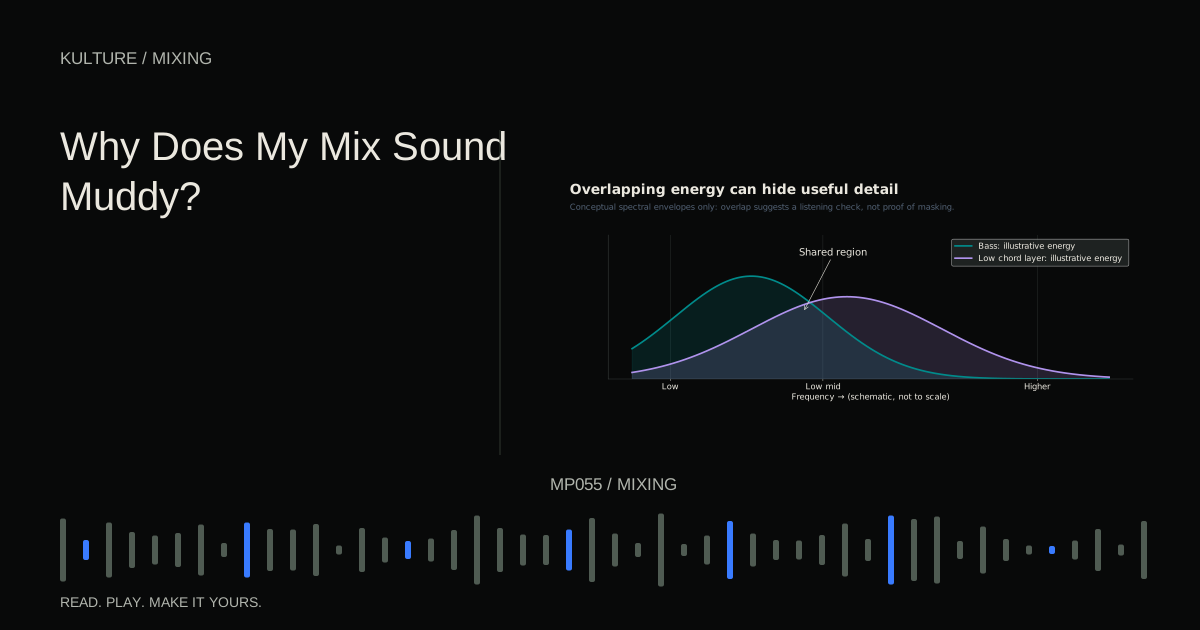 Mixing5 min
Why Does My Mix Sound Muddy?
Read & try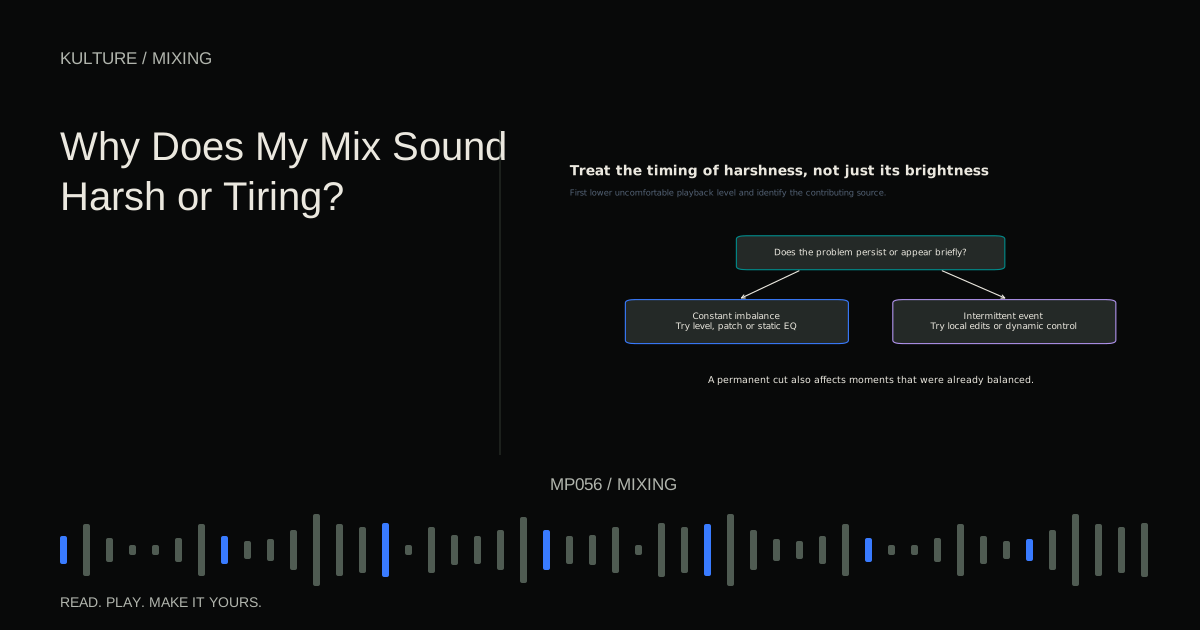 Mixing5 min
Why Does My Mix Sound Harsh or Tiring?
Read & try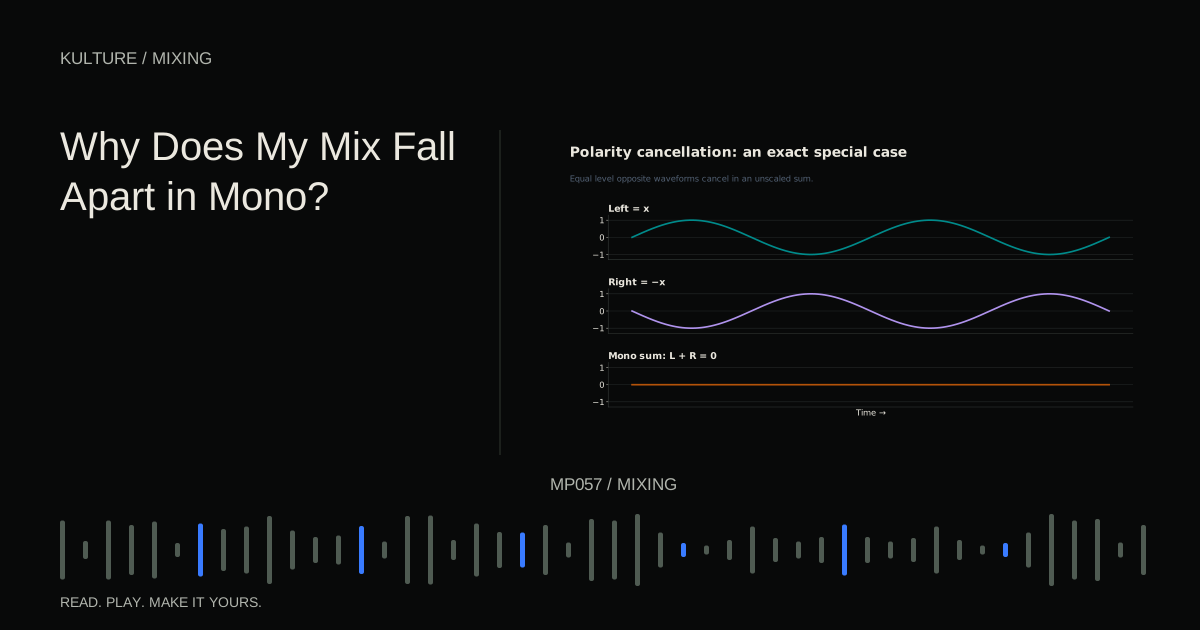 Mixing5 min
Why Does My Mix Fall Apart in Mono?
Read & try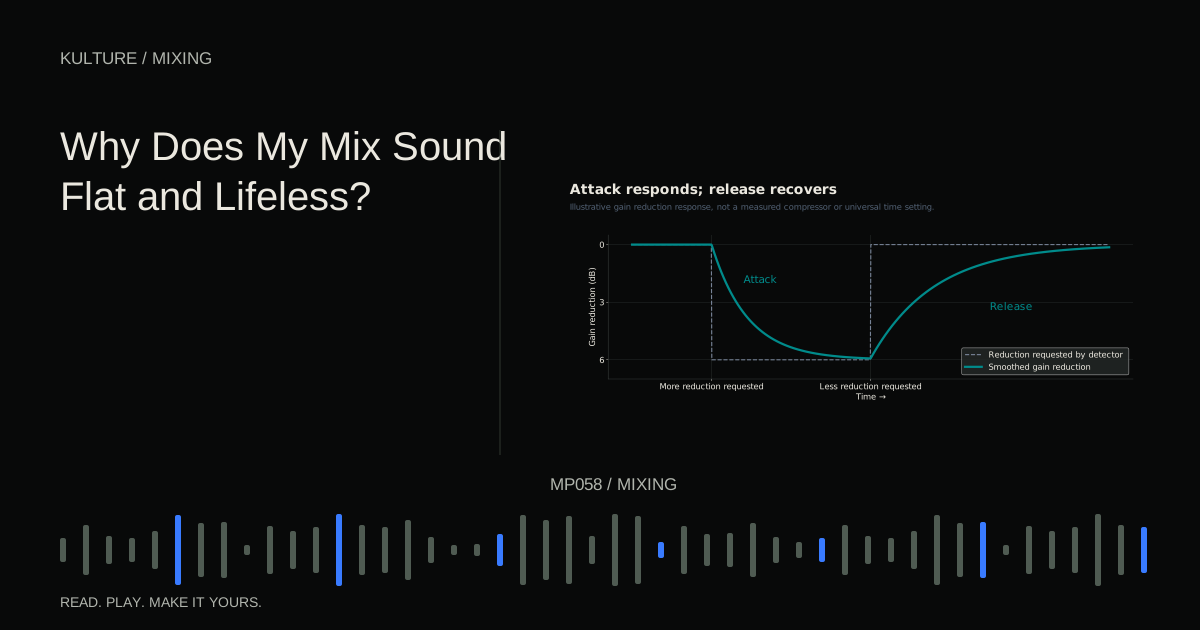 Mixing5 min
Why Does My Mix Sound Flat and Lifeless?
Read & try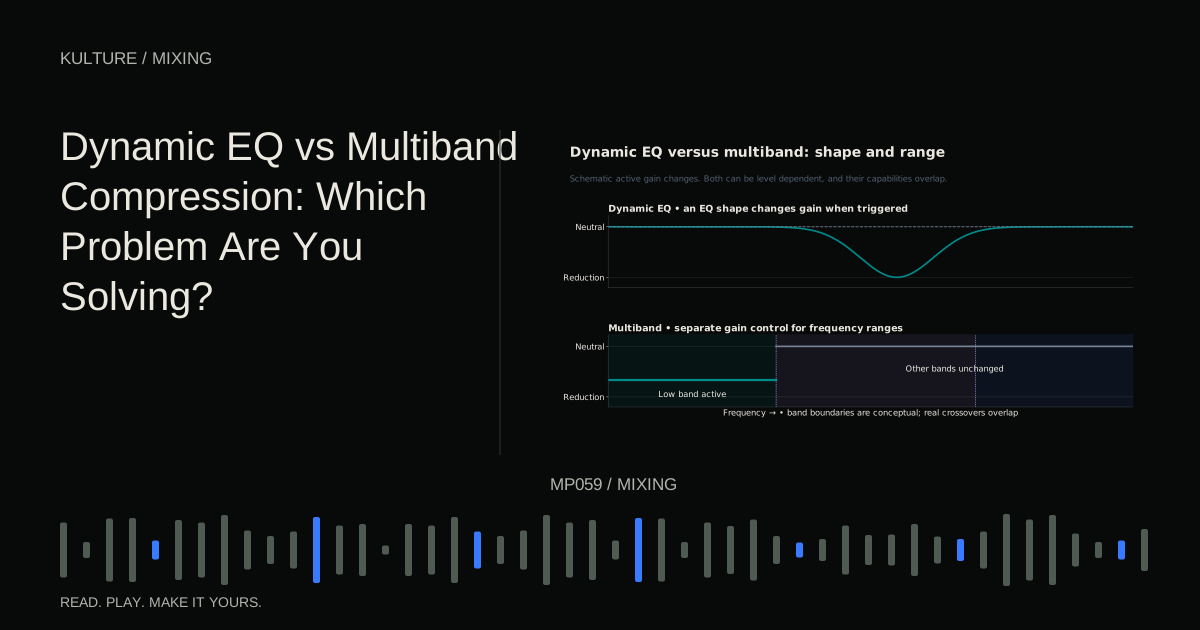 Mixing5 min
Dynamic EQ vs Multiband Compression: Which Problem Are You Solving?
Read & try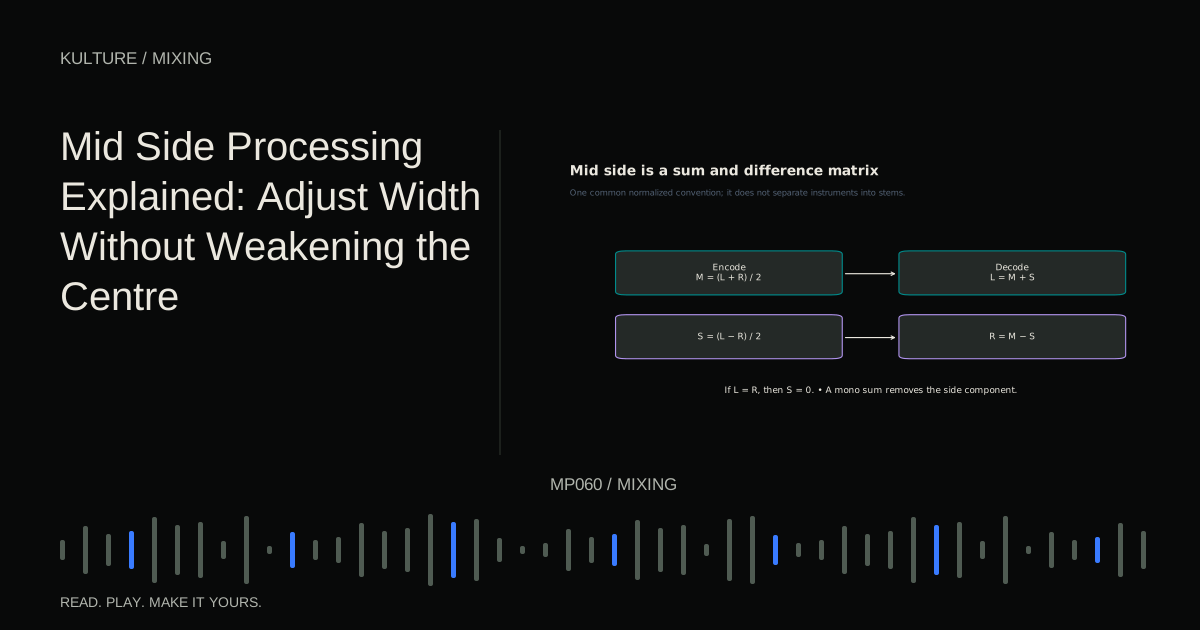 Mixing5 min
Mid Side Processing Explained: Adjust Width Without Weakening the Centre
Read & try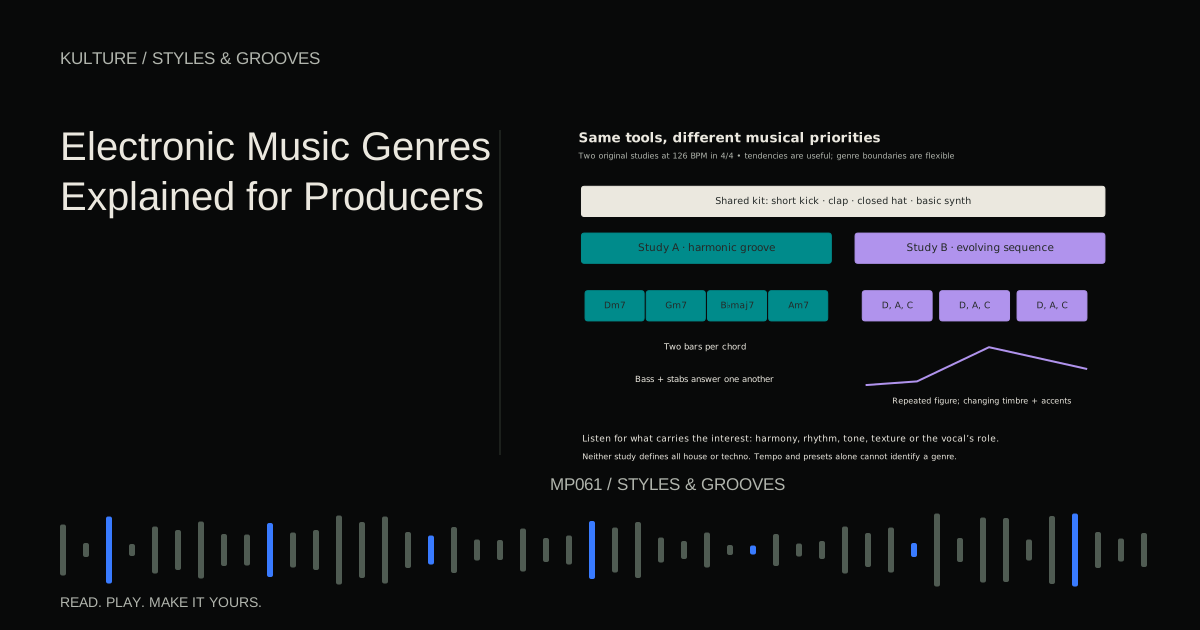 Styles & grooves5 min
Electronic Music Genres Explained for Producers
Read & try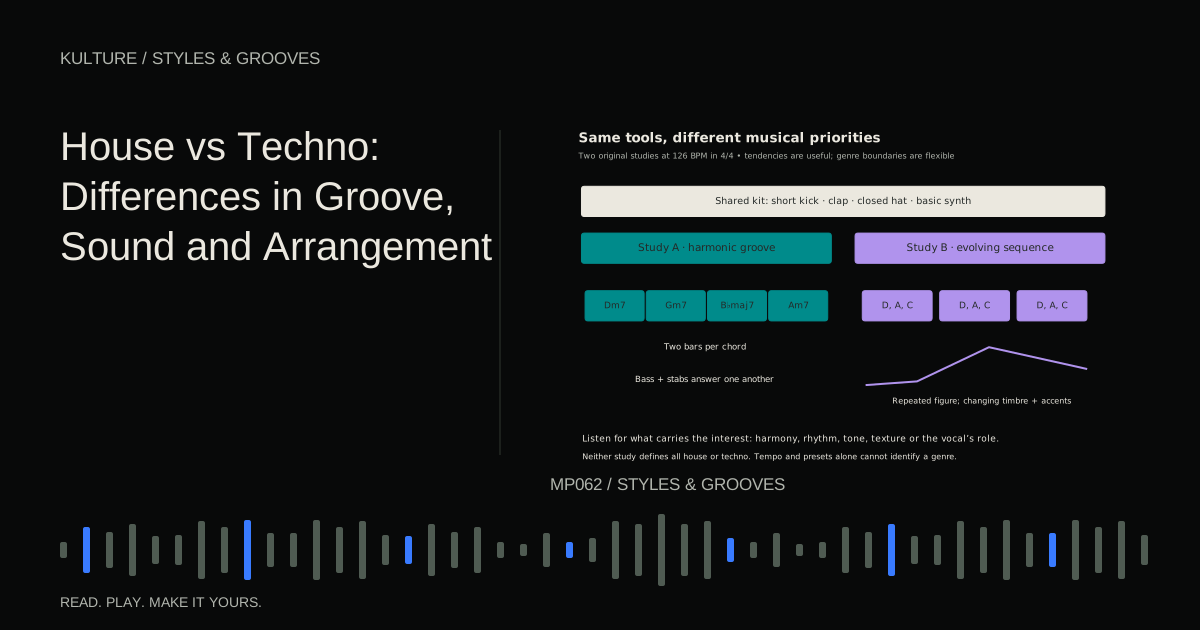 Styles & grooves5 min
House vs Techno: Differences in Groove, Sound and Arrangement
Read & try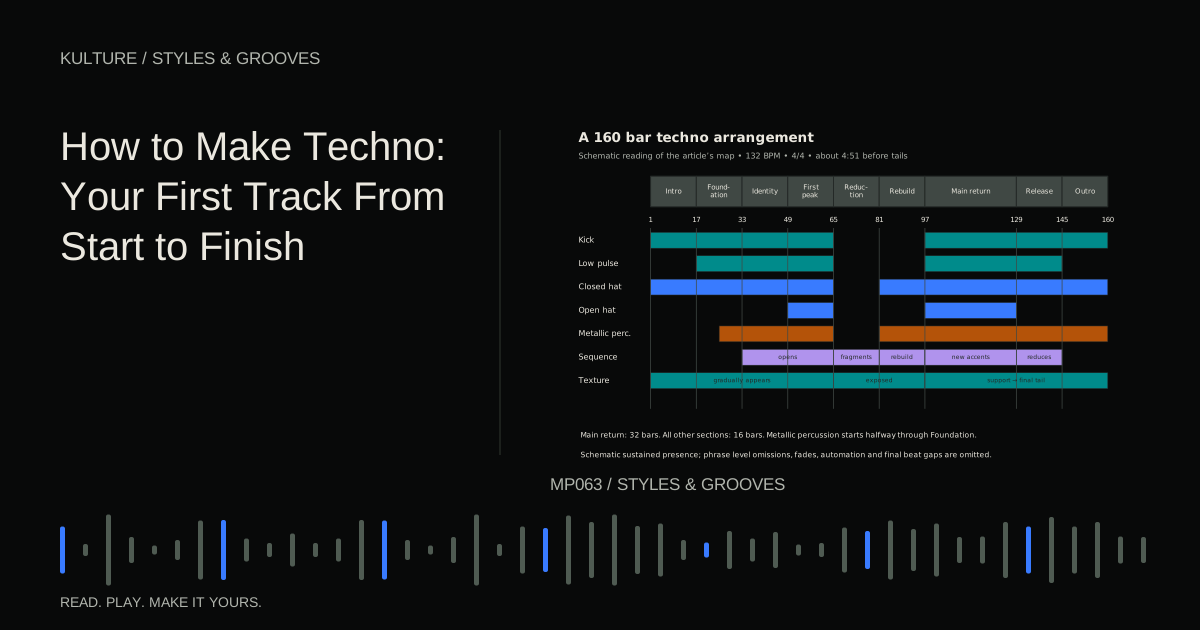 Styles & grooves9 min
How to Make Techno: Your First Track From Start to Finish
Read & try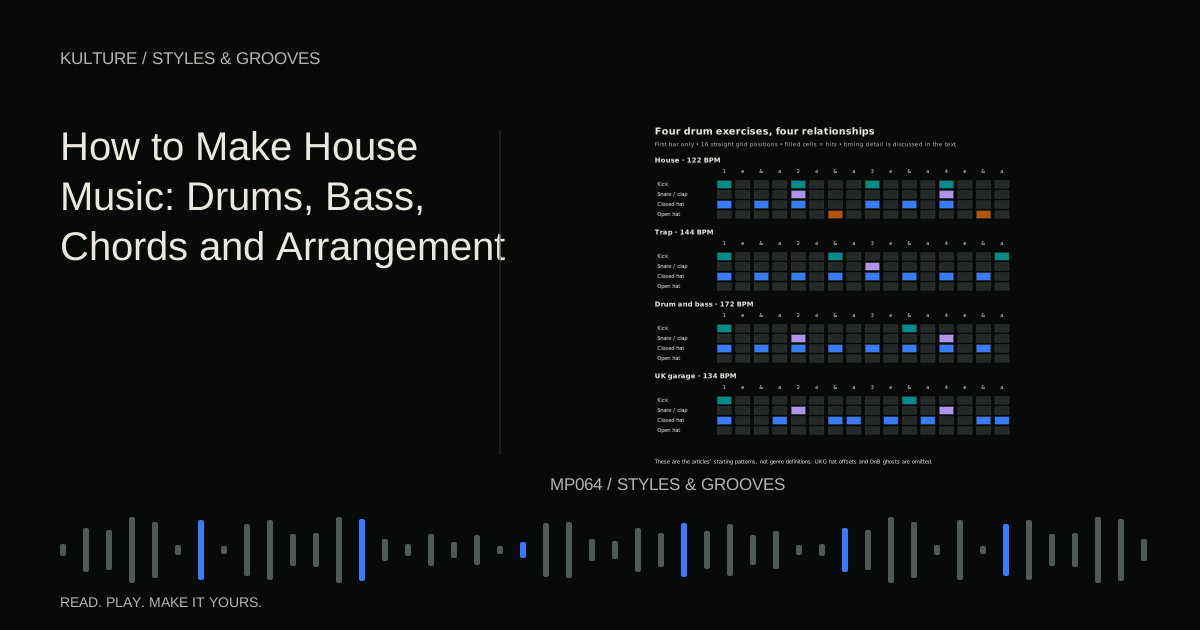 Styles & grooves6 min
How to Make House Music: Drums, Bass, Chords and Arrangement
Read & try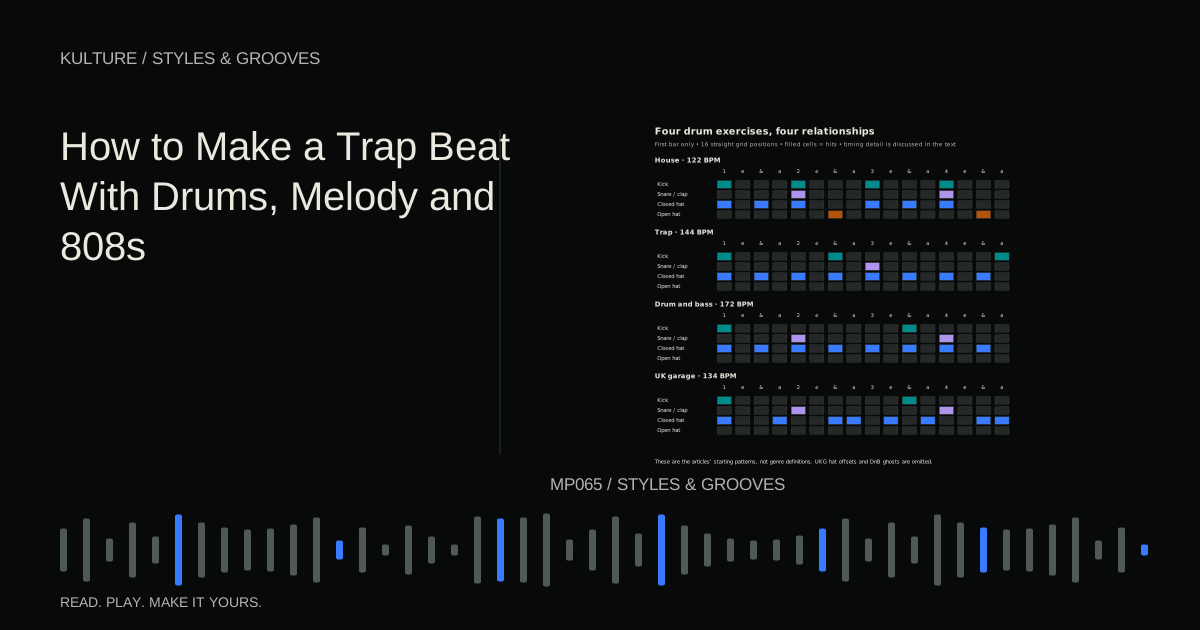 Styles & grooves6 min
How to Make a Trap Beat With Drums, Melody and 808s
Read & try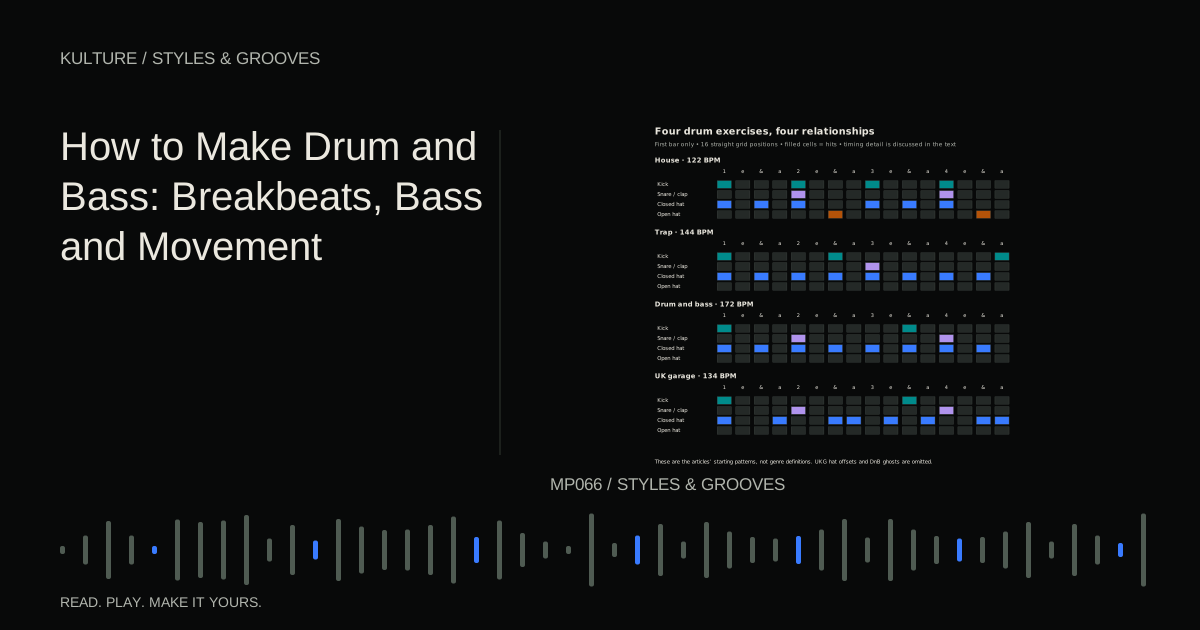 Styles & grooves6 min
How to Make Drum and Bass: Breakbeats, Bass and Movement
Read & try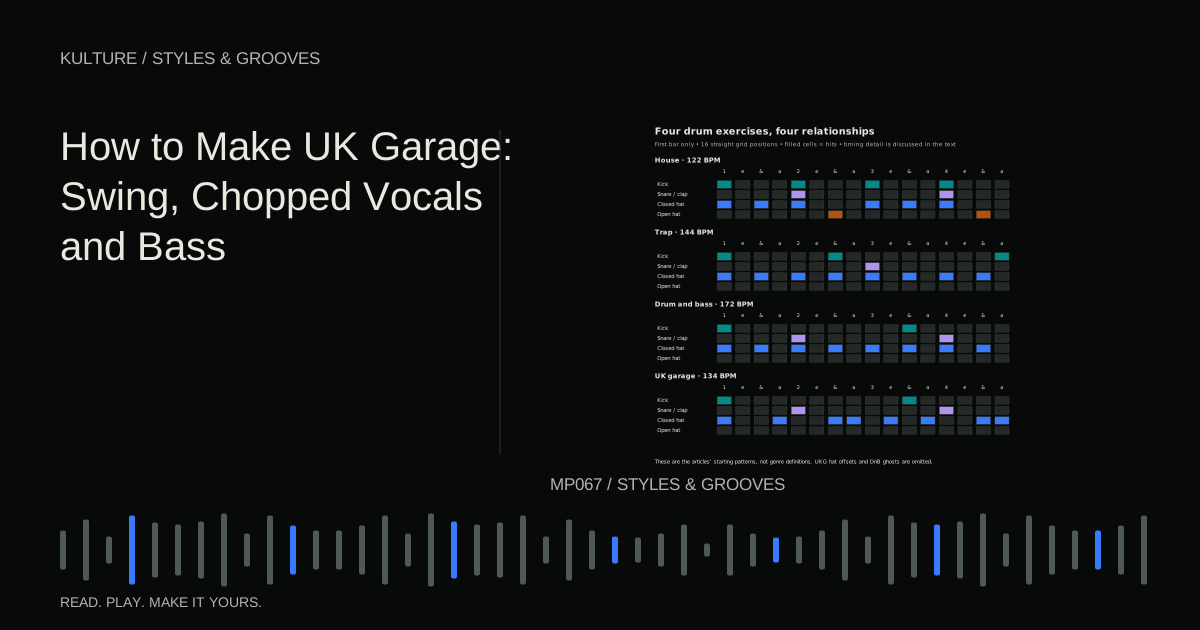 Styles & grooves6 min
How to Make UK Garage: Swing, Chopped Vocals and Bass
Read & try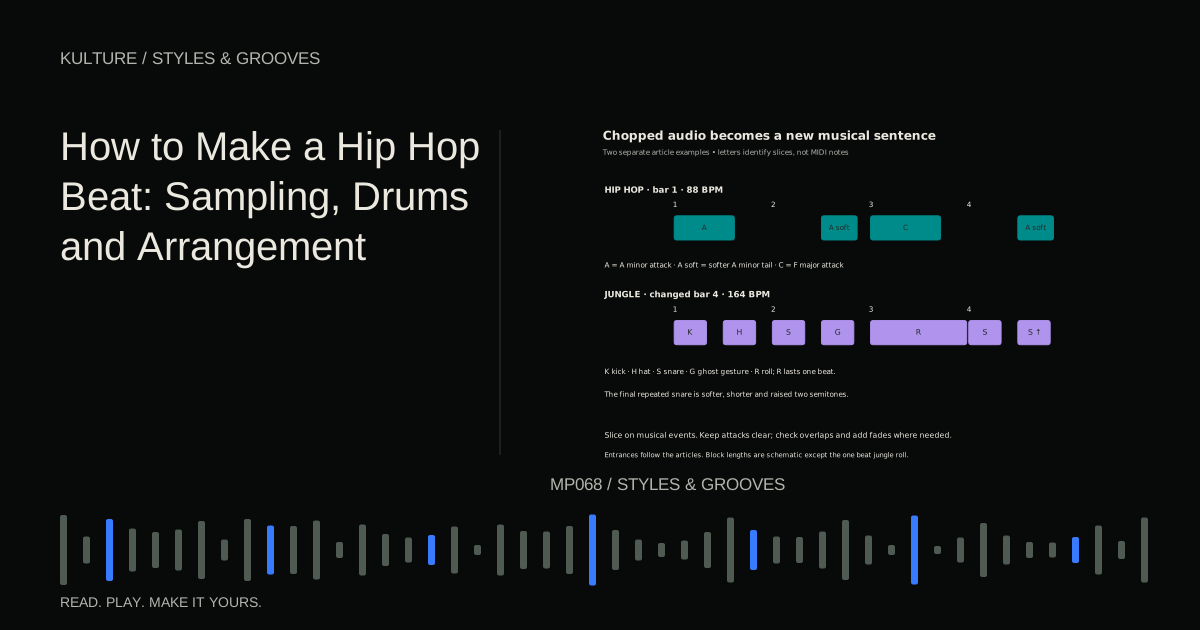 Styles & grooves6 min
How to Make a Hip Hop Beat: Sampling, Drums and Arrangement
Read & try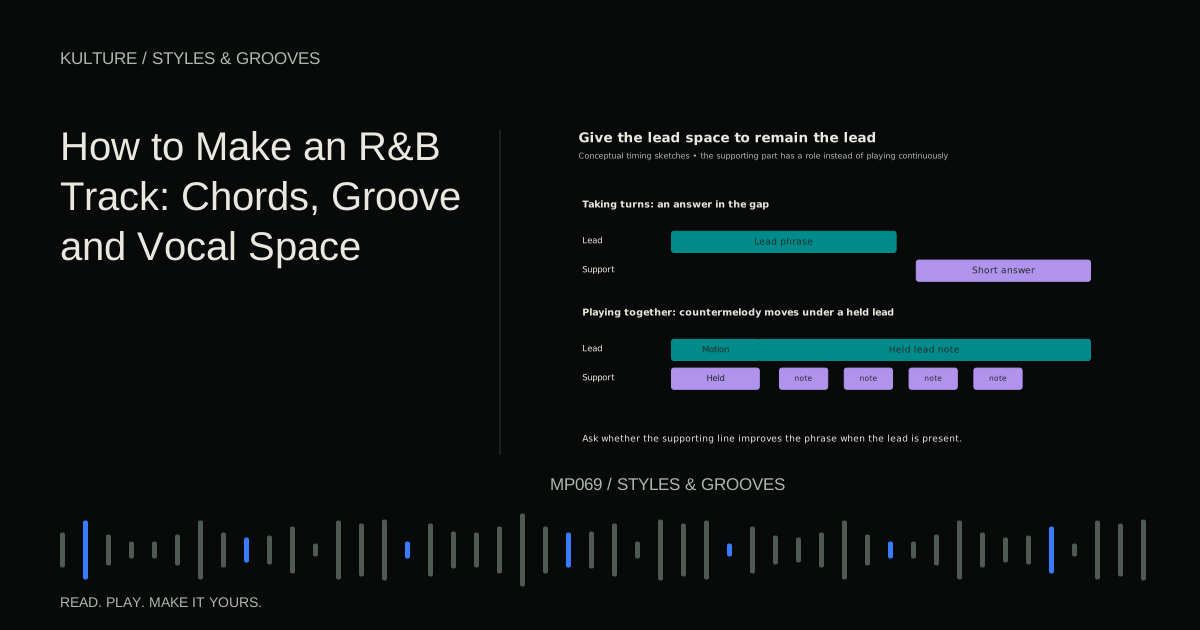 Styles & grooves5 min
How to Make an R&B Track: Chords, Groove and Vocal Space
Read & try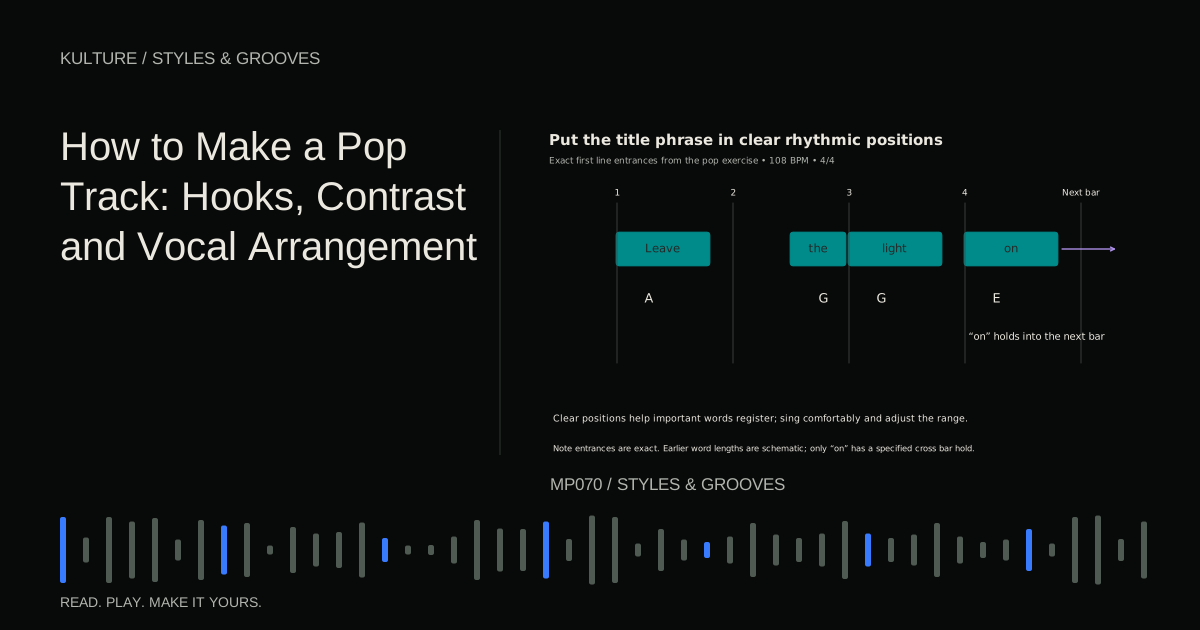 Styles & grooves6 min
How to Make a Pop Track: Hooks, Contrast and Vocal Arrangement
Read & try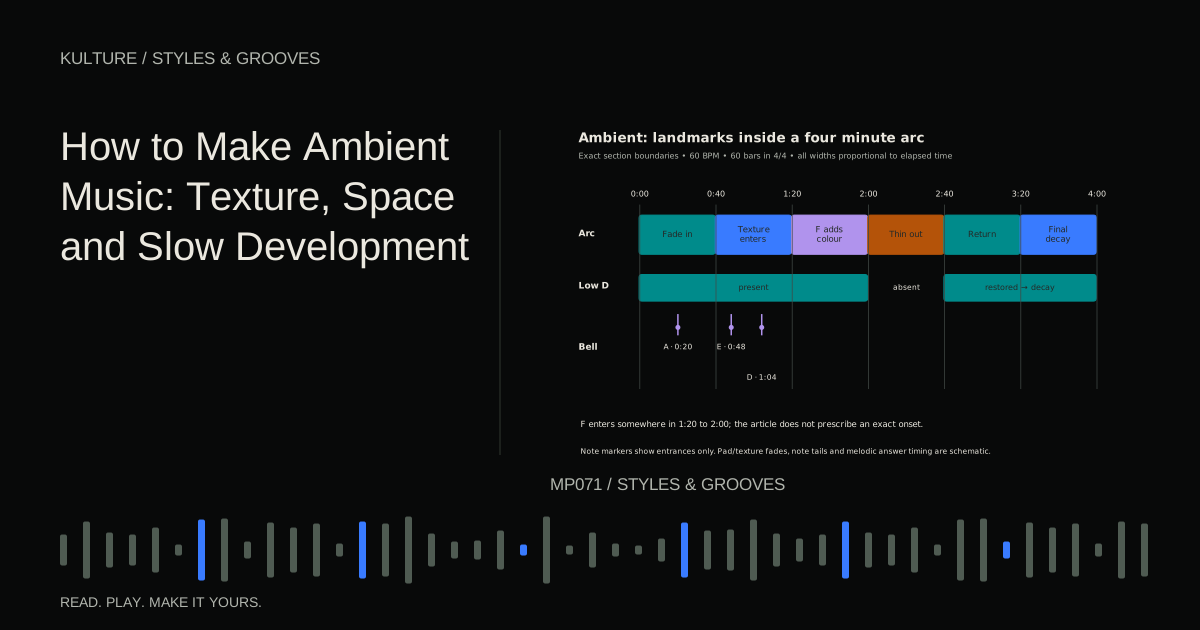 Styles & grooves6 min
How to Make Ambient Music: Texture, Space and Slow Development
Read & try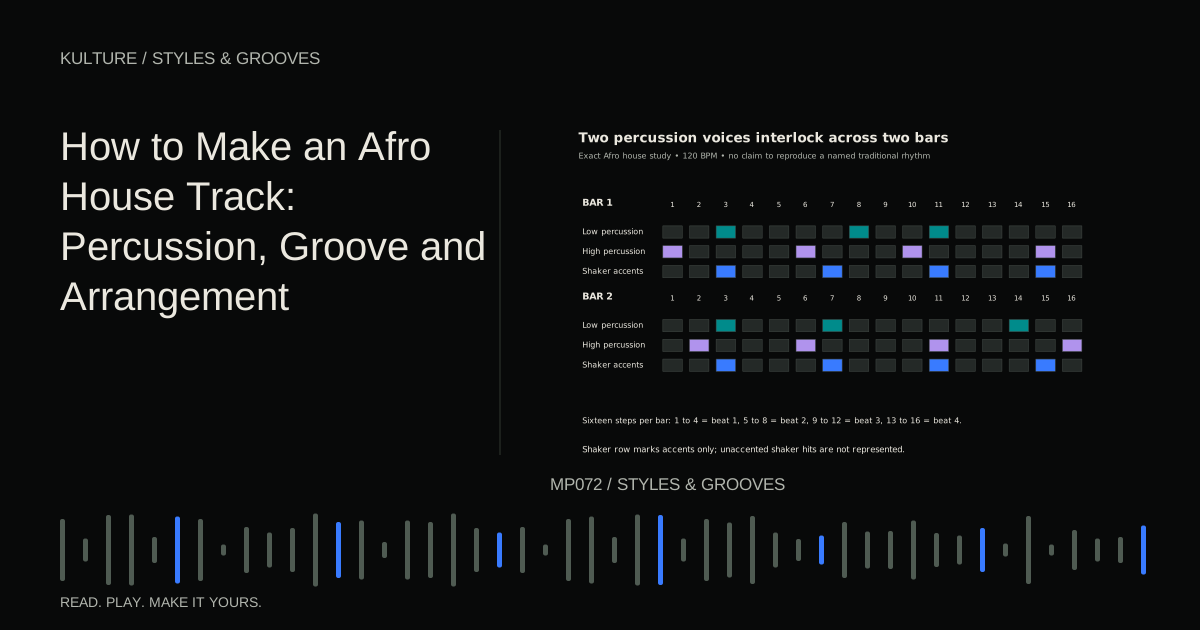 Styles & grooves5 min
How to Make an Afro House Track: Percussion, Groove and Arrangement
Read & try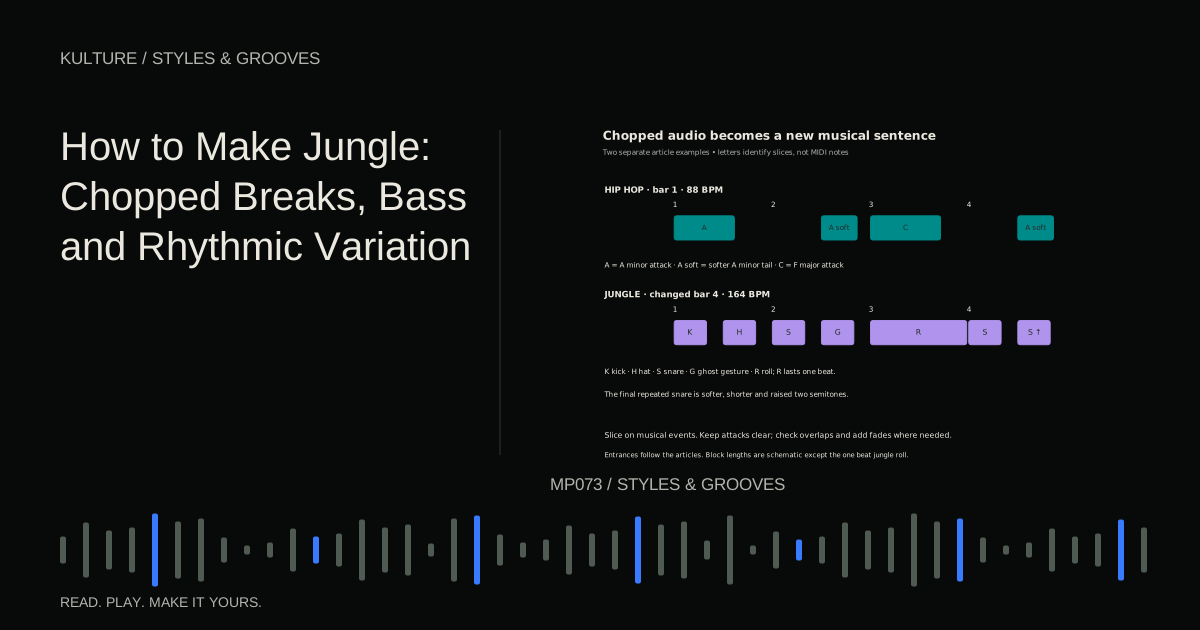 Styles & grooves6 min
How to Make Jungle: Chopped Breaks, Bass and Rhythmic Variation
Read & try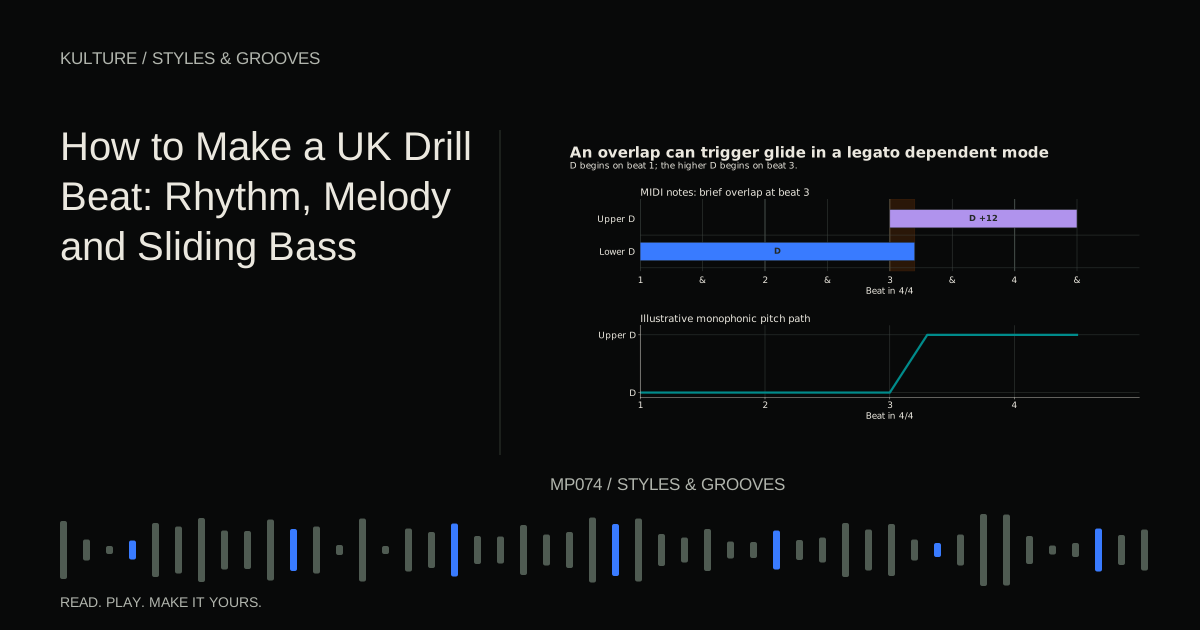 Styles & grooves6 min
How to Make a UK Drill Beat: Rhythm, Melody and Sliding Bass
Read & try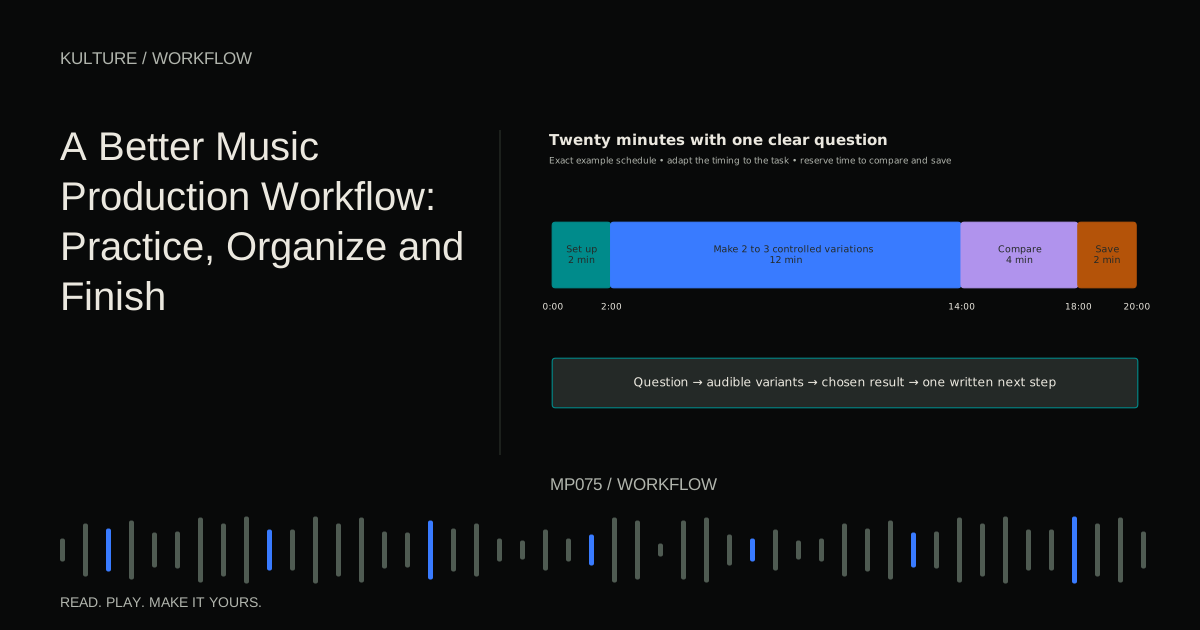 Workflow6 min
A Better Music Production Workflow: Practice, Organize and Finish
Read & try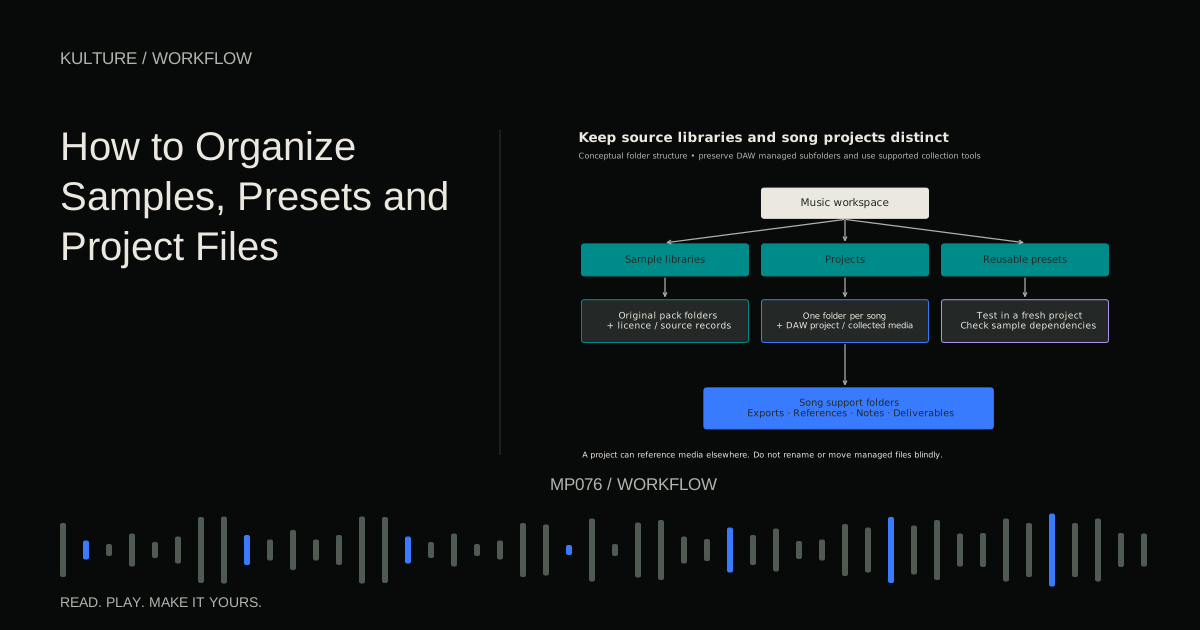 Workflow5 min
How to Organize Samples, Presets and Project Files
Read & try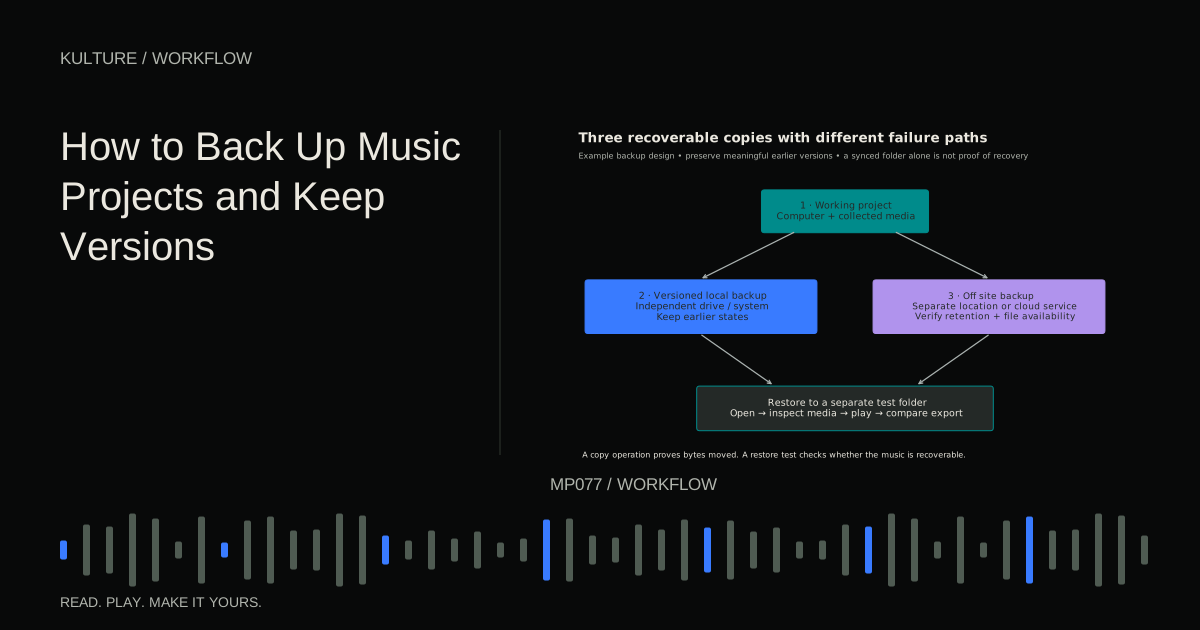 Workflow5 min
How to Back Up Music Projects and Keep Versions
Read & try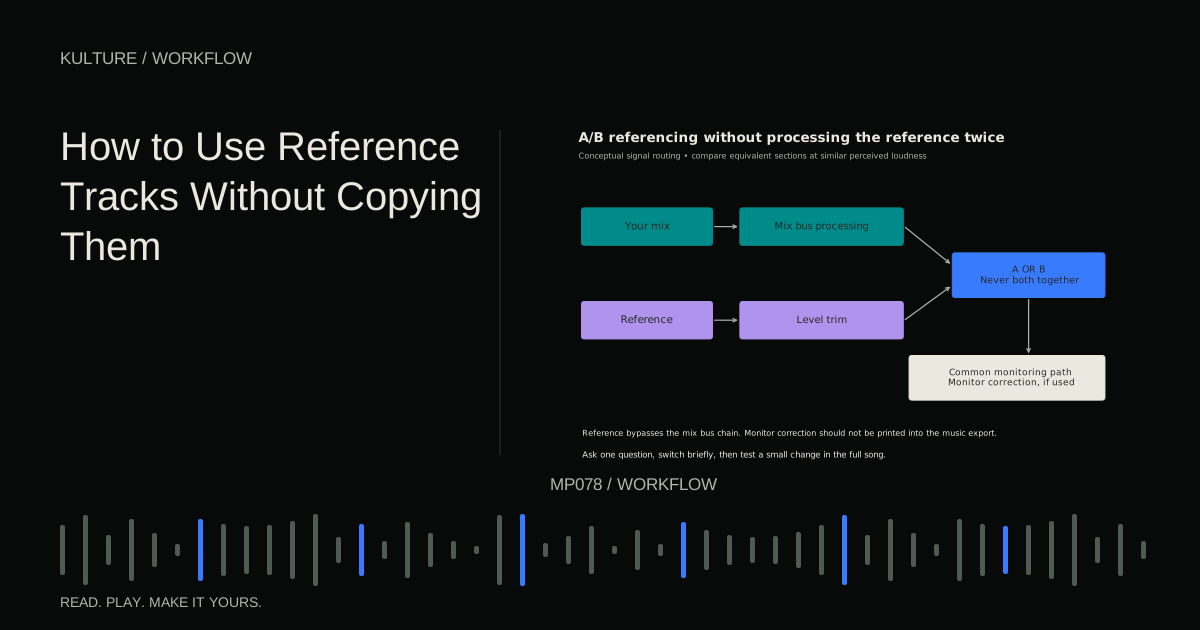 Workflow5 min
How to Use Reference Tracks Without Copying Them
Read & try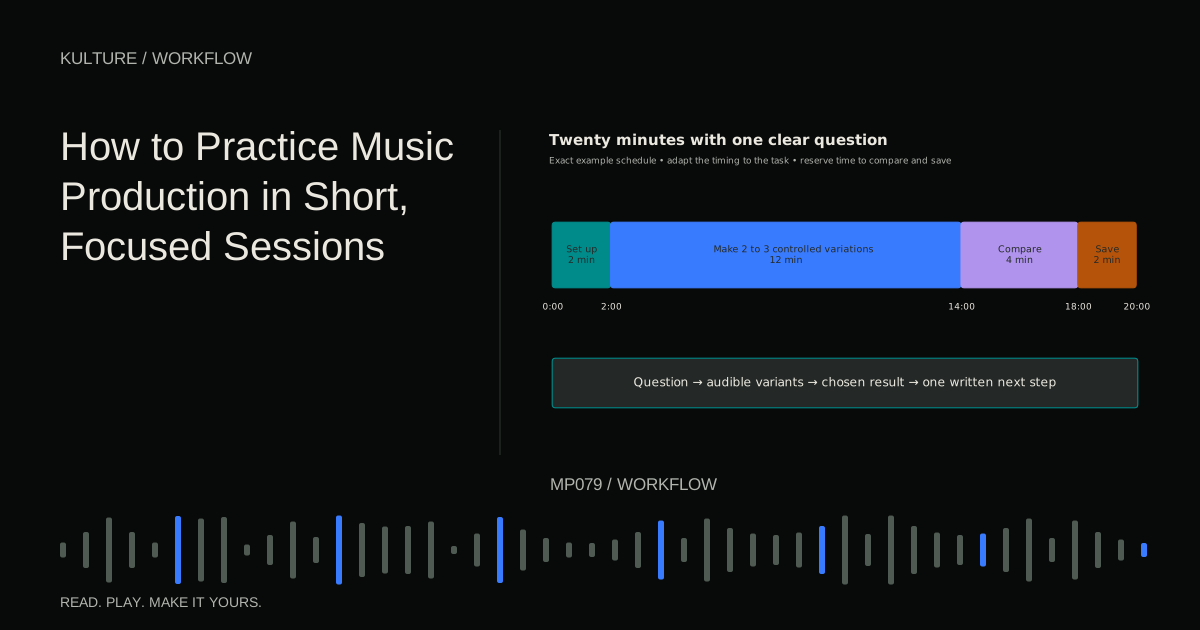 Workflow5 min
How to Practice Music Production in Short, Focused Sessions
Read & try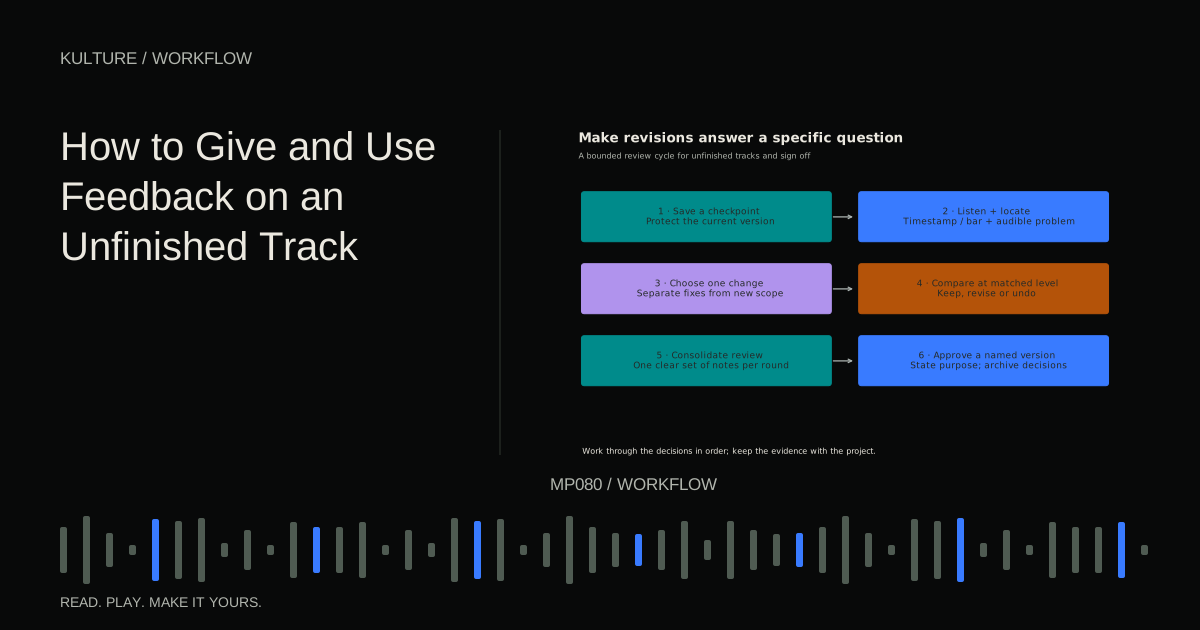 Workflow5 min
How to Give and Use Feedback on an Unfinished Track
Read & try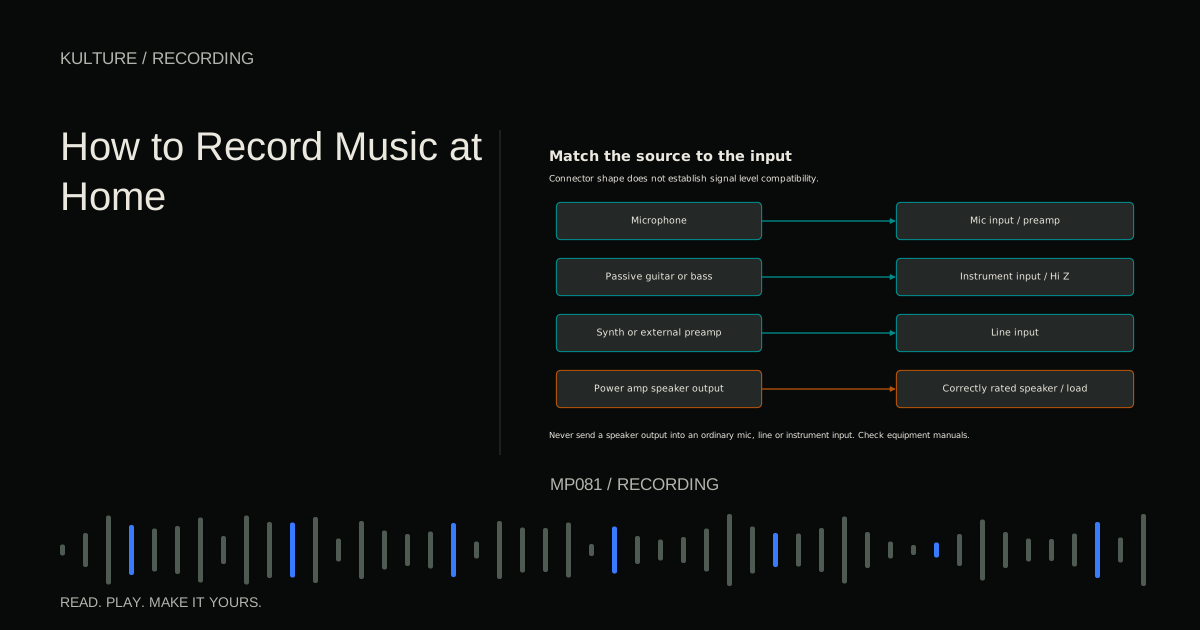 Recording7 min
How to Record Music at Home
Read & try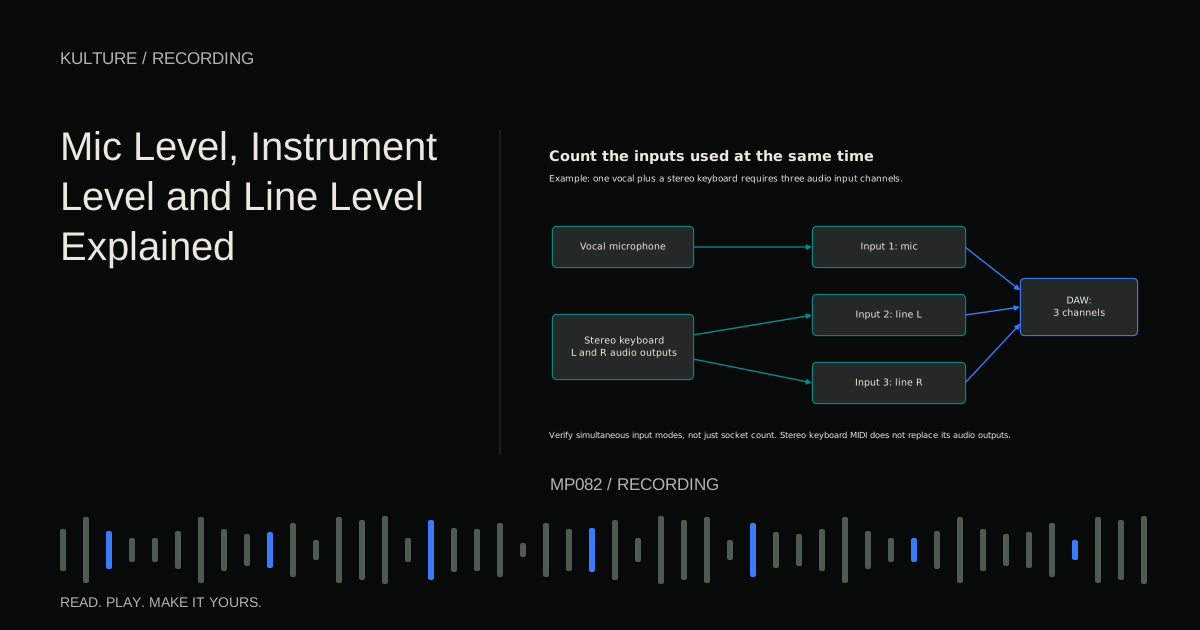 Recording6 min
Mic Level, Instrument Level and Line Level Explained
Read & try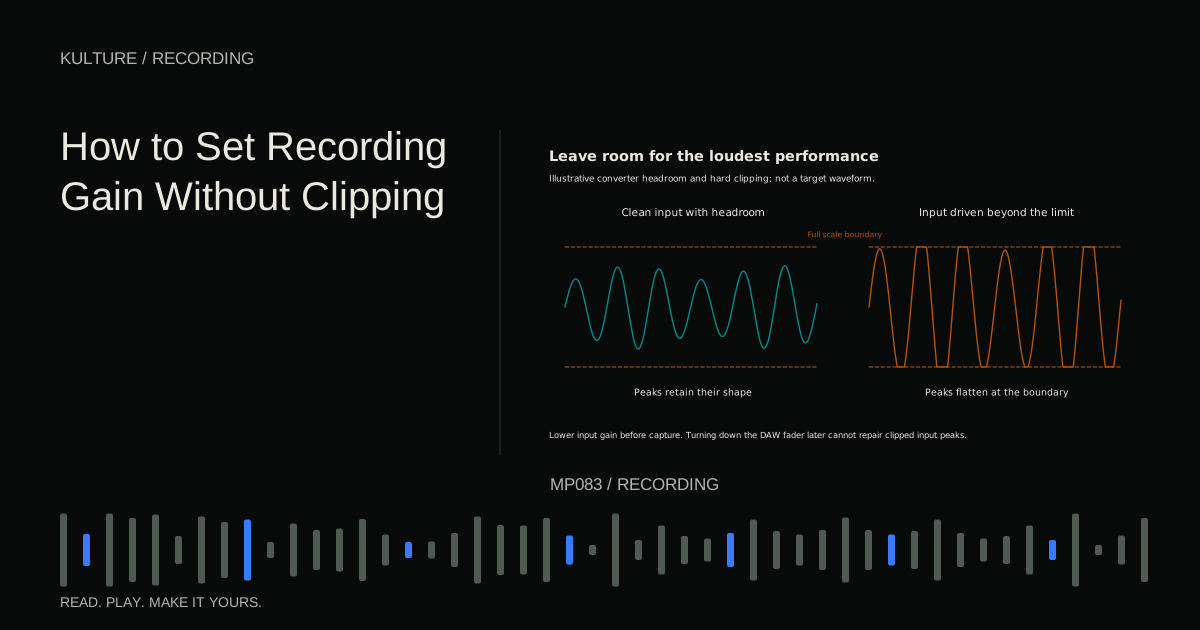 Recording6 min
How to Set Recording Gain Without Clipping
Read & try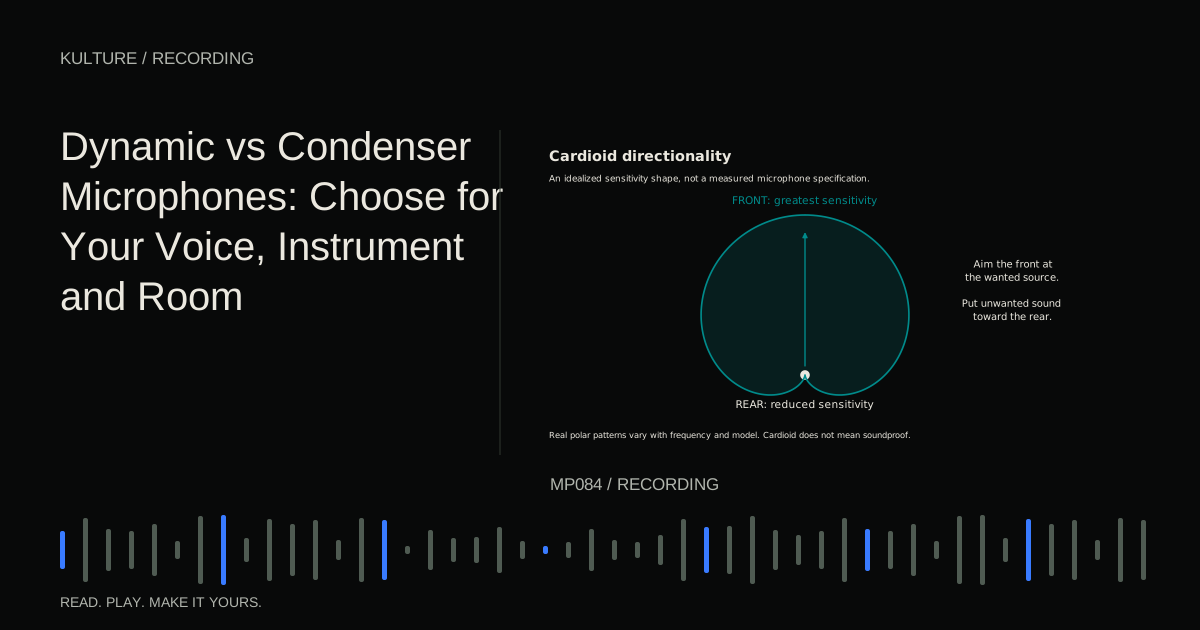 Recording6 min
Dynamic vs Condenser Microphones: Choose for Your Voice, Instrument and Room
Read & try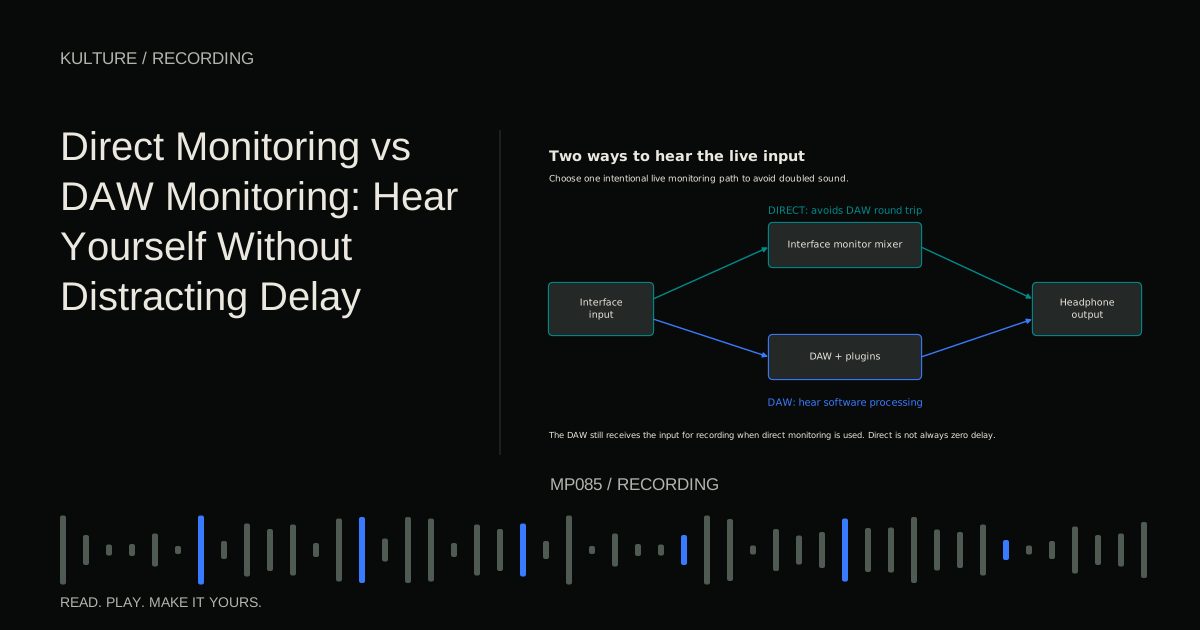 Recording6 min
Direct Monitoring vs DAW Monitoring: Hear Yourself Without Distracting Delay
Read & try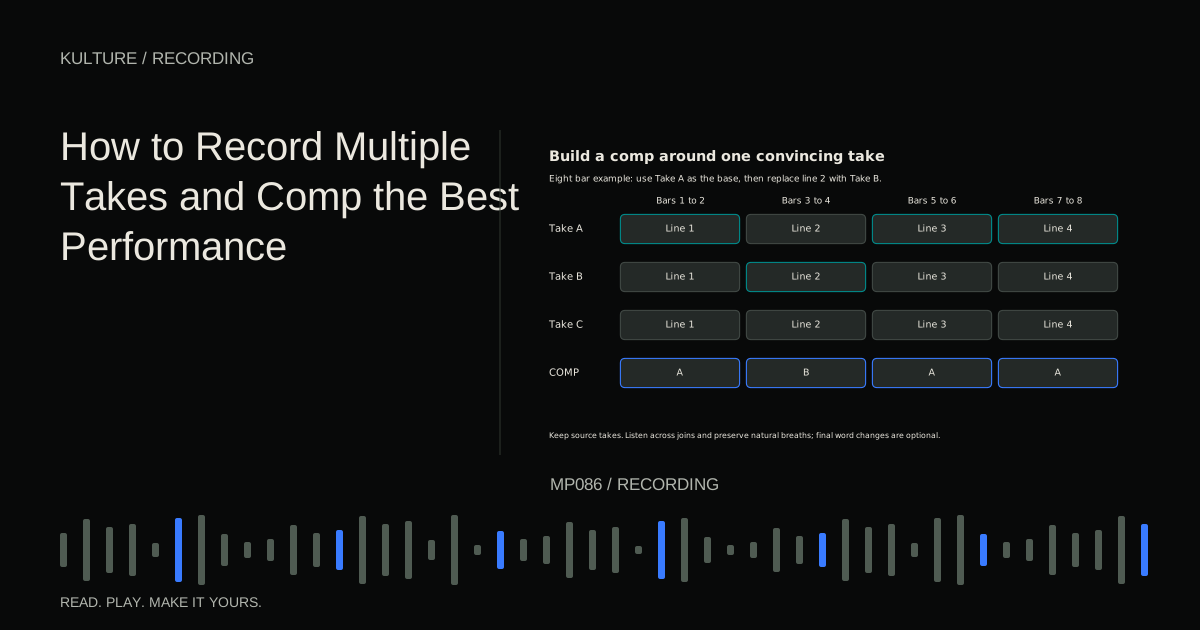 Recording6 min
How to Record Multiple Takes and Comp the Best Performance
Read & try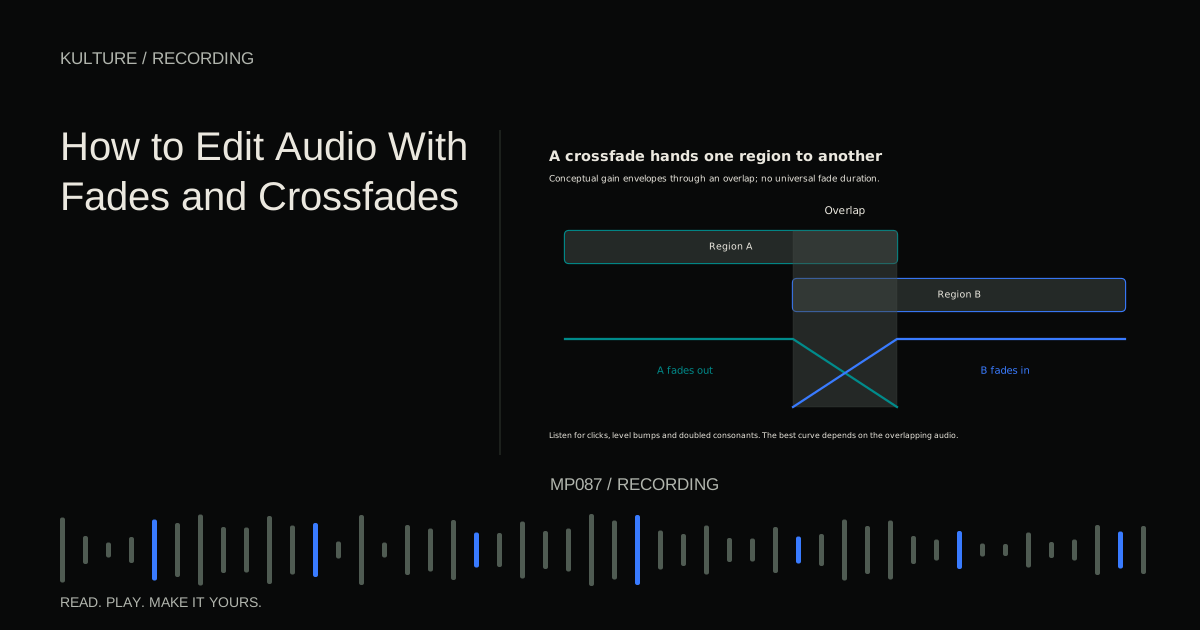 Recording6 min
How to Edit Audio With Fades and Crossfades
Read & try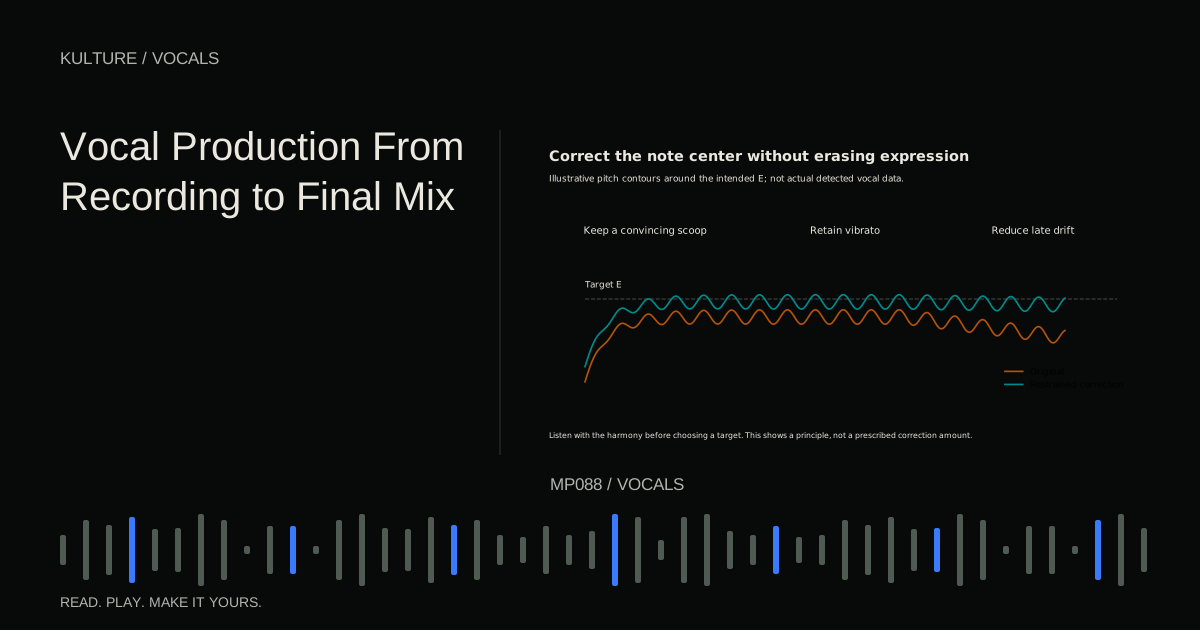 Vocals8 min
Vocal Production From Recording to Final Mix
Read & try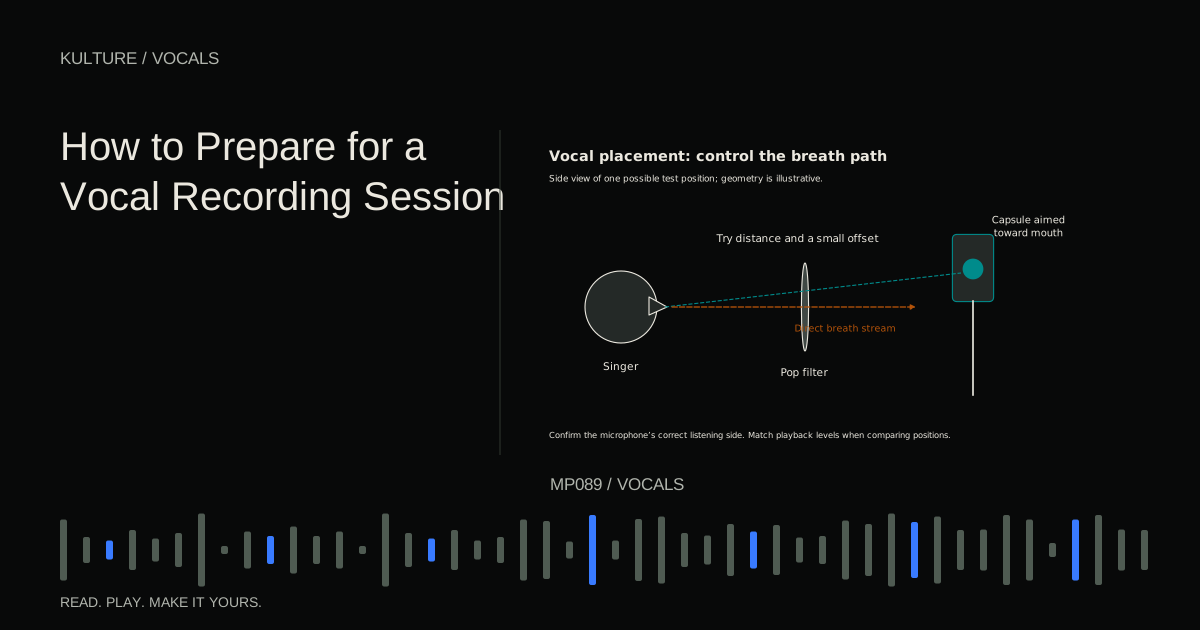 Vocals6 min
How to Prepare for a Vocal Recording Session
Read & try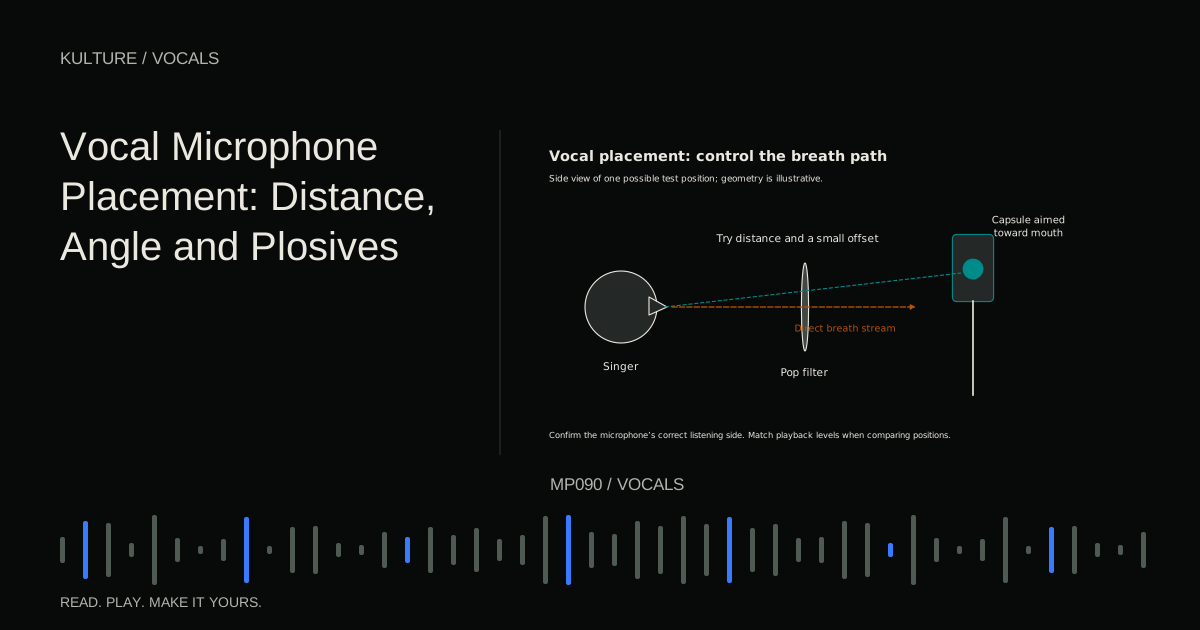 Vocals6 min
Vocal Microphone Placement: Distance, Angle and Plosives
Read & try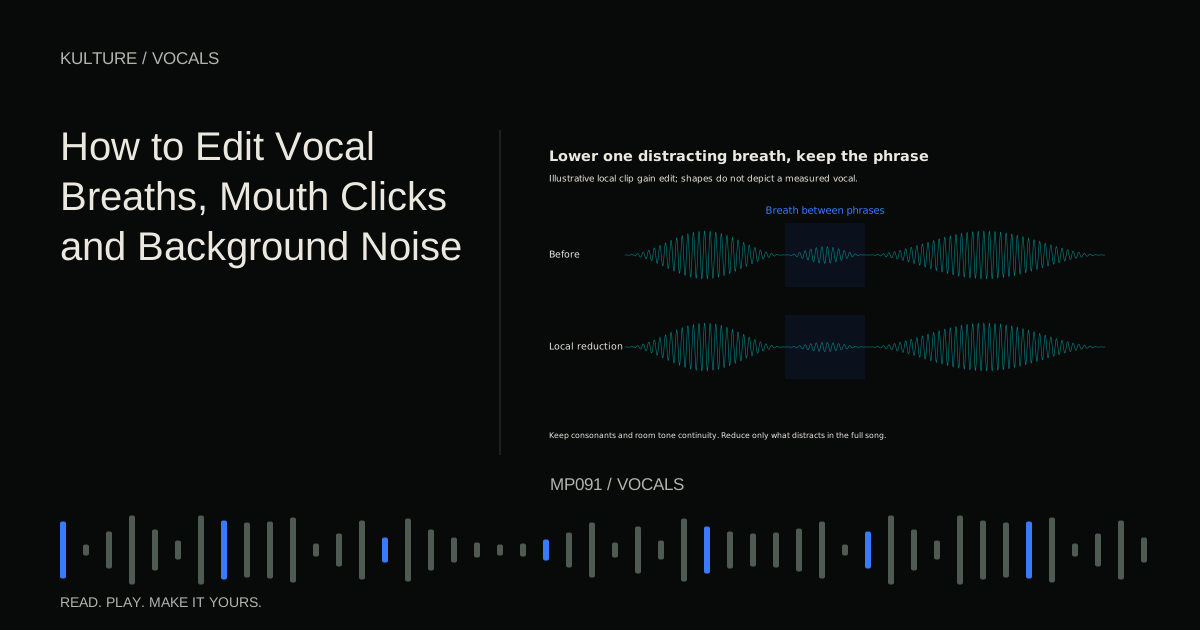 Vocals6 min
How to Edit Vocal Breaths, Mouth Clicks and Background Noise
Read & try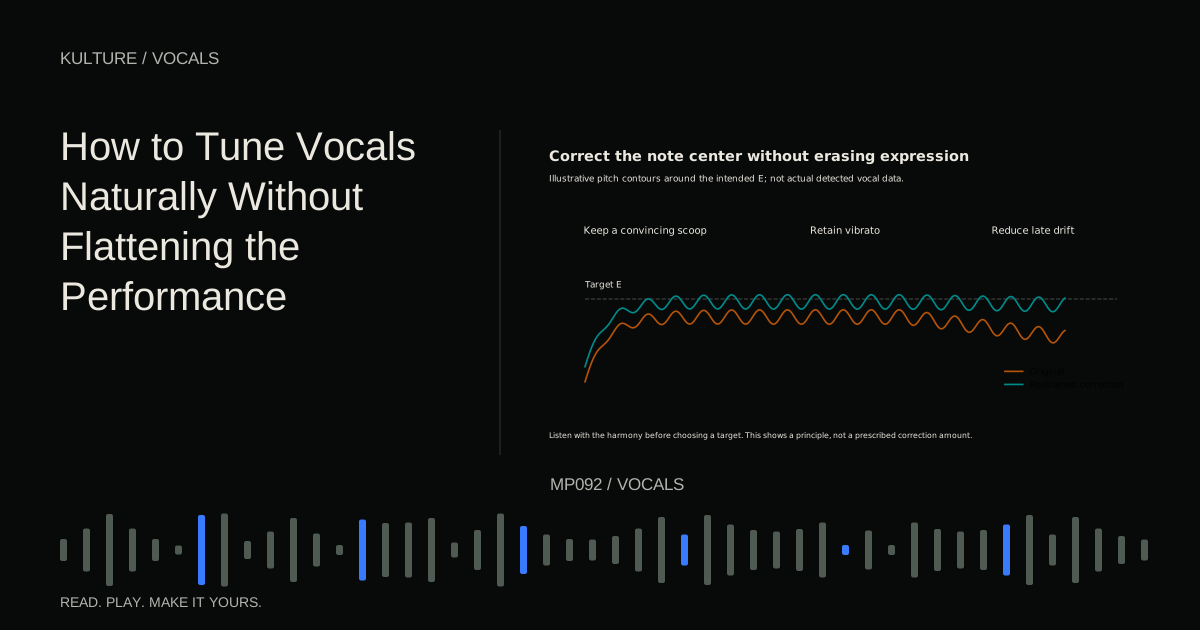 Vocals6 min
How to Tune Vocals Naturally Without Flattening the Performance
Read & try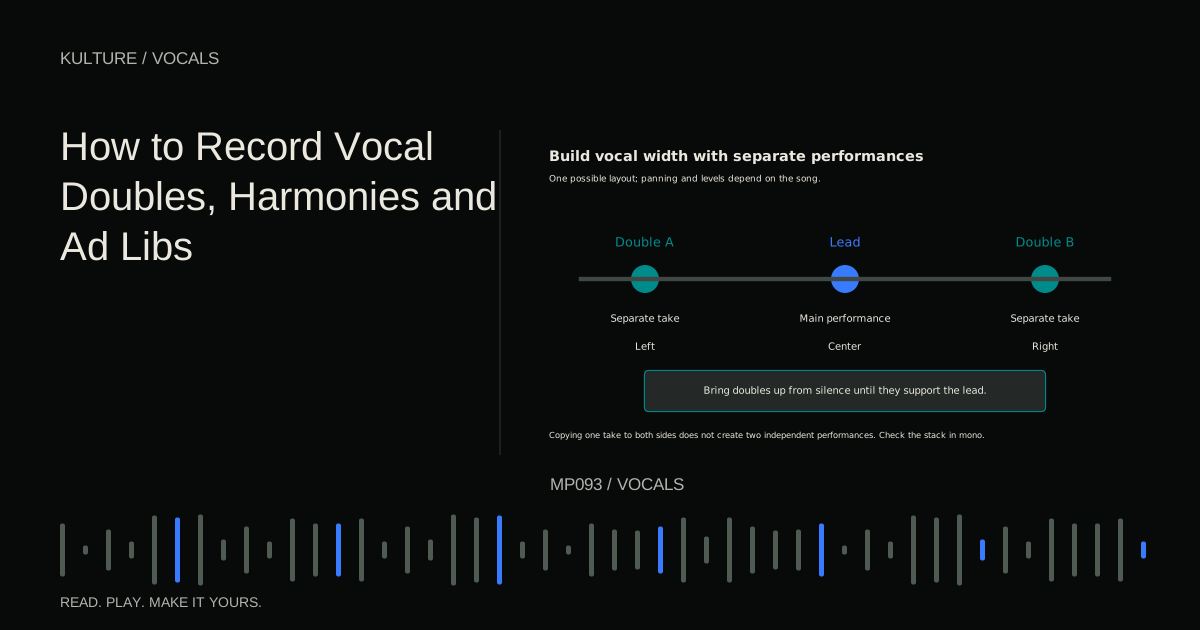 Vocals6 min
How to Record Vocal Doubles, Harmonies and Ad Libs
Read & try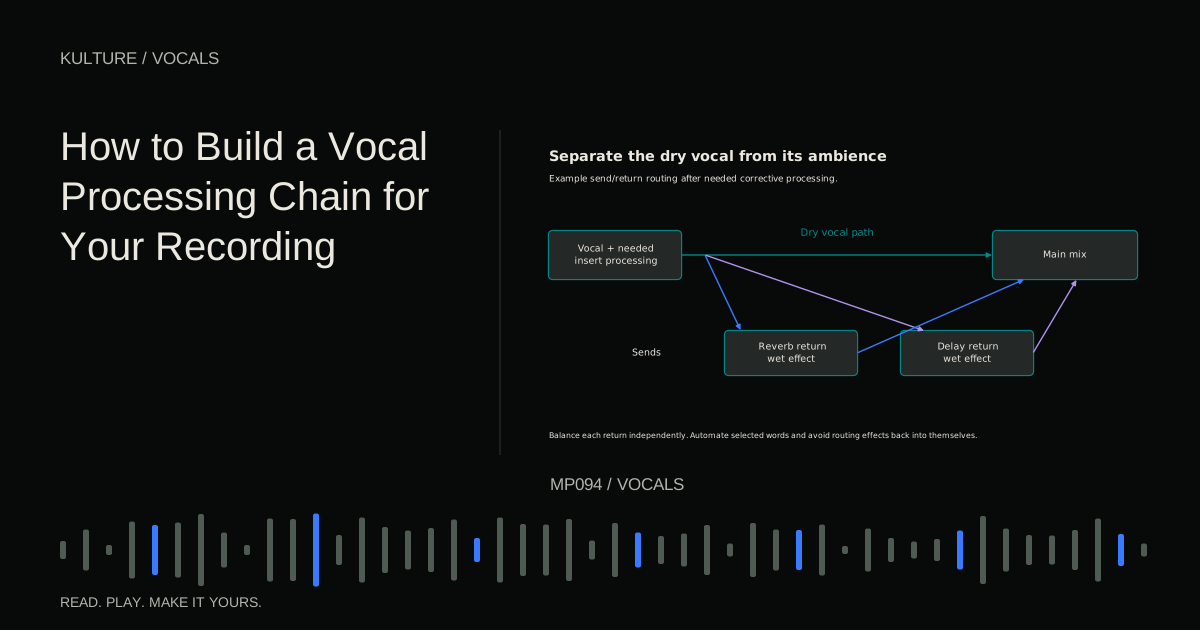 Vocals6 min
How to Build a Vocal Processing Chain for Your Recording
Read & try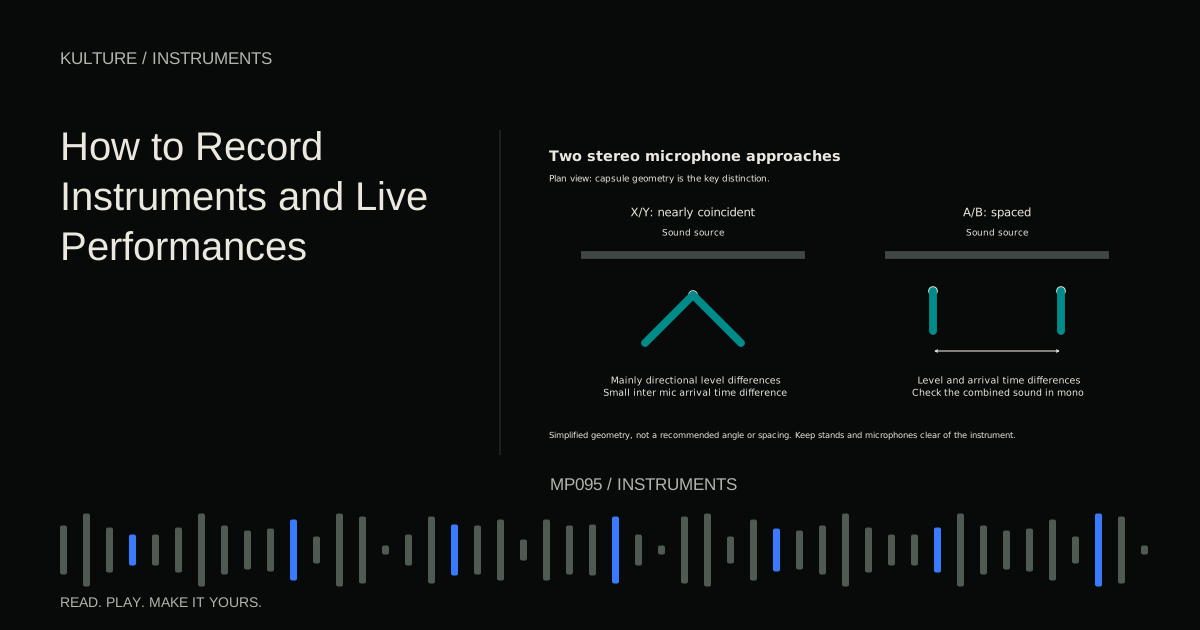 Instruments7 min
How to Record Instruments and Live Performances
Read & try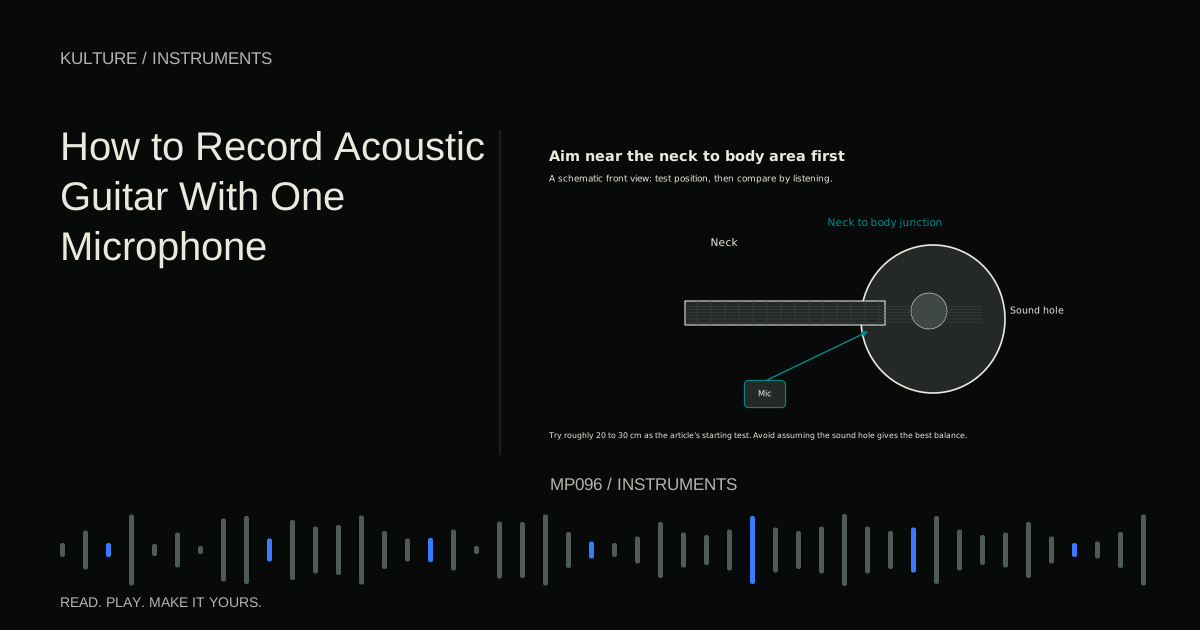 Instruments6 min
How to Record Acoustic Guitar With One Microphone
Read & try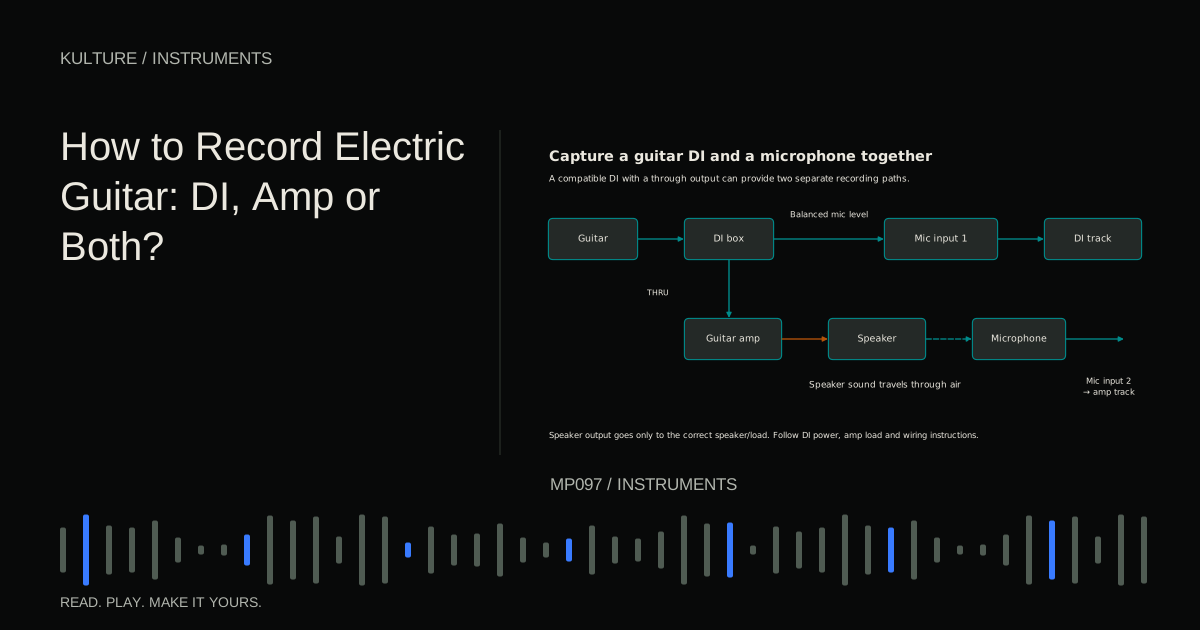 Instruments6 min
How to Record Electric Guitar: DI, Amp or Both?
Read & try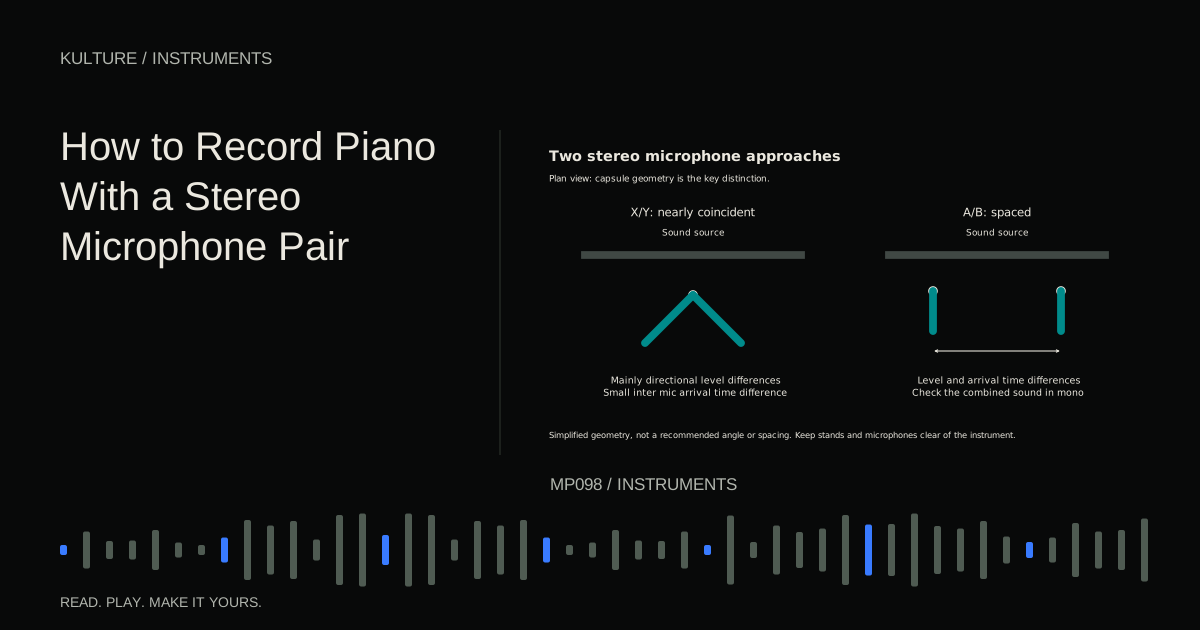 Instruments6 min
How to Record Piano With a Stereo Microphone Pair
Read & try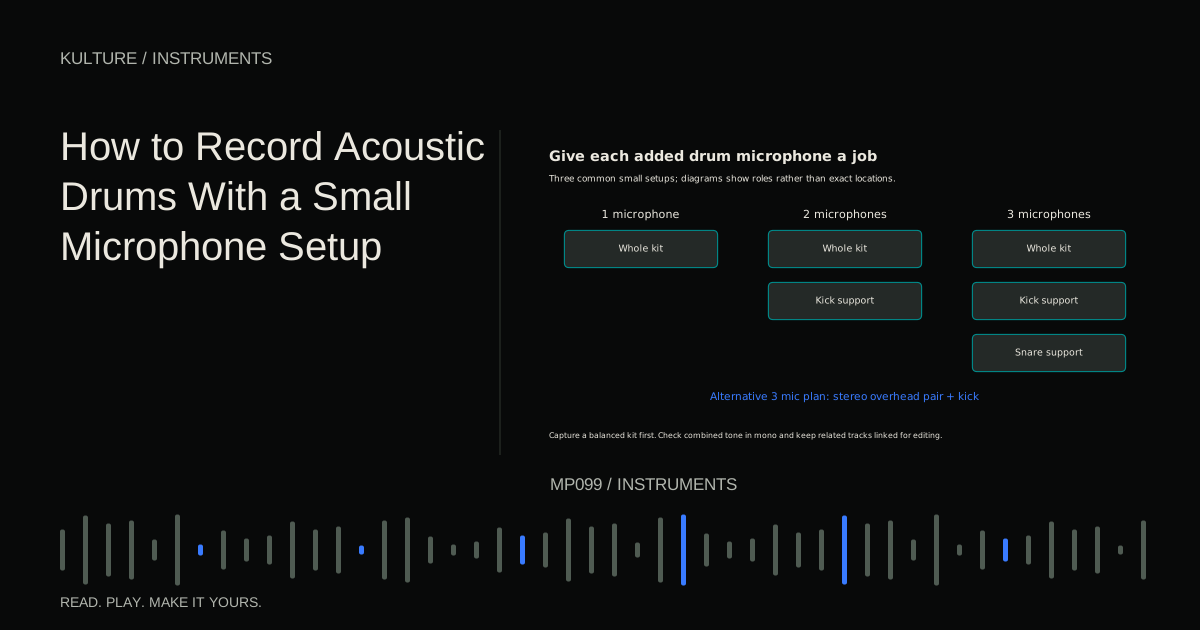 Instruments6 min
How to Record Acoustic Drums With a Small Microphone Setup
Read & try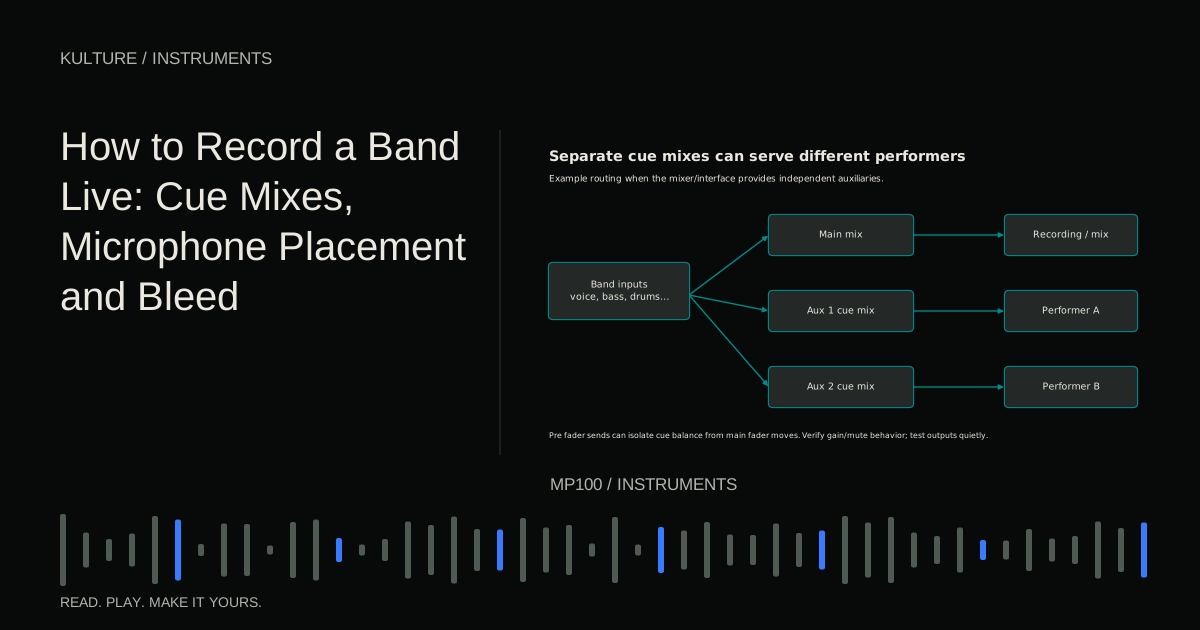 Instruments6 min
How to Record a Band Live: Cue Mixes, Microphone Placement and Bleed
Read & try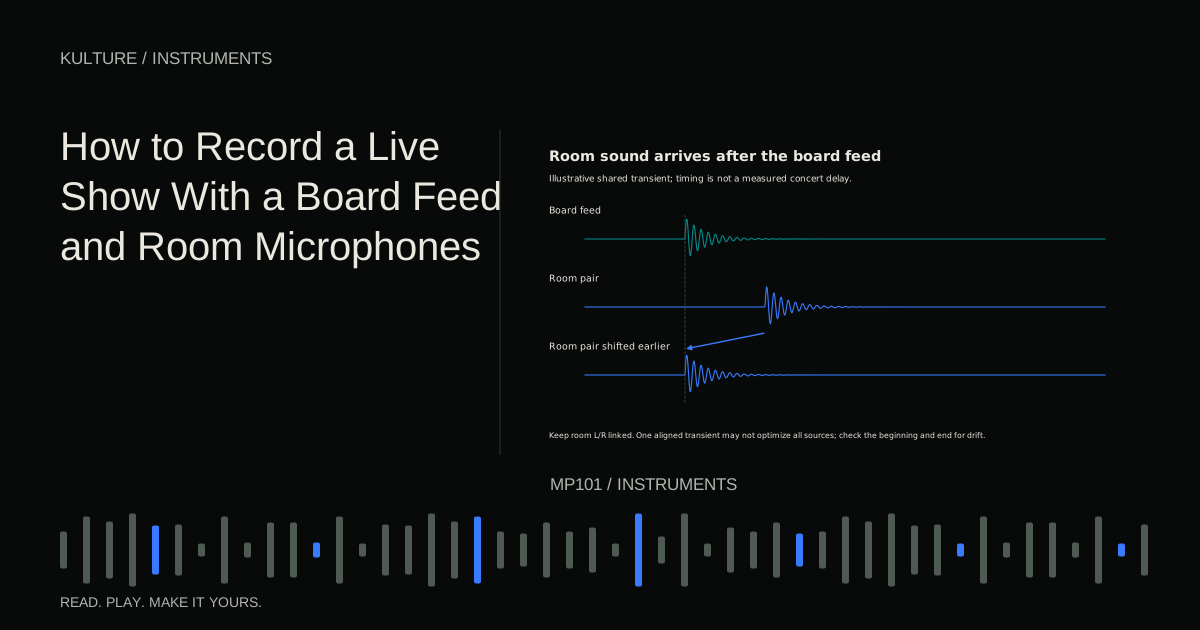 Instruments6 min
How to Record a Live Show With a Board Feed and Room Microphones
Read & try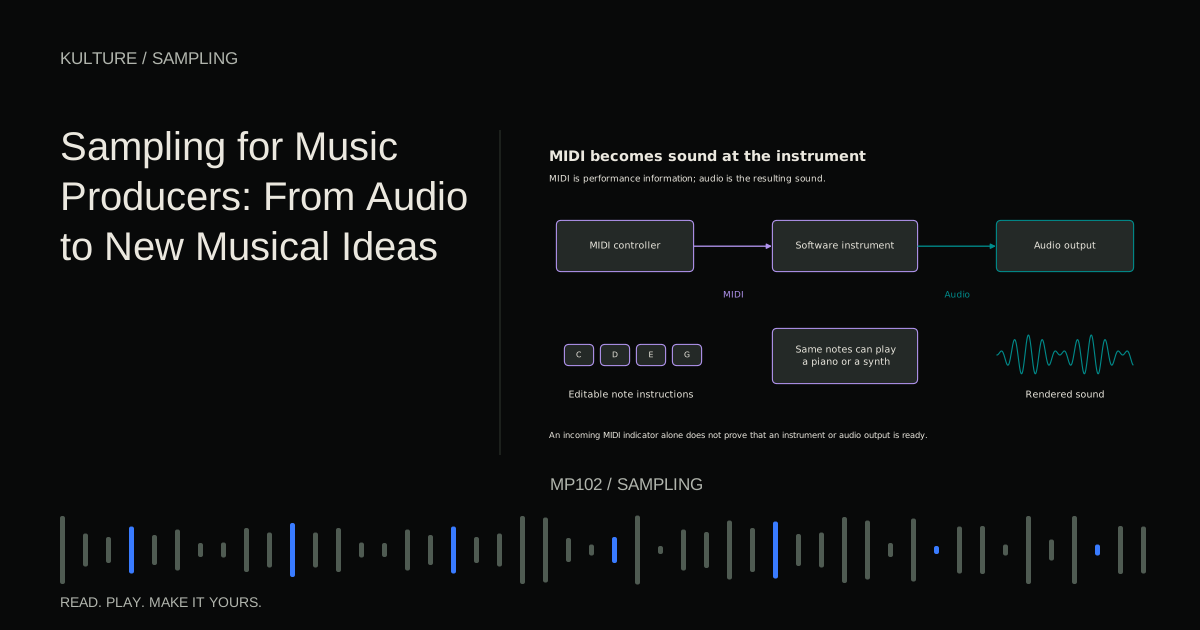 Sampling7 min
Sampling for Music Producers: From Audio to New Musical Ideas
Read & try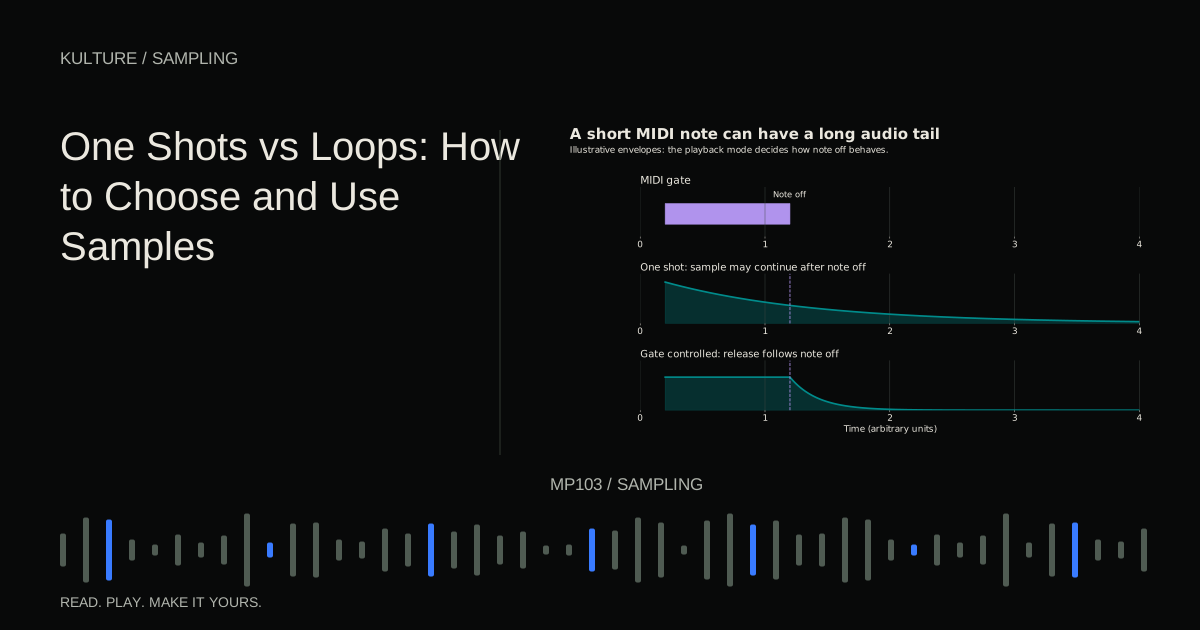 Sampling6 min
One Shots vs Loops: How to Choose and Use Samples
Read & try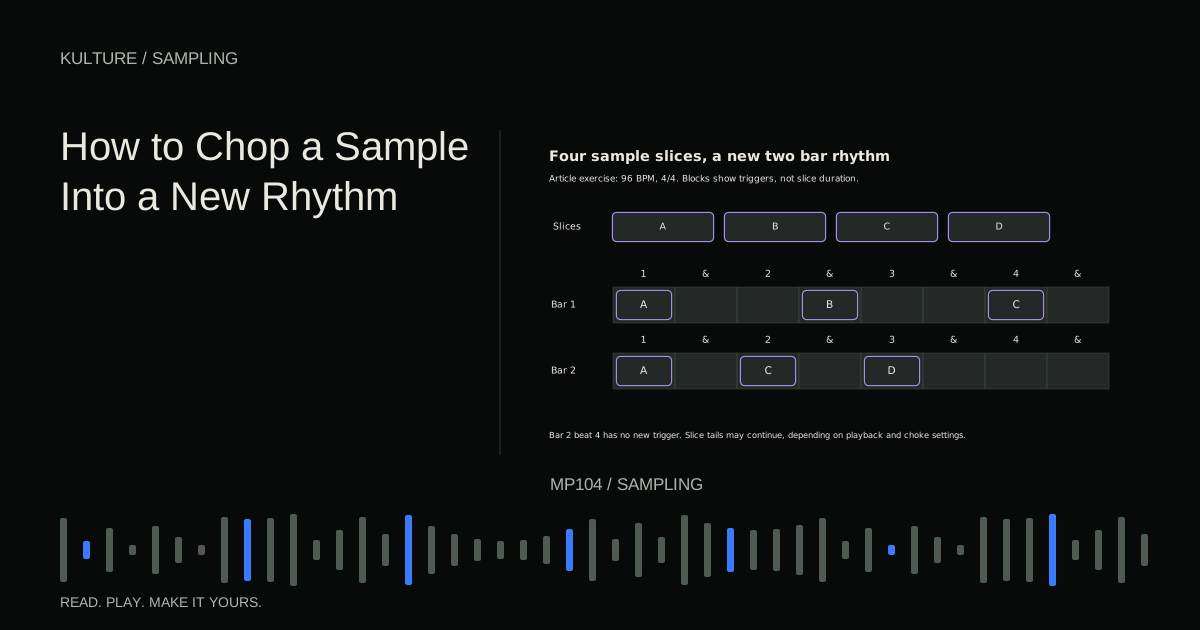 Sampling6 min
How to Chop a Sample Into a New Rhythm
Read & try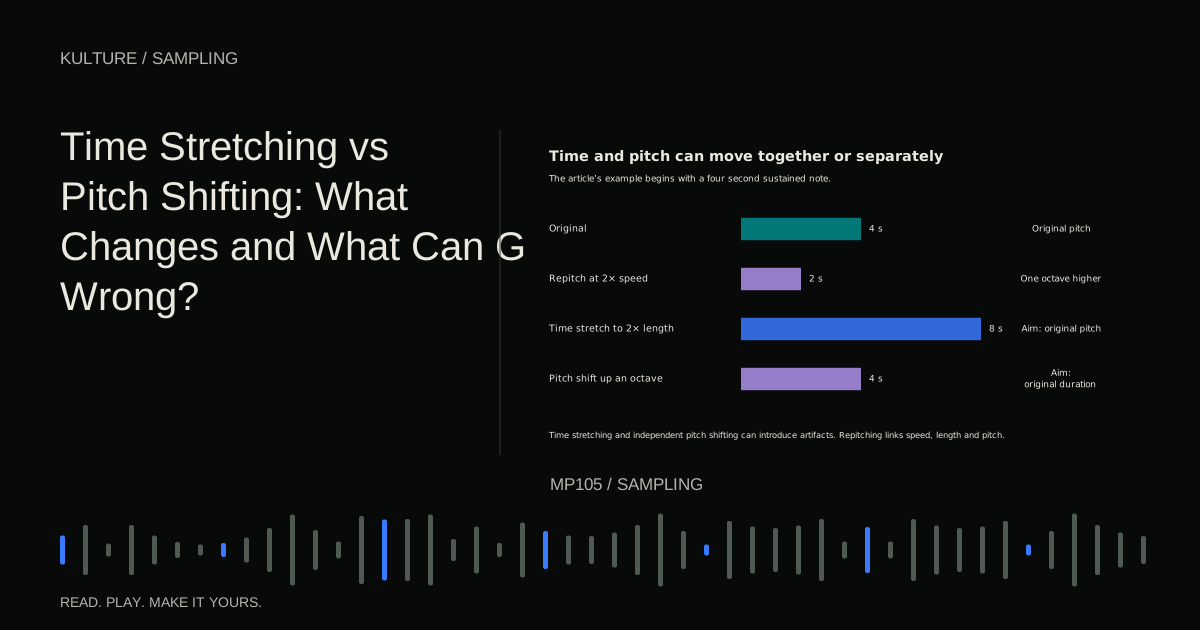 Sampling6 min
Time Stretching vs Pitch Shifting: What Changes and What Can Go Wrong?
Read & try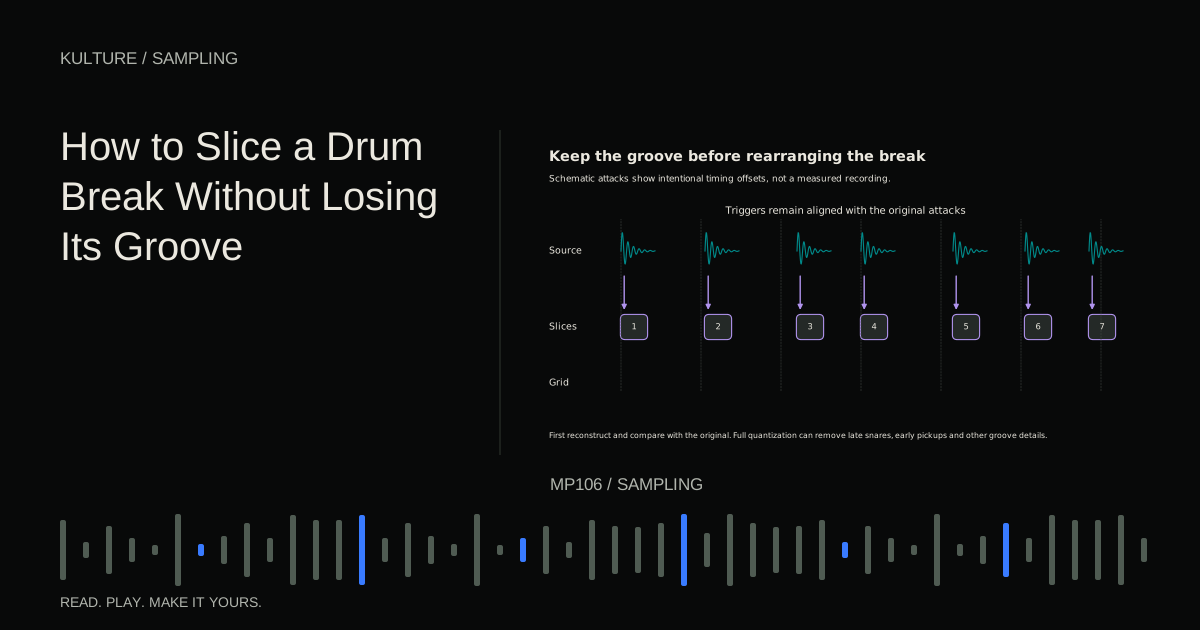 Sampling6 min
How to Slice a Drum Break Without Losing Its Groove
Read & try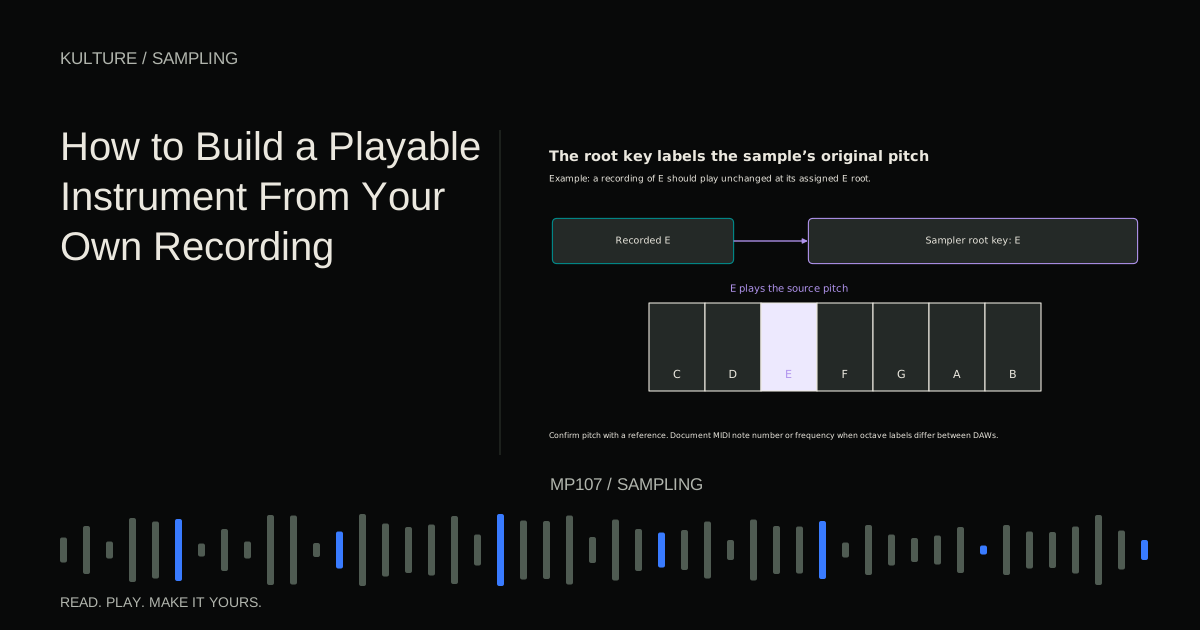 Sampling6 min
How to Build a Playable Instrument From Your Own Recording
Read & try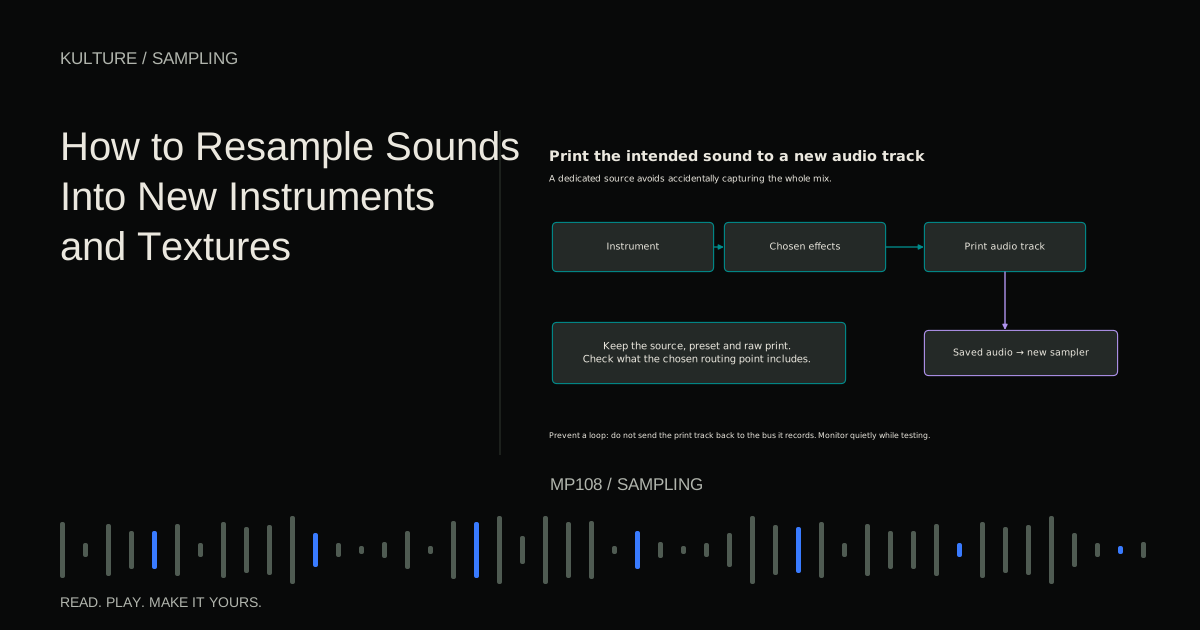 Sampling6 min
How to Resample Sounds Into New Instruments and Textures
Read & try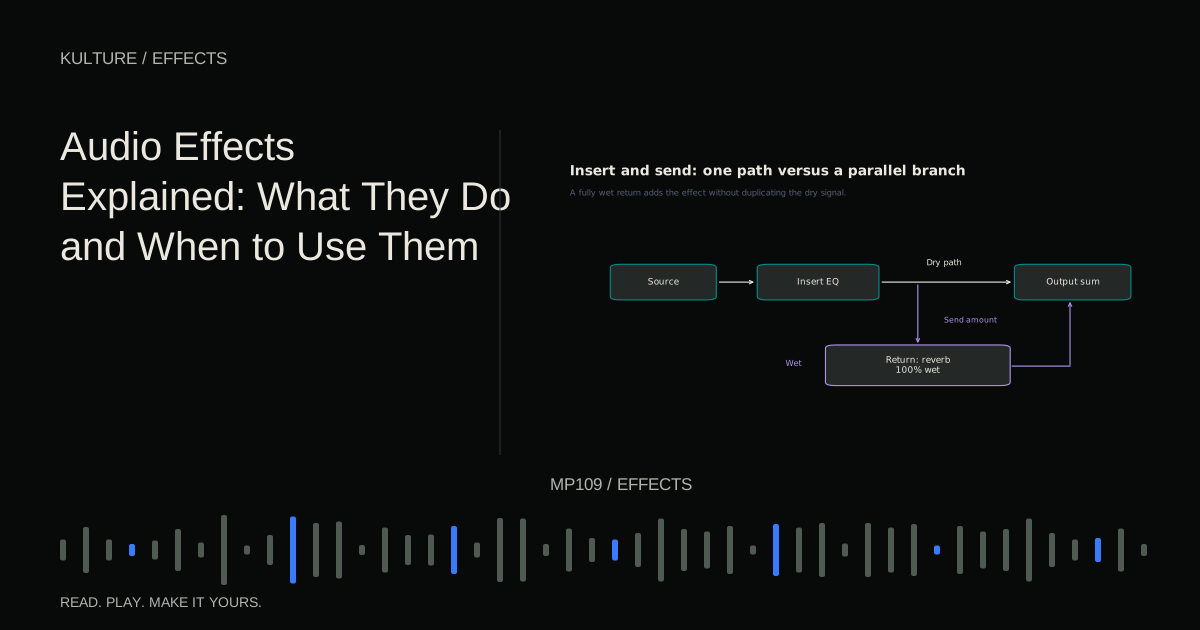 Effects7 min
Audio Effects Explained: What They Do and When to Use Them
Read & try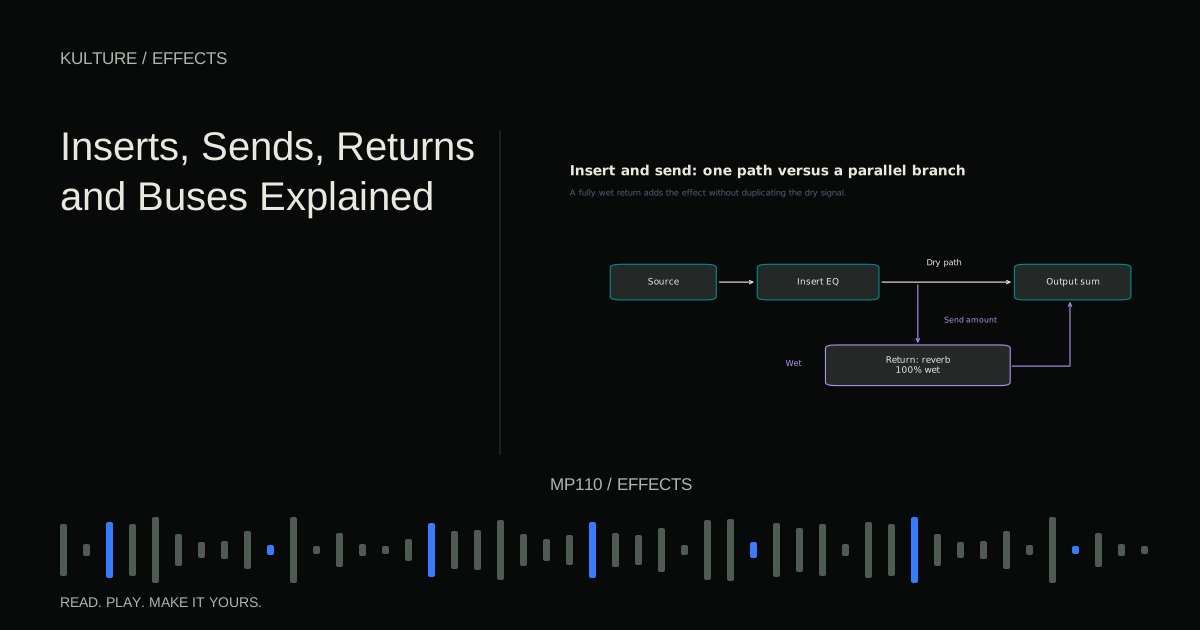 Effects6 min
Inserts, Sends, Returns and Buses Explained
Read & try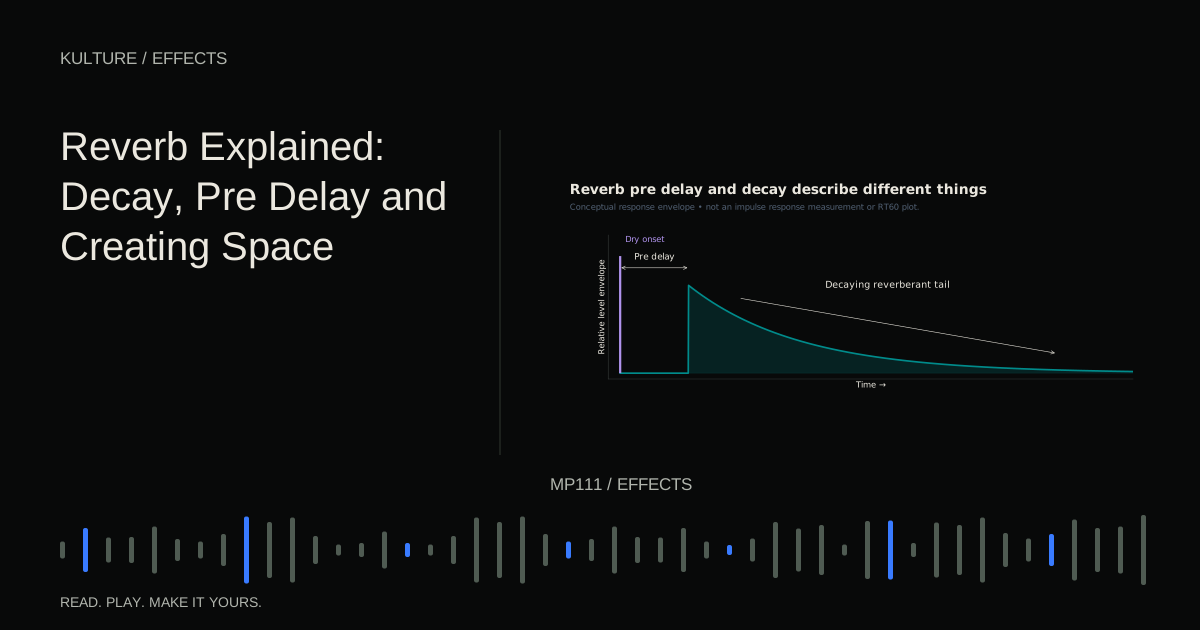 Effects5 min
Reverb Explained: Decay, Pre Delay and Creating Space
Read & try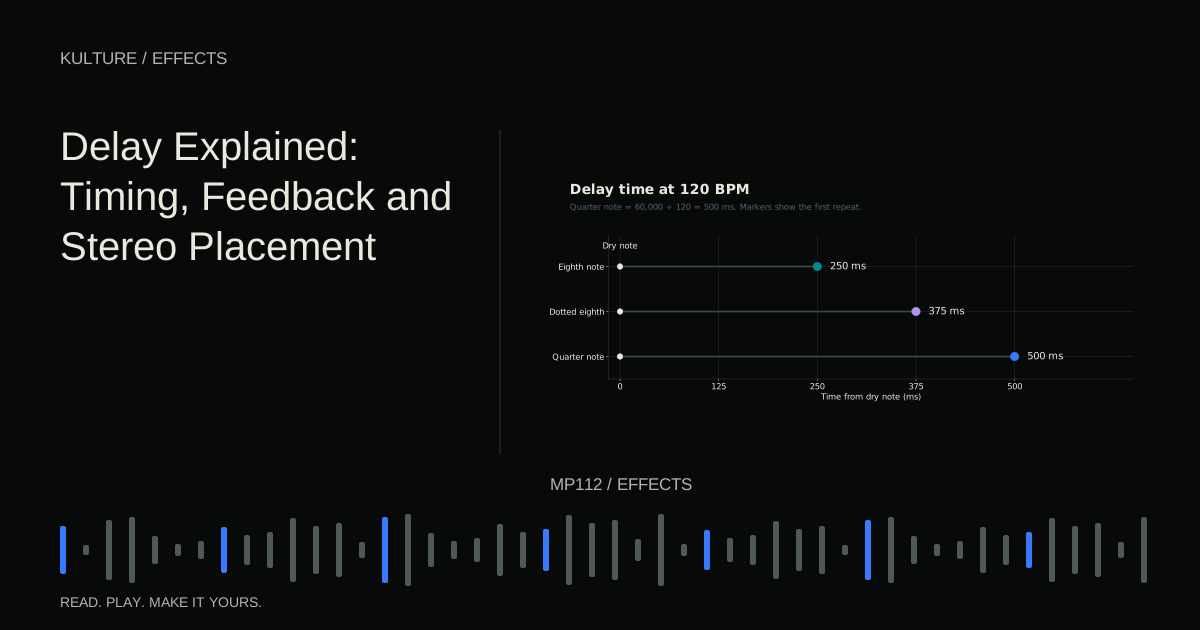 Effects5 min
Delay Explained: Timing, Feedback and Stereo Placement
Read & try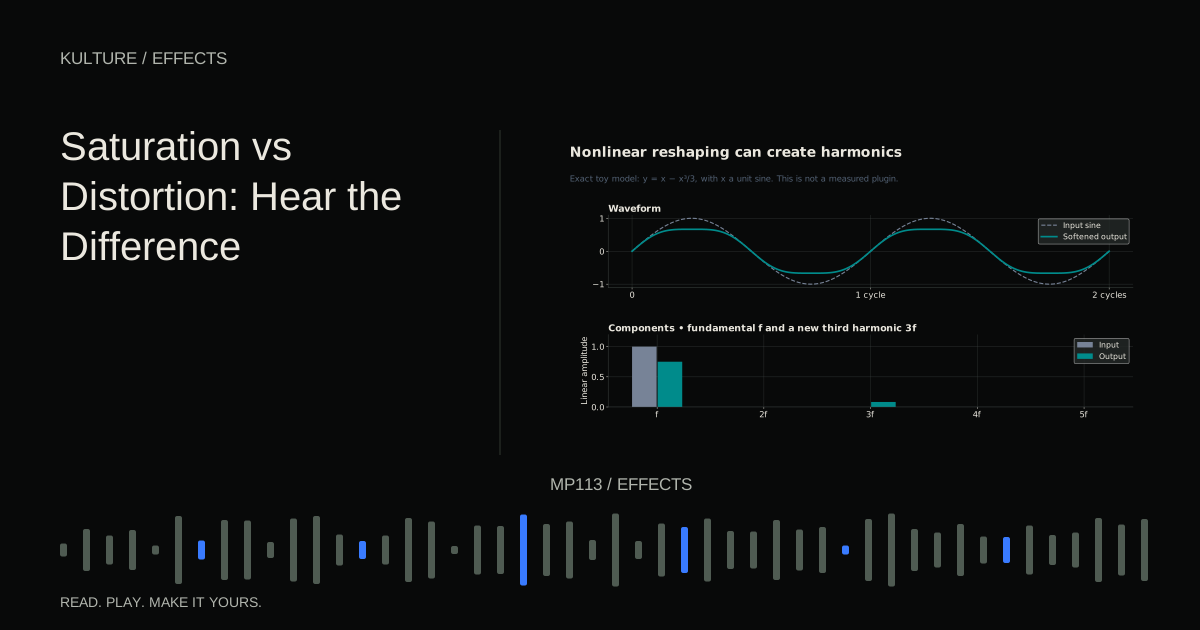 Effects5 min
Saturation vs Distortion: Hear the Difference
Read & try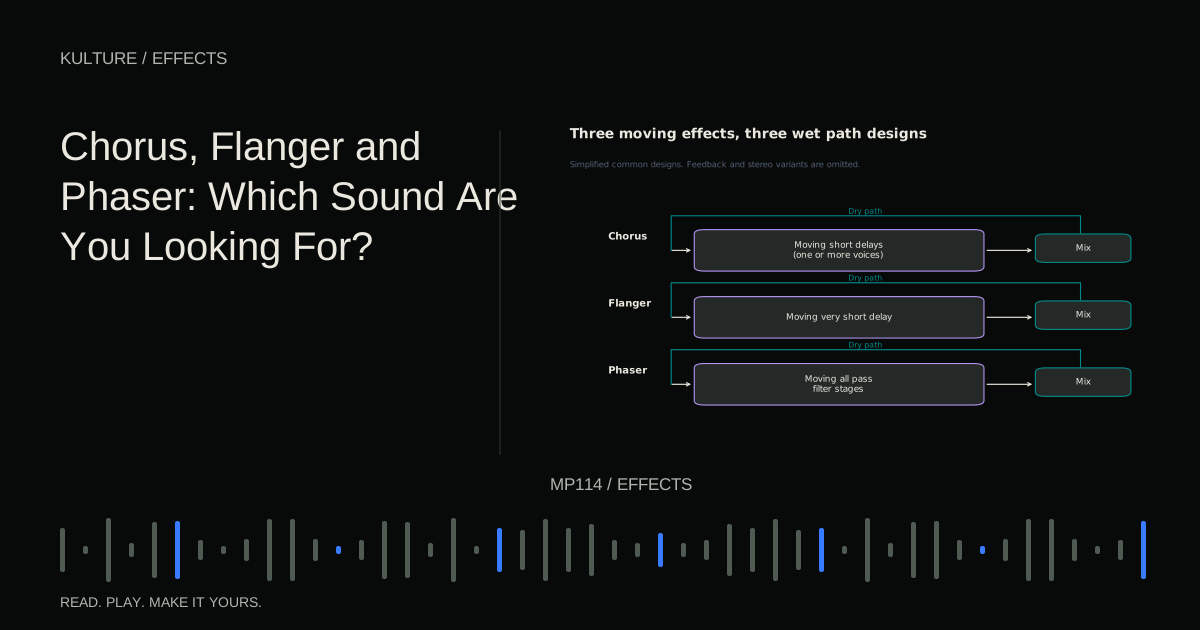 Effects5 min
Chorus, Flanger and Phaser: Which Sound Are You Looking For?
Read & try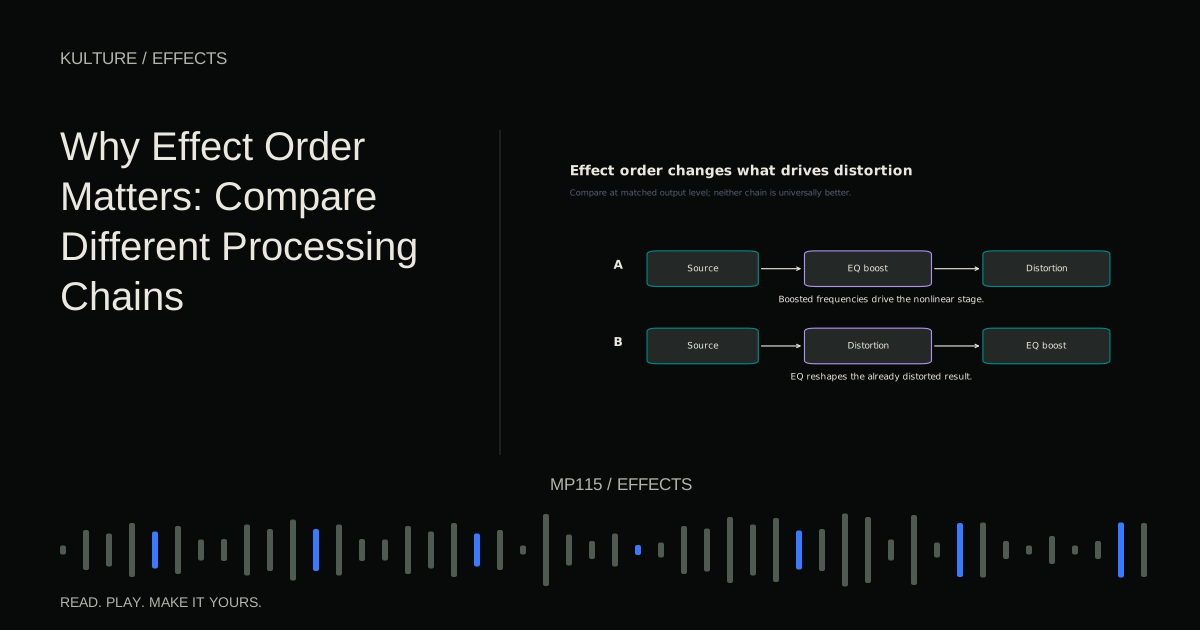 Effects5 min
Why Effect Order Matters: Compare Different Processing Chains
Read & try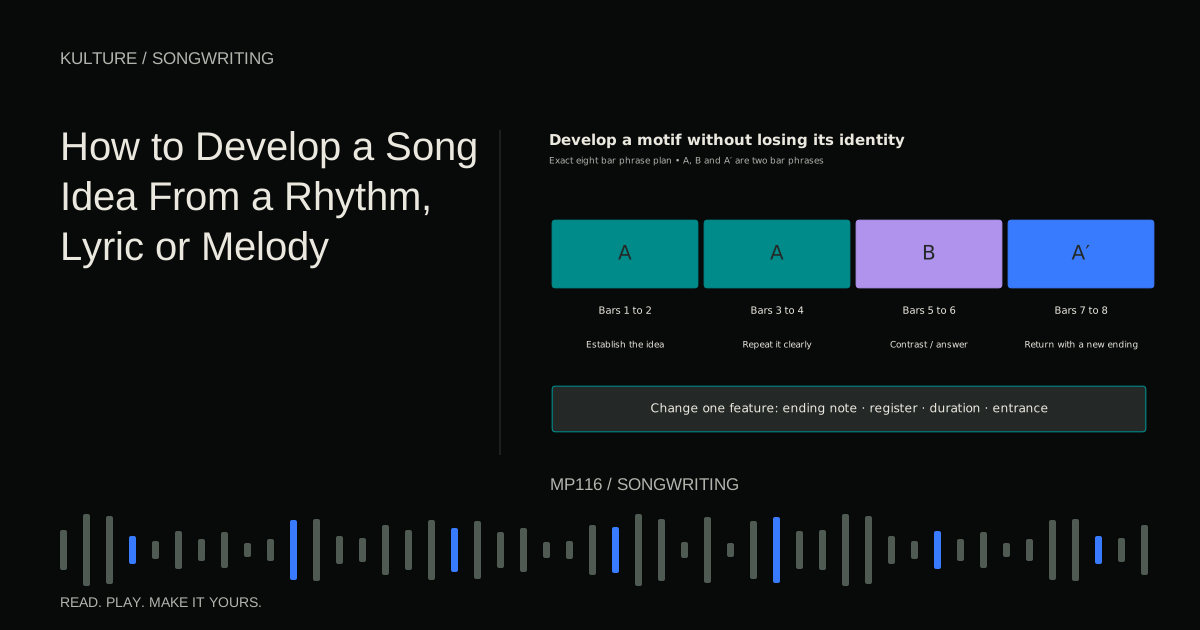 Songwriting6 min
How to Develop a Song Idea From a Rhythm, Lyric or Melody
Read & try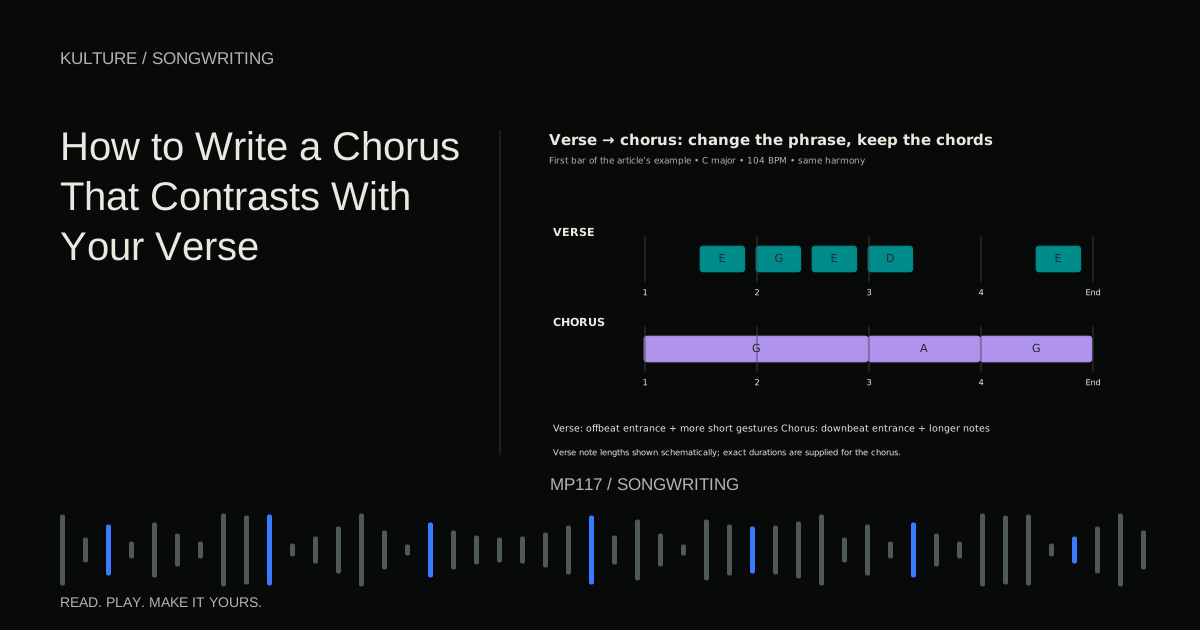 Songwriting5 min
How to Write a Chorus That Contrasts With Your Verse
Read & try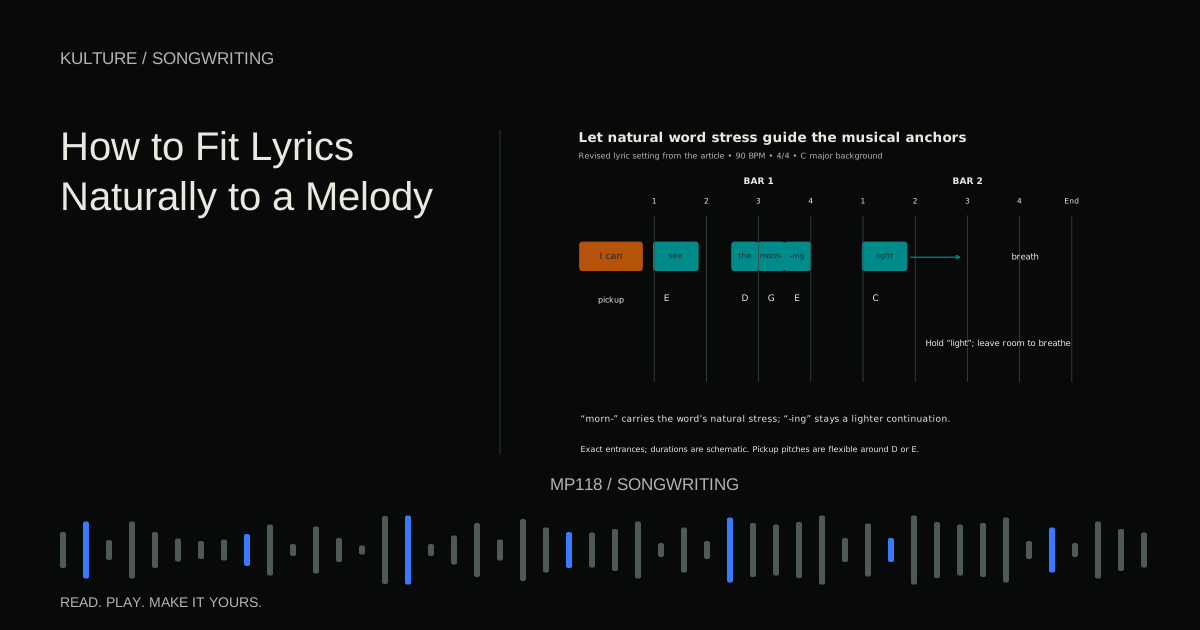 Songwriting5 min
How to Fit Lyrics Naturally to a Melody
Read & try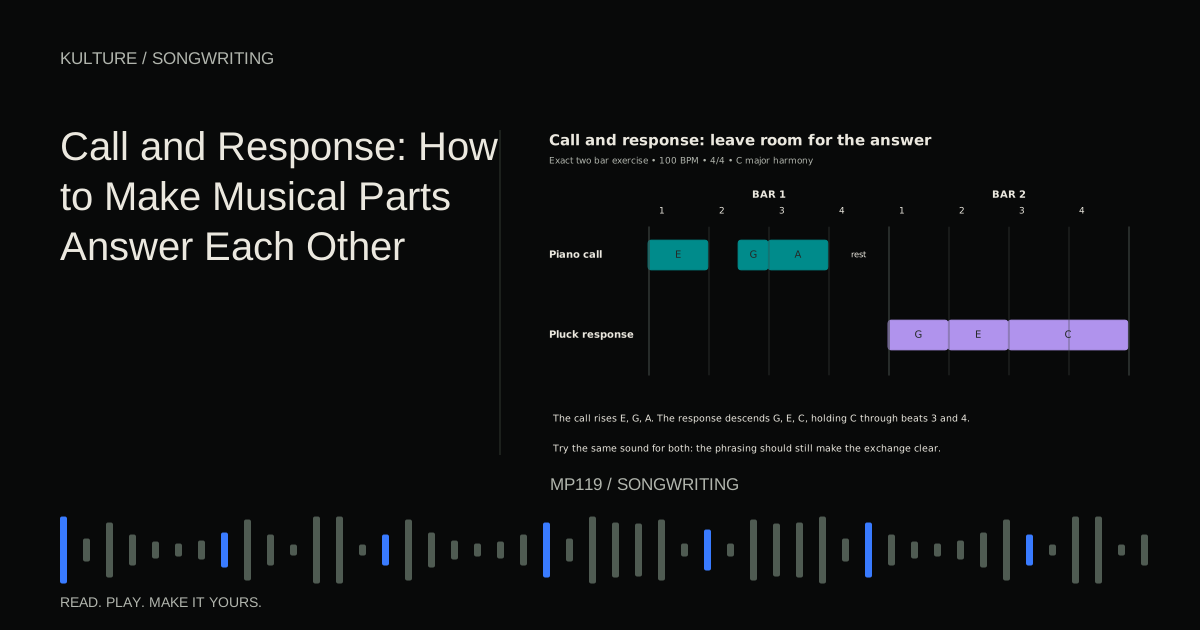 Songwriting6 min
Call and Response: How to Make Musical Parts Answer Each Other
Read & try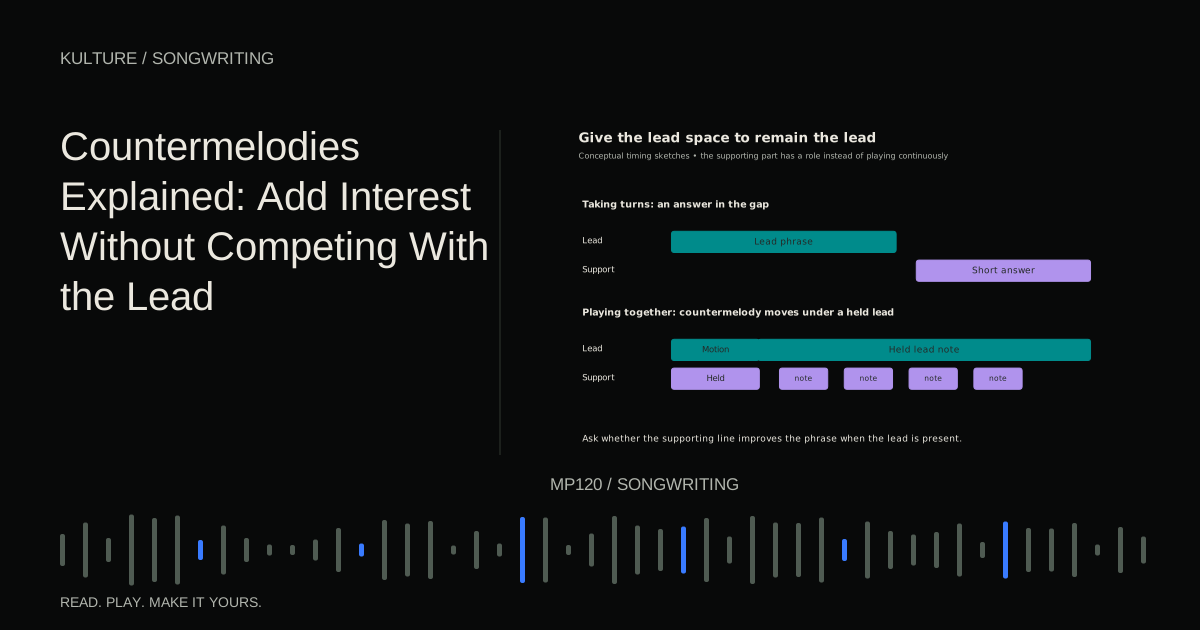 Songwriting5 min
Countermelodies Explained: Add Interest Without Competing With the Lead
Read & try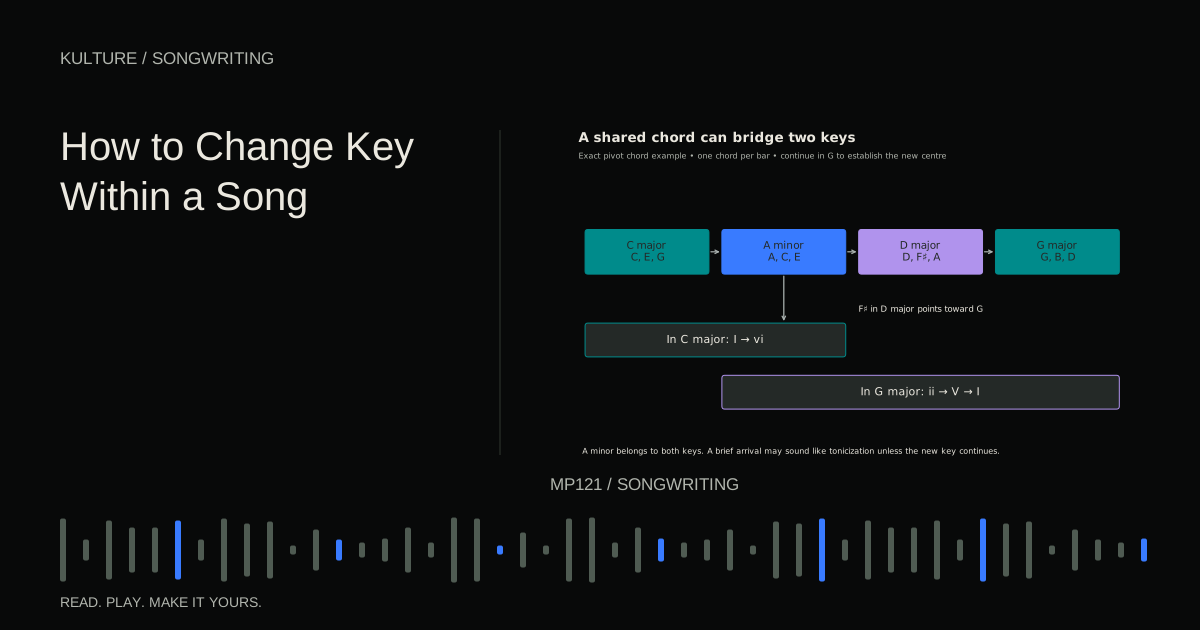 Songwriting6 min
How to Change Key Within a Song
Read & try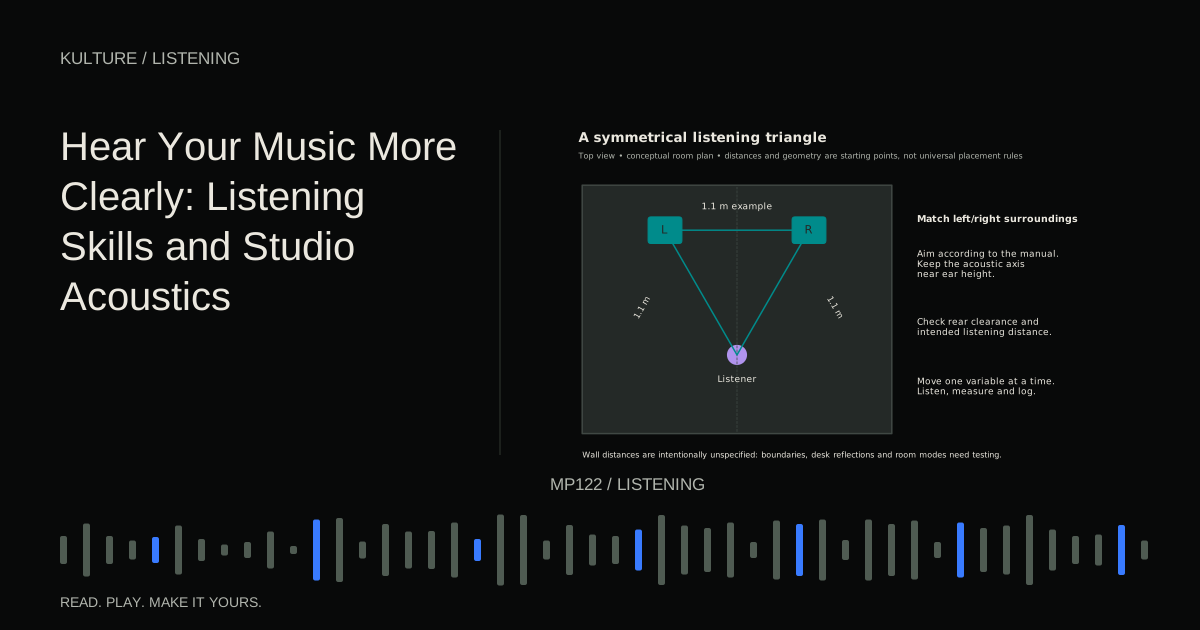 Listening7 min
Hear Your Music More Clearly: Listening Skills and Studio Acoustics
Read & try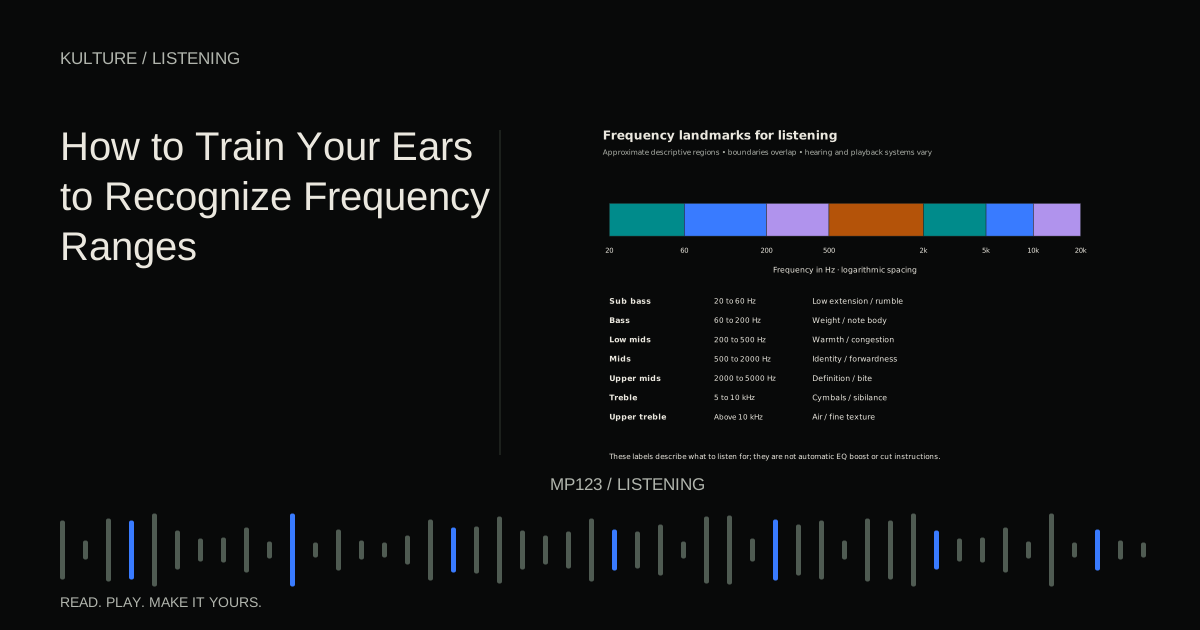 Listening6 min
How to Train Your Ears to Recognize Frequency Ranges
Read & try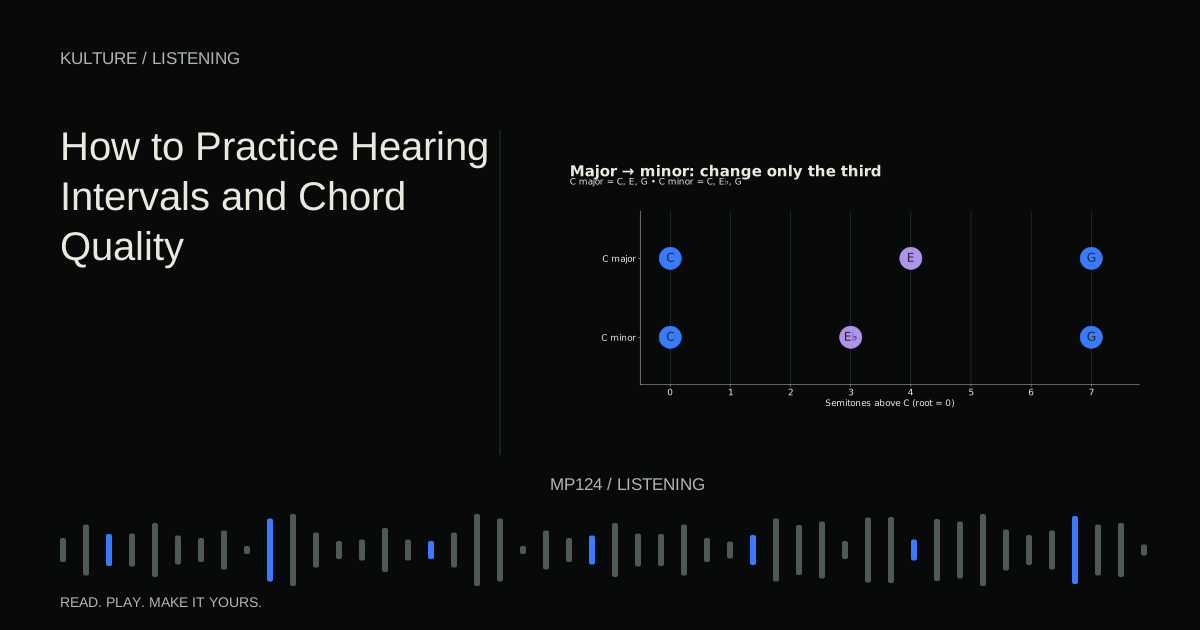 Listening6 min
How to Practice Hearing Intervals and Chord Quality
Read & try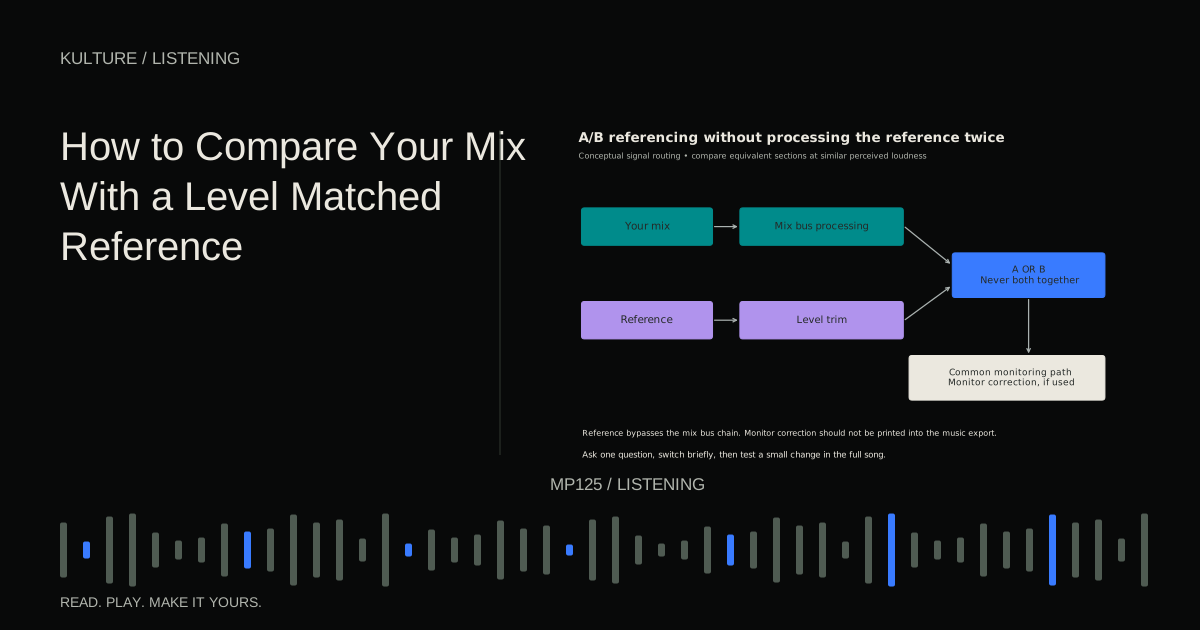 Listening6 min
How to Compare Your Mix With a Level Matched Reference
Read & try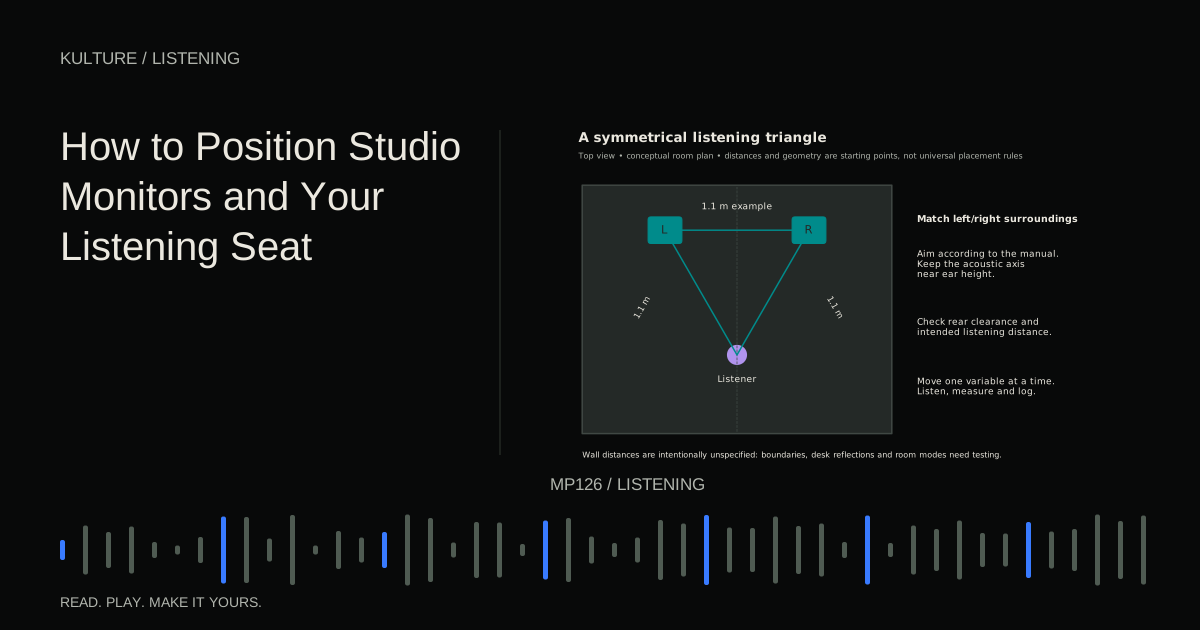 Listening5 min
How to Position Studio Monitors and Your Listening Seat
Read & try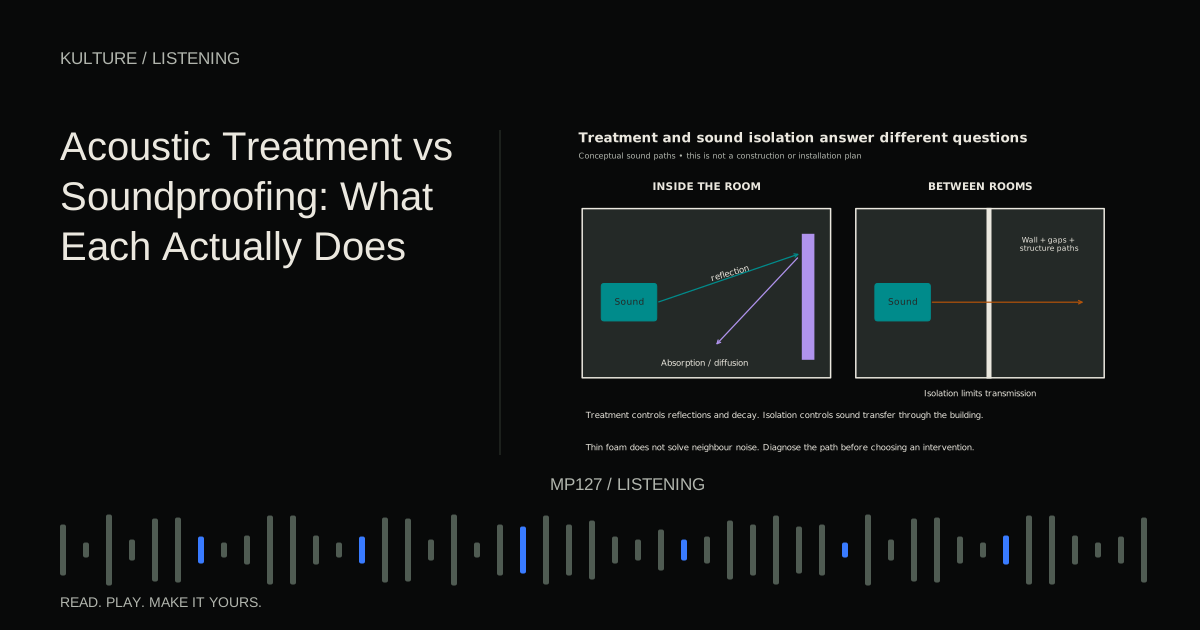 Listening5 min
Acoustic Treatment vs Soundproofing: What Each Actually Does
Read & try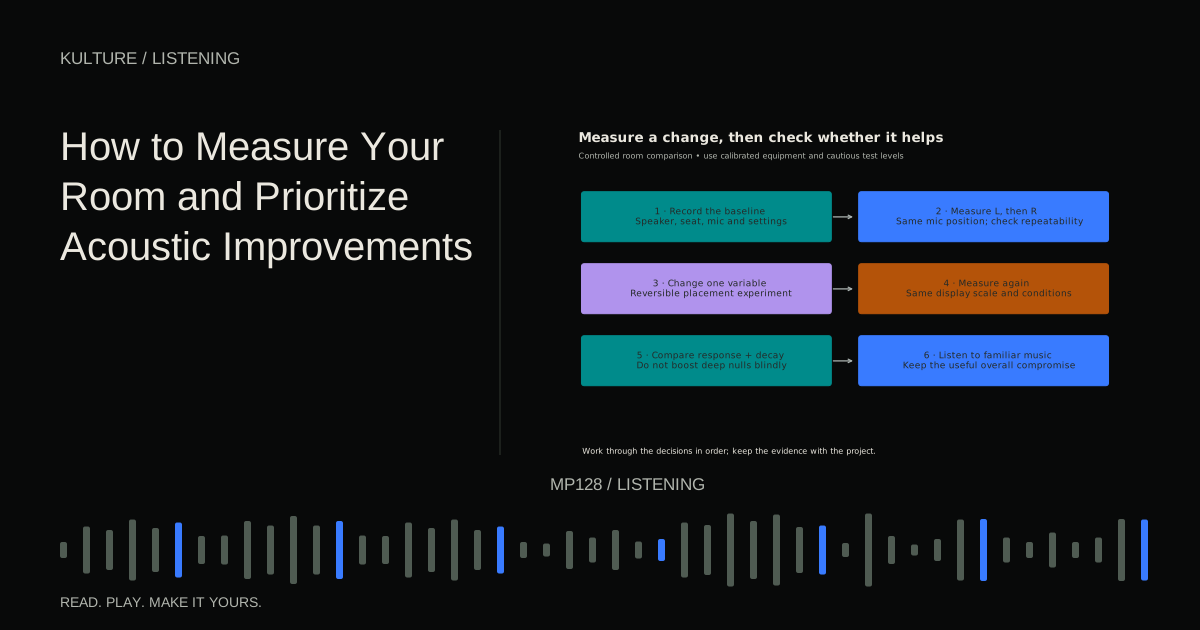 Listening5 min
How to Measure Your Room and Prioritize Acoustic Improvements
Read & try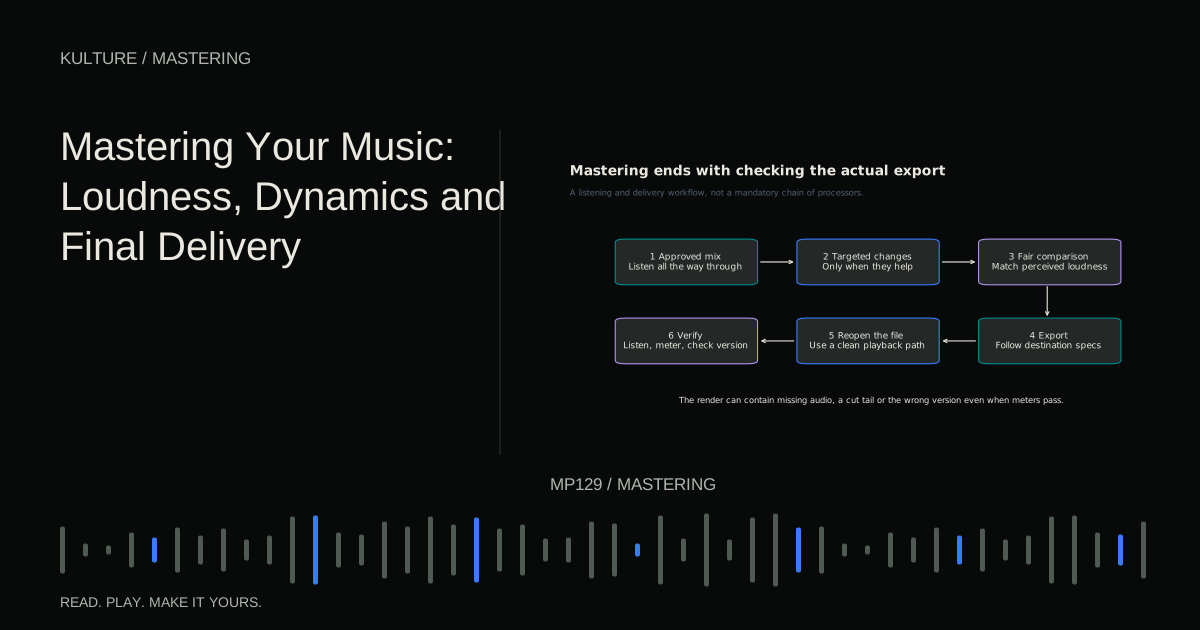 Mastering7 min
Mastering Your Music: Loudness, Dynamics and Final Delivery
Read & try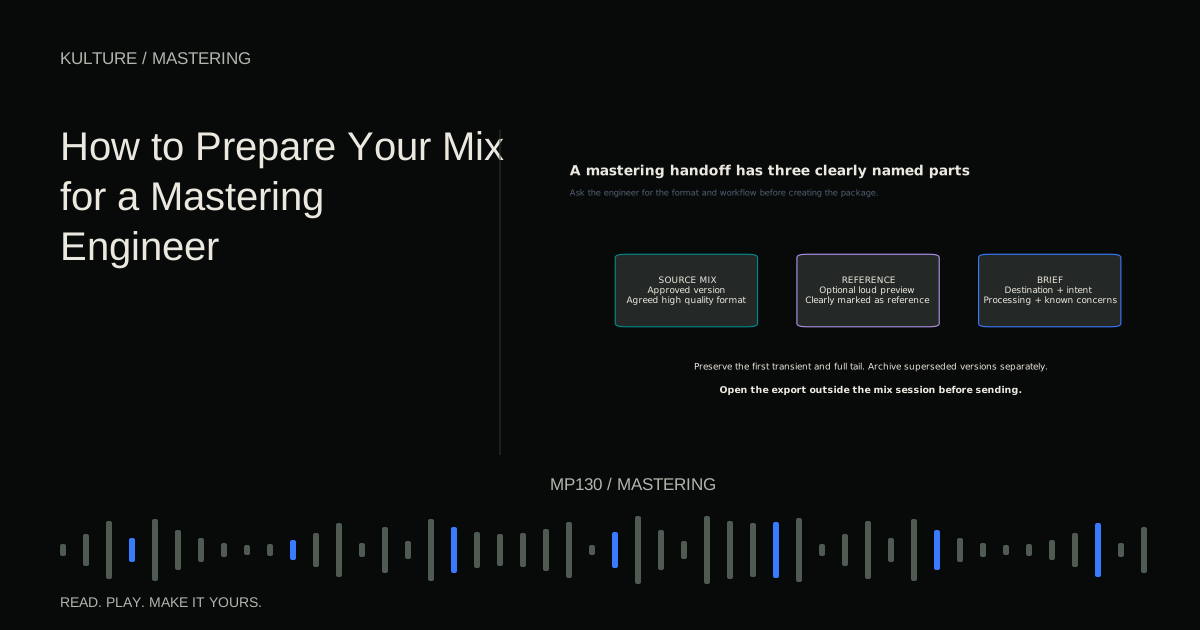 Mastering5 min
How to Prepare Your Mix for a Mastering Engineer
Read & try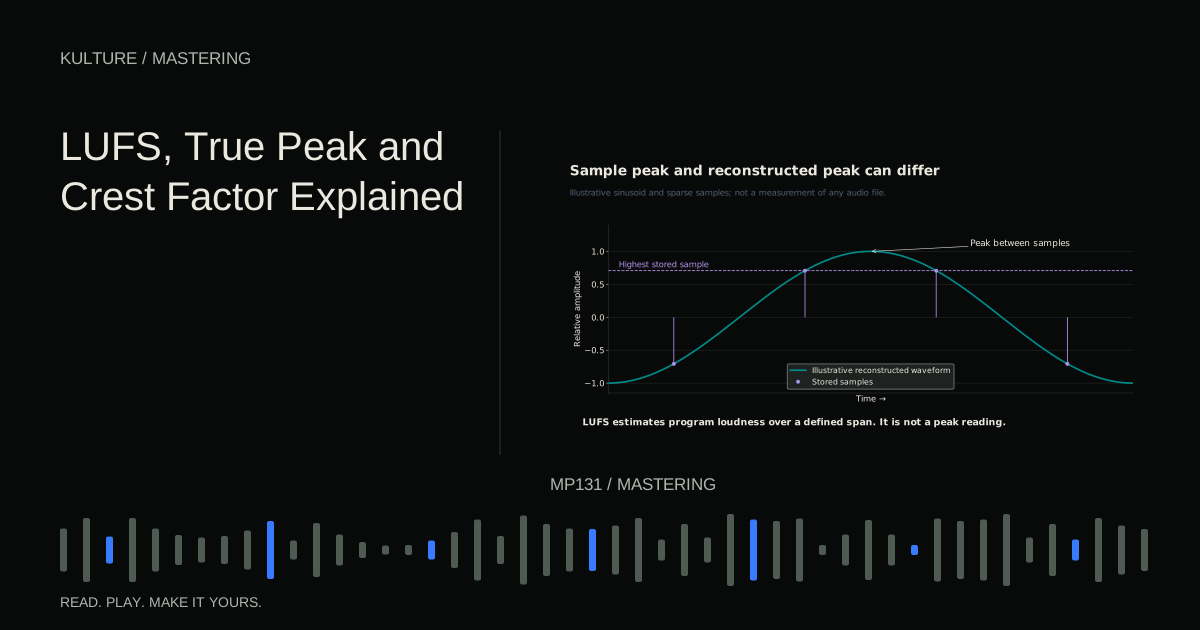 Mastering5 min
LUFS, True Peak and Crest Factor Explained
Read & try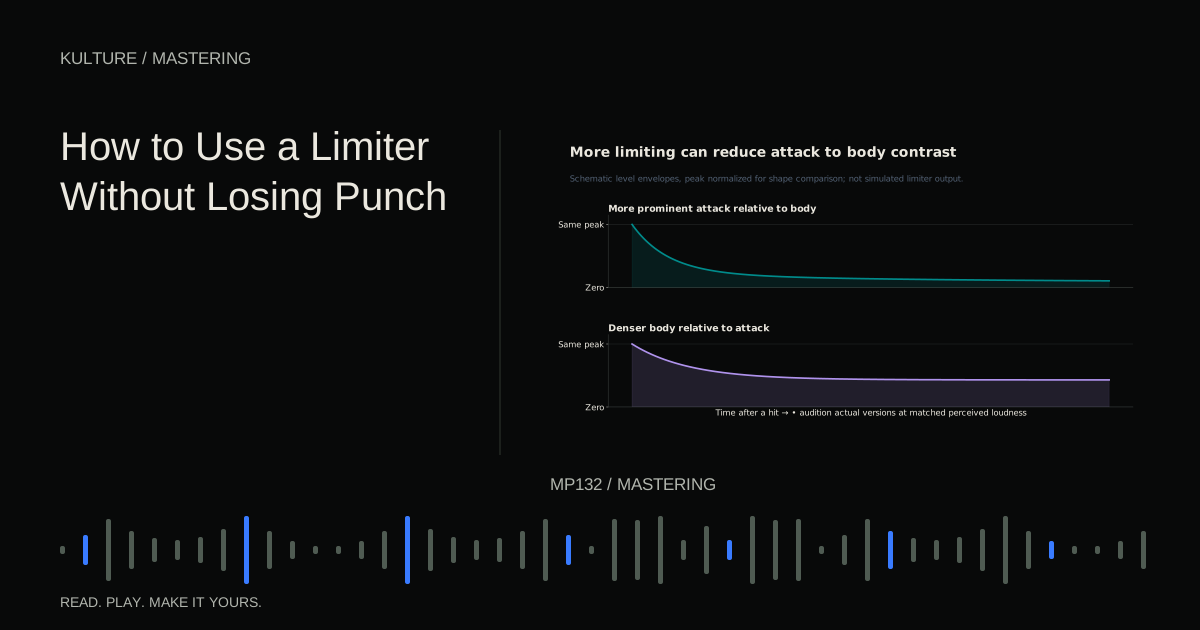 Mastering5 min
How to Use a Limiter Without Losing Punch
Read & try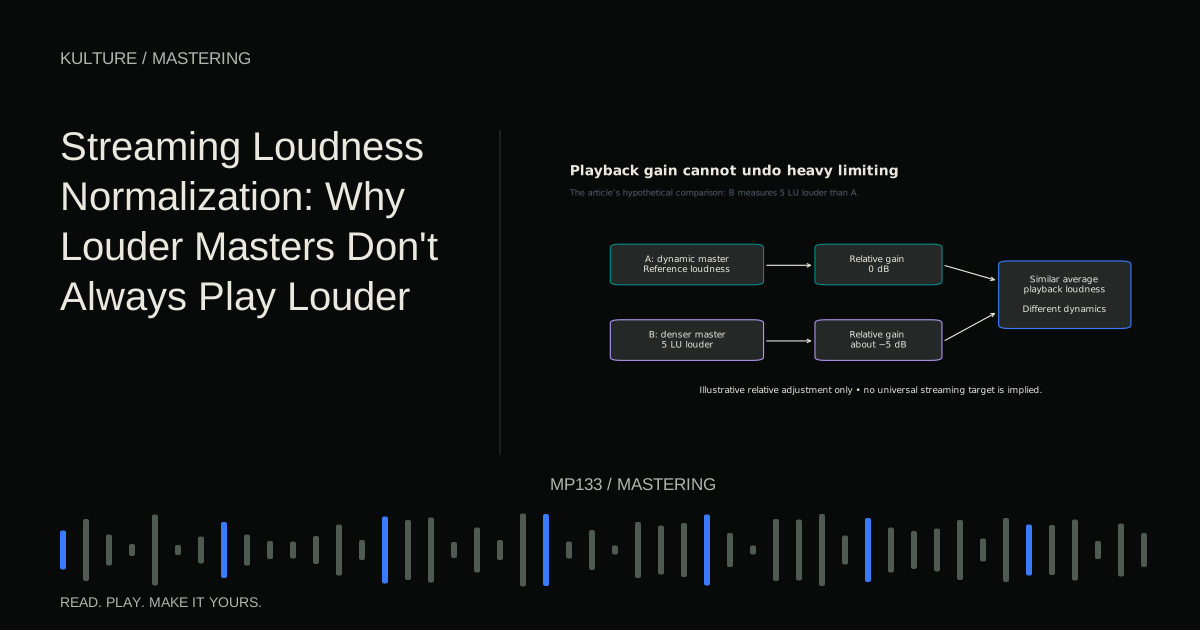 Mastering5 min
Streaming Loudness Normalization: Why Louder Masters Don't Always Play Louder
Read & try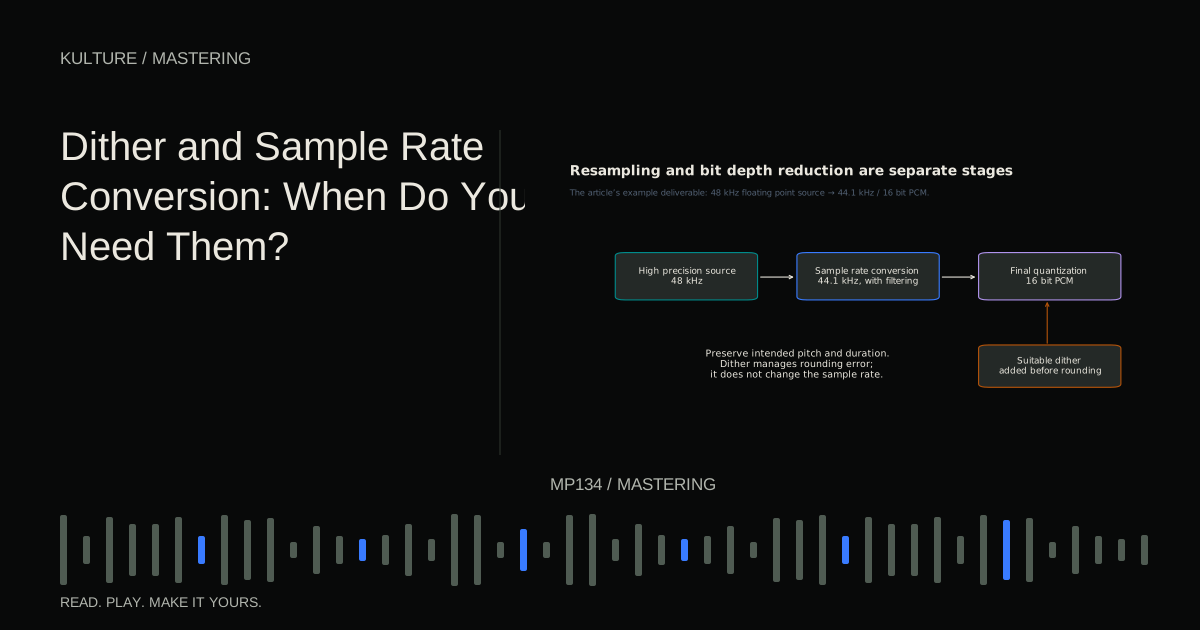 Mastering5 min
Dither and Sample Rate Conversion: When Do You Need Them?
Read & try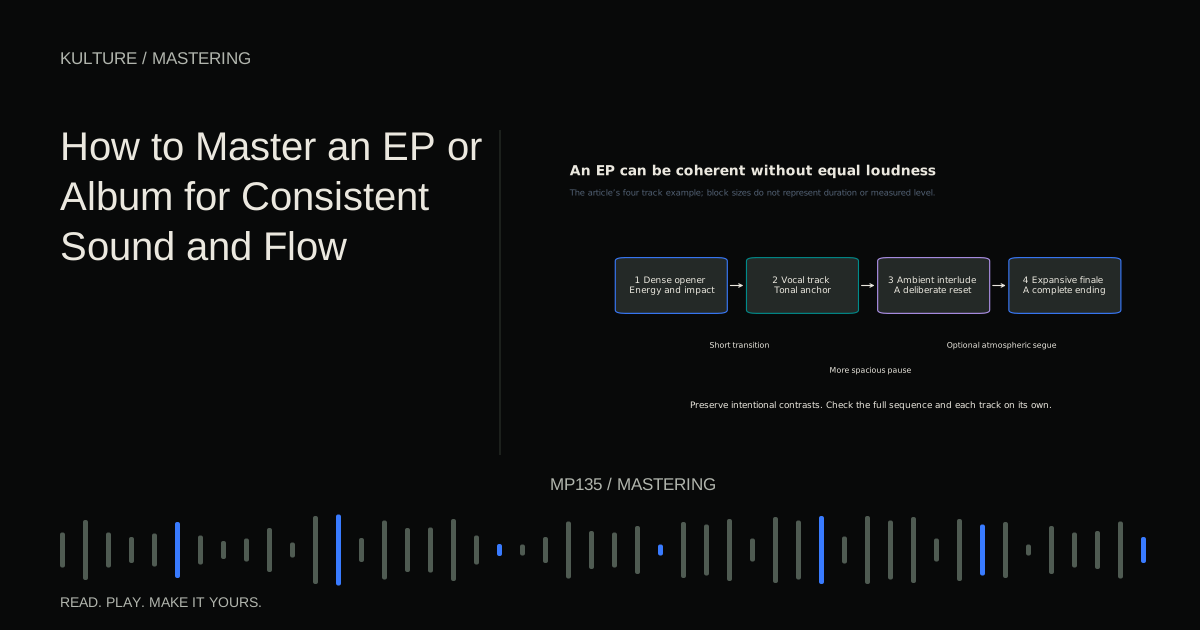 Mastering6 min
How to Master an EP or Album for Consistent Sound and Flow
Read & try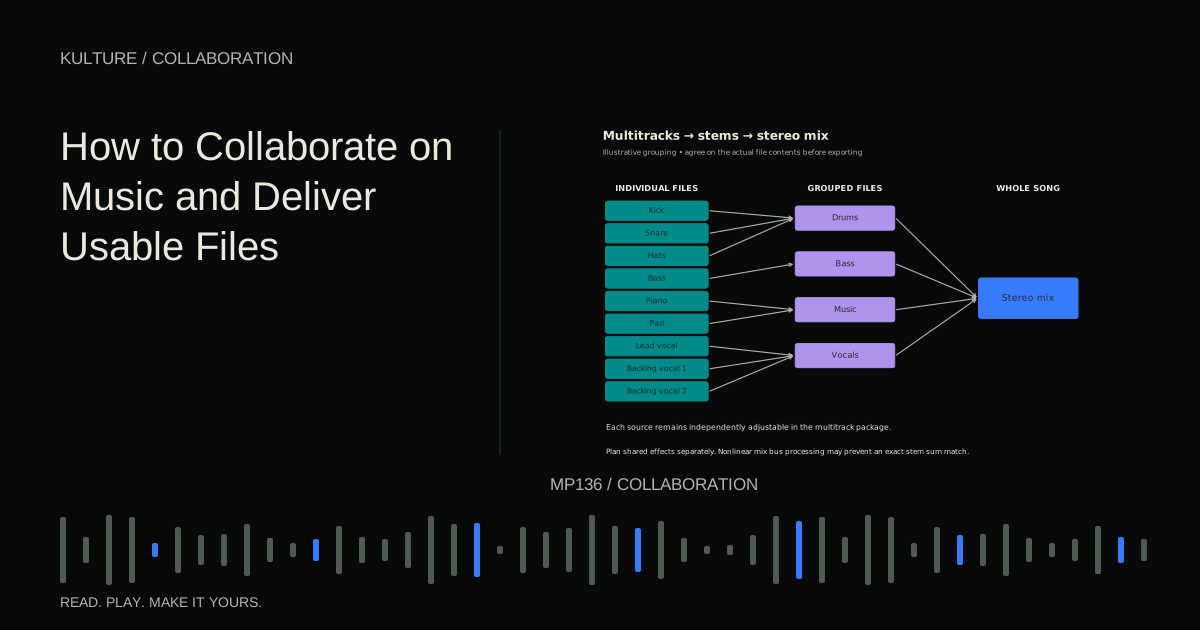 Collaboration6 min
How to Collaborate on Music and Deliver Usable Files
Read & try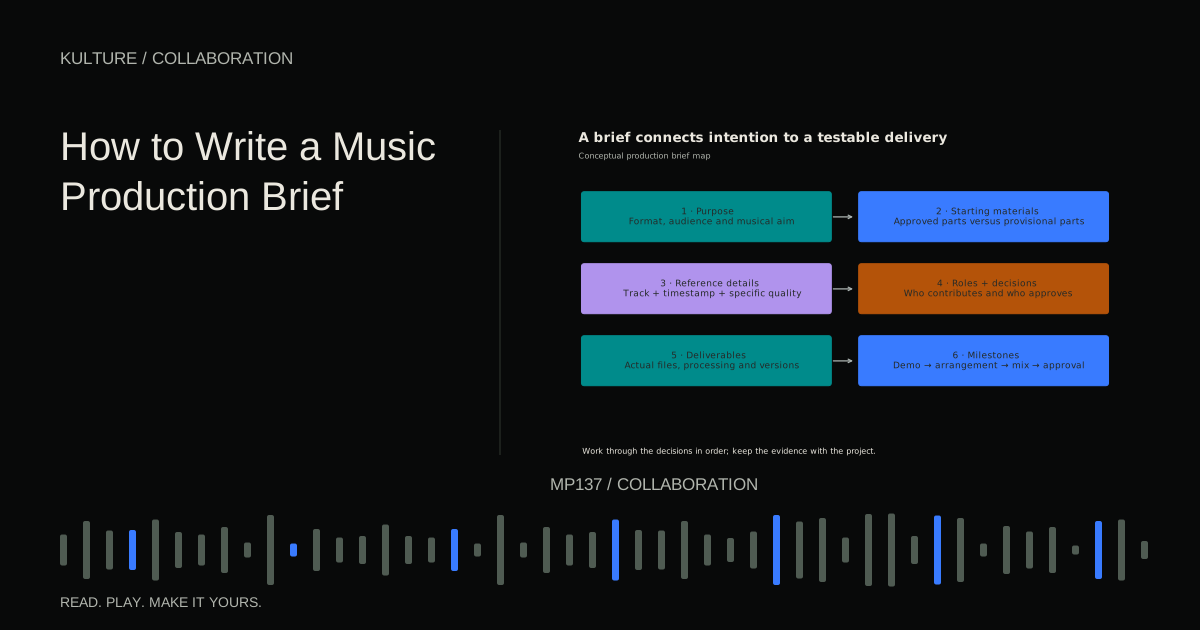 Collaboration5 min
How to Write a Music Production Brief
Read & try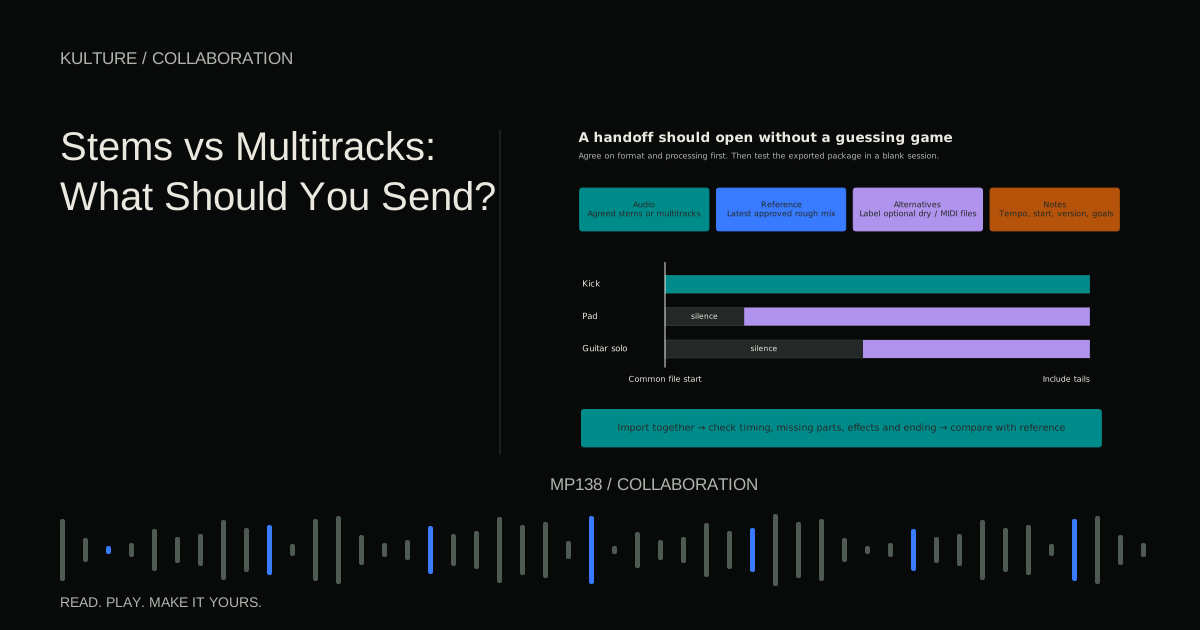 Collaboration5 min
Stems vs Multitracks: What Should You Send?
Read & try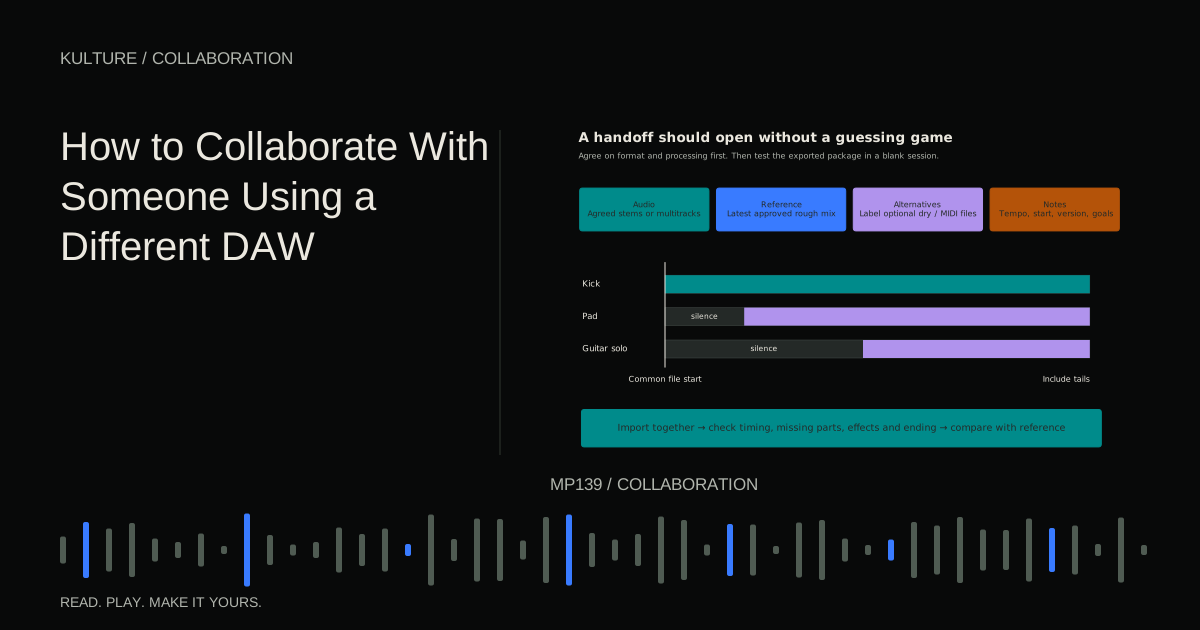 Collaboration5 min
How to Collaborate With Someone Using a Different DAW
Read & try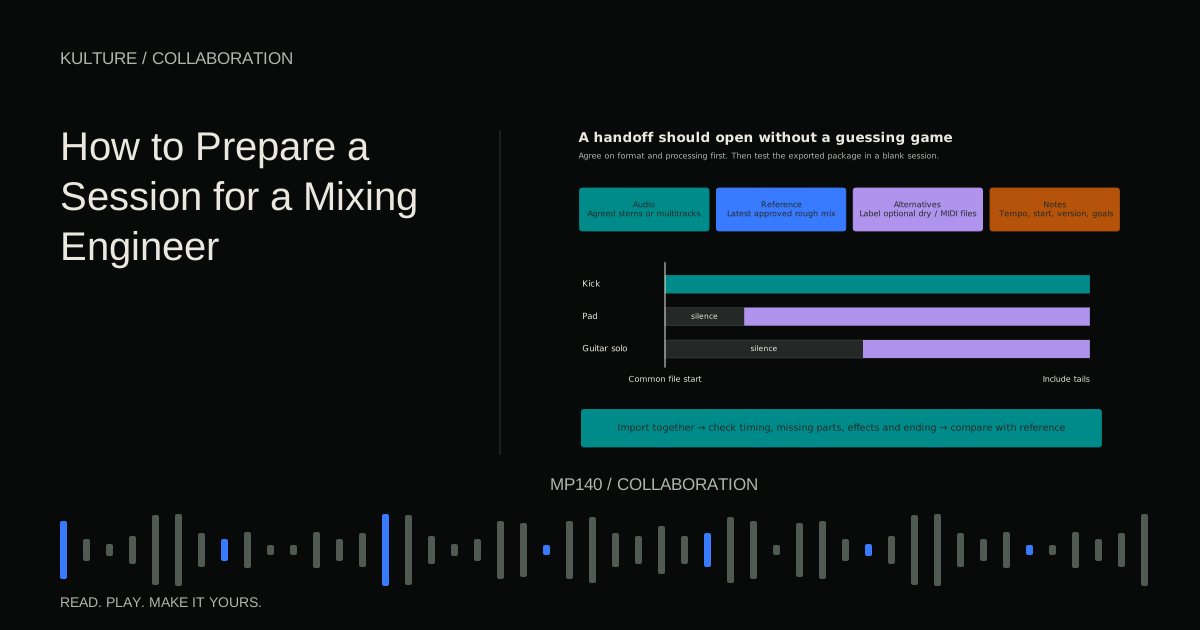 Collaboration5 min
How to Prepare a Session for a Mixing Engineer
Read & try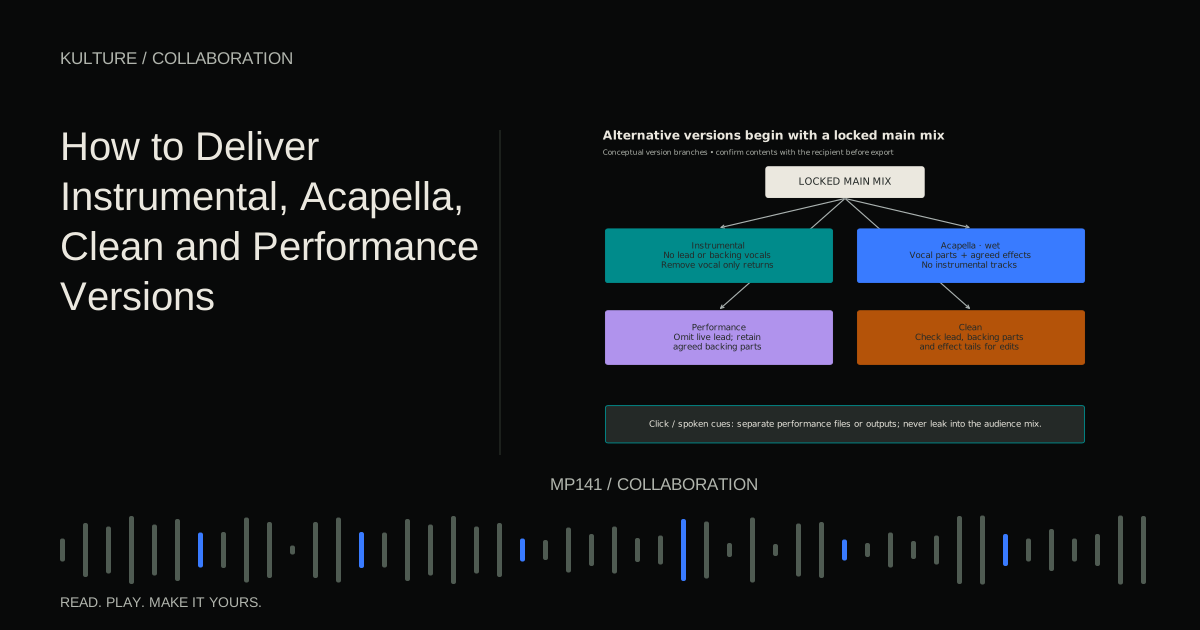 Collaboration5 min
How to Deliver Instrumental, Acapella, Clean and Performance Versions
Read & try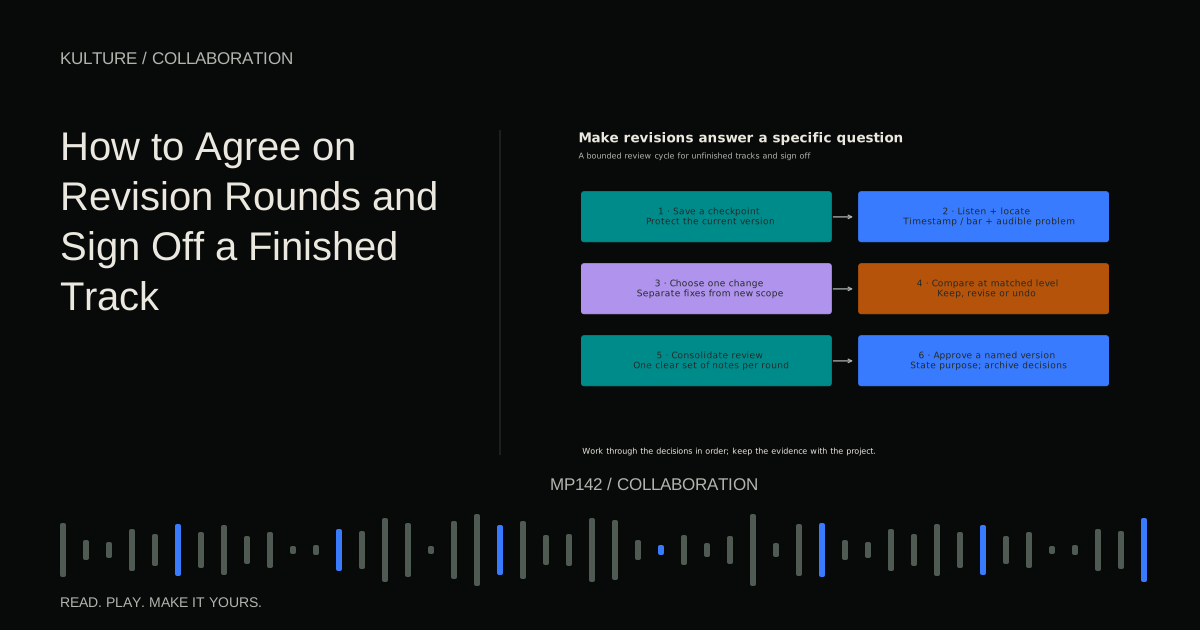 Collaboration5 min
How to Agree on Revision Rounds and Sign Off a Finished Track
Read & try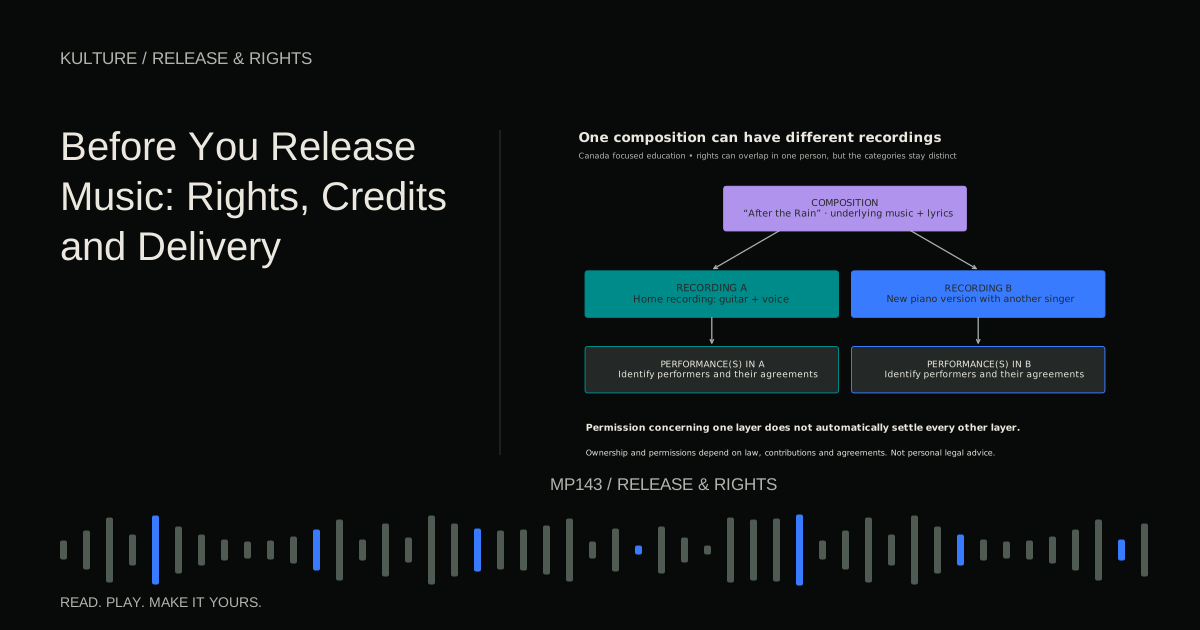 Release & rights6 min
Before You Release Music: Rights, Credits and Delivery
Read & try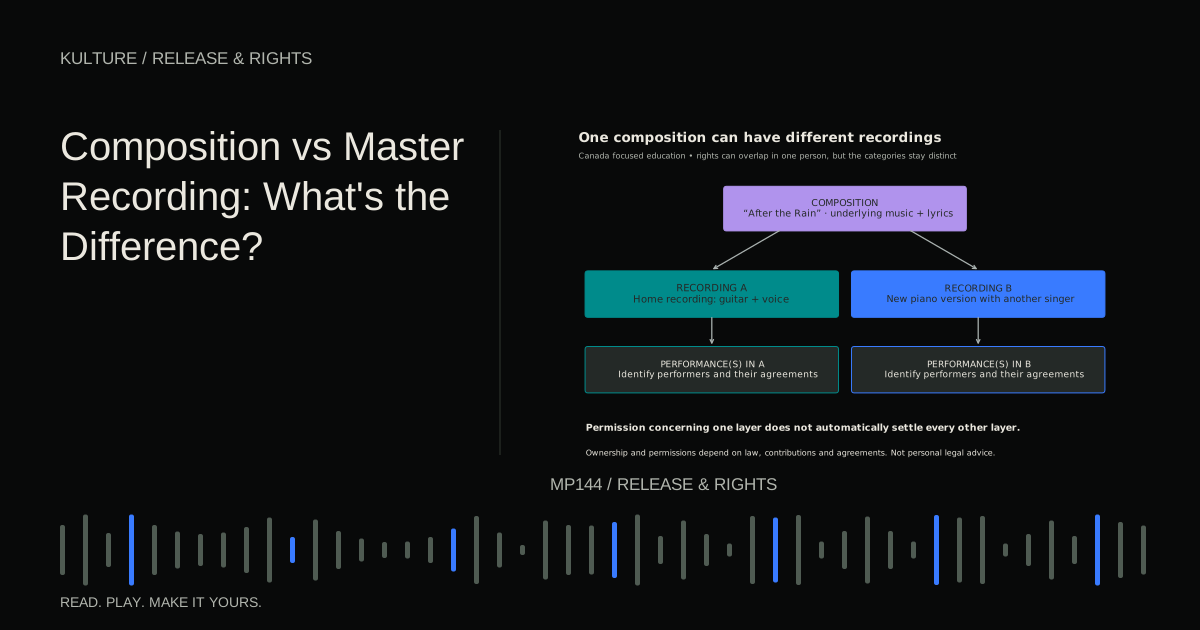 Release & rights5 min
Composition vs Master Recording: What's the Difference?
Read & try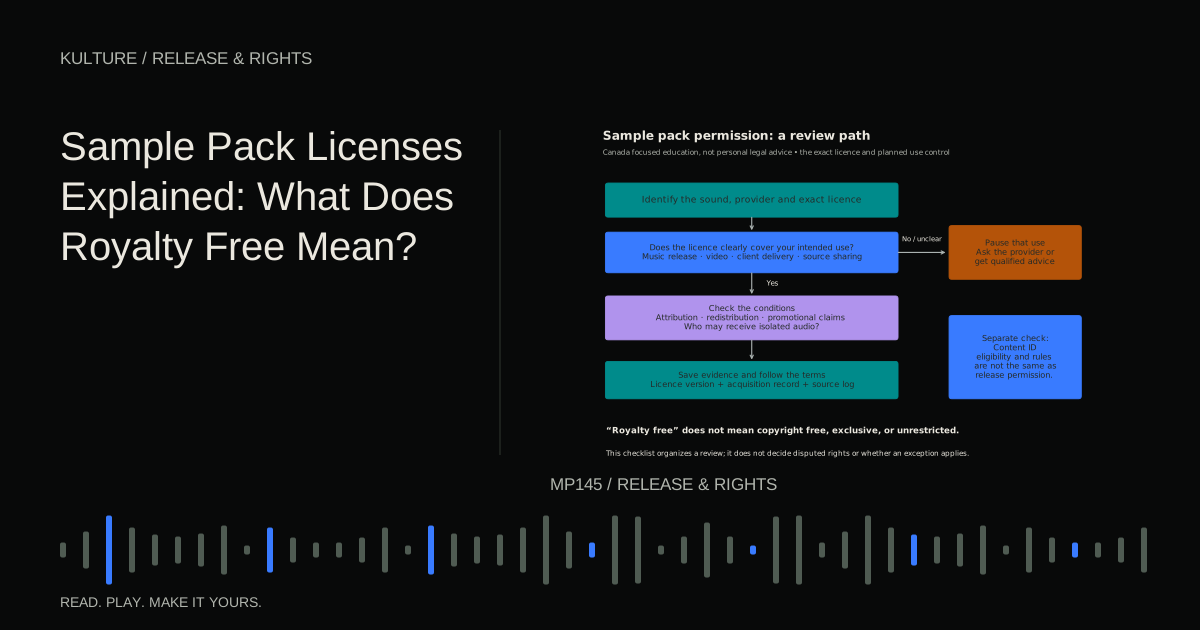 Release & rights5 min
Sample Pack Licenses Explained: What Does Royalty Free Mean?
Read & try Release & rights5 min
Sampling vs Interpolation: What Permissions Might You Need?
Read & try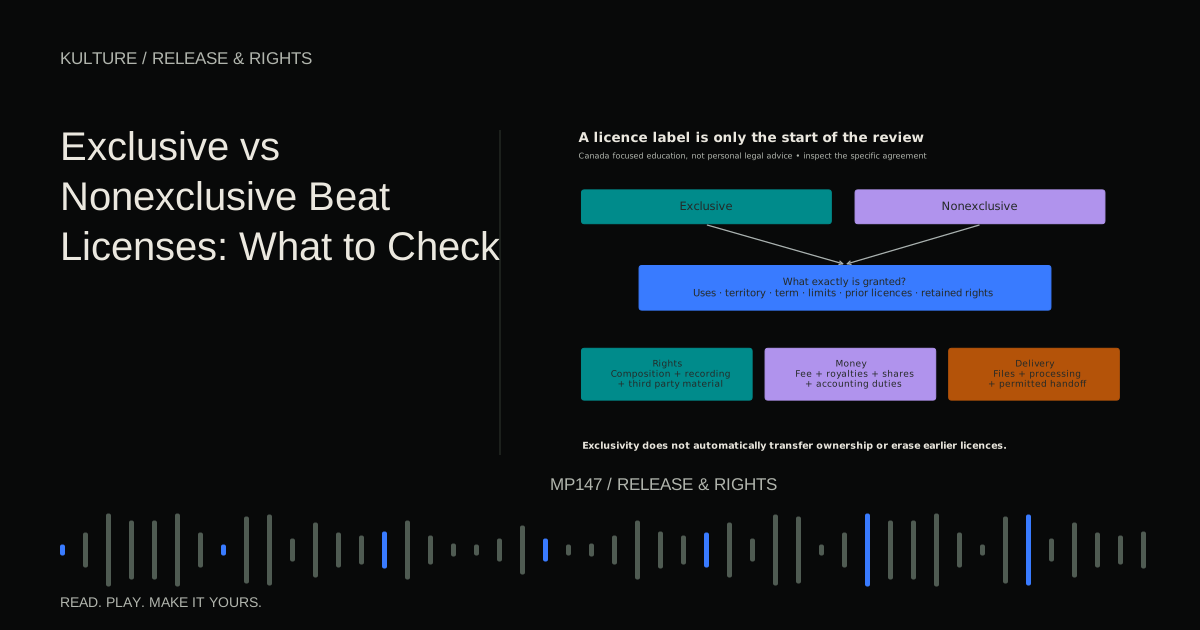 Release & rights5 min
Exclusive vs Nonexclusive Beat Licenses: What to Check
Read & try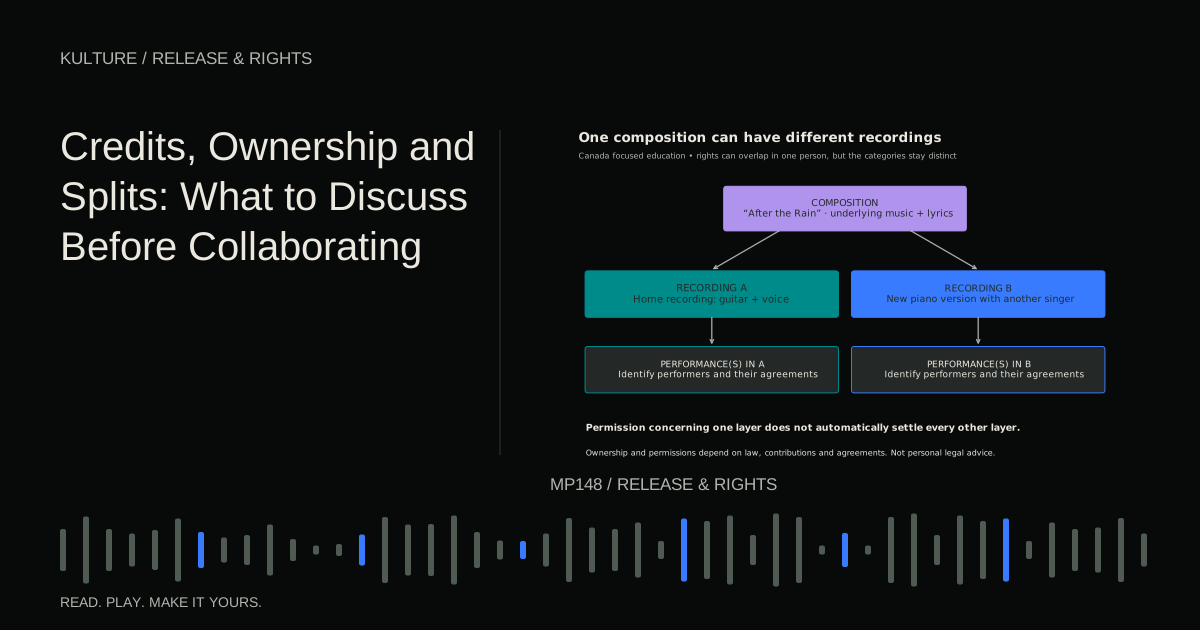 Release & rights5 min
Credits, Ownership and Splits: What to Discuss Before Collaborating
Read & try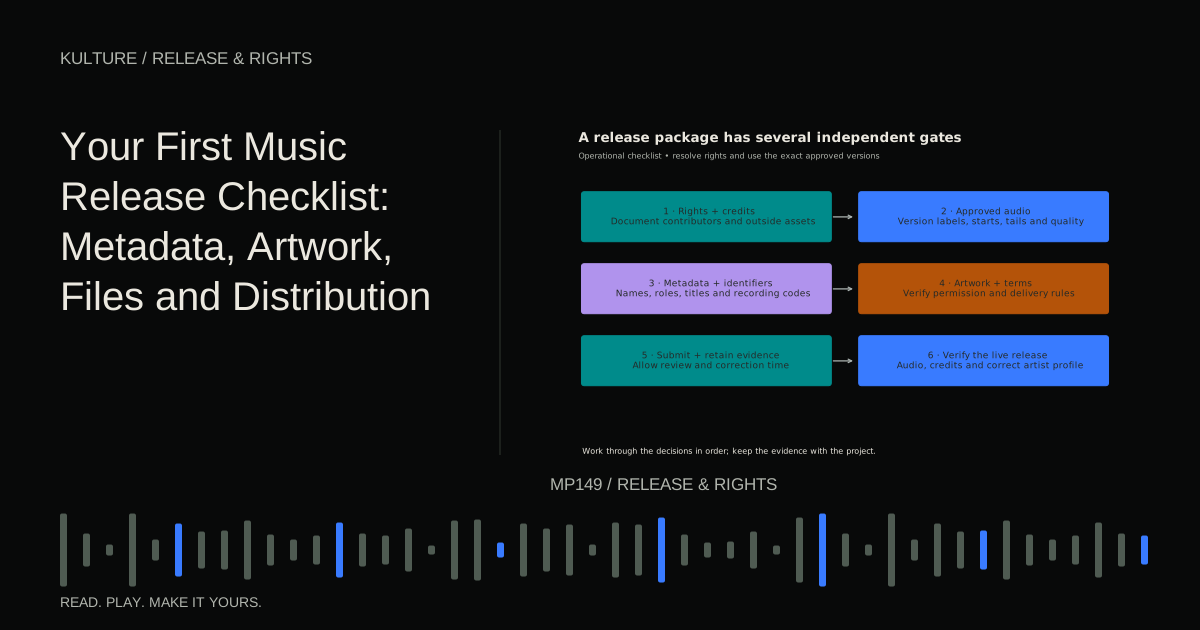 Release & rights6 min
Your First Music Release Checklist: Metadata, Artwork, Files and Distribution
Read & try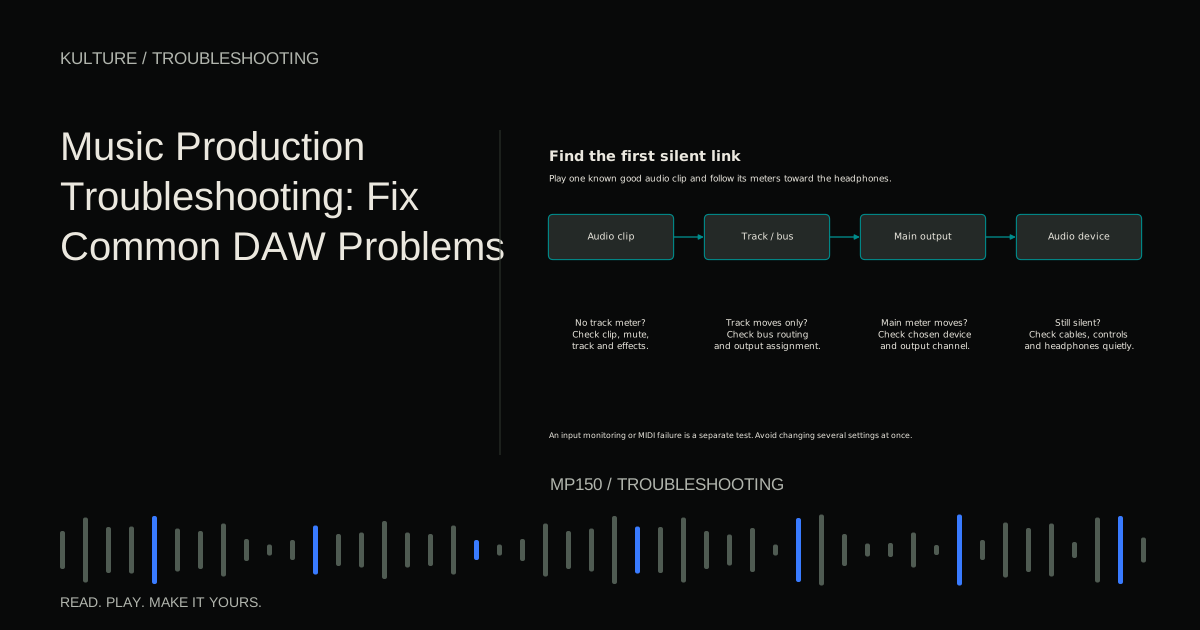 Troubleshooting7 min
Music Production Troubleshooting: Fix Common DAW Problems
Read & try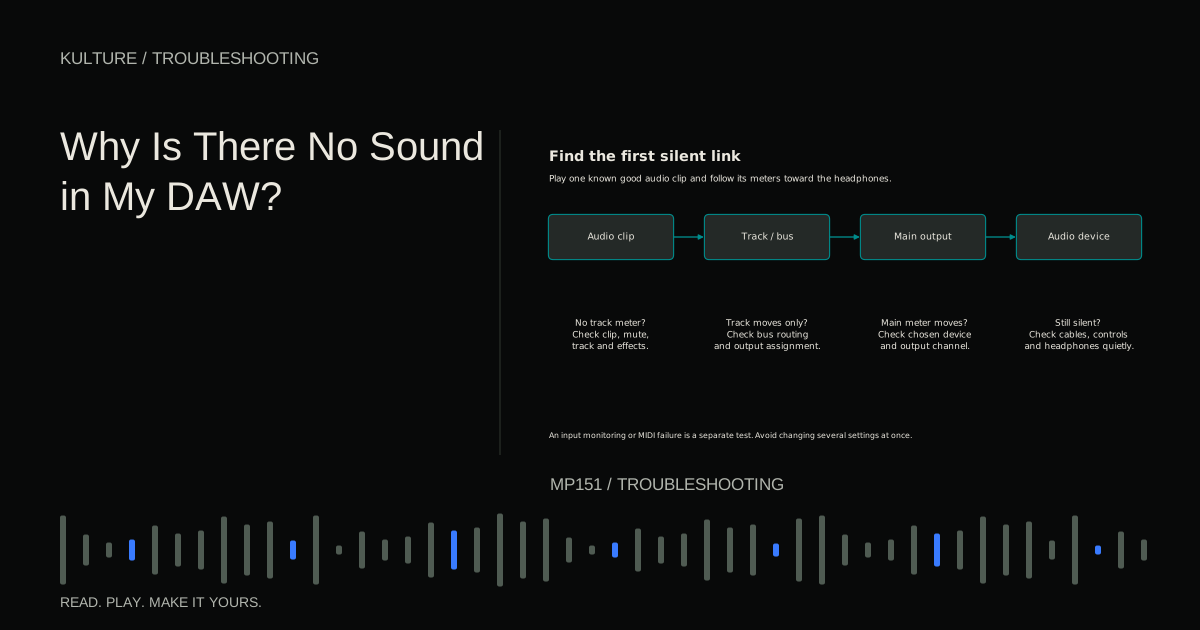 Troubleshooting6 min
Why Is There No Sound in My DAW?
Read & try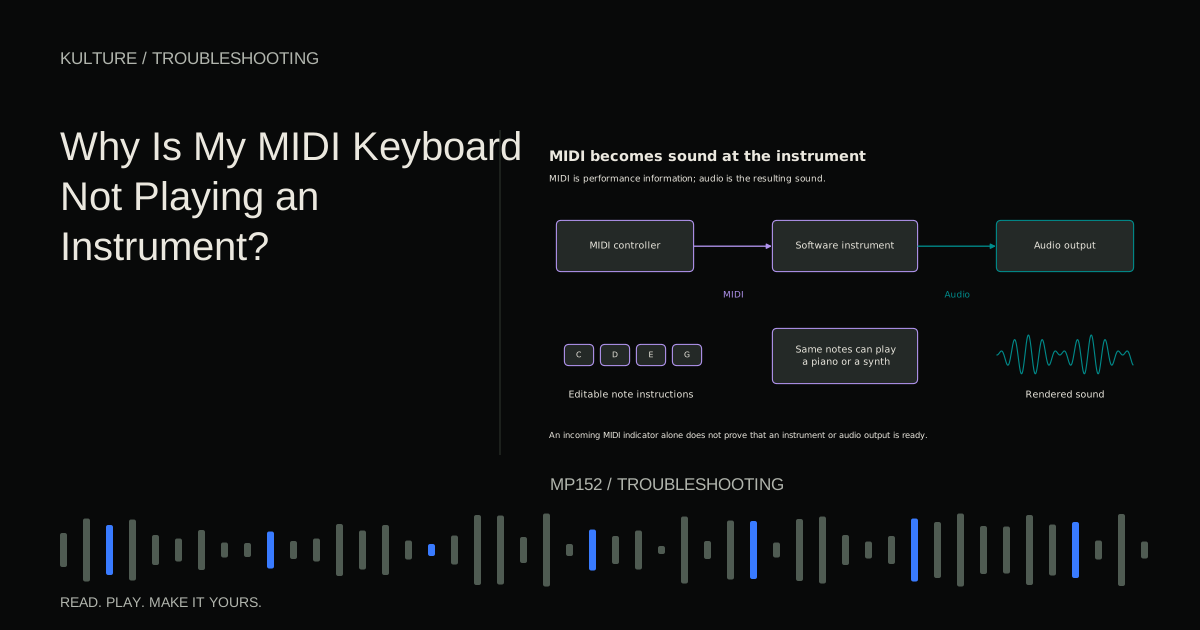 Troubleshooting6 min
Why Is My MIDI Keyboard Not Playing an Instrument?
Read & try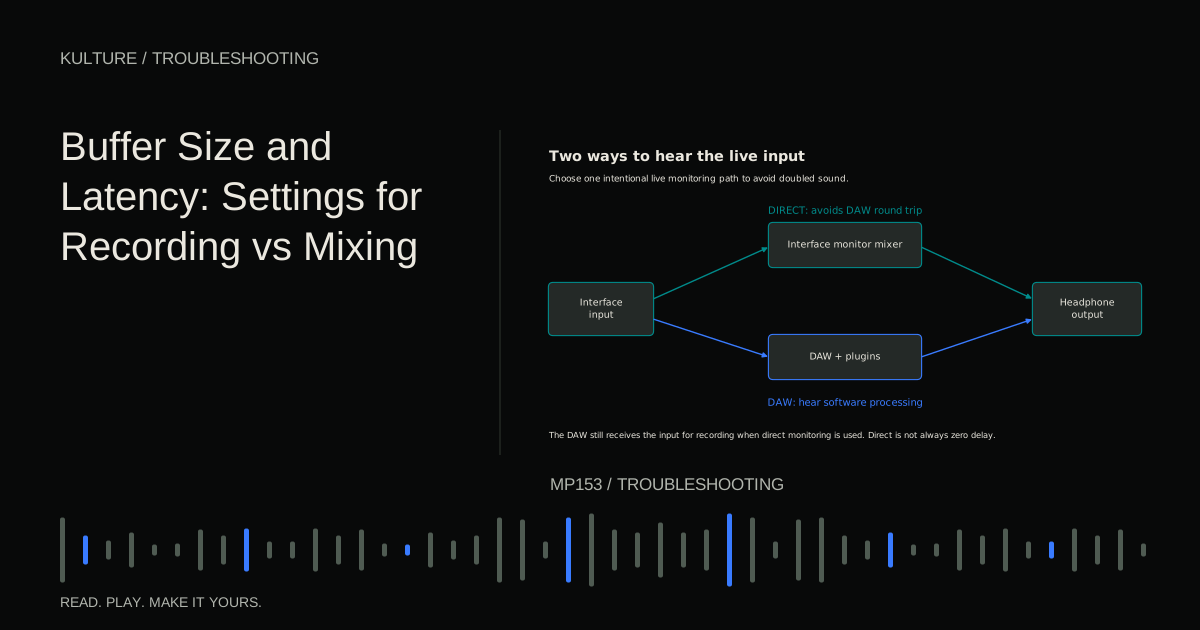 Troubleshooting6 min
Buffer Size and Latency: Settings for Recording vs Mixing
Read & try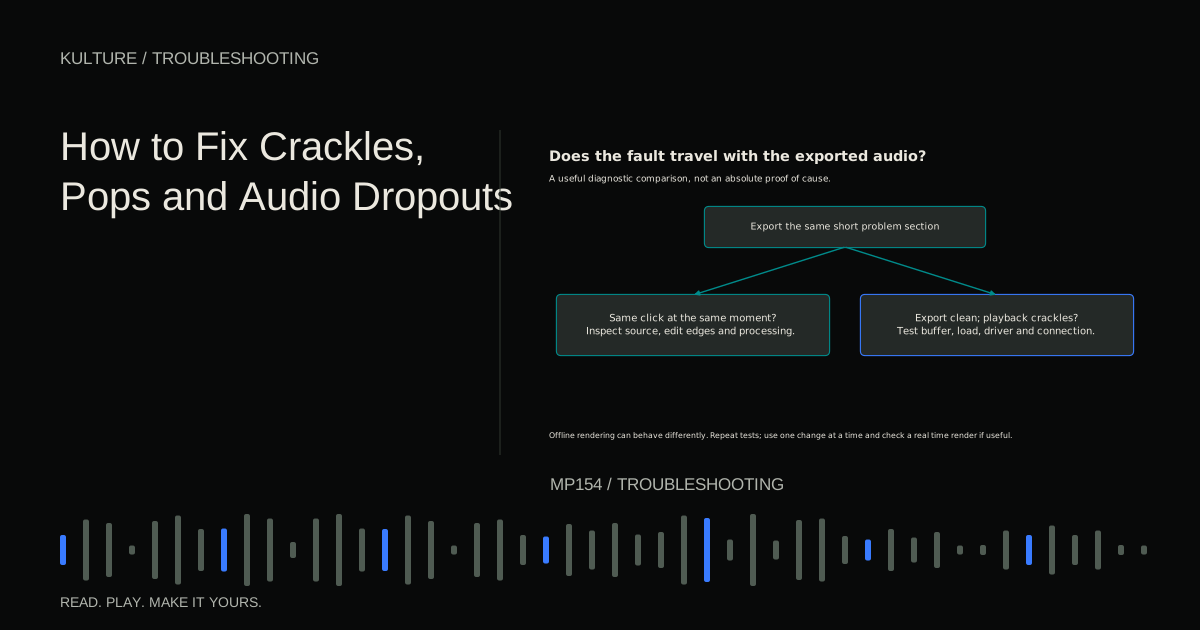 Troubleshooting6 min
How to Fix Crackles, Pops and Audio Dropouts
Read & try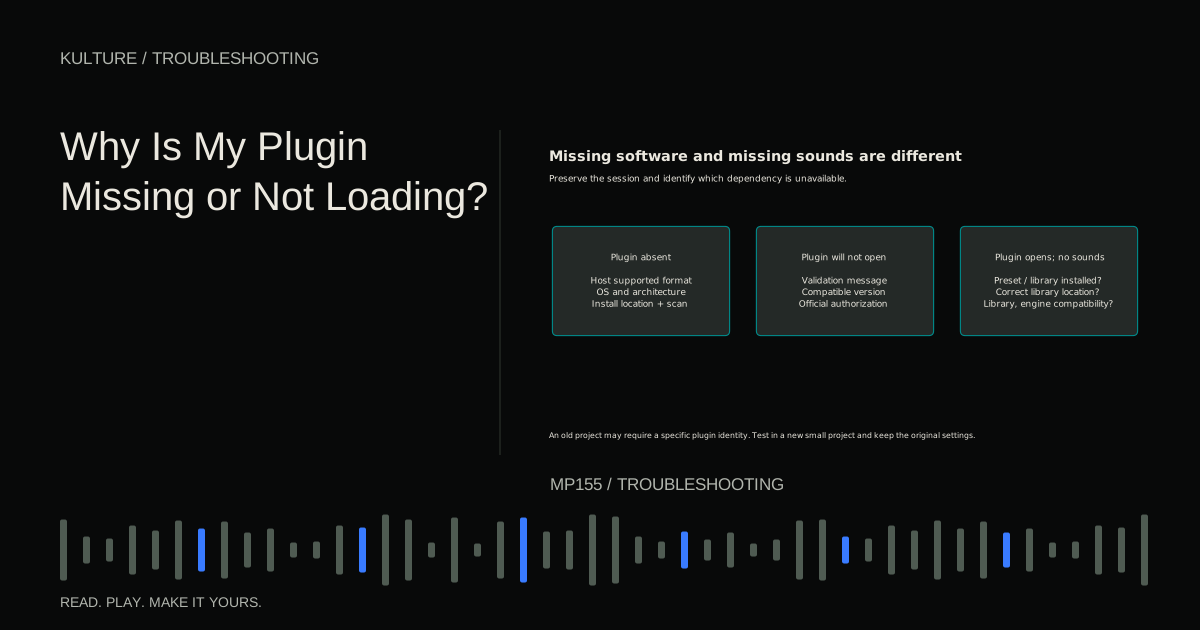 Troubleshooting6 min
Why Is My Plugin Missing or Not Loading?
Read & try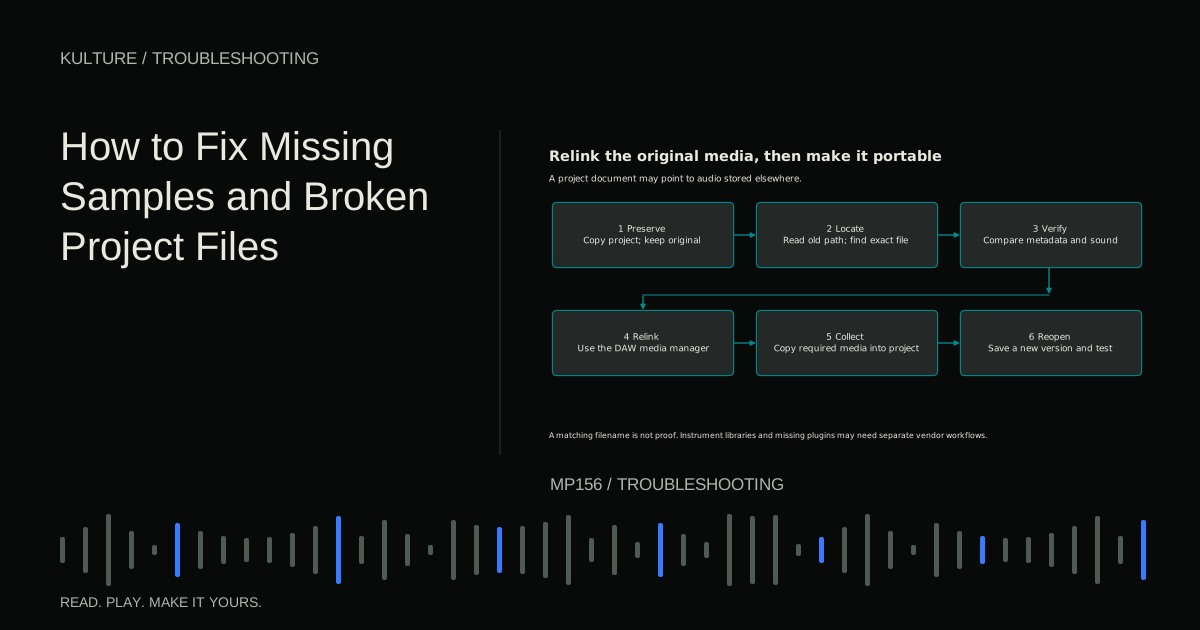 Troubleshooting6 min
How to Fix Missing Samples and Broken Project Files
Read & try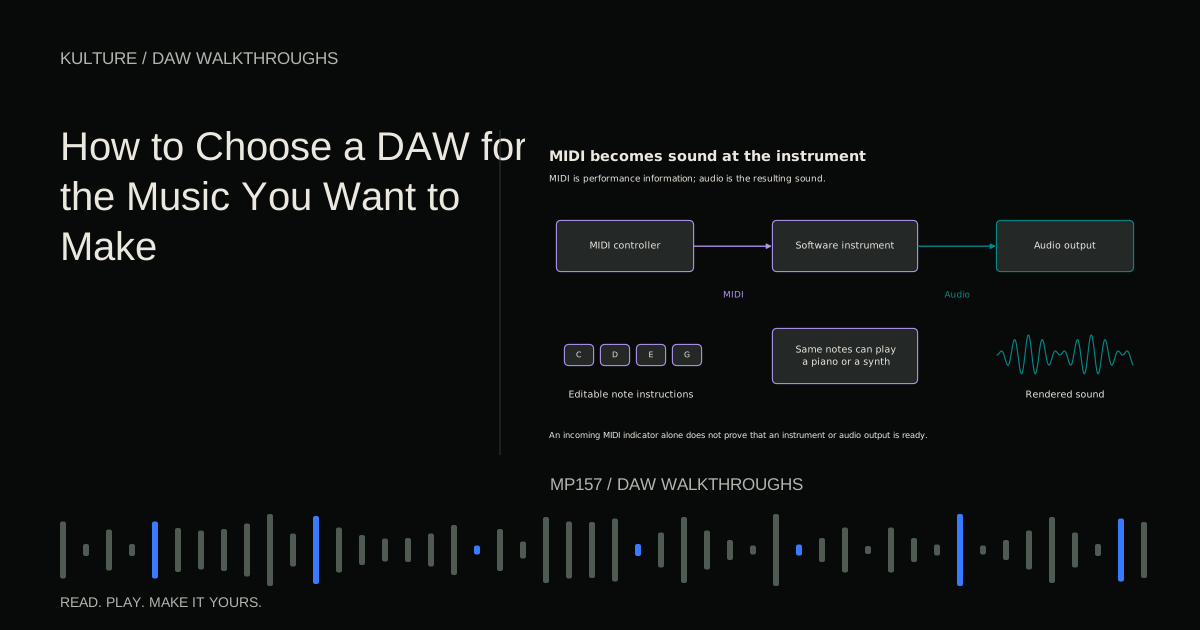 DAW walkthroughs6 min
How to Choose a DAW for the Music You Want to Make
Read & try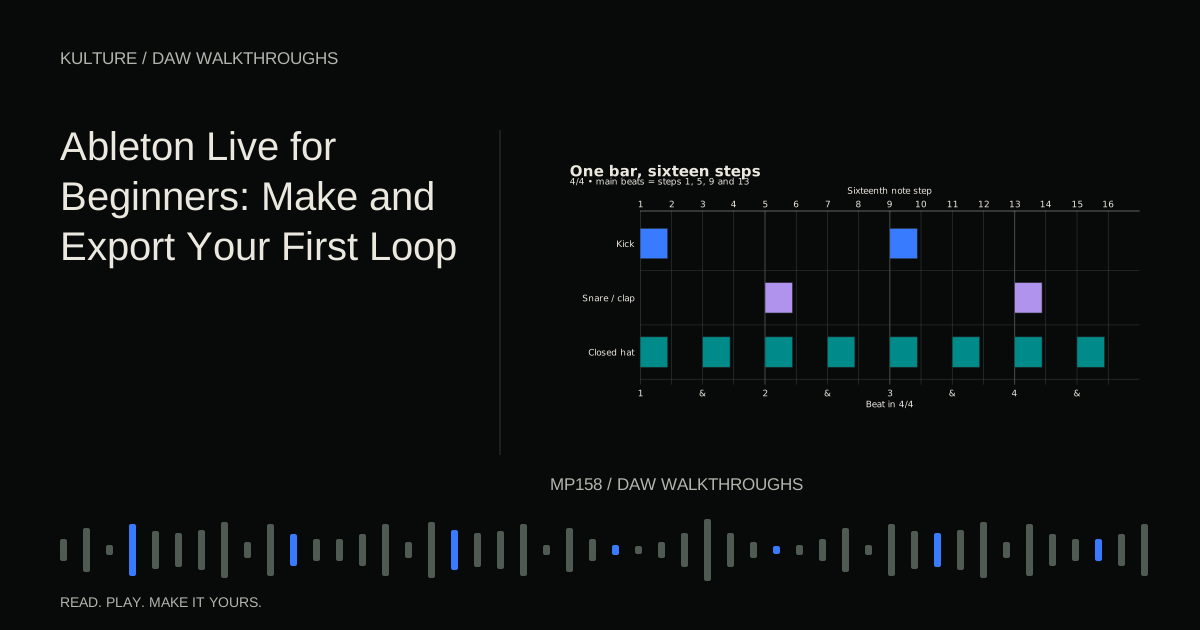 DAW walkthroughs8 min
Ableton Live for Beginners: Make and Export Your First Loop
Read & try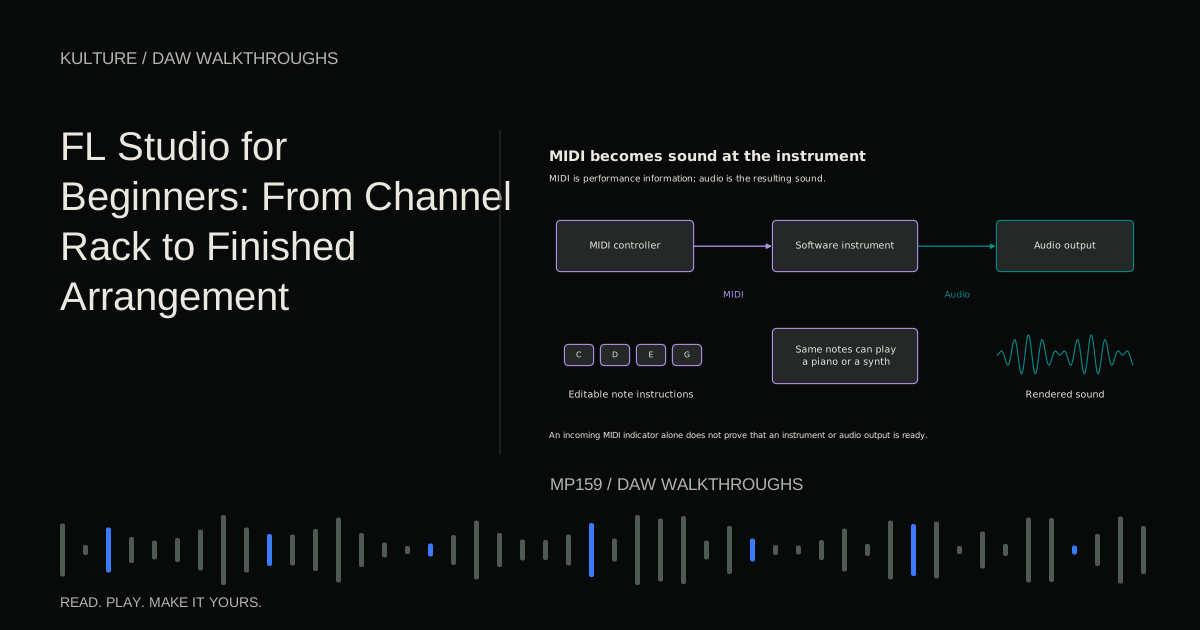 DAW walkthroughs8 min
FL Studio for Beginners: From Channel Rack to Finished Arrangement
Read & try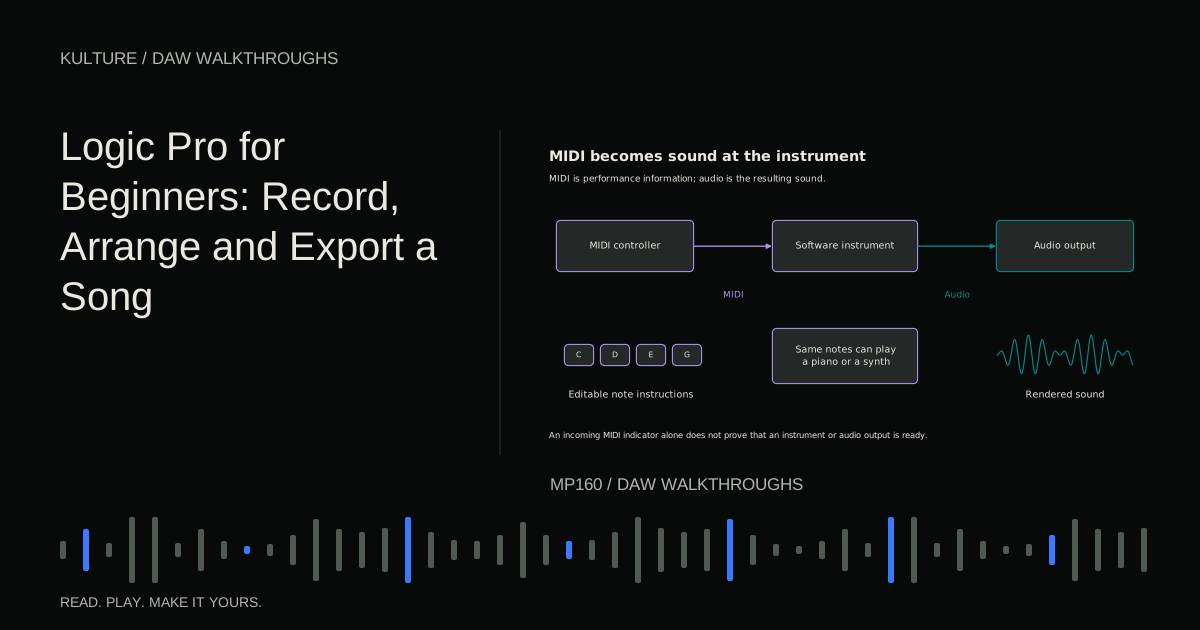 DAW walkthroughs8 min
Logic Pro for Beginners: Record, Arrange and Export a Song
Read & try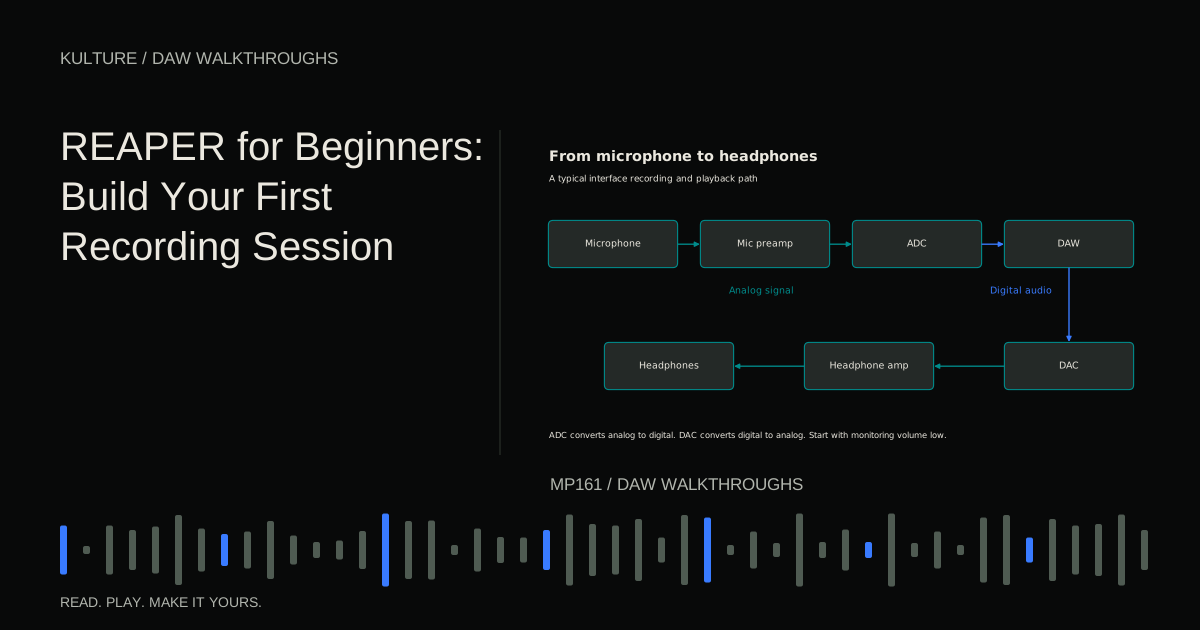 DAW walkthroughs8 min
REAPER for Beginners: Build Your First Recording Session
Read & try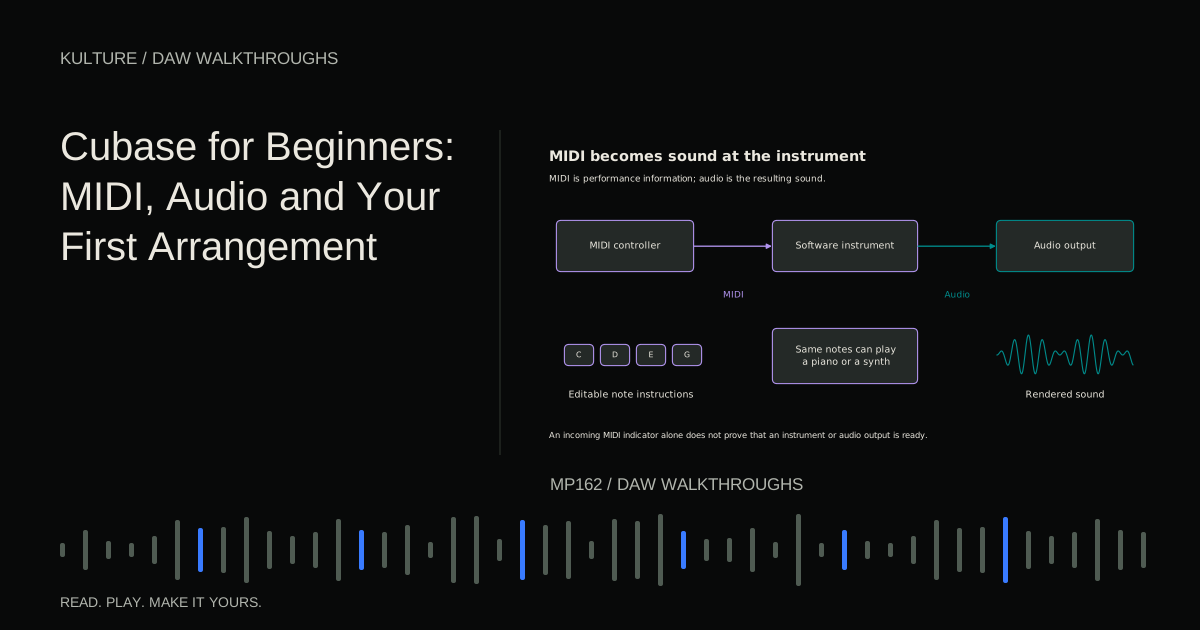 DAW walkthroughs7 min
Cubase for Beginners: MIDI, Audio and Your First Arrangement
Read & try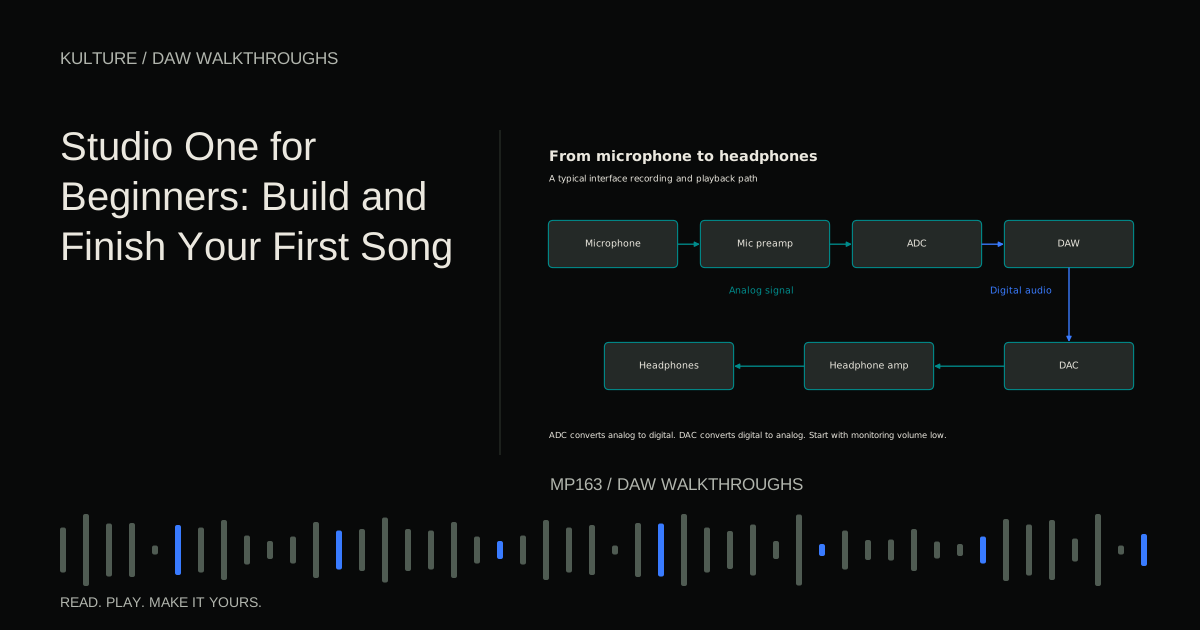 DAW walkthroughs8 min
Studio One for Beginners: Build and Finish Your First Song
Read & try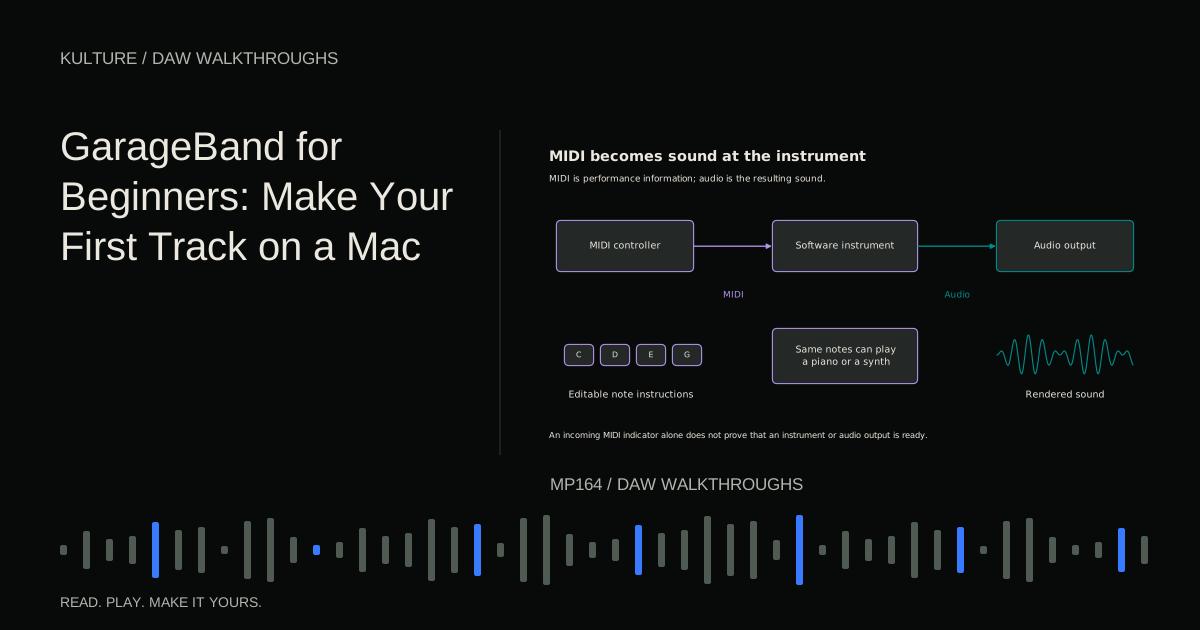 DAW walkthroughs8 min
GarageBand for Beginners: Make Your First Track on a Mac
Read & try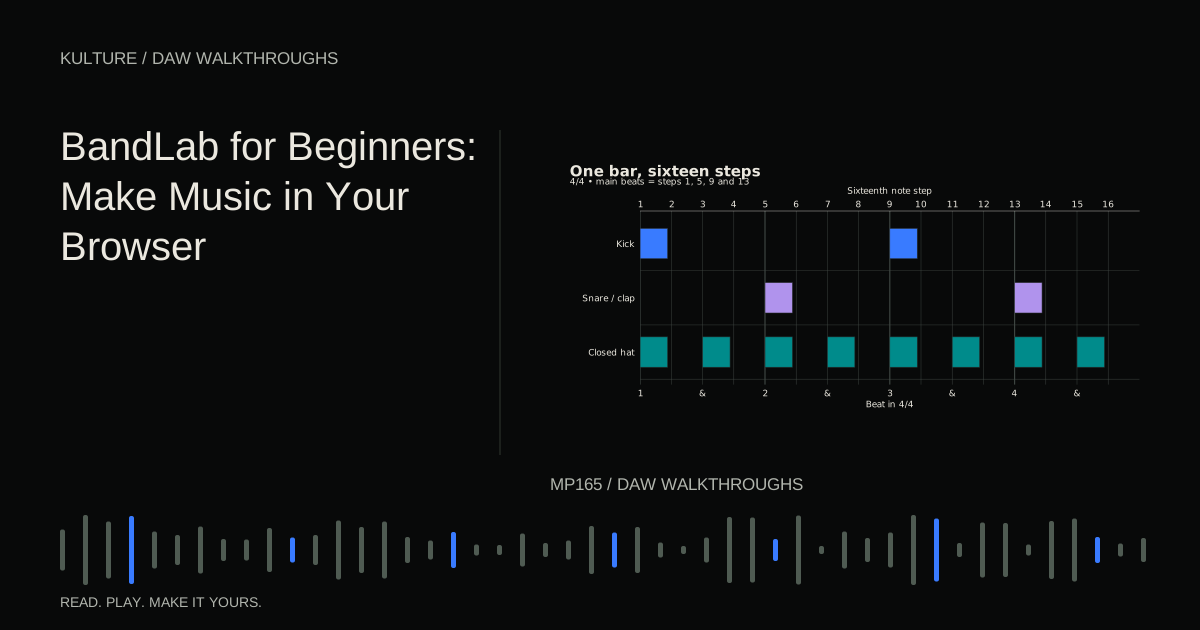 DAW walkthroughs7 min
BandLab for Beginners: Make Music in Your Browser
Read & try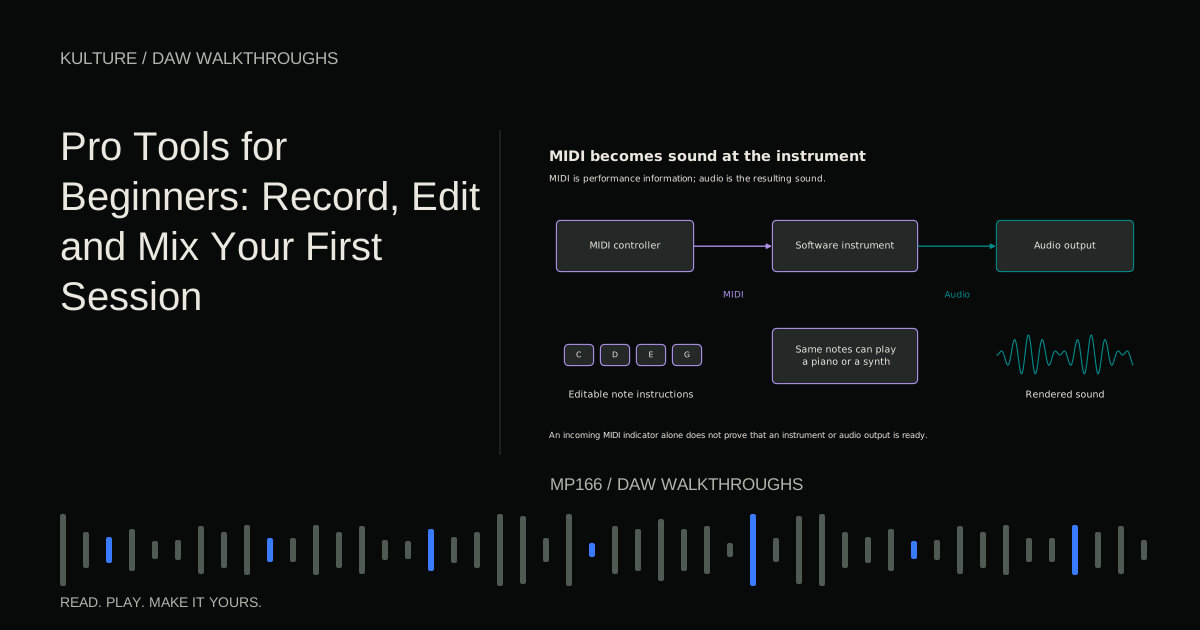 DAW walkthroughs8 min
Pro Tools for Beginners: Record, Edit and Mix Your First Session
Read & try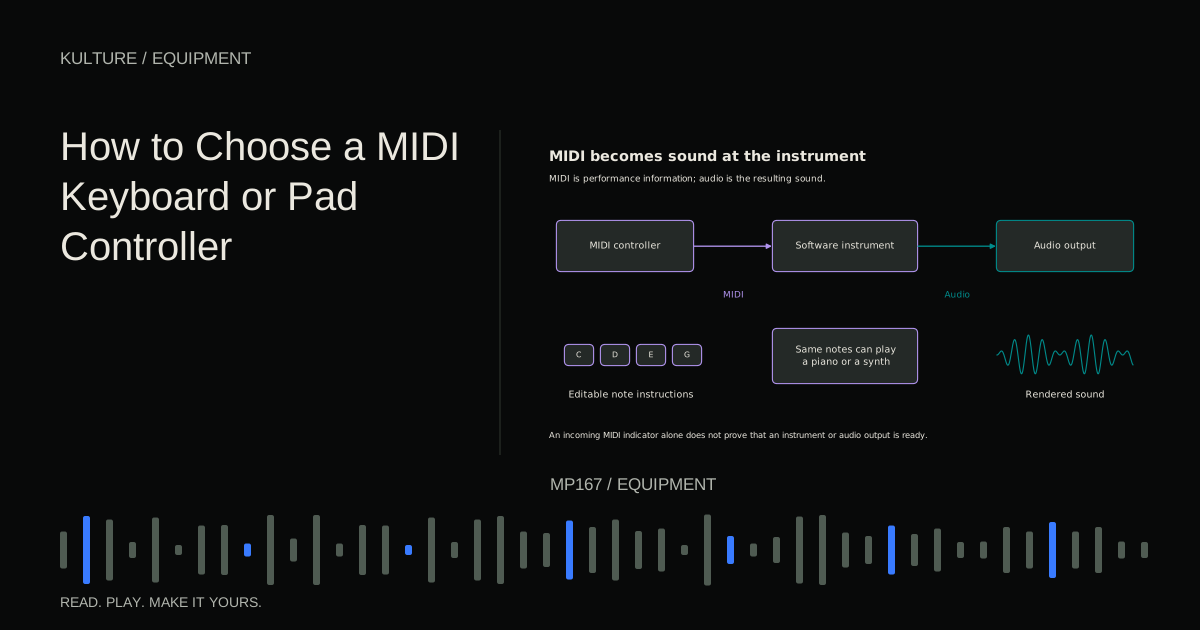 Equipment6 min
How to Choose a MIDI Keyboard or Pad Controller
Read & try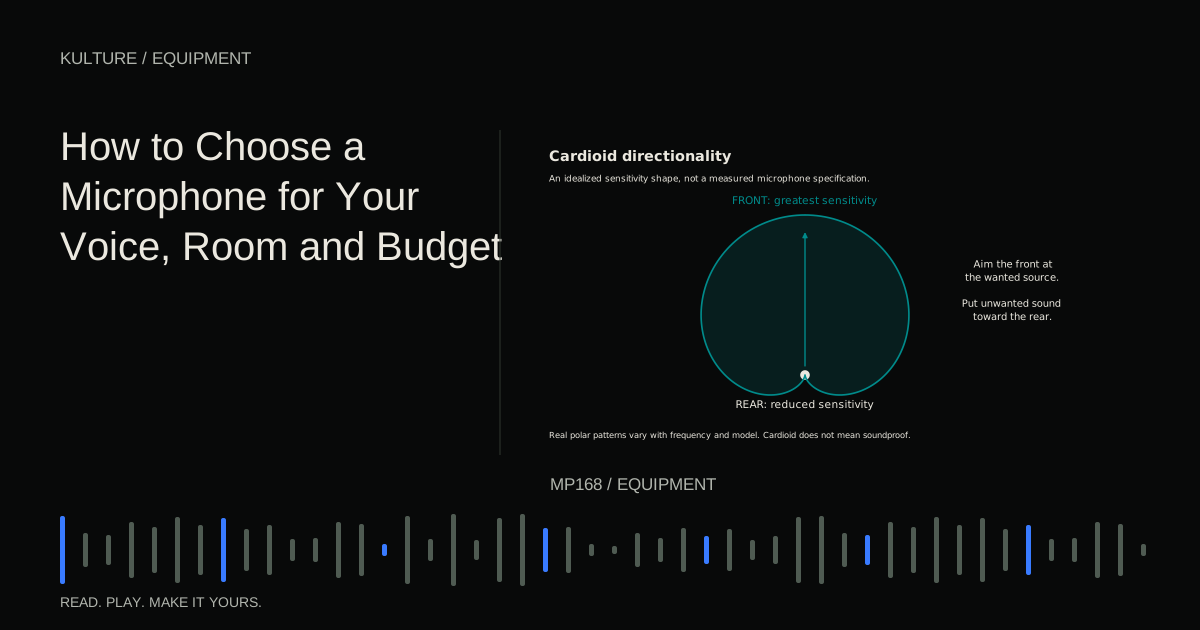 Equipment6 min
How to Choose a Microphone for Your Voice, Room and Budget
Read & try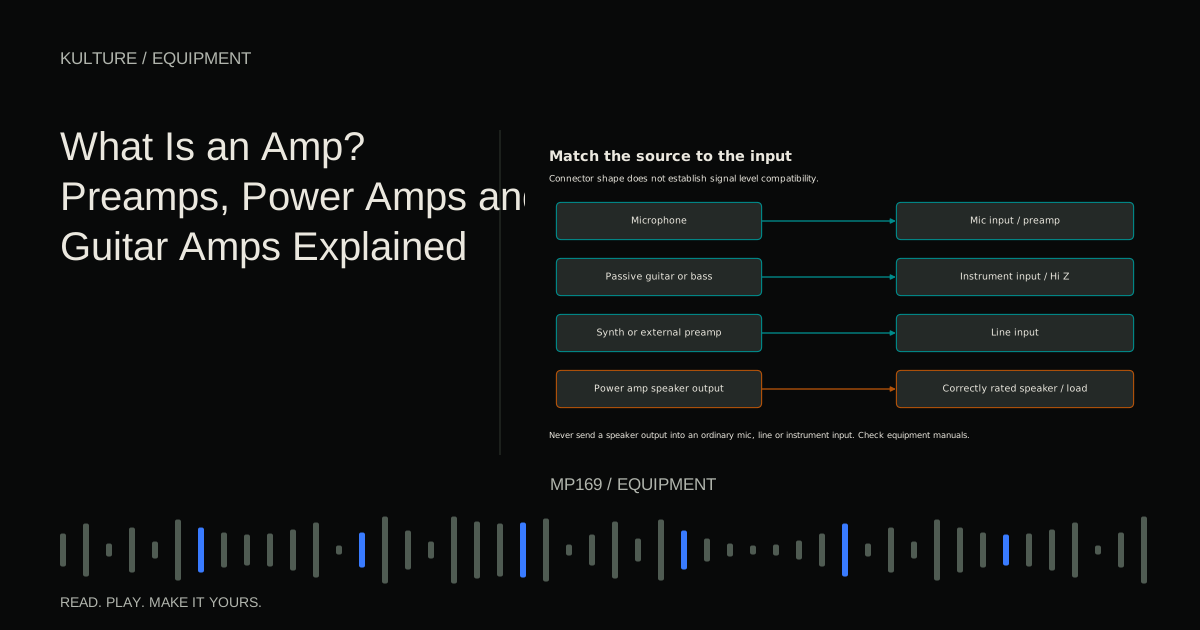 Equipment6 min
What Is an Amp? Preamps, Power Amps and Guitar Amps Explained
Read & try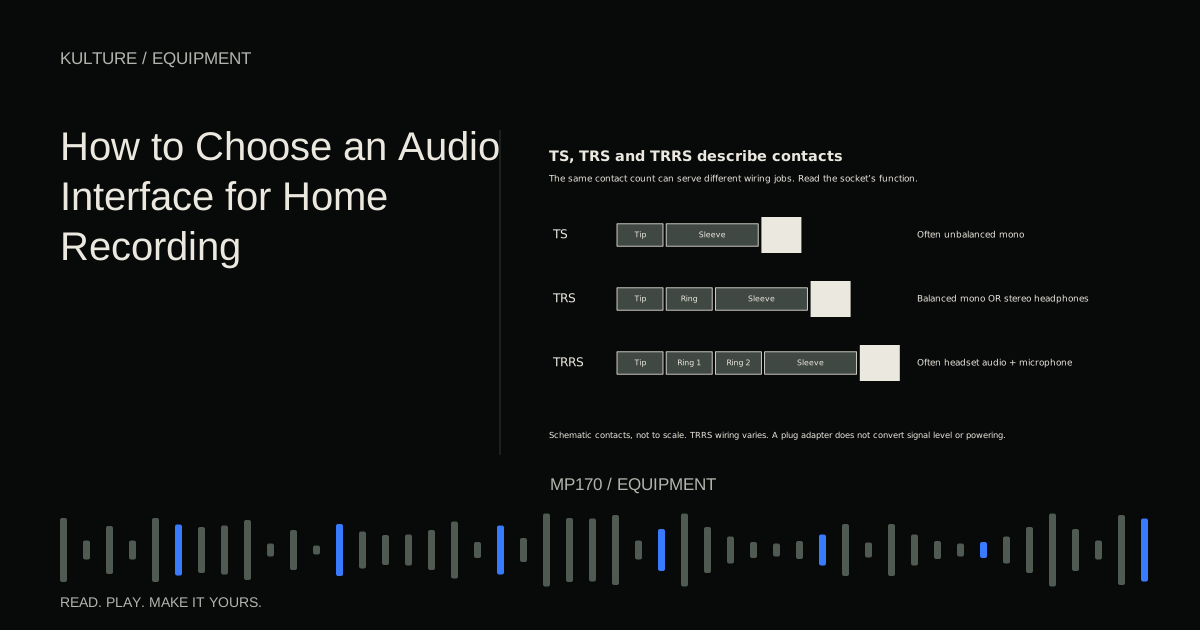 Equipment6 min
How to Choose an Audio Interface for Home Recording
Read & try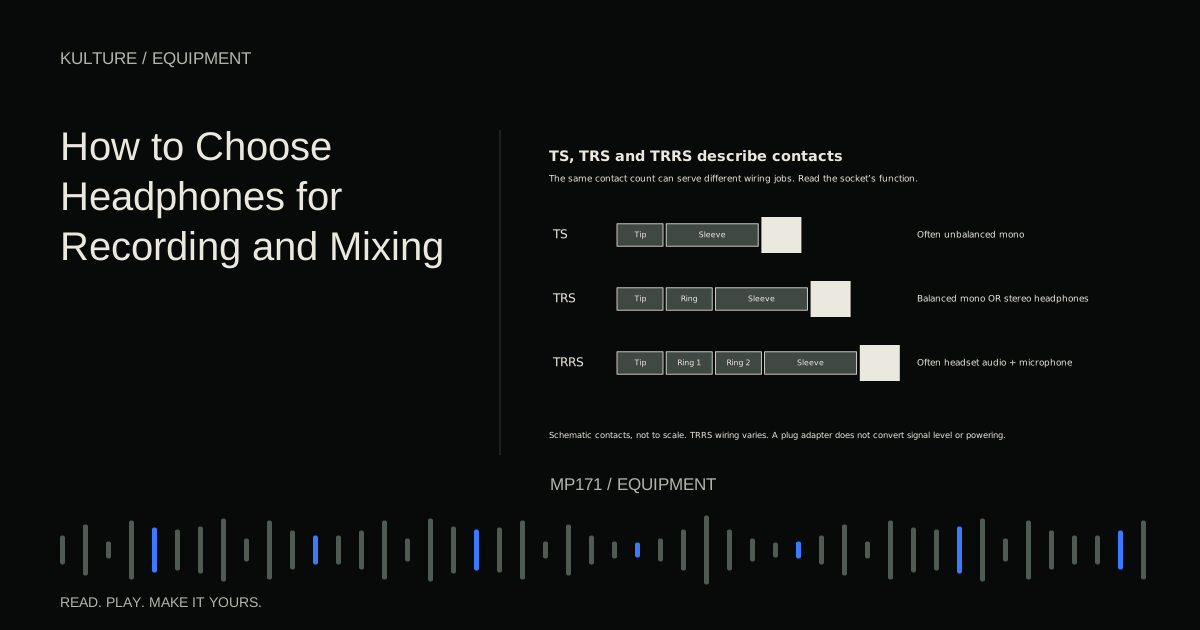 Equipment6 min
How to Choose Headphones for Recording and Mixing
Read & try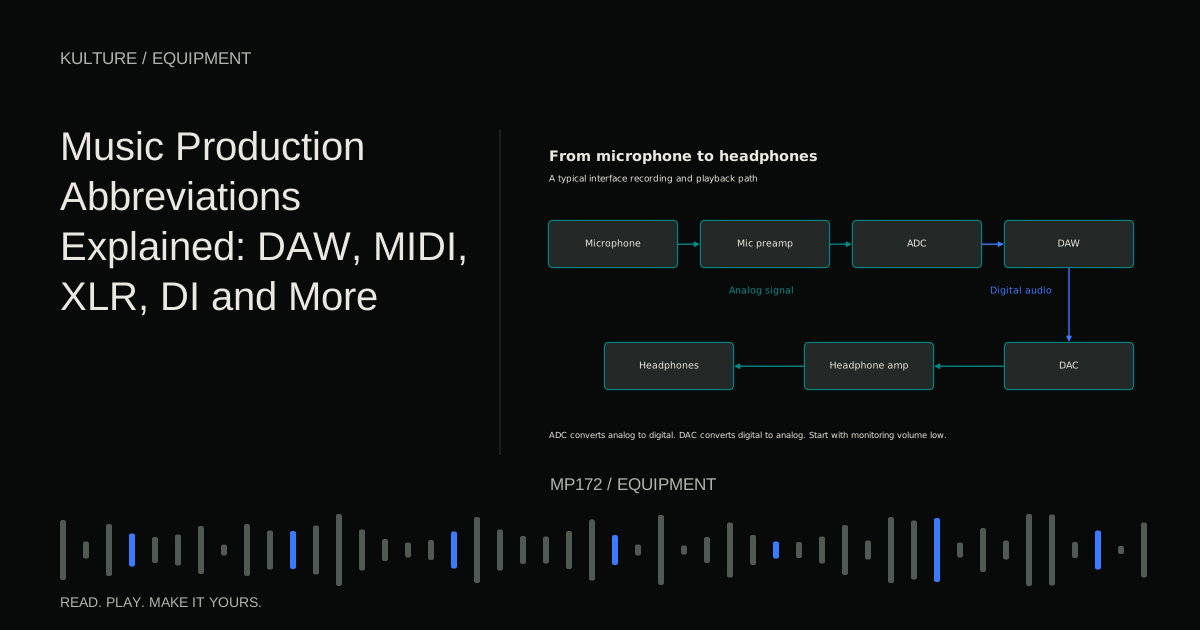 Equipment9 min
Music Production Abbreviations Explained: DAW, MIDI, XLR, DI and More
Read & try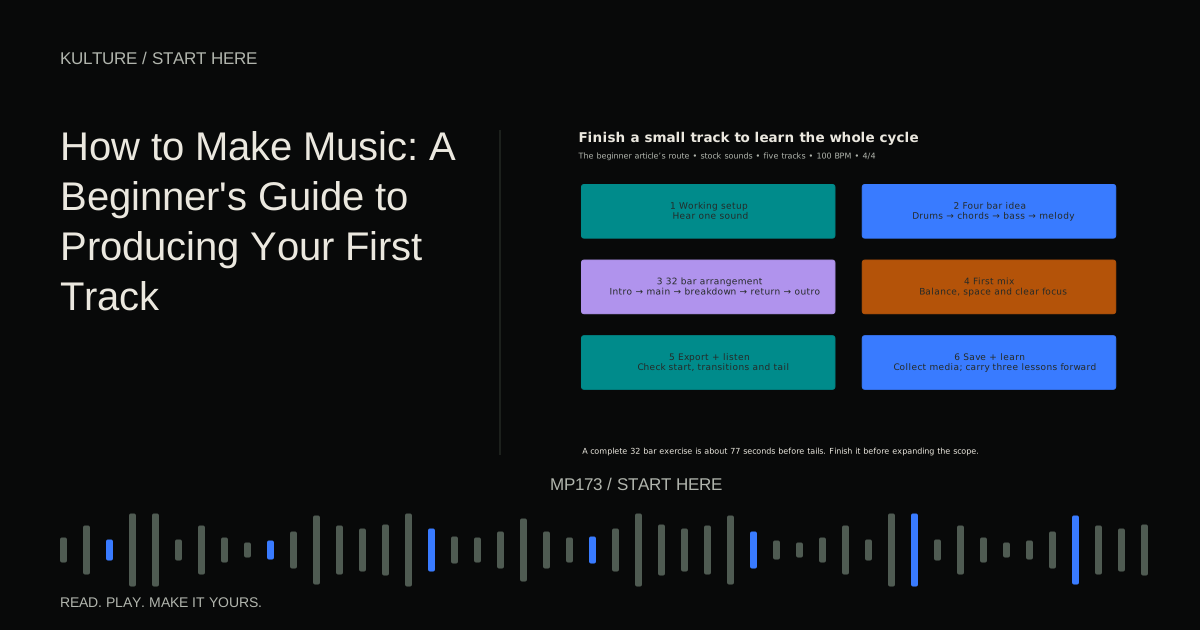 Start here8 min
How to Make Music: A Beginner's Guide to Producing Your First Track
Read & tryNo guides match that search. Try a shorter phrase or choose another subject.