The permissions depend on what is used, how it is used, the applicable law, existing licences, and any relevant exception. This is Canada focused educational information, not personal legal advice. Seek qualified advice before releasing material with unclear rights.
Identify what you are actually borrowing
A sample might be a drum hit, a vocal phrase, a chord passage, or a section of a finished recording. An interpolation might be a newly played melody or a newly sung lyric from another work.
Do not classify the use only by the amount of processing. Pitching, chopping, reversing, or filtering copied audio does not automatically turn it into an independently created recording. Equally, playing a new performance does not automatically make the musical material original.
Write down the source recording, the source work if known, the exact passage, and the planned use. This factual description is more useful than deciding in advance that the excerpt is “too small to count.”
TRY IT HERE
Make it your session
Turn the steps into a plan you can save.
Ready when you are. Audio starts only when you press Play.
Keep experimenting in the stem splitter LabSeparate the possible rights layers
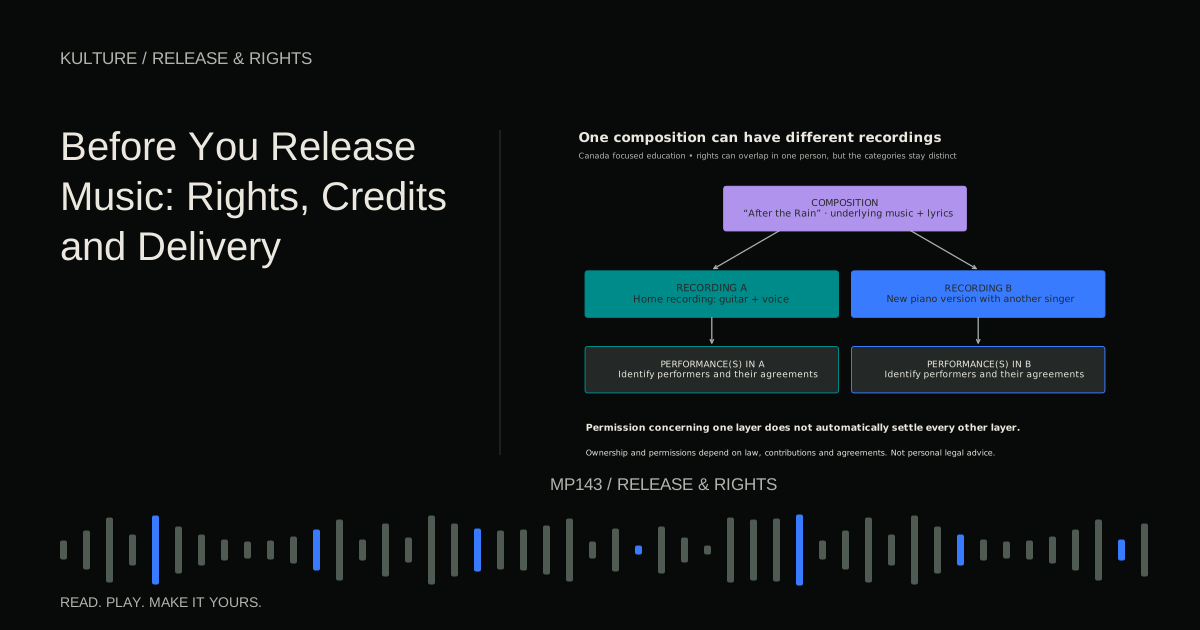
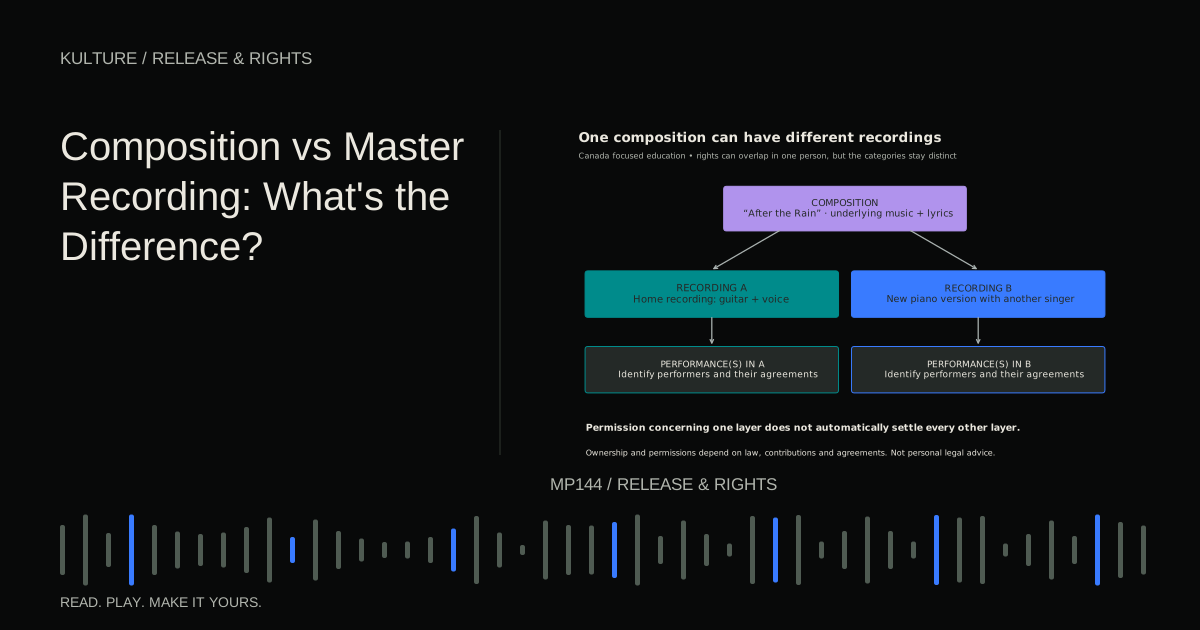
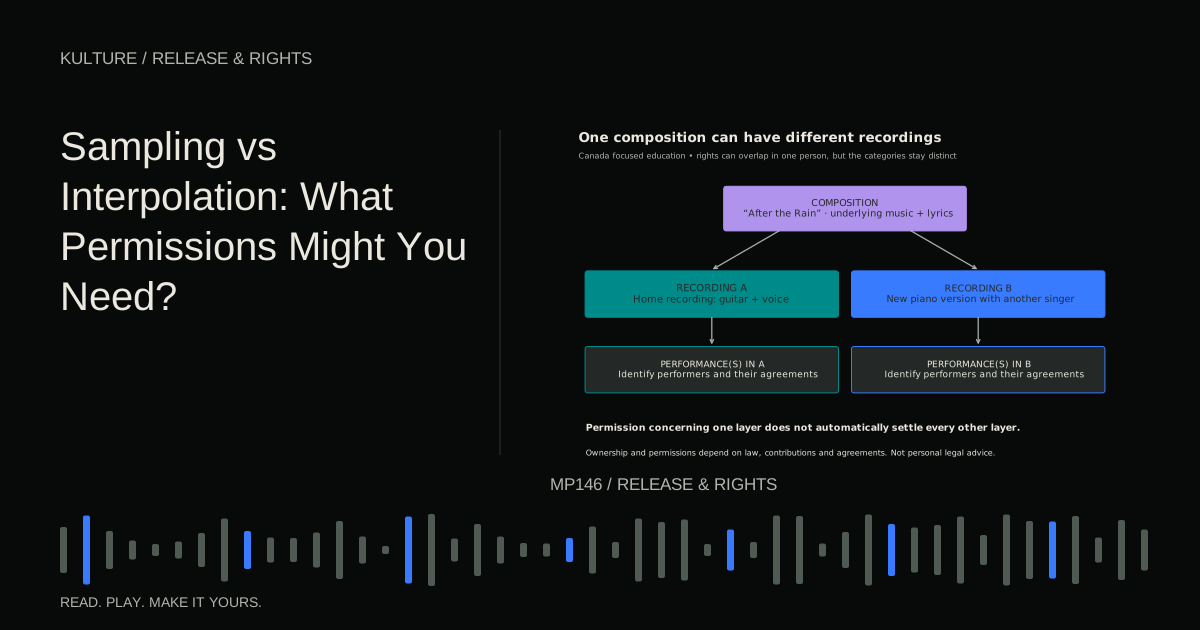
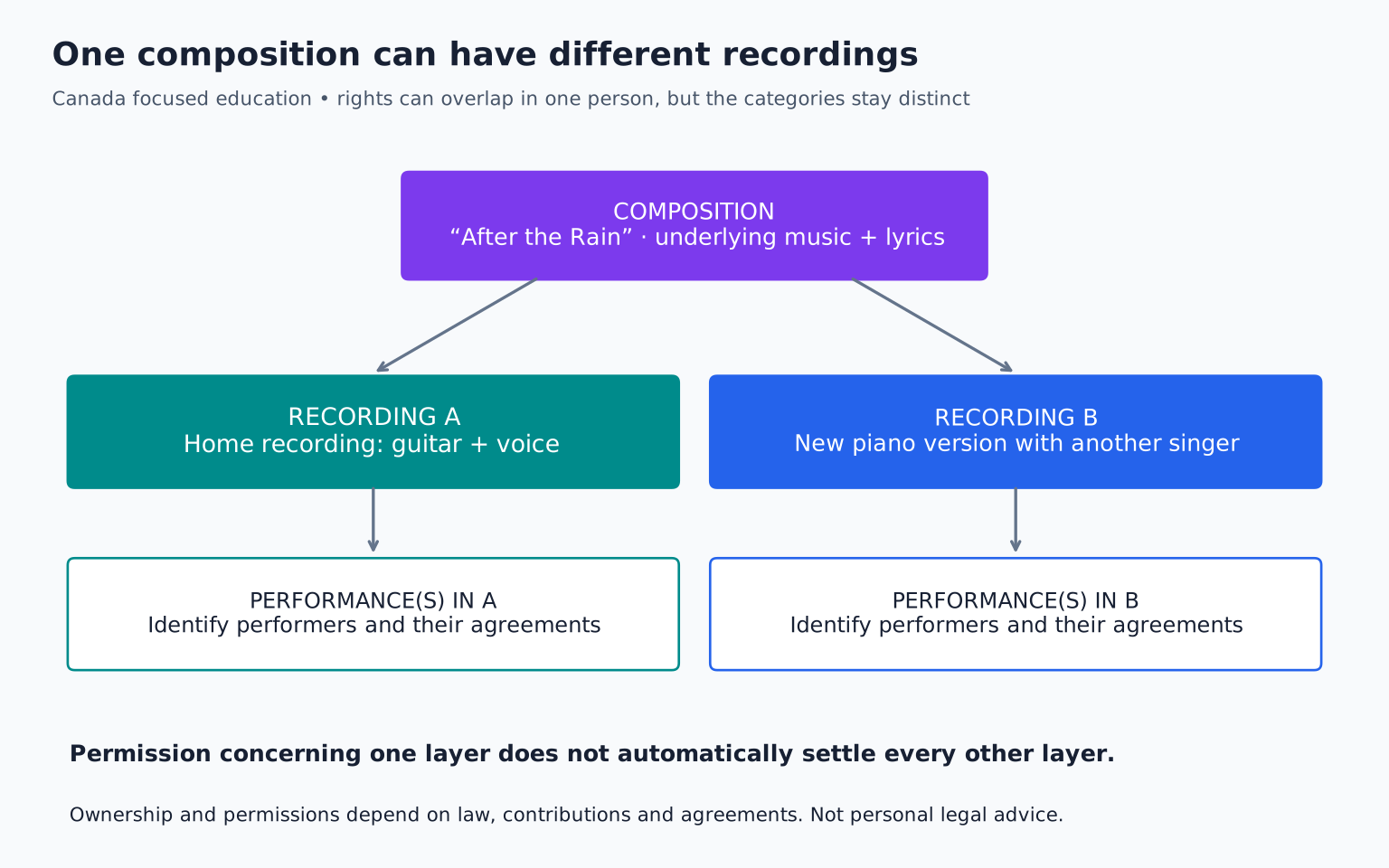
Canadian law distinguishes rights in musical works, performances, and sound recordings. A copied recording may involve more than one of those layers.
For a commercial sample, investigate who controls the recording and who controls the composition. Those may be different parties. The person who uploaded the track may not control either, or may control only part of the relevant rights.
For an interpolation, investigate the composition permission even though the new performance does not copy the original audio. Depending on the project, agreements with the new performers and makers also matter.
The composition versus master guide provides a simple map of these distinctions.
Do not rely on a universal duration rule
There is no reliable blanket rule that any sample shorter than a particular number of seconds is automatically safe. Nor does the absence of recognizable lyrics automatically settle the issue.
Legal analysis can involve the nature and substantiality of what was taken, the rights involved, the jurisdiction, and possible exceptions. A brief but important musical element can raise different questions from a longer incidental sound. A beginner checklist cannot decide that analysis for every track.
If you believe an exception applies, get advice grounded in the actual facts and jurisdiction. Do not import a United States fair use slogan into a Canadian release plan as though the legal frameworks were interchangeable. Canadian exceptions have their own requirements.
Existing licences may already cover some uses
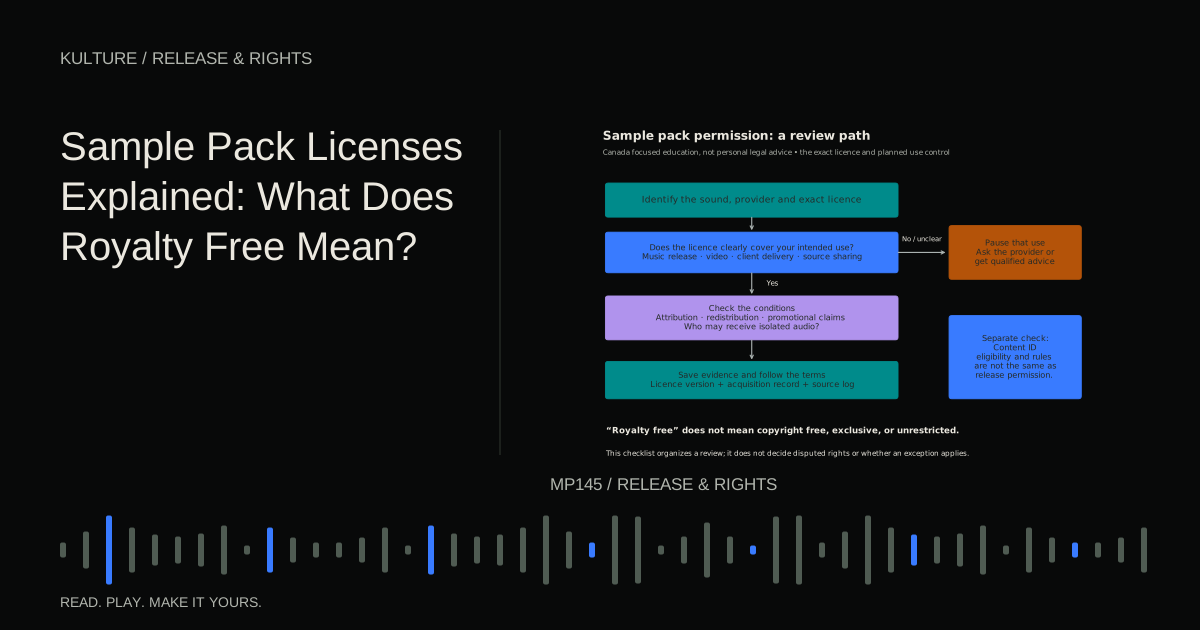
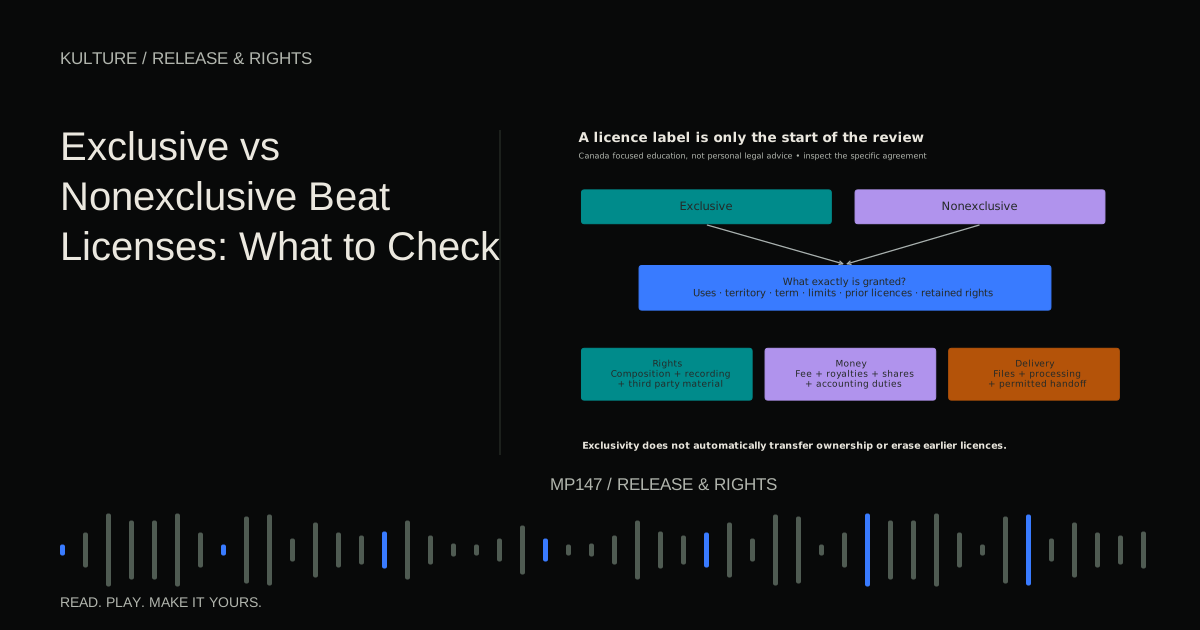
A production library or sample pack licence may authorize incorporation of particular sounds into new work. That is a different situation from taking audio from a commercial song without an applicable licence.
Read the exact terms, including restrictions on redistribution, attribution, promotional claims, and automated rights management. A licence can be broad for music production while narrow for isolated sample resale or other uses.
Use sample pack licence review to document that permission. Do not describe every sample as needing individually negotiated clearance when an existing licence already covers the intended use; equally, do not assume a licence covers an unlisted source.
Find the relevant rightsholders
Start with official release credits, label information, publisher information, and reputable repertoire databases. Treat database entries as leads to verify, not conclusive proof that one listed party can authorize every intended use.
SOCAN's public repertoire search can help identify represented musical work information. SOCAN's reproduction rights FAQ explains part of its licensing role. Confirm whether the organization or publisher can handle the specific request rather than assuming a general licence covers sampling.
There may be multiple writers, publishers, territories, or administrators. Ask who has authority to approve the particular use and whether additional approvals are needed.
Prepare a specific permission request
A useful request identifies the source, exact excerpt, proposed new recording, and intended exploitation. Include the duration and location of the borrowed material, how it has been altered, the planned release territories and formats, and whether there will be video or advertising use.
Provide a private listening reference when appropriate and authorized. Do not publicly release the track merely to show the rightsholder what you mean.
Ask about fees, shares, credits, restrictions, approval rights, and the written licence process. The response may depend on the actual use. An informal “sounds cool” message from someone without authority is not a dependable substitute for the required permission.
Work through two examples
Example one: copied vocal audio. You take a two second phrase from an existing recording and repeat it in a new chorus. The short duration does not settle the question. Identify the recording and composition rights, investigate permissions or any applicable exception with qualified help, and document the outcome before release.
Example two: newly played melody. You ask a keyboard player to recreate a recognizable melody from another song. You have a new performance and new audio, but the composition question remains. The keyboard player's session agreement does not authorize use of the earlier writer's material.
These examples show why “I replayed it” and “I changed the pitch” are not complete release strategies.
Keep the creative and legal timelines connected
If clearance is uncertain, keep an alternate arrangement that does not depend on the borrowed material. This avoids making the release schedule hostage to a late answer.
Do not promise a release date, spend heavily on promotion, or sign a rights warranty while treating a major permission question as a minor administrative task. A rightsholder may decline, require changes, or propose terms you do not accept.
If you replace the material, check that the replacement is genuinely independent or properly licensed. Replacing only the sound while retaining the same borrowed composition may leave the central issue unresolved.
Document the final permission, not just the conversation
Keep the executed licence or other applicable evidence, the approved version, credits, payment records where relevant, and any usage limits. Make sure the released track matches what was authorized.
Your exercise is to audit one borrowed element using five headings: source audio, underlying work, intended use, permission basis, and unresolved questions. If any answer is uncertain, pause the release decision and investigate. Continue with release rights and delivery once the status is clear.
TAKE IT INTO YOUR OWN MUSIC
Your next session.
Example one: copied vocal audio. You take a two second phrase from an existing recording and repeat it in a new chorus. The short duration does not settle the question. Identify the recording and composition rights, investigate permissions or any applicable exception with qualified help, and document the outcome before release.
Notes and progress stay in this browser.