This guide is Canada focused educational information, not personal legal advice. Contributions, employment, contracts, and applicable law can affect ownership. Seek qualified advice when the agreement is significant, disputed, or unclear.
Begin with roles, not percentages
List what each person is expected to do: write lyrics, compose music, create the beat, perform, record, edit, mix, master, fund, or distribute. One person may have several roles.
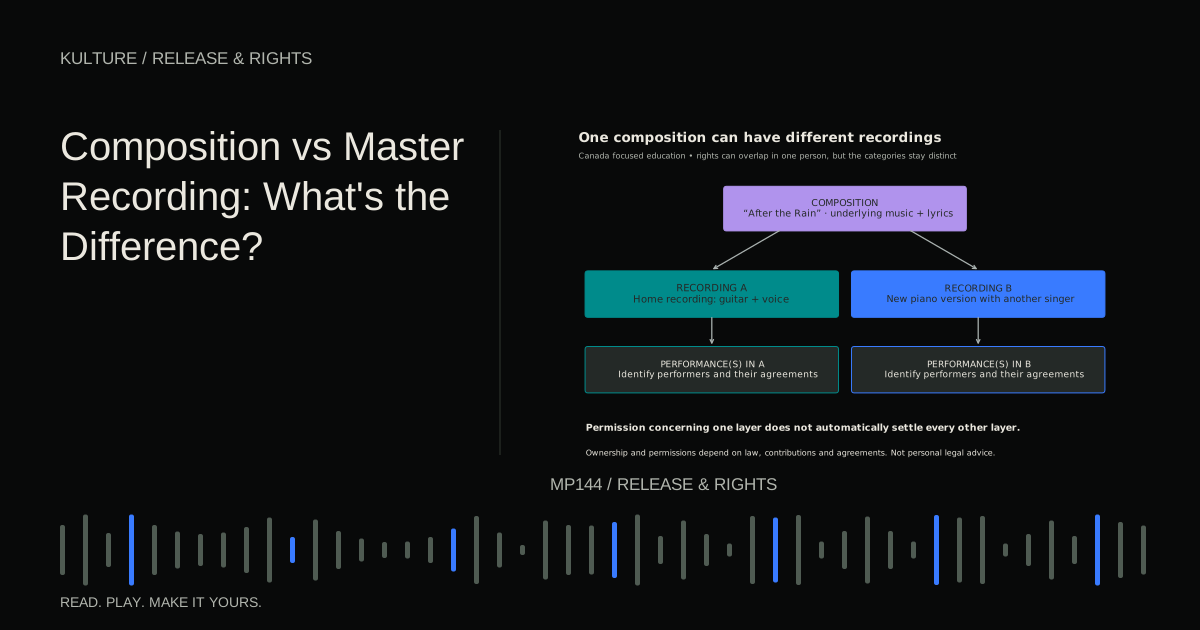
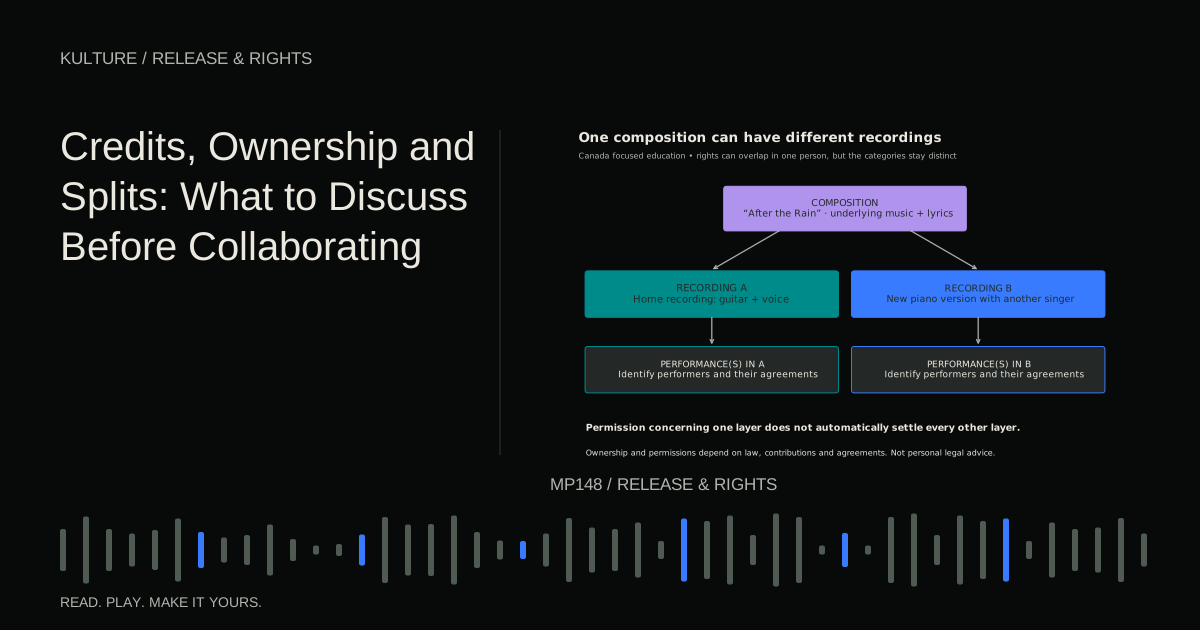
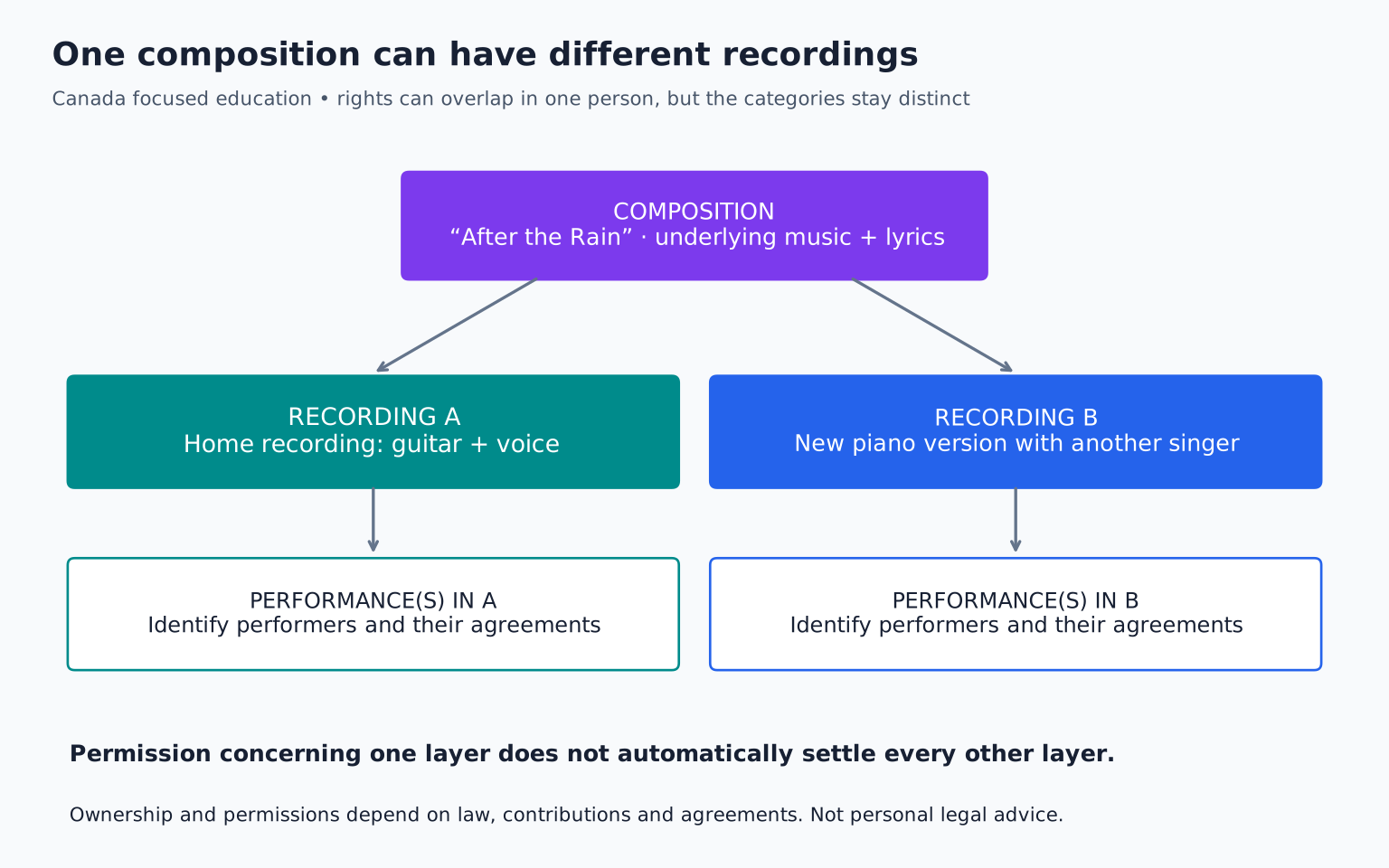
Then distinguish the outputs. Who contributes to the composition? Who is involved in the recording? Who performs? Who supplies licensed material? This map is more useful than assuming every person in the room belongs in the same percentage pool.
The composition versus master guide explains why the song and its recording should be discussed separately.
TRY IT HERE
Make it your session
Turn the steps into a plan you can save.
Ready when you are. Audio starts only when you press Play.
Keep experimenting in the stem splitter LabTreat credit as an accurate description
Agree on public names and roles. Confirm whether someone is a primary artist, featured artist, producer, songwriter, performer, mixer, or mastering engineer. Do not award a featured artist credit solely because a sample pack contains a person's voice.
Credit should match the contribution and any applicable agreement or platform requirements. A credit can matter professionally even when it does not carry ownership or a royalty share.
Canada's moral rights provisions for authors address attribution and integrity within their statutory conditions. They should not be reduced to a claim that every contributor has the same credit rights. Get advice on waivers or disputes rather than treating credit as merely a decorative field.
Name the right or revenue stream being split
A composition ownership split is not the same as a split of recording revenue. A producer royalty can be separate from either. A fee can compensate work without answering ownership. Expenses can be reimbursed under another arrangement.
Ask what the percentage applies to, how the amount is calculated, whether costs are deducted, who receives payments, and when accounting happens. “Half the profits” is especially unclear unless profit and allowable costs are defined.
Avoid presenting any percentage as a universal industry rule. Two writers might agree equal shares; another project may use a different arrangement. The agreement should reflect informed consent and the legal framework, not an internet formula.
Use a concrete example to expose ambiguity
Imagine Sam writes lyrics and a vocal melody, Lee creates the instrumental composition and recording, and Morgan sings a backing part. The group says, “Sam and Lee split it equally.”
What does “it” mean? The composition? Ownership of the finished recording? Net distributor receipts? Are Lee's production fee and expenses separate? What permission and credit does Morgan receive? Who may approve a film licence?
The sentence is not complete until those questions are answered. Morgan's performance should be addressed even if Morgan is not a co writer. Conversely, being the lead vocalist does not automatically determine the composition split.
Discuss approval and control
Ownership percentages do not tell the whole operational story. Decide who can approve release, alternate versions, remixes, synchronization uses, artwork association, and takedowns. Synchronization generally concerns pairing music with visual media; the required rights and agreements depend on the use.
Identify who can sign with a distributor and what warranties they can truthfully make. If one person administers the release, distinguish administrative responsibility from ownership.
Plan for disagreements and departures. What happens if one collaborator becomes unreachable, wants to leave the project, or objects to a proposed use? These questions are easier to discuss before money or a deadline creates pressure.
Put the agreement in a durable form
Use a clear written record and obtain appropriate signatures where required. Canada's Copyright Act, section 13 includes requirements for assignments and grants of interests. A casual chat may not satisfy every legal need, so obtain proper drafting when rights are being transferred or exclusively licensed.
A split sheet can record agreed composition information, but it may not cover master ownership, performer consent, fees, accounting, approvals, or dispute procedures. Do not assume one short form resolves the whole collaboration.
Keep the signed documents with the project archive and make sure everyone receives the agreed version. If the arrangement changes, document the change rather than relying on a later verbal understanding.
Register consistently without treating registration as a verdict
When registering works or recordings with relevant organizations, use information consistent with the agreement and the organization's own share conventions. Some systems represent writer and publisher interests differently, so do not copy numbers mechanically without understanding the fields.
SOCAN's reproduction rights FAQ explains its catalogue registration process and why share conventions differ between rights. Registration is administration; it does not authorize one collaborator to decide a disputed split unilaterally.
If entries conflict, resolve the underlying disagreement and follow the organization's correction process. Keep legal names and identifiers accurate while using the agreed professional names in public credits.
Understand that collection channels differ
Composition related income, recording income, and performer related remuneration can follow different paths. A distributor does not necessarily collect everything, and joining one organization does not guarantee every revenue stream is covered.
Re:Sound's FAQ explains its role concerning performers and makers in Canada, distinct from composition rights administered through other channels. Eligibility and representation matter. Investigate the relevant organizations and existing mandates before signing overlapping agreements.
Do not promise a collaborator a fixed payment per stream. Actual revenue depends on services, territories, contracts, uses, and other factors. An ownership discussion should not be built on a fictional universal rate.
Keep the conversation practical and respectful
Raise these topics before the work becomes emotionally loaded. You can say, “Let's separate writing shares, recording ownership, fees, and credits so we all know what we are agreeing to.” That is clearer than opening with a demand for a percentage.
If you disagree about a contribution, describe the contribution and proposed arrangement rather than attacking the person's value. Pause release if a material rights dispute remains unresolved, and use qualified advice or mediation where appropriate.
Your exercise is to make a collaboration record with four headings: contributions and credits, composition, recording and performances, and money and approvals. Write every unanswered question underneath. Continue with the release rights overview once the participants have agreed on the answers.
TAKE IT INTO YOUR OWN MUSIC
Your next session.
Imagine Sam writes lyrics and a vocal melody, Lee creates the instrumental composition and recording, and Morgan sings a backing part. The group says, “Sam and Lee split it equally.”
Notes and progress stay in this browser.