A kick can contain a brief click, a falling pitch and a low tail. A bass can contain low fundamentals, upper harmonics and its own attack. Their interaction changes across notes, so one EQ screenshot cannot describe the whole problem.
Hear the arrangement before touching the mixer
Create a two bar loop at 120 BPM. Put kicks on each quarter note. Program bass notes on the offbeat eighths: the “and” after each beat. Use C, C, E flat and G in the first bar, then B flat, G, E flat and C in the second. Keep bass notes shorter than an eighth note initially.
Listen to kick and bass alone at a moderate level. Because their onsets alternate, they may already separate clearly. Now extend the bass notes so they overlap the following kicks. Hear how duration changes the relationship even though the pitch and faders remain unchanged.
This is the first decision: do you want interlocking events or overlapping weight? Neither is universally correct. A sustained bass may be essential to the song, but then you need to manage the overlap deliberately.
TRY IT HERE
Start with the faders
Balance an original drum, bass and chord loop.
Ready when you are. Audio starts only when you press Play.
Keep experimenting in the synth LabChoose compatible source sounds
Try a short kick against a sustained bass, then a longer kick against a short bass. You are distributing time differently. If both sounds have long low tails, their accumulation may make the rhythm feel slower or less defined.
Change the kick sample or synth envelope before forcing a mismatched source with extensive processing. For a synthesized kick, shortening amplitude decay can reduce its low tail while preserving its initial attack. See designing synthesized drums for a controlled example.
Do not tune every kick to the bass root automatically. A long tonal kick may create a clearly audible harmonic relationship; a short kick may have a rapidly changing or ambiguous pitch. Listen to the settled body rather than treating an analyzer’s strongest momentary peak as the only answer.
Establish the level relationship
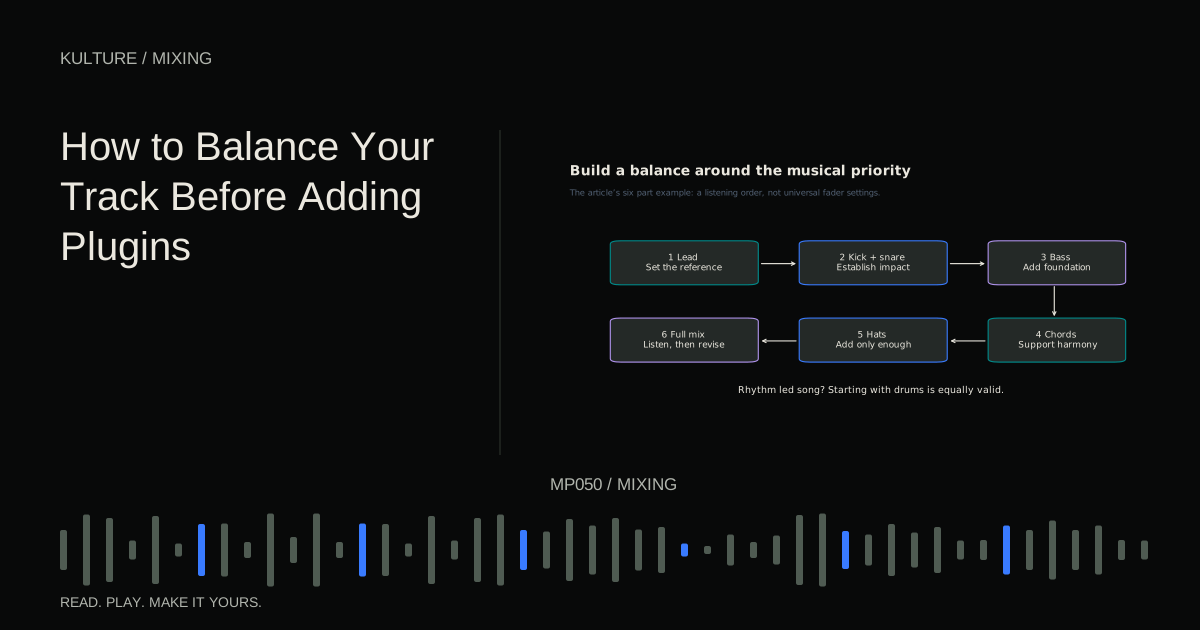
Lower both tracks, bring up the kick to a comfortable starting level, then raise bass until the groove feels supported. Try reducing the bass slightly after you first hear it clearly. If it still works, that may preserve more impact and headroom.
A low end part that seems weak on a small speaker may need audible harmonics rather than more sub bass. A slightly brighter bass patch or restrained saturation can help its notes remain identifiable without making the deep energy excessive on larger systems.
Listen in the full mix before finalizing. Chords, vocals and guitars can mask the bass’s upper harmonics, changing how much low energy seems necessary. A kick and bass balance made in isolation is a useful test, not the final verdict.
Use EQ for a real collision
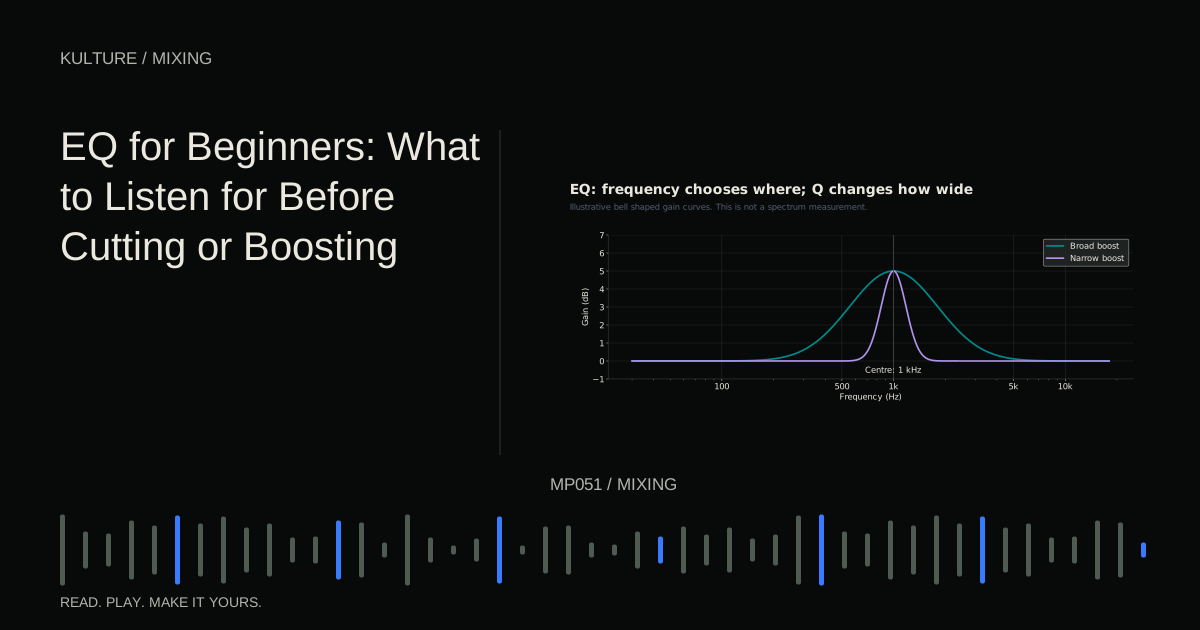
If the kick’s body and bass’s strongest notes blur together, try a small broad reduction on the less important source in the conflicting region. Sweep gently while listening to the pair, then return to the full arrangement.
Avoid automatically boosting one at a fixed frequency and cutting the other at the same number. The bass moves through notes, the kick may change pitch during its decay, and broad filter shapes overlap. Decide whether the change improves the actual groove across both bars.
You can sometimes preserve the bass fundamental while reducing unnecessary lower mid thickness, or emphasize the kick’s attack rather than its deepest body. iZotope’s low end guidance discusses source duration as well as frequency balance, which is important when EQ alone seems ineffective.
Apply ducking only as much as the groove needs
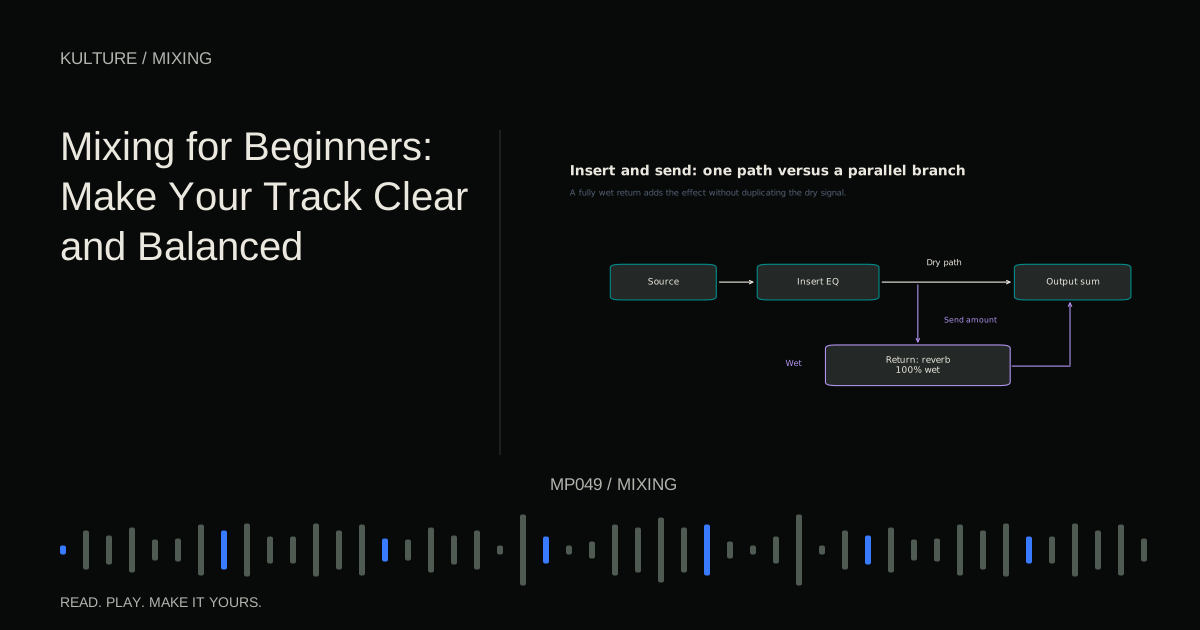
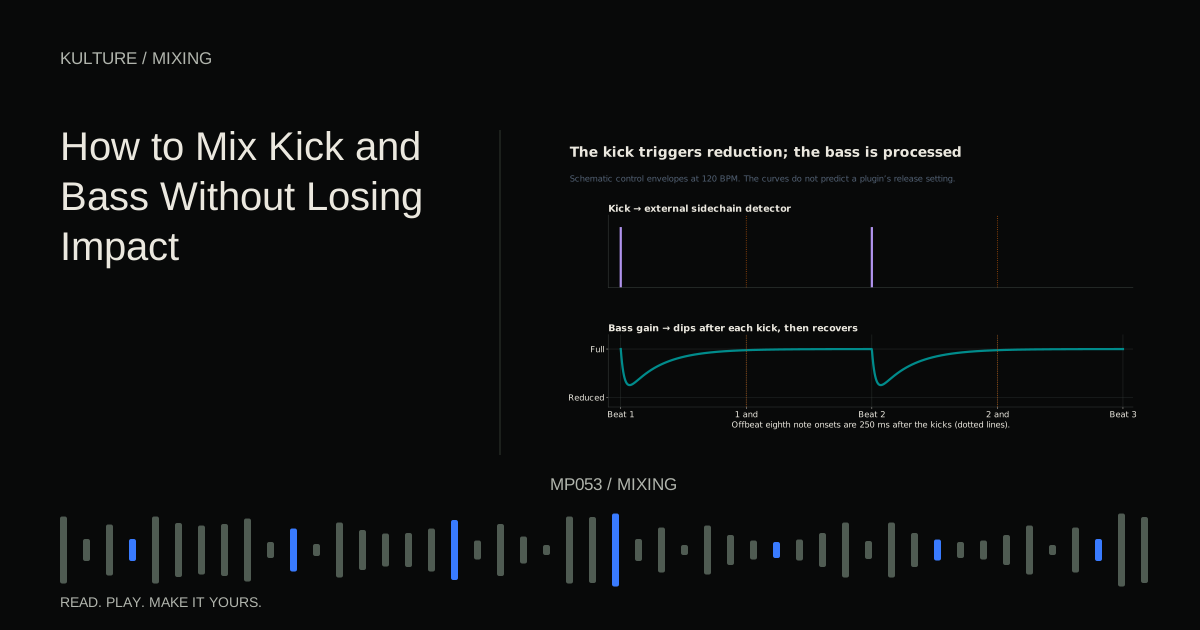
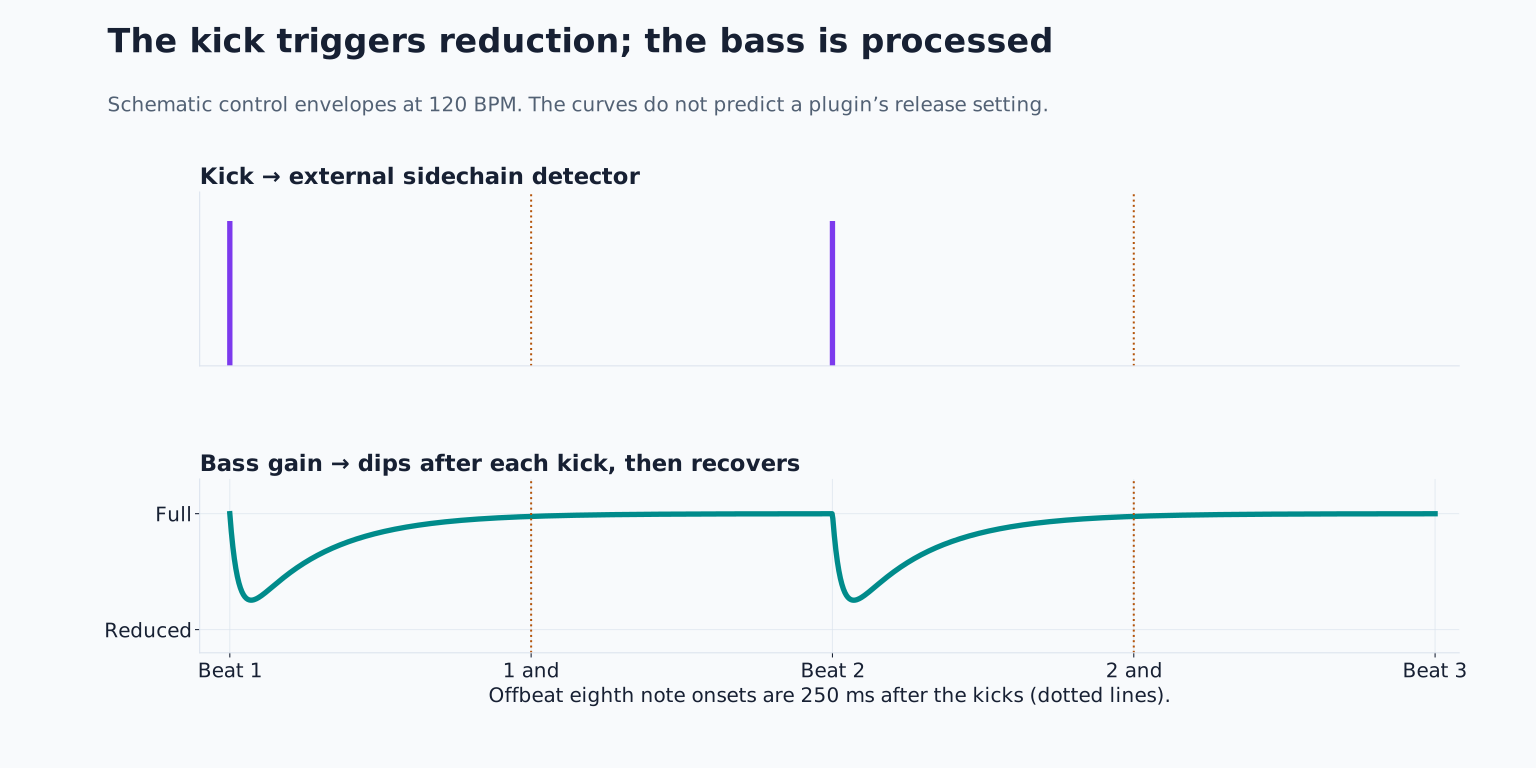
Ducking means temporarily lowering one sound when another occurs. A common approach places a compressor on the bass and feeds the kick to its external sidechain detector. The compressor processes the bass; the kick tells it when to act.
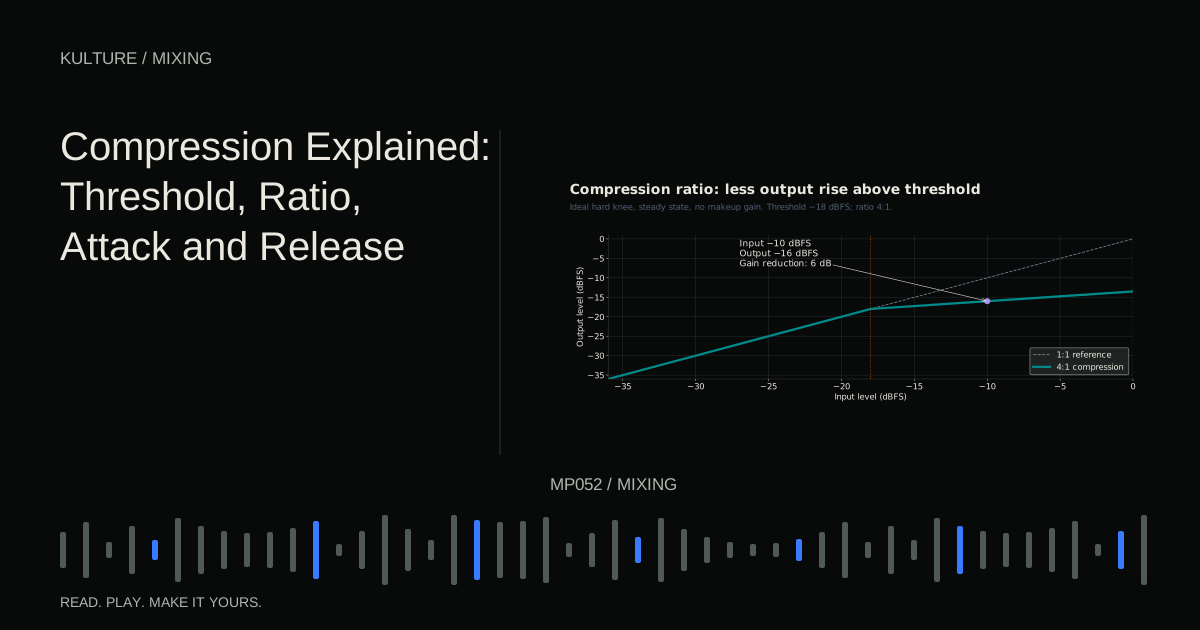
Start with a modest ratio and lower the threshold until kick hits produce a small, visible reduction. Adjust attack so the overlap is controlled without an unwanted click, then adjust release so the bass returns when you want to hear it. The appropriate release depends on the kick tail, bass rhythm and compressor behaviour.
At 120 BPM, an eighth note lasts 250 milliseconds. In the offbeat pattern, you might aim for most of the bass’s level to be restored by its next onset, but do not assume a 250 millisecond displayed release guarantees that envelope. Listen and watch the actual recovery.
If the bass pumps too obviously, reduce the amount or shorten the recovery appropriately. If only its low region needs ducking, a frequency selective processor may preserve more of its upper character. Learn the distinction in dynamic EQ versus multiband compression.
Understand phase without chasing a frozen waveform
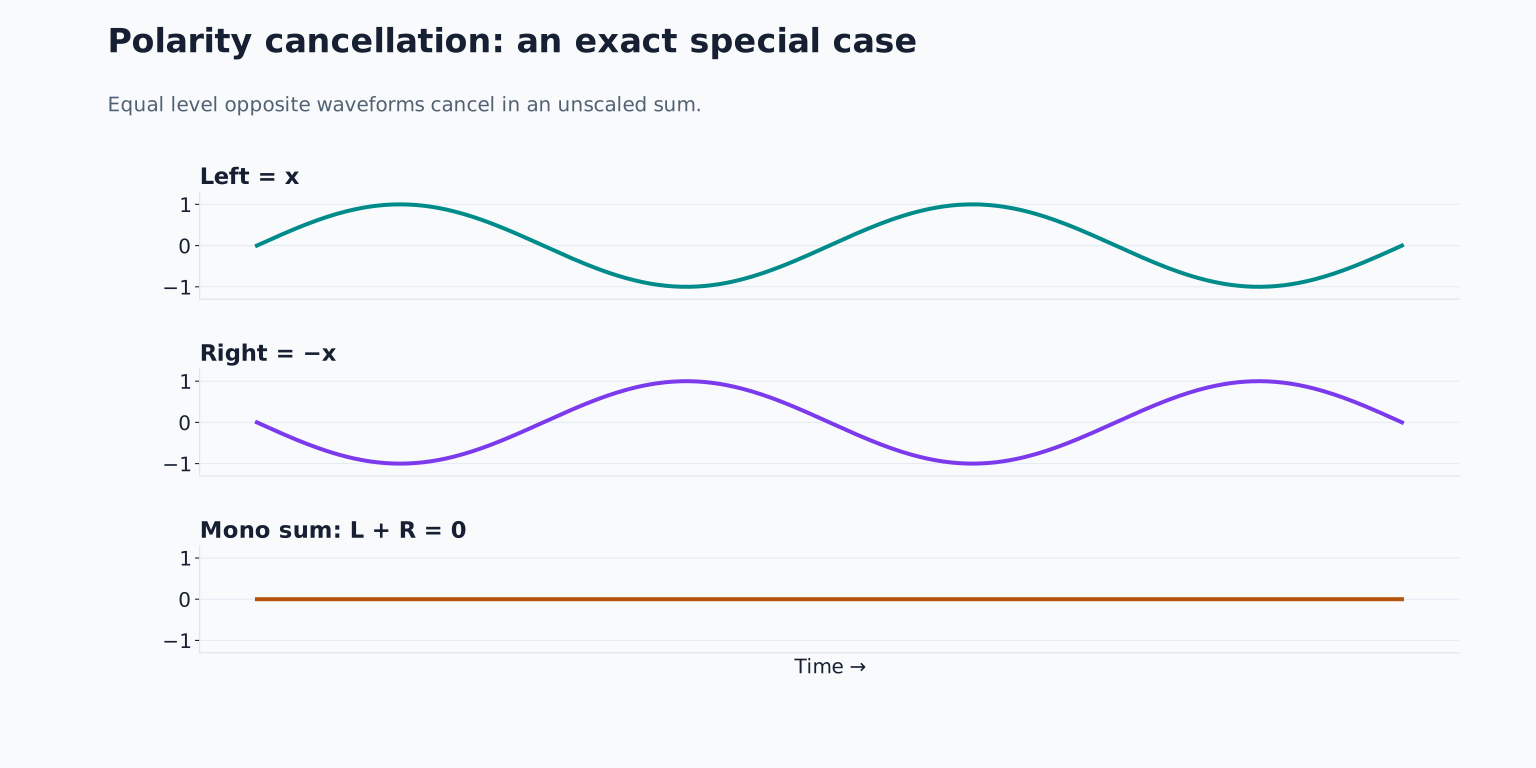
When low frequency waveforms overlap, their relative timing and polarity affect the combined level. Polarity inversion flips the waveform’s sign; it is not the same as a general time shift. A small time move changes phase differently at different frequencies.
Try a polarity inversion as a comparison, but listen across the full bass pattern. A setting that strengthens one note may weaken another. Moving the kick in time also changes groove, so do not prioritize a visually tidy waveform over musical timing.
If layered kick components are inconsistent, inspect them separately. An unnecessary second low layer may be the problem. One dependable low body with a separate attack layer can be easier to control than two competing full range kicks.
Check the result beyond the loudest note
Listen to the lowest bass note, the highest note and the transition into the next section. Check a mono sum and a second playback system when available. If one note blooms disproportionately, determine whether the source, room or monitoring system is contributing before applying a permanent cut to the whole bass.
For practice, make three versions of the same loop: separated by note length, separated by a small tonal adjustment and separated by ducking. Match their overall level and choose which best expresses the groove. Then add the remaining instruments and repeat the comparison. The best low end is the one that supports the finished song, not merely the most impressive isolated loop.
TAKE IT INTO YOUR OWN MUSIC
Your next session.
Listen to the lowest bass note, the highest note and the transition into the next section. Check a mono sum and a second playback system when available. If one note blooms disproportionately, determine whether the source, room or monitoring system is contributing before applying a permanent cut to the whole bass.
Notes and progress stay in this browser.