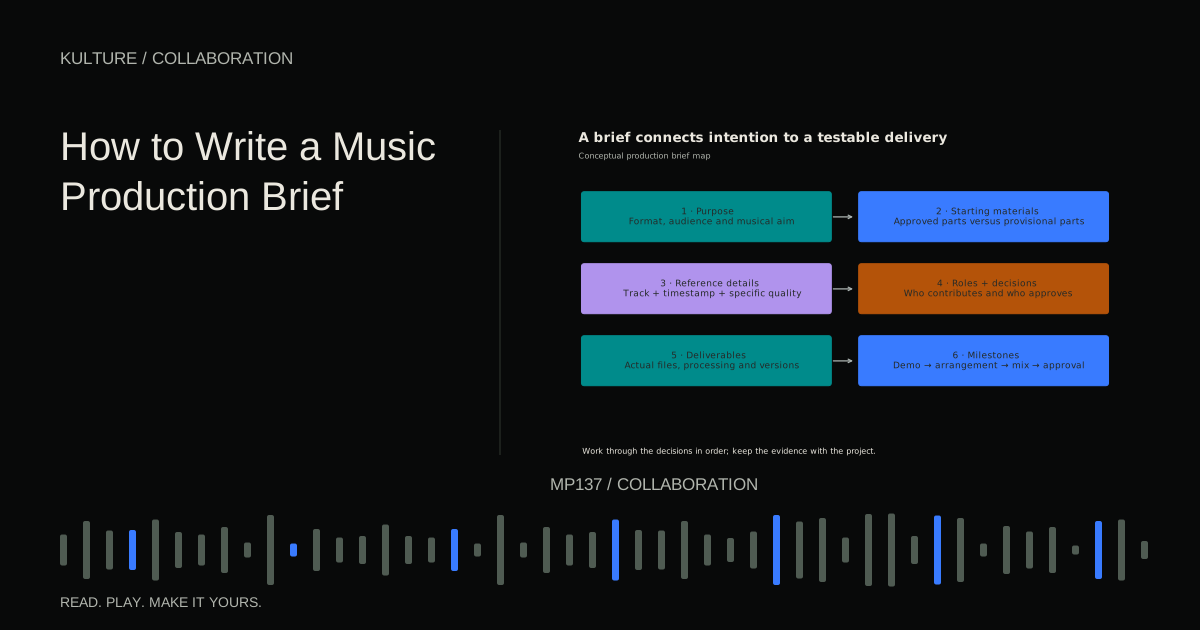
A useful brief is short enough to read, specific enough to act on, and easy to update when the project changes. Begin with the desired outcome rather than a list of plugins.
State the purpose in one sentence
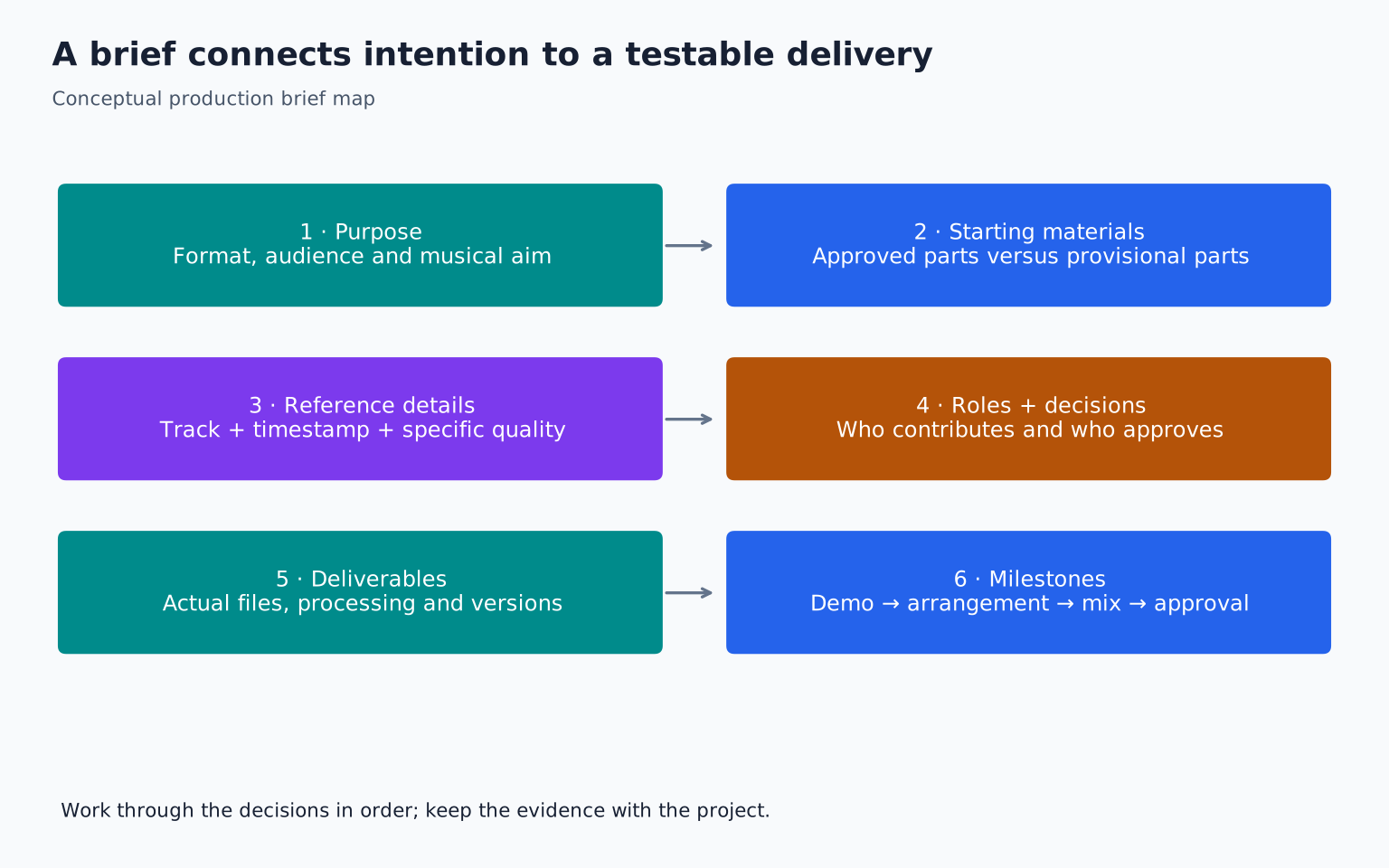
Describe the format, audience or use, and main musical intention. For example: “Produce a three minute indie pop single built around an intimate lead vocal, with a restrained first verse and a larger final chorus.”
That sentence establishes scale and contrast. It does not require a particular compressor or a vague promise of “radio quality.” If the track is for a live show, game, advertisement, or film scene, state that because timing, looping, alternate versions, and rights requirements may differ.
Avoid using genre alone as a complete brief. “Electronic” can mean sparse ambient music, aggressive club production, or a vocal pop arrangement. Add concrete musical descriptions.
TRY IT HERE
Make it your session
Turn the steps into a plan you can save.
Ready when you are. Audio starts only when you press Play.
Keep experimenting in the stem splitter LabDefine the starting materials
List what already exists: lyrics, melody, demo, chord progression, vocal recordings, beat, reference tracks, or an unfinished session. Identify which materials are approved and which are open to change.
For example: “Keep the chorus melody and lyric. The verse harmony and drum arrangement can change. The demo vocal is a guide and will be rerecorded.” This prevents someone from carefully polishing a temporary performance or rewriting the part you most wanted to preserve.
State whether the supplied material includes third party loops, samples, or licensed beats. Do not describe an uncleared sample as release ready. Keep the detailed rights discussion separate but linked to the brief.
Translate references into instructions
Choose two or three references and explain one feature of each. Include a legitimate link and a timestamp when possible. “The bass stays short under the vocal from 0:45” is actionable. “Make it sound expensive like this” is not.
References can conflict. If one has a very dry vocal and another has a huge wash of ambience, explain which quality matters in each. Otherwise the producer must guess whether you want a compromise or different treatments in different sections.
The level matched reference guide explains how loudness can distort comparisons. Do not reject a rough arrangement merely because a commercial reference is mastered louder.
Define roles and decision authority
Write who is producing, writing, performing, editing, mixing, and mastering. One person may hold several roles, but naming them prevents gaps.
Choose who approves creative changes and who consolidates feedback. If three band members can request contradictory revisions independently, the brief is missing a practical decision process.
Credit, ownership, and payment should be discussed explicitly in the appropriate agreement. A production brief records the job; it should not silently substitute for a rights contract. In Canada, the Copyright Act's ownership and assignment provisions are relevant background. Seek qualified advice for legal commitments.
Specify deliverables in plain language
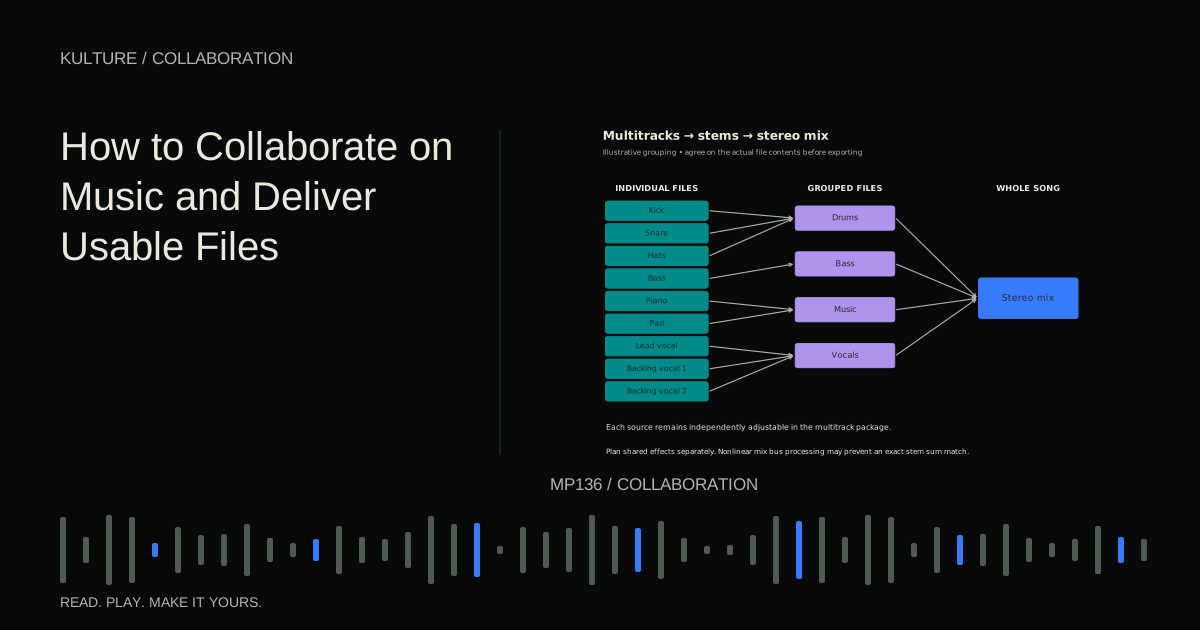
Instead of “all files,” name the required outputs. These might include an approved stereo mix, instrumental, clean version, individual audio tracks, grouped stems, MIDI, or a native session.
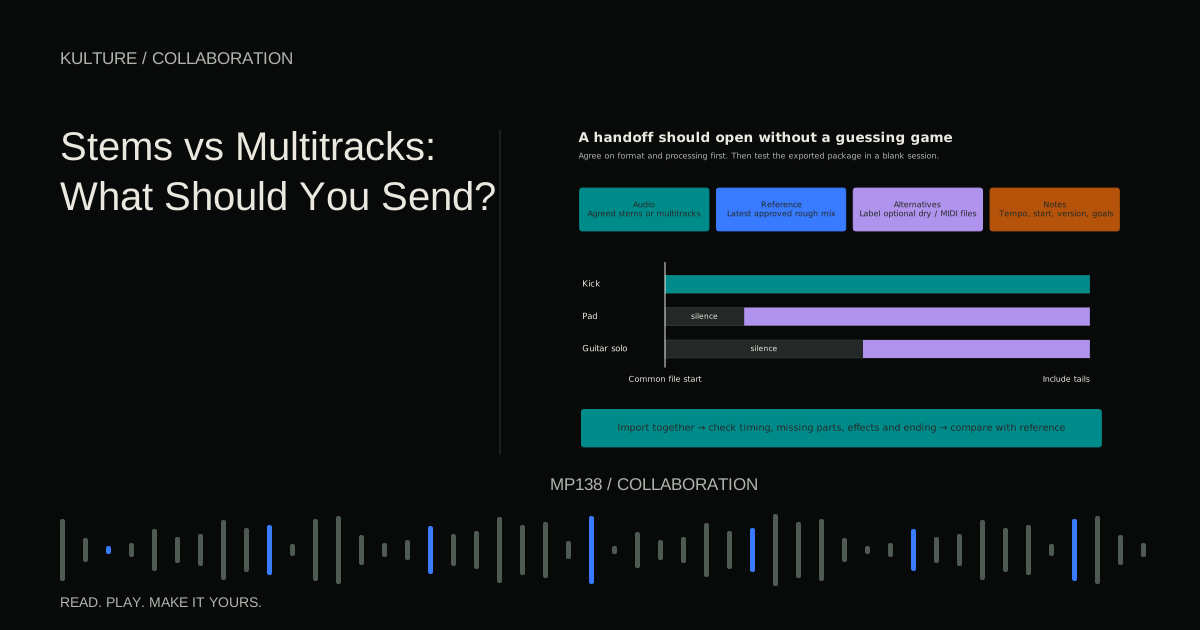
State whether effects should be printed, whether alternate dry files are needed, and whether the recipient needs editable instruments. A native session is not useful if its essential plugins are unavailable and no audio prints exist.
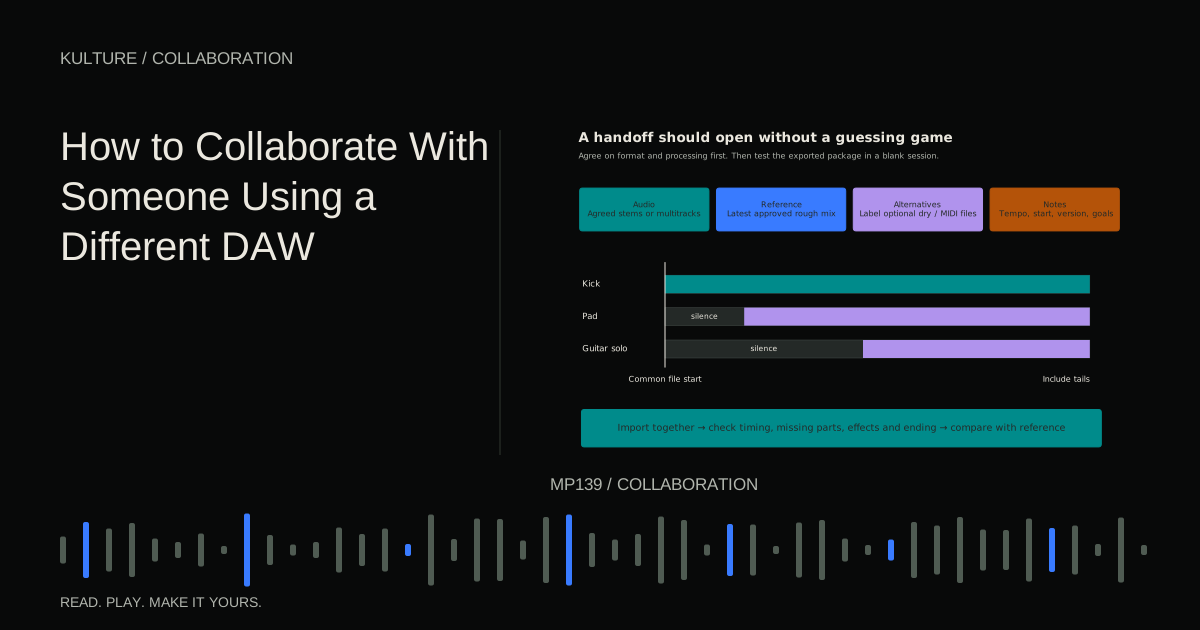
Technical details should be confirmed with the next recipient. If a mixing engineer is involved, ask what they want before requiring a format that creates extra work. Ableton's export guidance shows why the word “stems” should be accompanied by a description of the actual contents.
Make the schedule stage based
Break the work into meaningful approvals: arrangement direction, performance recording, production lock, mix review, and final delivery. Give each stage a date only when the people involved can reasonably commit to it.
A stage based schedule catches expensive changes early. It is easier to change the chorus arrangement before recording ten layers of backing vocals than after mastering.
Allow time for feedback and corrections. “Delivery Friday” is ambiguous if the client first listens Friday evening and expects revisions before a midnight release. State whether the date means first draft, approval deadline, or finished files.
A complete example brief
Project: “Paper Lanterns,” original indie pop single.
Goal: Keep the lead vocal intimate while making the final chorus noticeably larger through arrangement and backing parts rather than only louder mastering.
Starting materials: Approved chorus melody and lyrics; rough piano demo; guide vocal; no third party samples currently included.
Open decisions: Drum sound, bass part, verse chord voicing, and transition into the final chorus. Do not change the chorus lyric without approval.
References: One for the close vocal perspective, one for short bass notes, and one for a final chorus arrangement build. Each reference will include a specific section and explanation.
Roles: Producer builds and edits the arrangement. Artist records final lead vocals. A separate engineer mixes after production approval. Artist consolidates feedback.
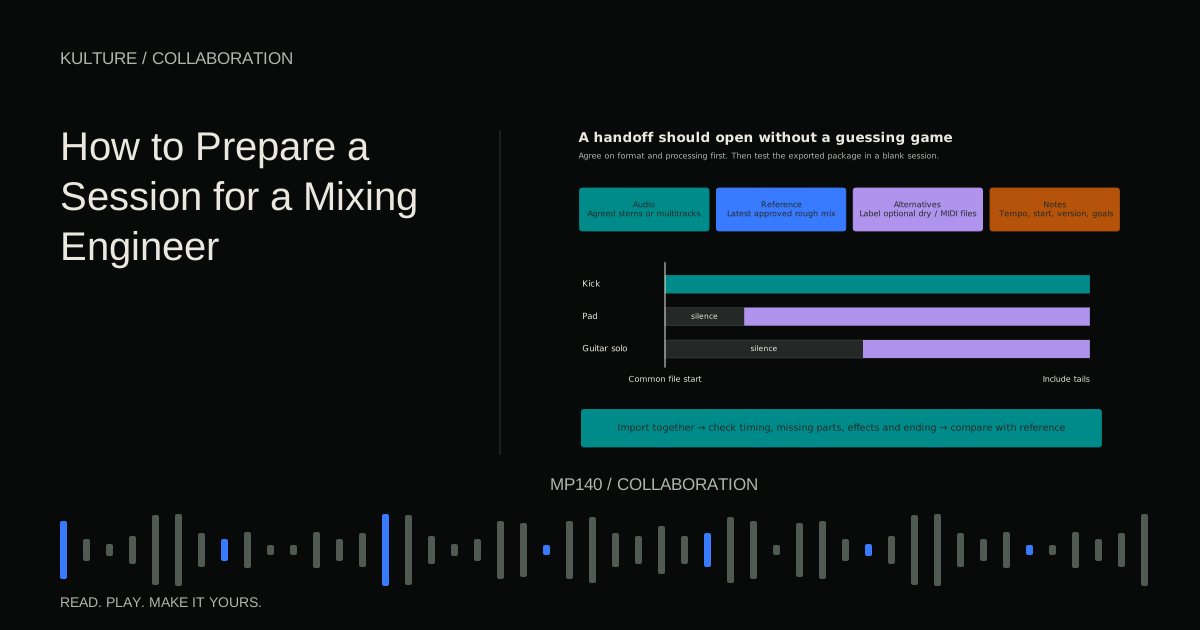
Deliverables: Stereo production reference, aligned individual audio tracks for mixing, printed signature effects, optional dry vocal files, and a note listing tempo, key context, and version.
Review process: One arrangement review before final recording, then agreed production revisions. New songwriting after production approval requires a scope discussion.
Completion test: Approved arrangement, complete performances, no missing assets, files verified in a fresh session, and all known rights questions resolved before release.
This example is a working communication document, not a ready made legal agreement.
Keep room for discovery
A brief should identify non negotiables and areas for exploration. “Try two drum approaches for the first chorus” invites creativity within a bounded task. “Do whatever you want” can be exciting, but it leaves budget, schedule, and revision expectations unclear.
When a new idea changes the direction, update the brief and confirm which earlier decisions are replaced. Do not leave the old document active while relying on scattered messages to explain the new plan.
Test the brief before work starts
Ask the collaborator to summarize the goal, first milestone, and deliverables in their own words. If their understanding differs, clarify it now. This is a practical check, not an examination.
Your exercise is to write a one page brief for one track, then remove every adjective that cannot guide a decision unless it has a concrete example. Replace “warm,” “big,” or “modern” with an explanation of the musical result you mean. Continue with revision rounds and sign off to make the review process equally clear.
TAKE IT INTO YOUR OWN MUSIC
Your next session.
Project: “Paper Lanterns,” original indie pop single.
Notes and progress stay in this browser.