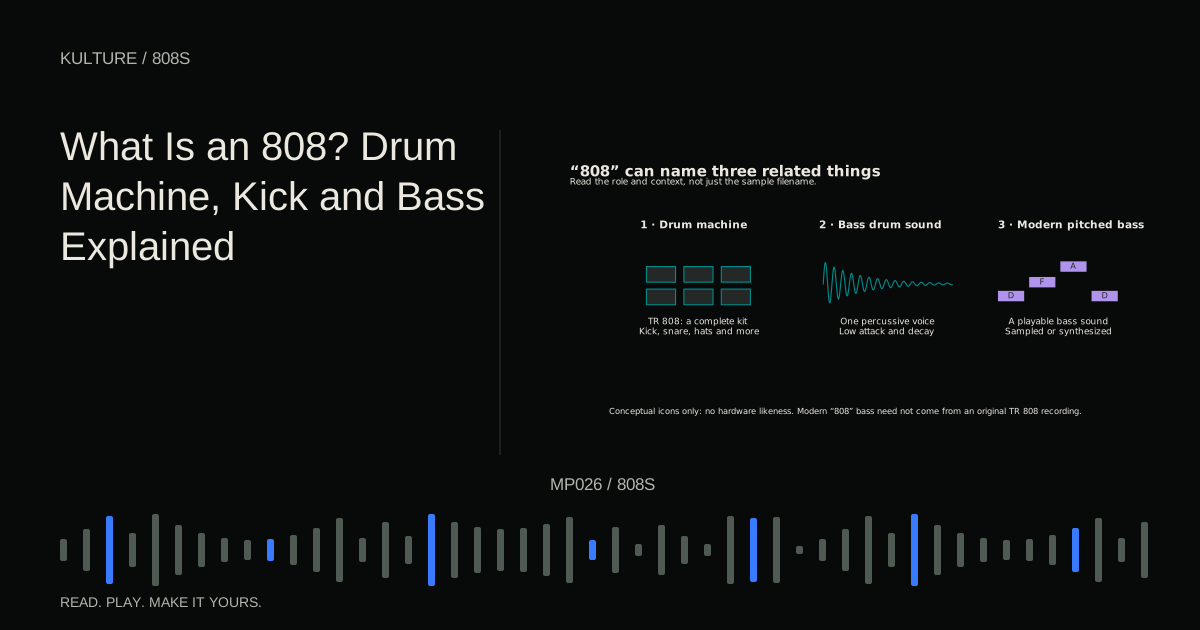
An 808 can occupy both bass and percussion roles. Its long low body means a busy pattern can fill much more space than the same MIDI played on a short pluck.
Prepare a predictable instrument
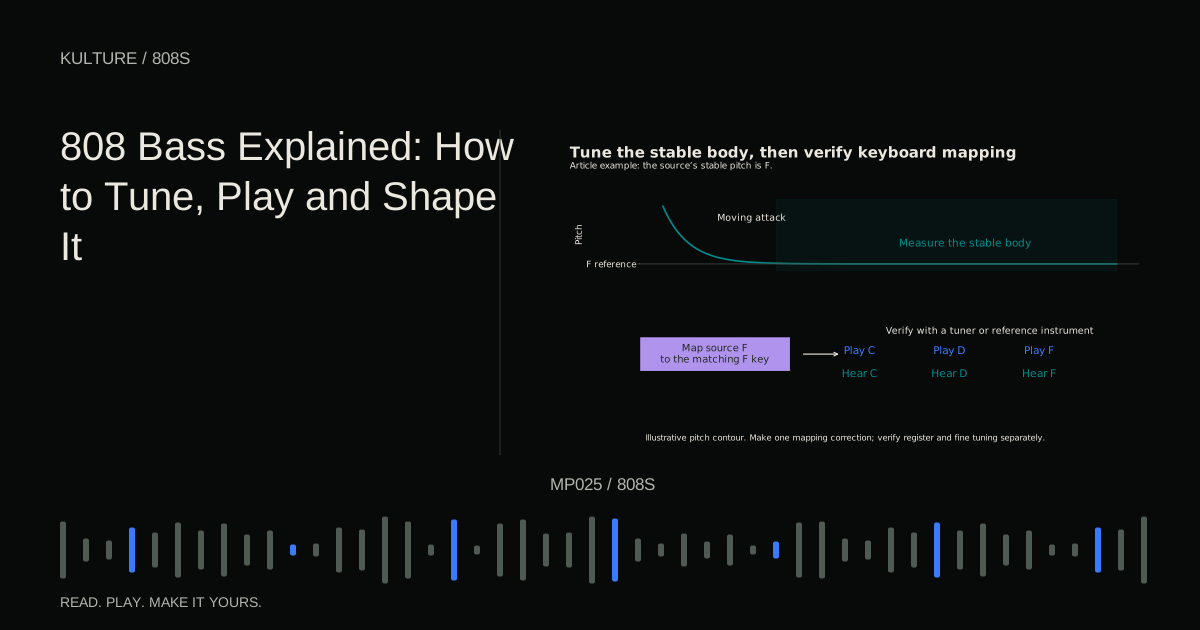
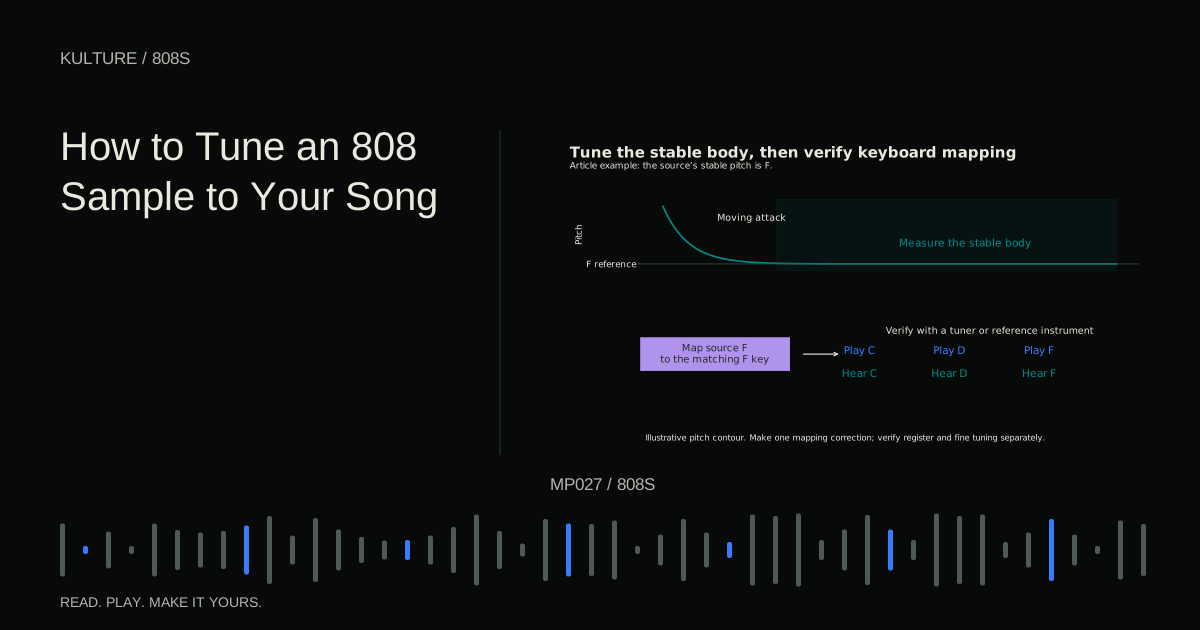
Load a tuned 808 sample or synthesized 808 style bass. Check that playing D produces D, and test at least two other notes. If the keyboard mapping is wrong, fix it before composing. How to Tune an 808 Sample explains the process.
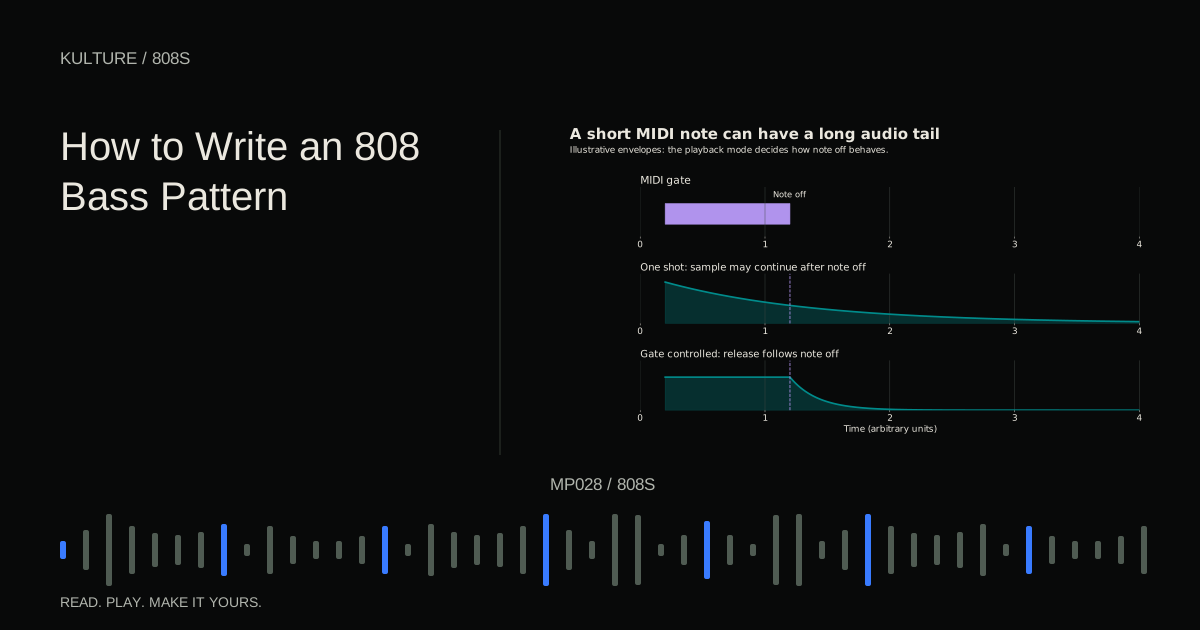
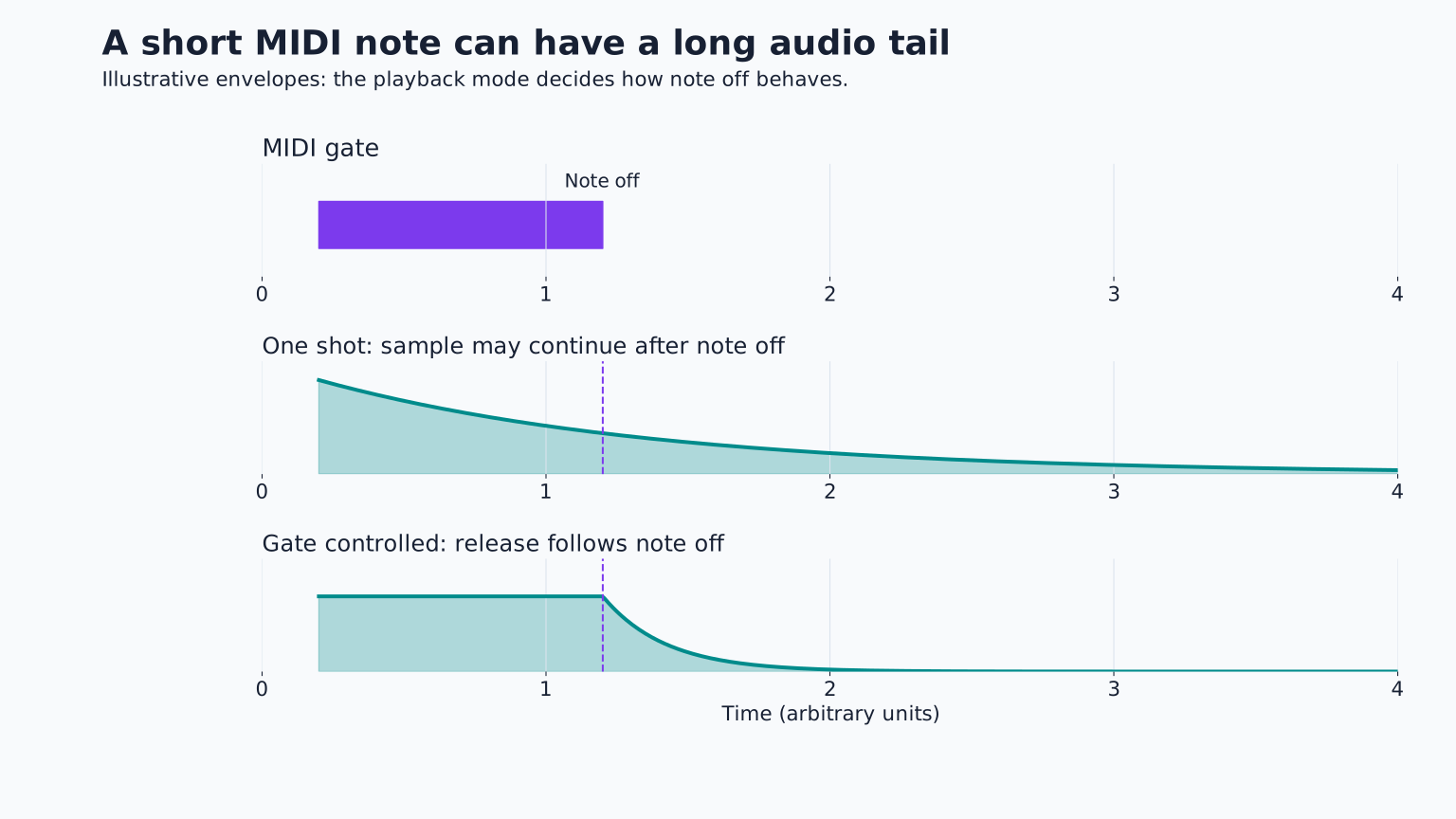
Choose a playback mode in which note lengths behave as intended. Draw one short and one long note. If they sound identical, the instrument may be using one shot playback or a fixed decay envelope. That can be useful, but you need to know it before relying on MIDI rests.
Image Line's Sampler manual documents the note release distinction for its sampler. Other instruments may use gate, trigger, classic or envelope modes with different behavior.
TRY IT HERE
Give the bass some space
Tap steps to add rests. Change the register or slide.
Ready when you are. Audio starts only when you press Play.
Keep experimenting in the synth LabEstablish a simple drum frame
Use 4/4 at 140 BPM for this exercise. Put the main snare on beat 3 of each bar to create a half time framework. Add closed hats on eighth notes and kicks on beat 1 and the “and” after beat 2.
This is a teaching pattern, not a definition of trap or any other genre. The exact tempo and kick positions can change. What matters is having a stable drum reference while you design the bass.
Create four bars with Dm, B flat, F, C, one chord per bar. Use a simple chord sound so you can hear the bass's harmonic relationship without a dense arrangement.
Put the roots on the map
Write D, B flat, F and C on beat 1 of their respective bars. Hold each for two beats. Choose a register where the sample has a clear low body and recognizable pitch.
As an initial MIDI range, try D at 38, B flat at 34, F at 41 and C at 36. If the lowest note is poorly defined, move the entire pattern up an octave and compare. Octave labels differ among DAWs, so note numbers are used here for precision.
Listen with chords and drums. The first bass attack coincides with the kick, creating a shared arrival. If the combination is too heavy, shorten the kick or soften the 808's attack rather than immediately reducing every bass note.
Add a short answer
Place a second root on the “and” after beat 3, lasting half a beat. This leaves a gap around the main snare on beat 3 and gives the bass a response afterward.
Count “1 and 2 and 3 and 4 and.” The short answer begins between 3 and 4. Check its release so it does not continue unintentionally across the next bar's chord change.
Now compare with placing the answer on beat 4. The difference is only half a beat, but the first version leans forward while the second lands more squarely. Choose the one that best supports your hat and kick pattern.
Create a phrase through contrast
Keep the second root in bars 1 and 2. Remove it from bar 3. In bar 4, replace it with two short C notes on the “and” of beat 3 and beat 4. You now have repetition, a gap and a turnaround.
Do not add a roll in every bar. A rare quick event becomes a feature; a constant one becomes the baseline. If the track has a busy vocal, the sparse third bar may be the most useful part of the pattern.
Listen from the beginning of the four bar phrase. A fill that sounds exciting in isolation may be too much after three already active bars.
Add one harmonic departure
Over D minor, A is the fifth. Try replacing the short D answer in bar 1 with A. Keep it brief, so the low D remains the clear foundation. Over the B flat chord, F plays the same fifth role.
You do not need to add thirds or passing notes immediately. The low register magnifies some harmonic tensions, and a sustained non root bass note can change the perceived chord. Use How to Match a Bassline to Your Chords if you want to explore those colors deliberately.
A simple line with roots and occasional fifths can still be distinctive through rhythm, articulation and sound. Complexity is not a prerequisite for a memorable 808 pattern.
Treat slides as punctuation
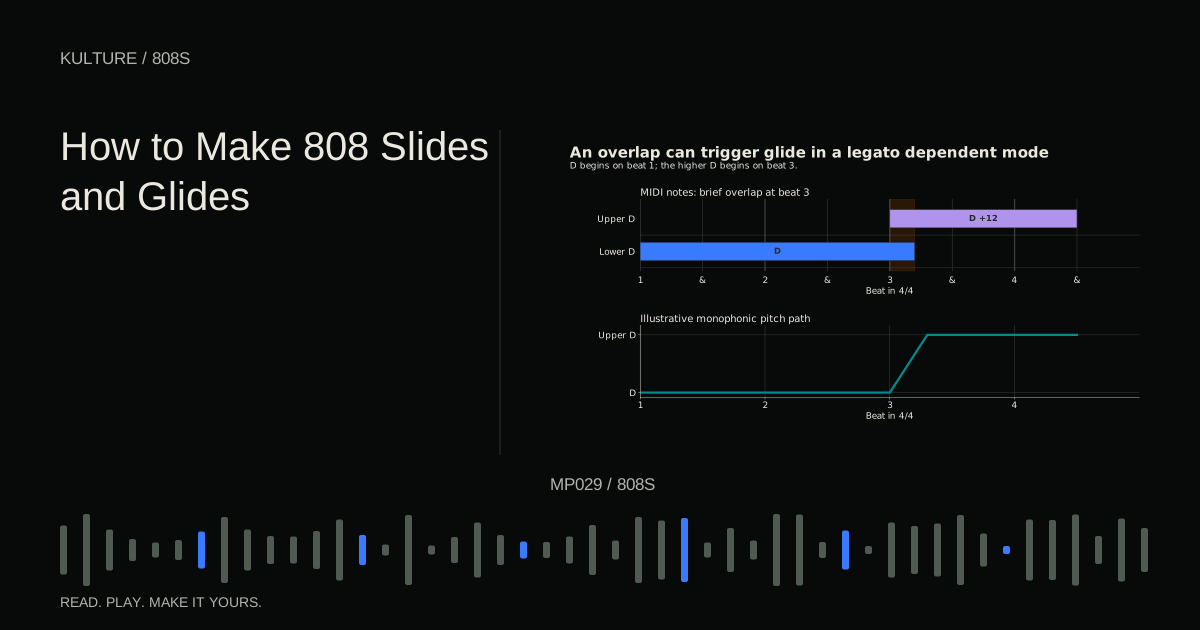
At the end of bar 4, try a slide from C to the D that begins the next phrase, or use a short octave slide within a D minor bar. Decide whether the slide should arrive before the downbeat or land on it.
Check the instrument's glide rules. Some require overlapping notes, others glide whenever enabled, and some use special slide events. Ableton's instrument reference shows that even instruments within one DAW can have different glide modes.
If the slide never reaches its target, shorten its time or lengthen the destination. If every note begins from the previous pitch unexpectedly, use selective glide behavior or automate the setting. The dedicated 808 Slides and Glides guide gives controlled examples.
Use rolls only when the sound can articulate them
A rapid repeated note roll requires the instrument to produce distinct attacks or an intentionally connected texture. A long one shot sample played polyphonically may stack several tails and create a low frequency blur.
Try two sixteenth note repetitions before the final rest, rather than a full bar of thirty second notes. Lower one hit slightly to create an accent shape. If the notes click, inspect retrigger behavior and envelope fades rather than hiding the problem with distortion.
At 140 BPM, sixteenths are fairly short. A slow attack or long glide may prevent the sound from settling before the next trigger. Match the articulation to the rhythm instead of forcing every sample to perform every roll.
Balance the 808 with the complete track
Bring in the lead or vocal. Remove an 808 event wherever it competes with an important phrase unless that interaction is intentional. Check whether the high notes or slides draw too much attention.
If the bass disappears on smaller playback systems, consider a sound with more upper harmonics or modest saturation. Match output level when comparing. A louder distorted version is not automatically a better pattern.
If the kick and 808 collide, edit their tails and relative attacks first. Sidechain ducking can help, but it should solve a heard problem rather than serve as a mandatory step.
Complete an eight bar pattern
Duplicate the four bar phrase. Keep the first pass simple. In the second, add one fifth, one octave or slide, and one deliberate rest before the next section. Do not change all three in every bar.
Play the eight bars without watching the editor. You should hear a stable harmonic foundation, a recognizable rhythmic idea and a clear ending. Save a version without effects so you can return to the performance if later processing obscures it.
TAKE IT INTO YOUR OWN MUSIC
Your next session.
Duplicate the four bar phrase. Keep the first pass simple. In the second, add one fifth, one octave or slide, and one deliberate rest before the next section. Do not change all three in every bar.
Notes and progress stay in this browser.