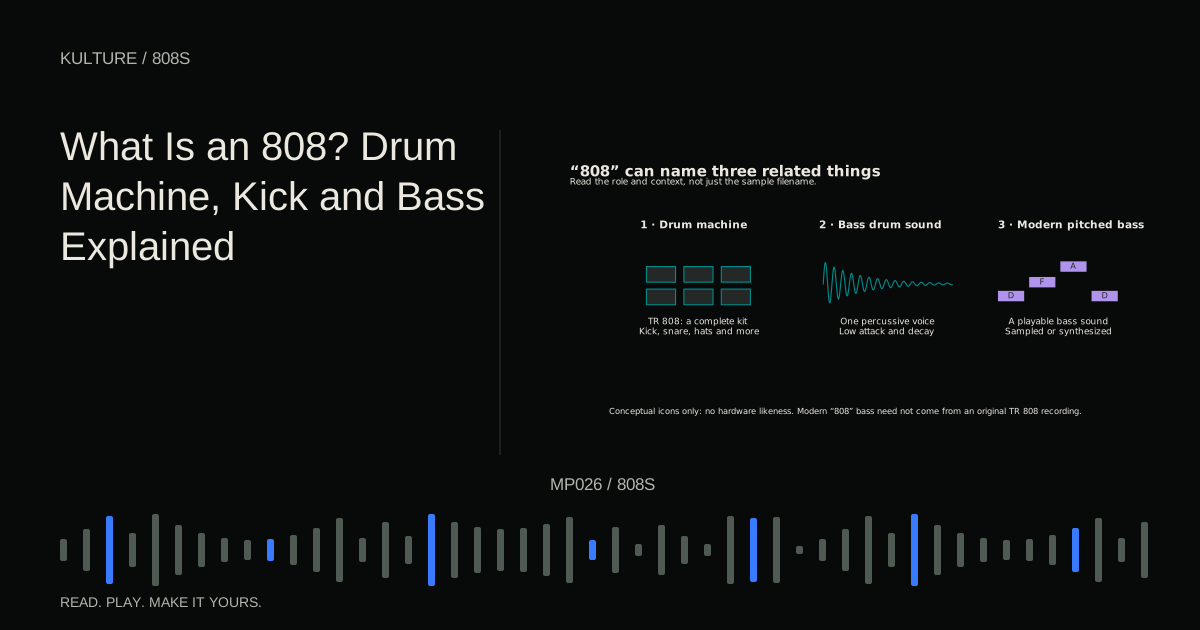
If someone asks for “more 808,” they may mean more sub bass, a longer bass tail, a more recognizable 808 style tone or an actual TR 808 drum part. Ask which quality they want rather than assuming the word describes one fixed sound.
The original instrument was a complete drum machine
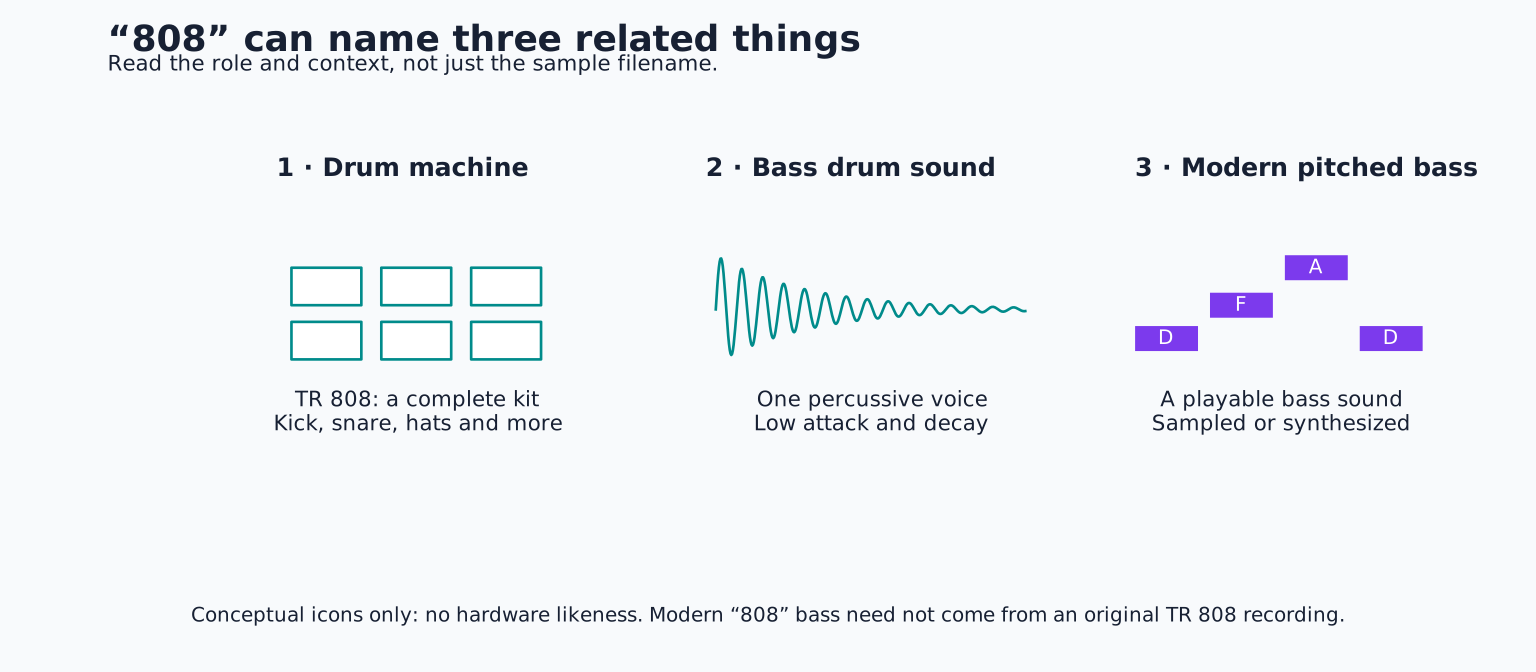
Roland introduced the TR 808 Rhythm Composer in 1980. It generated its percussion electronically rather than playing recordings of acoustic drums. Its sounds included more than the famous bass drum: snare, claps, hats and other percussion were part of the instrument's identity.
Roland's TR 808 history describes the instrument's development and analog synthesis approach. The important production distinction is that a “TR 808 kit” refers to a family of drum voices, while an “808 bass sample” usually refers to a particular low sound.
You do not need original hardware to learn the musical techniques associated with it. A suitable sample or synthesizer can let you practice bass patterns, envelopes and pitch movement without claiming to reproduce every detail of the historical instrument.
TRY IT HERE
Give the bass some space
Tap steps to add rests. Change the register or slide.
Ready when you are. Audio starts only when you press Play.
Keep experimenting in the synth LabWhy the bass drum became a bass sound
A bass drum can contain a pronounced low frequency resonance. When that resonance lasts long enough and has a sufficiently clear pitch, listeners can hear it as both percussion and a musical note.
The 808 style boom became material producers could sample, transpose and play across a keyboard. Roland's account of 808 bass development discusses the move from drum hits to chromatic basslines and the later use of synthesized alternatives.
That history explains the modern vocabulary. A producer may call a newly synthesized, distorted sub bass an “808” even when it was never recorded from a TR 808. The term often describes a sound family and production role rather than strict provenance.
Hear the three roles in a simple experiment
Create a four bar project at 100 BPM. Load a short kick sample, a long 808 style sample and a plain sustained bass synth. Play each on beat 1 of every bar, one at a time.
The short kick primarily marks an event. The long 808 may mark the event and continue supplying pitched weight. The sustained synth may provide a stable note with less obvious percussion at the beginning.
Now play D, F, A and D across the four bars. If the long sample tracks pitch correctly, it becomes a bassline. If it remains at one pitch regardless of the MIDI notes, your instrument may be using fixed drum pad mapping rather than chromatic playback.
This test identifies what the sound actually does. The label in a sample browser is less useful than hearing its pitch, attack and duration.
An 808 is not necessarily a pure sine wave
A sine wave is a smooth periodic waveform containing one frequency in its ideal form. It can be a useful starting point for a sub bass. But an 808 style sound may contain a pitch envelope, transient, nonlinear distortion, noise or additional harmonics.
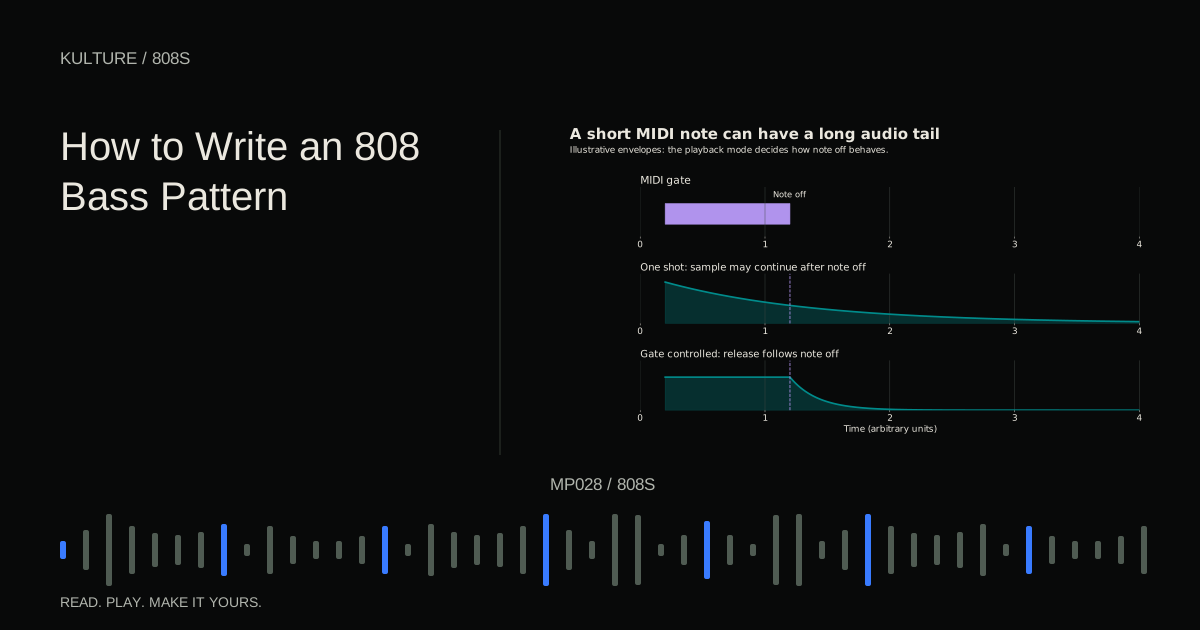
The pitch envelope changes pitch over time, often creating a fast downward movement at the start. The amplitude envelope changes loudness over time. These two envelopes serve different jobs: one shapes the thump's pitch motion, while the other shapes its duration and fade.
Modern samples may already contain aggressive saturation, clipping or layered attacks. Adding more processing without inspecting the source can exaggerate those features. If a file sounds harsh, it may not need a sharper transient or another distortion plugin.
Kick and 808 can overlap in function
A short kick can provide a clear attack above a smoother 808 bass. That division often works well, but it is not compulsory. An 808 sample with enough transient may work alone.
Try the long sample by itself, then add the short kick on the same attacks. If the combined sound becomes muddy or loses consistency, compare their tails and relative timing. Two low sounds do not always add into a stronger result.
You can shorten the kick, soften the 808's attack, change the pattern or choose a different pair. Equalization and sidechain ducking are later options when you have identified a specific conflict. Kick vs Bass covers that decision process.
Tuning matters when the sound carries harmony
A melodic 808 should produce the notes you intend. That means verifying the source pitch and sampler mapping, then writing a line that fits the chords. It does not mean forcing every short drum hit in every track to match the tonic.
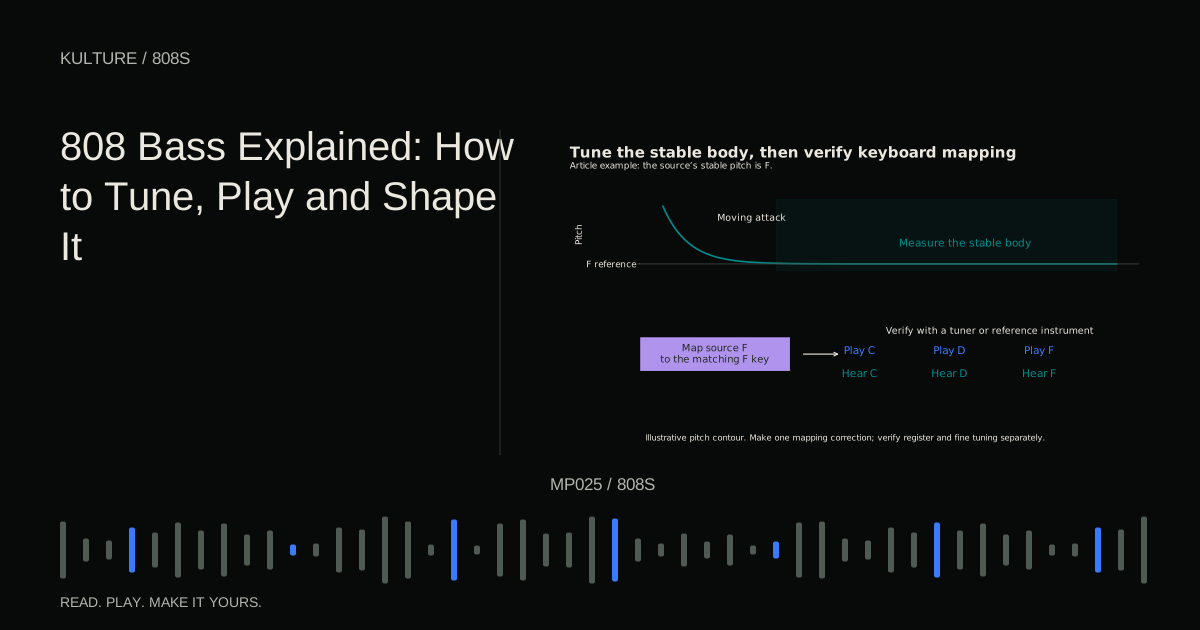
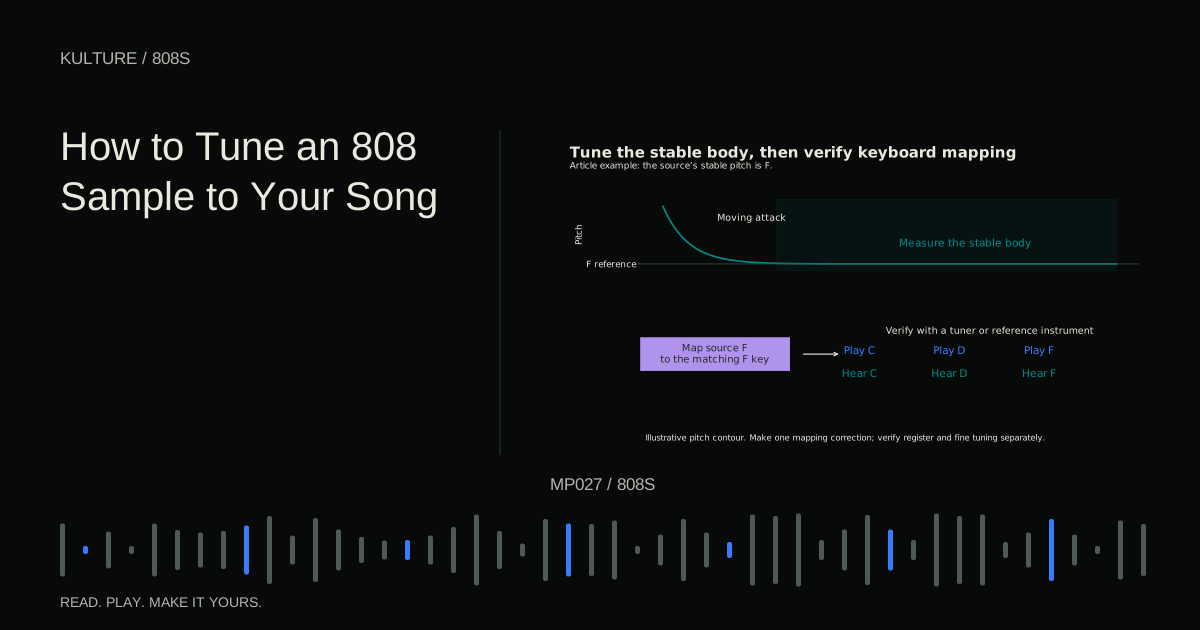
A very short kick with a fast pitch sweep may not have one stable musical pitch. A sustained 808 tail often does. Focus on the part of the sound that listeners hear as bass when checking its tuning.
If the sample's filename says “C,” treat that as a clue rather than a guarantee. Processing, export mistakes or octave conventions can cause confusion. Verify with a tuner and a reference instrument, especially before writing a long part. Use How to Tune an 808 Sample for a step by step method.
Why the same MIDI can sound different with another sample
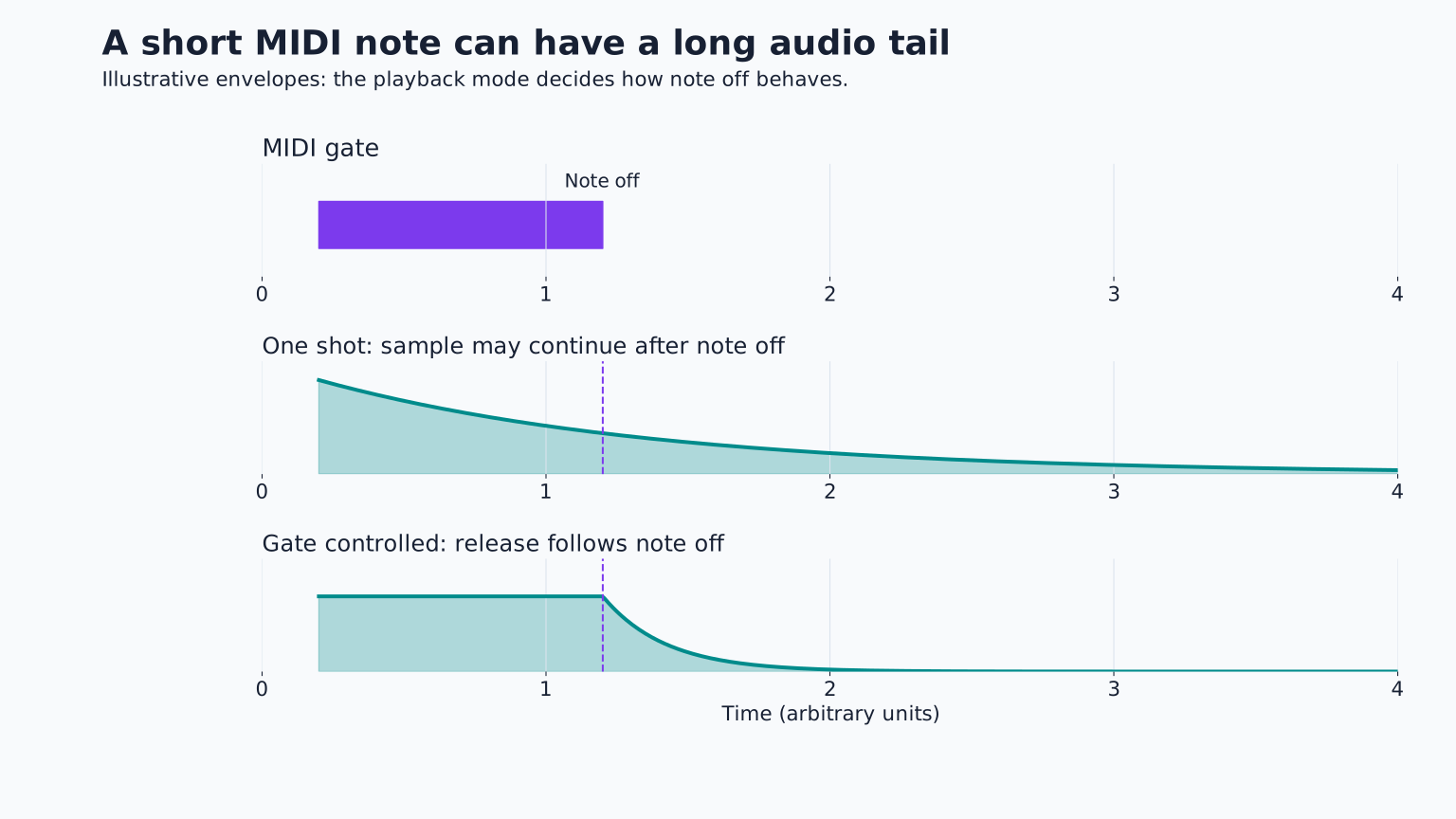
A longer sample may overlap the next note. A brighter one may seem louder despite a similar meter reading. A sample transposed upward through speed based playback may become shorter, while a time stretched version may preserve duration but add different artifacts.
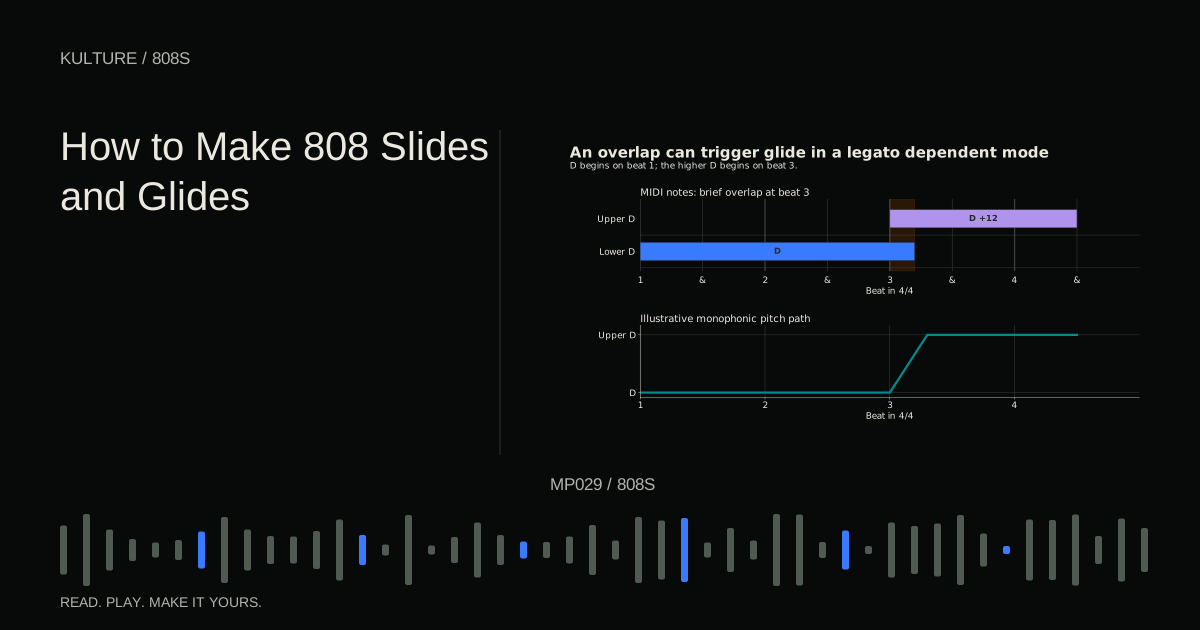
The instrument's voice and envelope settings also matter. One shot playback can ignore note lengths; a monophonic mode can cut previous notes; legato behavior can connect notes without restarting the attack.
When replacing an 808, audition the whole phrase rather than only the first note. You may need to edit durations, velocities or slide timing to suit the new sound. Sample selection is part of performance design, not merely a cosmetic swap.
A useful way to describe the sound you want
Instead of saying only “a better 808,” describe its role and shape: short or sustained, clean or distorted, sharp or soft attack, stable or sliding pitch, supportive or prominent. These terms help you choose samples and communicate with collaborators.
For example, “a short, clean 808 that stops before each snare” is a much more actionable target than “a heavy 808.” Another track might need “a sustained, harmonically rich bass with one slide into the chorus.”
Practice the distinction
Make three four bar versions of the same idea: a TR 808 style drum kit with no melodic bass, a pitched 808 bass with minimal drums, and a separate kick plus 808 bass. Label what each sound contributes.
Then choose the version that supports your song. Continue with 808 Bass Explained to turn that choice into a tuned, playable and controlled part.
TAKE IT INTO YOUR OWN MUSIC
Your next session.
Make three four bar versions of the same idea: a TR 808 style drum kit with no melodic bass, a pitched 808 bass with minimal drums, and a separate kick plus 808 bass. Label what each sound contributes.
Notes and progress stay in this browser.