Start by finding when the mud appears and which source makes it worse. A clear diagnosis lets you make a smaller change and preserve the warmth the track actually needs.
Describe what “muddy” means in this song
Does the bass have no clear note shape? Do chords become thick when the chorus arrives? Does the vocal lose intelligibility only when reverb is active? These are different problems that can all be described as mud.
Pick a short section where the issue is obvious and a second section that sounds clearer. Compare their instrumentation and note lengths. If the muddy section simply contains three additional sustained parts, the arrangement is a strong suspect.
Check the monitoring situation too. If every familiar reference sounds unusually boomy in the same position, do not immediately cut your mix to compensate. Try a second familiar playback system or headphones at a comfortable level. Room and speaker behaviour can exaggerate low frequency regions.
TRY IT HERE
Find the frequency
Move a bell filter through a harmonic tone and compare bypass.
Ready when you are. Audio starts only when you press Play.
Keep experimenting in the synth LabUse subtraction as a test
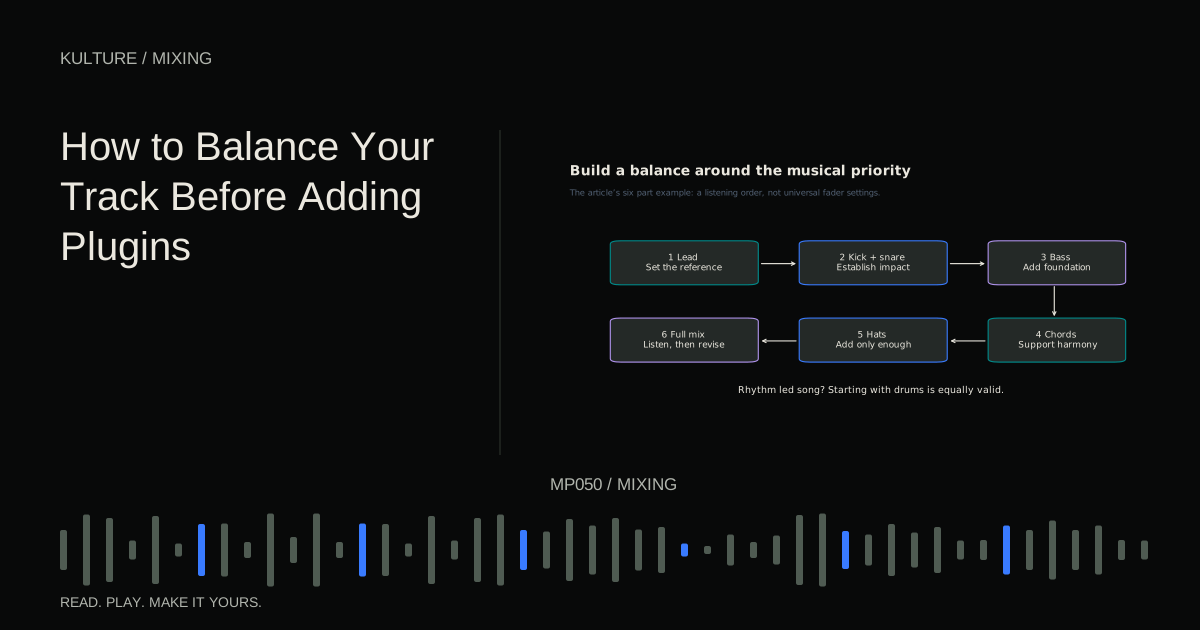
Mute one suspected layer while the whole mix plays. Start with sustained chords, pads, room microphones and effect returns. If muting one part restores clarity, you have a useful lead.
Do not stop at “that track is bad.” Lower it first, then shorten its notes or release. A well chosen sound can become muddy because it plays too continuously. iZotope’s explanation of muddy sound also highlights sustained material as a contributor to buildup.
If removing any single track barely helps, several sources may each contribute a little. Try muting a whole family, such as pads and chord layers, then restore them one at a time. This is more informative than adding an EQ to every channel at once.
Rebuild a simple collision
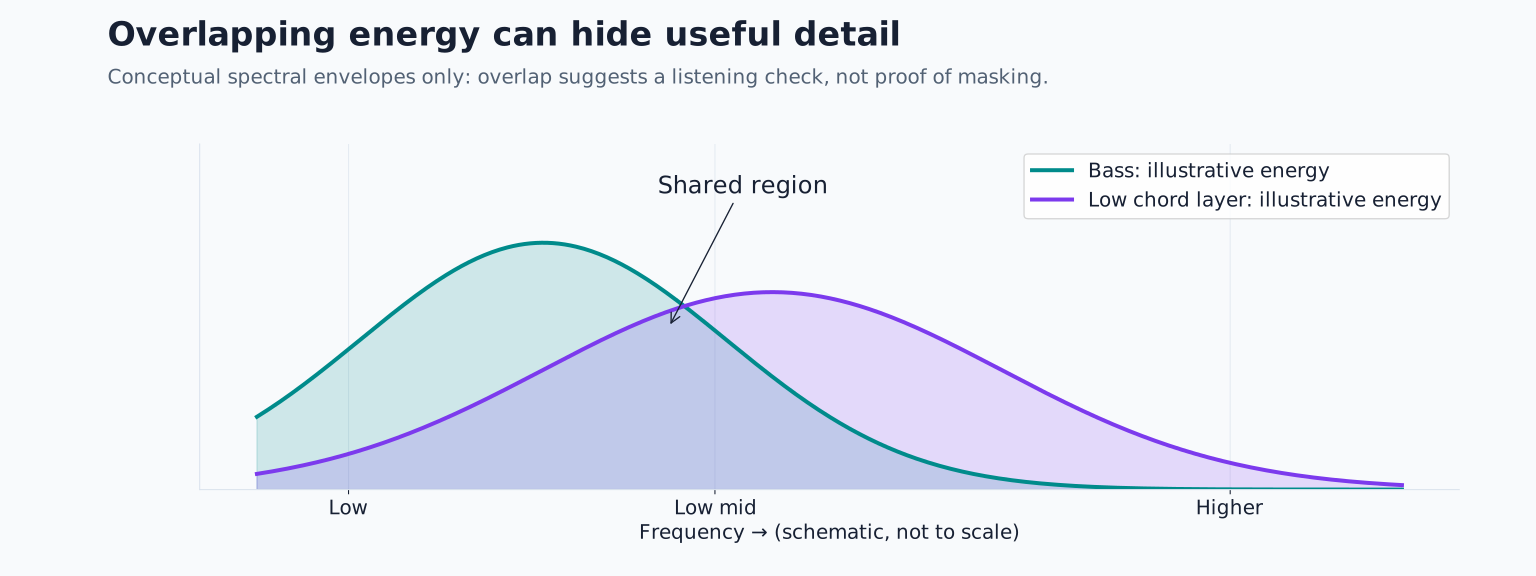
Create a two bar example at 100 BPM. Program a bass line using C, E flat, G and B flat, with one note per beat. Add a pad playing C, E flat and G in a low middle register for the first bar, then B flat, D and F in the second.
Give the pad a long release, perhaps two seconds for this test. The first chord will continue under the second, and its low notes may also overlap the bass. Listen to the combined result, then shorten the release to around 300 milliseconds.
Next remove the pad’s lowest note or move the chord upward. Compare those changes separately. You may find the greatest improvement comes from harmony and duration, not from changing any frequency control.
This example teaches two kinds of overlap: simultaneous notes in the same register, and old notes continuing into a new harmony. EQ can reduce their level in a region, but it cannot decide which chord should have ended.
Distinguish low weight from low mid thickness
Deep bass energy and low mid body are related but not identical. A mix can have little true sub bass yet still sound cloudy because guitars, keys and reverbs accumulate above the deepest region.
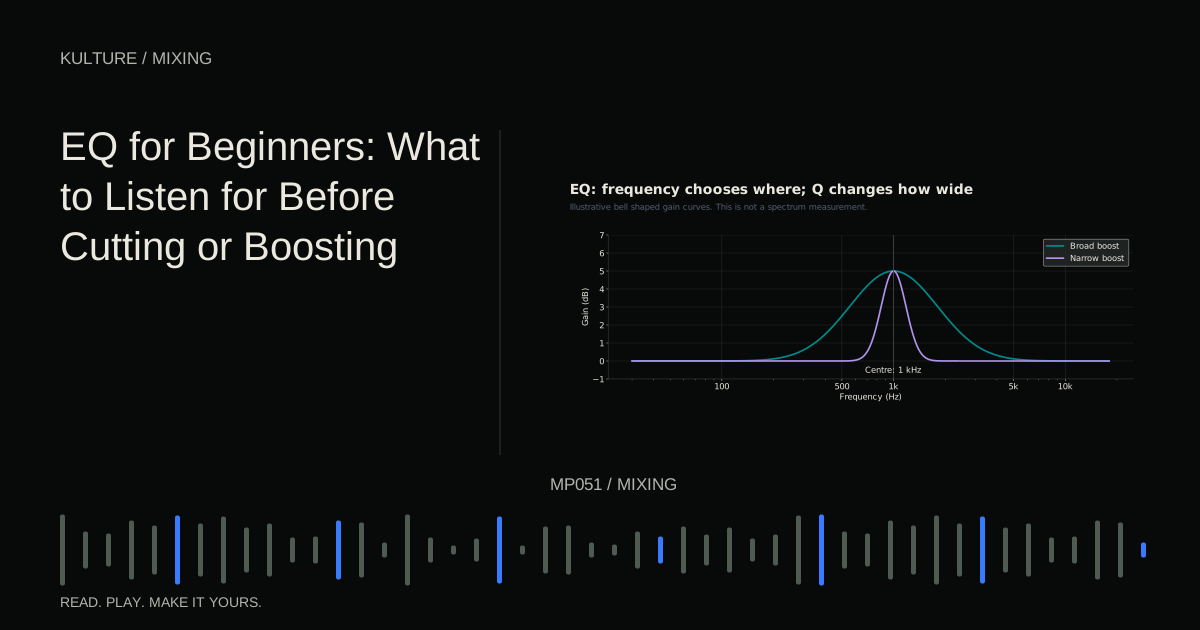
Listen to the source that your mute test identified. If it has unnecessary thickness, try a broad, modest EQ reduction where that thickness is audible. Move the band while the mix plays and judge whether the important part becomes clearer without making the source hollow.
Avoid cutting the same region on every instrument. You may remove the warmth that makes the arrangement feel connected. One supporting layer can often give up more body than the main vocal or melody.
If a high pass filter helps, stop before useful fundamentals disappear. The correct boundary depends on the instrument’s notes and role. See EQ for beginners for a measured way to choose it.
Inspect the effects separately
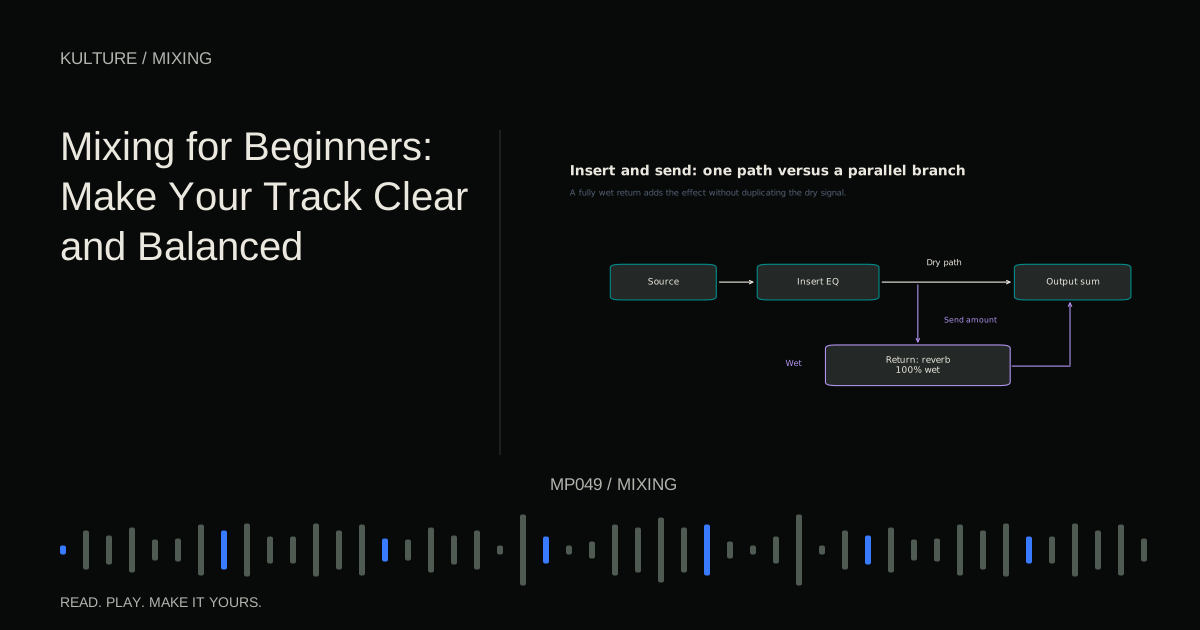
Mute reverb and delay returns. If clarity returns immediately, the dry balance may already be good. Reduce the send, shorten the decay or filter the effect rather than heavily changing the dry source.
Listen to the return by itself briefly. Does it contain a large amount of low frequency or low mid energy from several instruments? A shared room can become dense because every send contributes to the same tail.
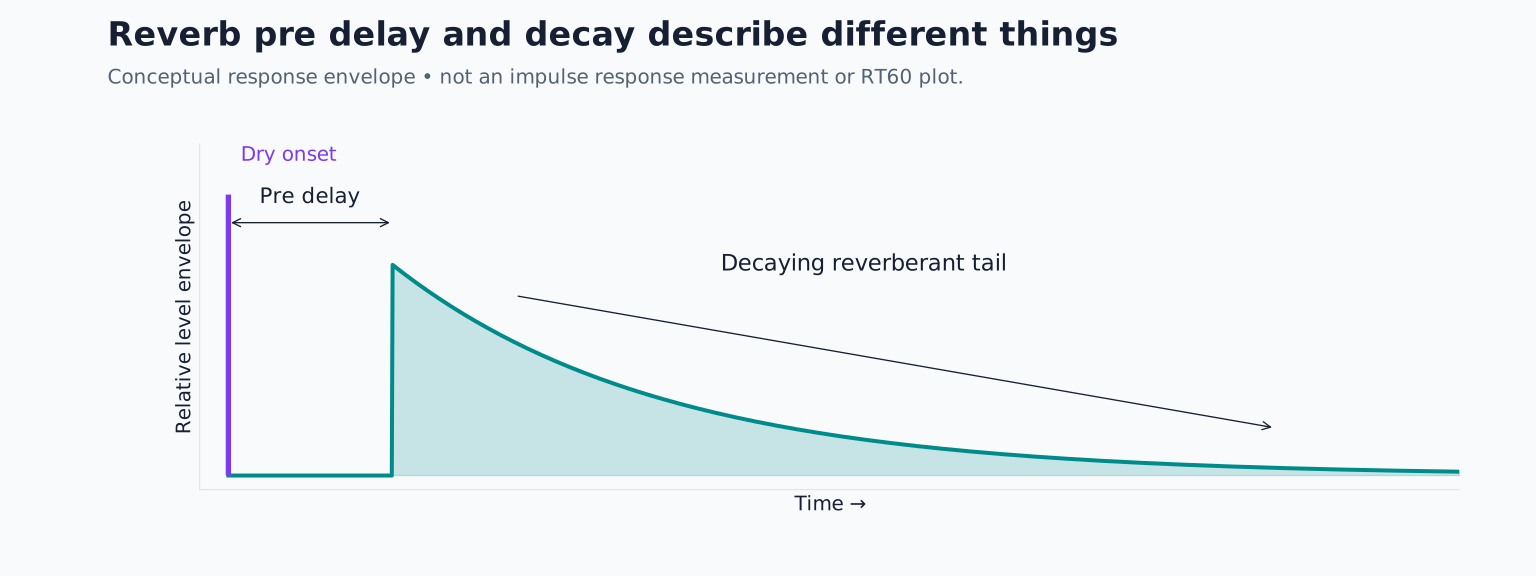
Try reducing the bass or kick send first if those instruments do not need that space. For a vocal or lead, a little pre delay can separate the source’s beginning from the reverb onset, but it will not solve an excessively long, loud tail on its own.
For delays, feedback can accumulate repetitions across several chord changes. Lower feedback or automate the send at phrase endings so the repeats appear where there is room. Reverb principles help distinguish space from simple buildup.
Check dynamics and distortion
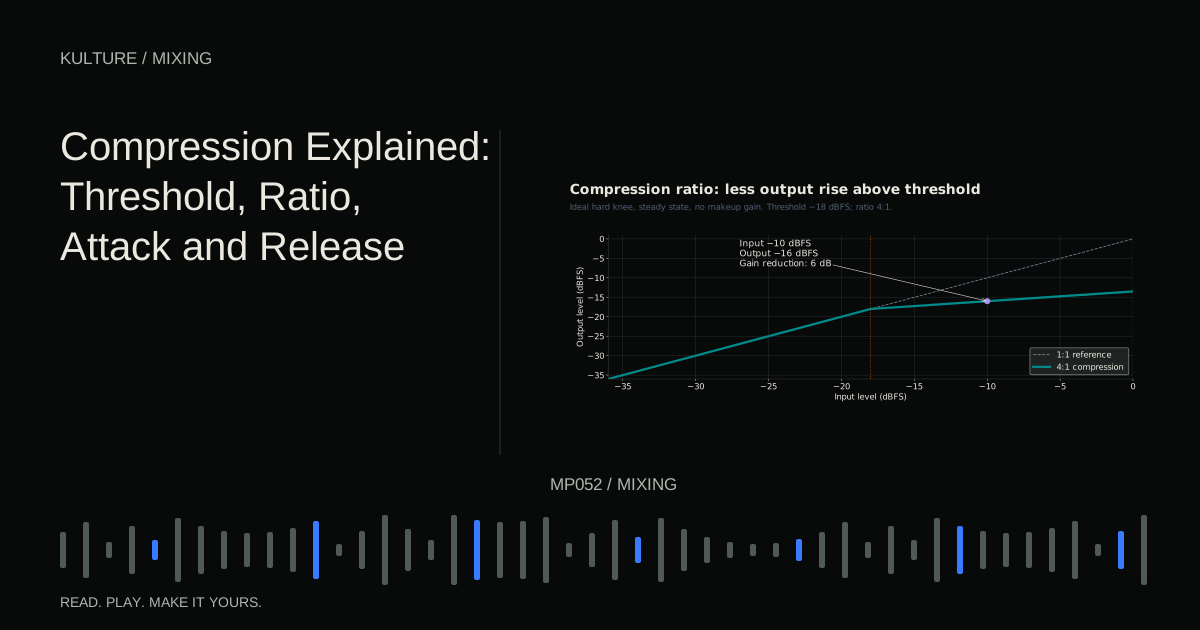
Compression can raise the apparent sustain of a source relative to its attack, especially after makeup gain. If a pad, bass or room suddenly feels thick after processing, bypass the compressor at matched loudness and compare.
Saturation can add harmonics and density. That may help a bass translate, but several heavily saturated low mid layers can make the mix crowded. Reduce drive on the suspected source before trying to remove all the resulting density with EQ.
If mud occurs only on particular notes, inspect the instrument and performance. One bass note may ring longer, trigger a resonance or overlap a kick differently. Local note length edits, clip gain or dynamic processing can be more precise than a permanent cut across the entire song.
Verify that clarity did not become thinness
After making changes, listen to a quieter section. Does it now lack body? Bypass the full set of corrections and compare at similar perceived loudness. Several sensible cuts can add up to too much subtraction.
Restore the most useful warmth, then keep only the changes that solve the identified problem. A clear mix can still be thick and warm; it simply gives the listener enough separation to understand its important parts.
For practice, save a muddy example and make three alternatives: shorter notes, a different chord register and one targeted EQ change. Choose the least destructive solution in context. If the low end pair remains unclear after the other layers are fixed, continue with mixing kick and bass.
TAKE IT INTO YOUR OWN MUSIC
Your next session.
After making changes, listen to a quieter section. Does it now lack body? Bypass the full set of corrections and compare at similar perceived loudness. Several sensible cuts can add up to too much subtraction.
Notes and progress stay in this browser.